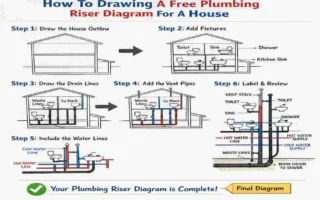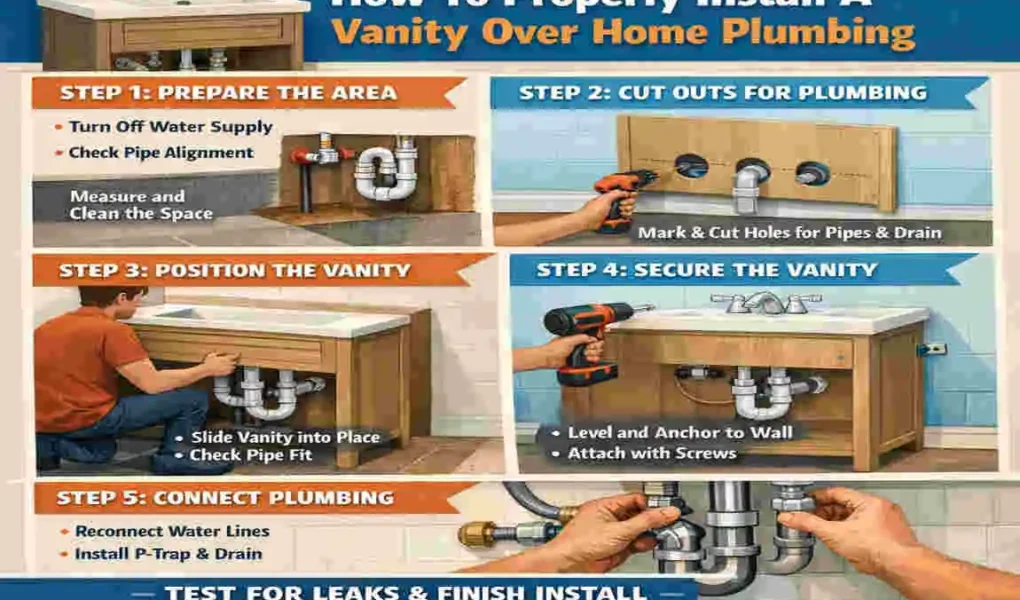
Installing a bathroom vanity over existing plumbing can feel tricky, but it’s much easier once you understand how the pipes, cabinet, and sink work together. The key is to fit the vanity around the plumbing without forcing anything. That keeps the setup safe, neat, and easy to maintain.
| Step | What to Do | Key Tip |
|---|---|---|
| Prepare the Area | Shut off water and clear the installation space. | Inspect existing plumbing first. |
| Measure & Mark | Measure the vanity and mark pipe locations. | Ensure the drain and supply lines align. |
| Position the Vanity | Carefully place the vanity over the plumbing. | Avoid putting pressure on pipes. |
| Make Cutouts | Create openings for drain and supply pipes if needed. | Keep cutouts only as large as necessary. |
| Connect Plumbing | Install the drain, P-trap, and water supply connections. | Check all fittings for proper alignment. |
| Secure & Test | Level and secure the vanity, then run water. | Check carefully for leaks before finishing. |
Understanding How Vanity Plumbing Fits Together
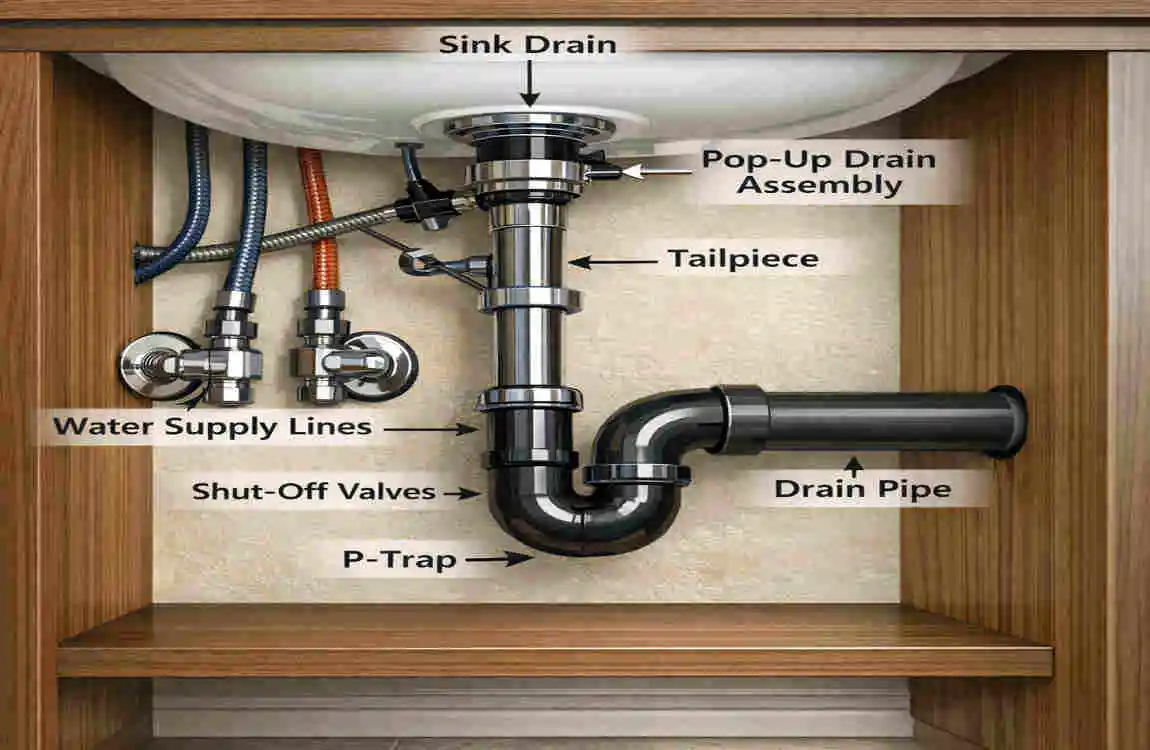
A bathroom vanity sits over the sink drain, P-trap, and water supply lines. The cabinet must leave enough room for the pipes behind it and underneath the sink. If the plumbing is not aligned well, the vanity may not sit flat, or the pipes may get pushed out of place.
The sink drain carries used water down into the plumbing system. The P-trap sits below the sink and helps stop sewer smells from coming back into the room. The hot and cold supply lines bring fresh water to the faucet. All of these parts need to line up cleanly with the vanity opening and sink base.
Before installation, check the pipes for rust, cracks, leaks, or loose joints. Also measure the distance from the wall to the drain, and from the floor to the pipe openings. Accurate measurements matter because even a small mismatch can make the vanity hard to install.
Plumbing Part What It Does What to Check
Drain pipe Carries used water away Alignment and height
P-trap Stops odors from coming back Clearance and access
Supply lines Bring water to faucet Length and condition
Wall opening Allows pipe entry Size and position
Preparing the Vanity Area Before Installation
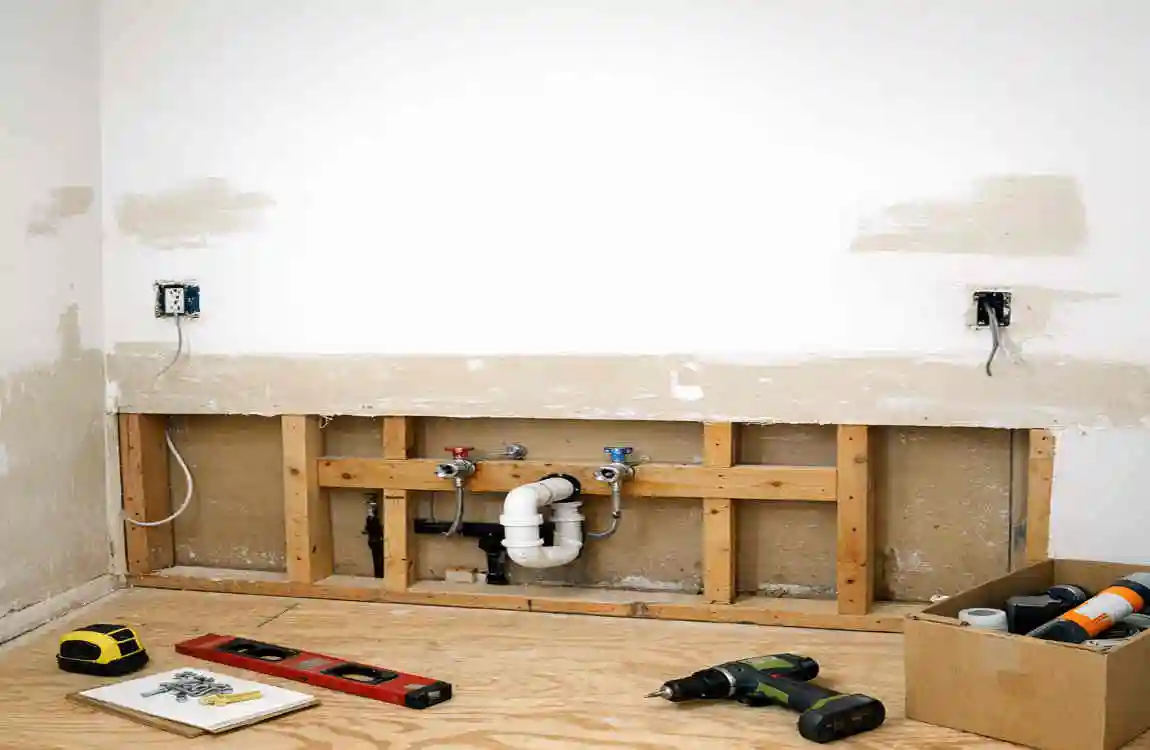
Before you bring in the new vanity, clear the space and make sure it’s ready. If there is an old vanity, remove it carefully and shut off the water first. This helps prevent water spills and pipe damage.
Check the wall and floor for damage, mold, or soft spots. If the surface is uneven, the new vanity may not sit properly. Use a stud finder to locate wall studs, since you will need a strong surface to secure the cabinet.
Mark where the plumbing lines come through the wall or floor. These marks help you line up the vanity before cutting or adjusting anything. Gather your tools ahead of time to make the job smoother.
Helpful tools and materials
- Measuring tape
- Pencil
- Level
- Drill
- Stud finder
- Adjustable wrench
- Pipe tape
- Silicone sealant
How to Install Vanity Over Home Plumbing
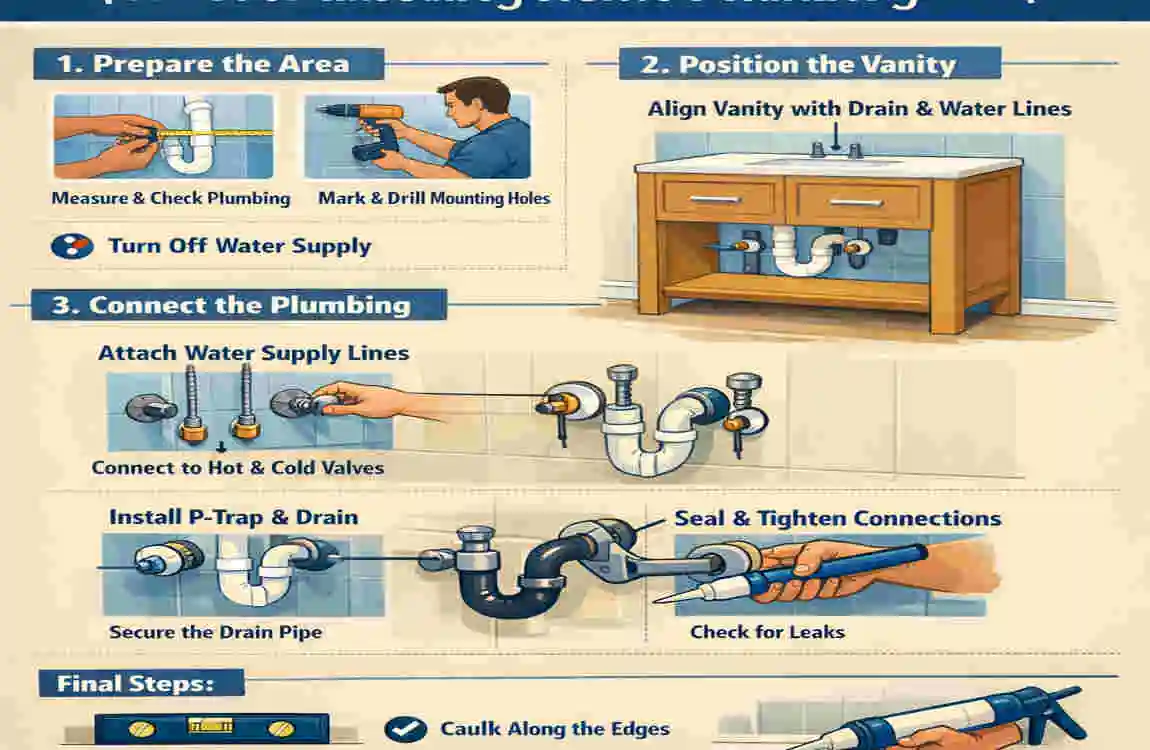
This is the main part of the job. When learning how to install vanity over home plumbing, the most important rule is to position the cabinet gently around the pipes. Don’t push the vanity against the plumbing to make it fit.
Start by placing the vanity in front of the plumbing opening and checking its position. Make sure the drain opening lines up with the sink area and that the cabinet is sitting level. If the pipes need space, you may need to trim small cutouts in the back of the vanity. Keep those openings neat and only as large as needed.
The cabinet should not press against the drain or supply lines. Leave enough room for the P-trap and future repairs. Once the fit looks right, connect the sink and plumbing parts before fully securing the vanity to the wall.
Main fitting checks
- Cabinet sits level against the wall
- Drain opening aligns with plumbing
- P-trap has enough space
- Supply lines are not bent tightly
- Doors and drawers open without hitting pipes
Connecting and Testing the Sink Plumbing
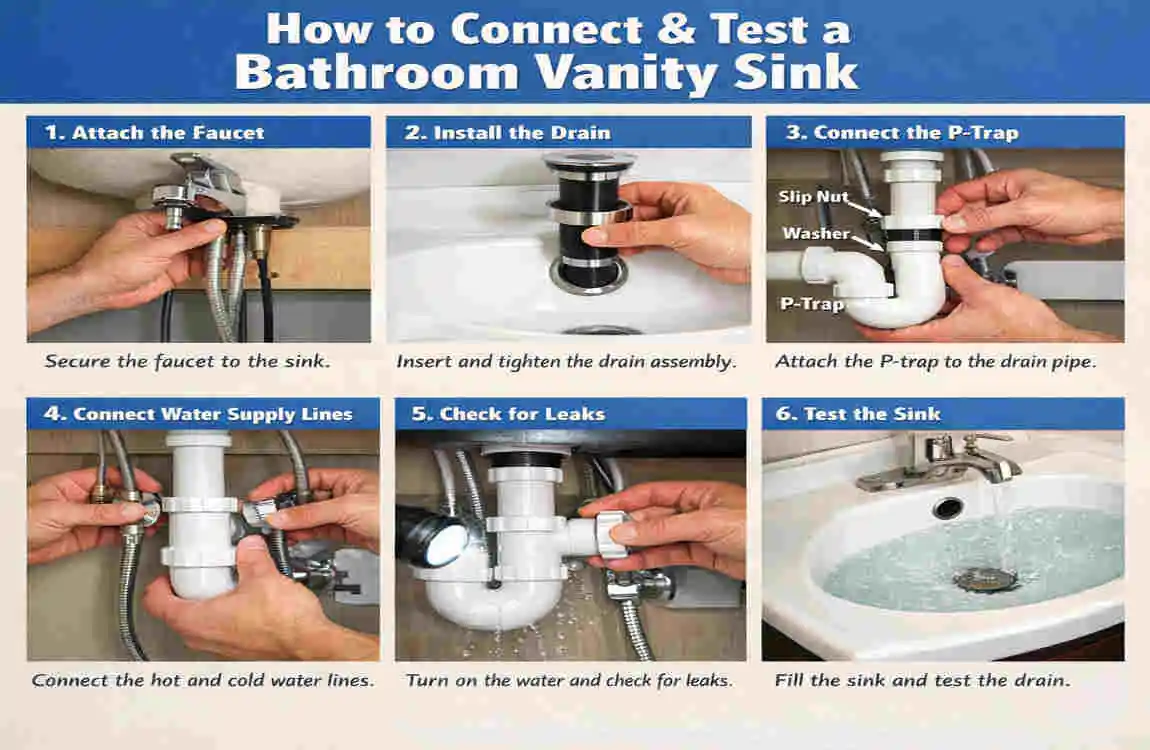
After you place the vanity, connect the sink plumbing carefully. Install the drain flange and tailpiece first, then attach the P-trap below. Make sure each connection fits snugly and that washers are seated correctly.
Next, connect the hot and cold supply lines to the faucet. Tighten the fittings enough to prevent leaks, but don’t overtighten. That can damage the threads or washers.
Once everything is connected, turn the water back on and run the sink for a few minutes. Watch every joint closely. If you see drips, stop and adjust the fitting before moving on. A slow leak can cause hidden damage under the cabinet later.
Common Vanity Plumbing Installation Mistakes to Avoid
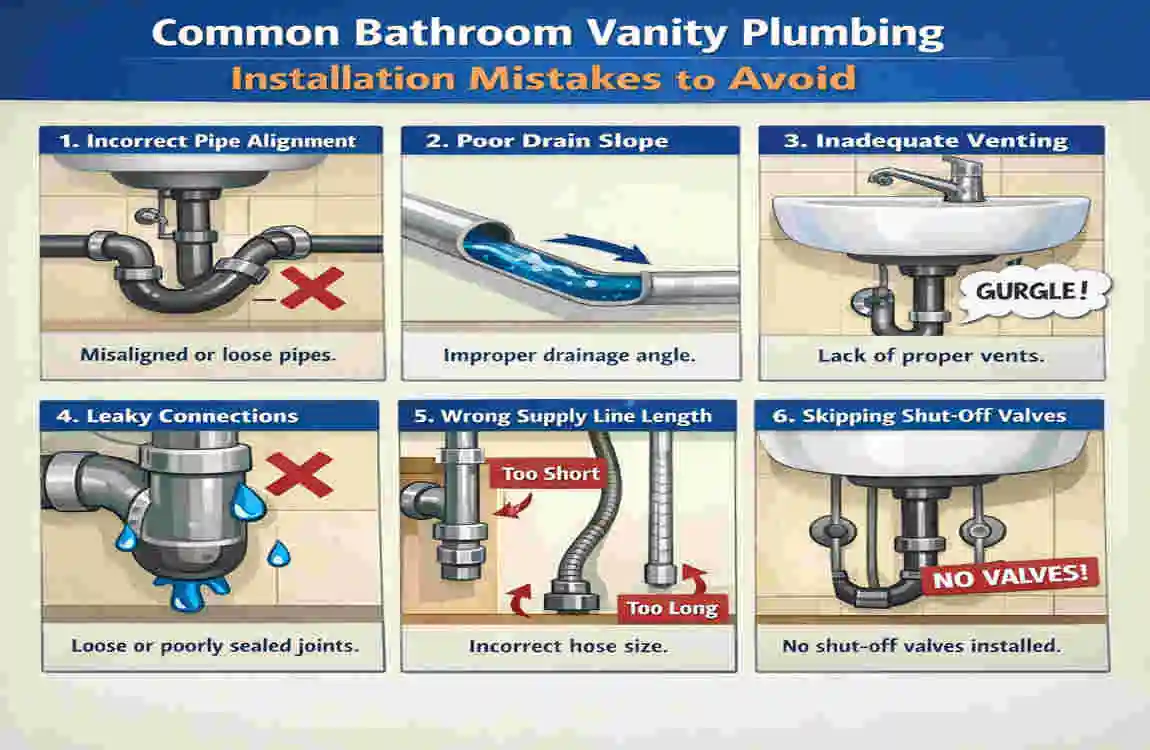
Many vanity problems happen because the plumbing was not measured or checked before installation. One common mistake is cutting large holes in the back of the cabinet. That can weaken the vanity and make the finished look messy.
Another issue is forcing the cabinet against the pipes. This can strain the drain or supply lines and may lead to leaks. Blocking the P-trap is also a problem because it makes future repairs difficult and can affect drainage.
Some people ignore small leaks after installation, but that usually leads to bigger trouble. Even a tiny drip can damage the cabinet base or flooring over time.
Mistakes to avoid
- Skipping measurements
- Cutting oversized openings
- Bending supply lines too sharply
- Leaving pipes trapped behind the cabinet
- Failing to test for leaks
FAQ
Can a vanity be installed over existing plumbing?
Yes. You can usually install a vanity over existing plumbing if the cabinet has enough space for the drain, P-trap, and supply lines.
How much space do you need around a P-trap?
The P-trap needs enough room so it does not touch the cabinet or get squeezed. It should be easy to reach for future repairs.
Can vanity cabinets be cut for plumbing?
Yes, but keep cutouts small and neat. Large cuts can weaken the cabinet and make it look unfinished.
How do I install a vanity without moving the plumbing?
You can install it by measuring the pipe locations carefully, choosing a vanity that fits the space, and cutting only the openings you need in the cabinet.