does bleach kill ants in house
Cleaning

Does Bleach Really Kill Ants in Your House? Truth Revealed

PIt is a quiet Tuesday morning. You stumble into your kitchen, still half-asleep, dreaming of that first cup of coffee. You reach for the sugar bowl, and suddenly, your eyes snap wide open. A thick, dark, moving line of tiny black insects is marching in perfect unison across your pristine countertops.

In a desperate bid to reclaim your kitchen, you reach beneath the sink and grab the biggest, most potent weapon you can find: a bottle of household bleach. You spray it relentlessly, wiping away the invaders. For a brief moment, you feel victorious. The counter is clean, the ants are gone, and it smells like a swimming pool. But as you sip your coffee a few hours later, you notice something disheartening. A new line of ants is marching right back along the same path.

It is a completely logical question. After all, bleach is a powerful chemical. We use it to sanitise surfaces, whiten our laundry, and eliminate tough mould. It seems like it should be the ultimate bug killer. But the truth about using bleach for ant control is wrapped in a layer of myths, half-truths, and temporary fixes.

Aspect Bleach Effectiveness Better Alternatives Why Switch?
Kills on Contact Yes, immediate Borax baits, vinegar Targets queen/colony, lasts weeks
Destroys Trails Temporary Vinegar/water mix Repels via scent even after drying
Safety in Homes Unsafe (fumes, surfaces) Diatomaceous earth, oils Pet/kid-friendly, eco-safe
Long-Term Control No (colony returns) Professional baits/exterminators Eliminates source, prevents reinfestation
Cost & Ease Cheap, DIY spray $3-5 borax, natural mixes Affordable, non-toxic repeat use

How Bleach Works on Ants: The Chemical Assault

does bleach kill ants in house

To truly understand the answer to “does bleach kill ants in house,” we need to put on our safety goggles and look at the underlying chemistry. Let’s break down exactly what happens when this common household cleaner comes into direct contact with a foraging ant.

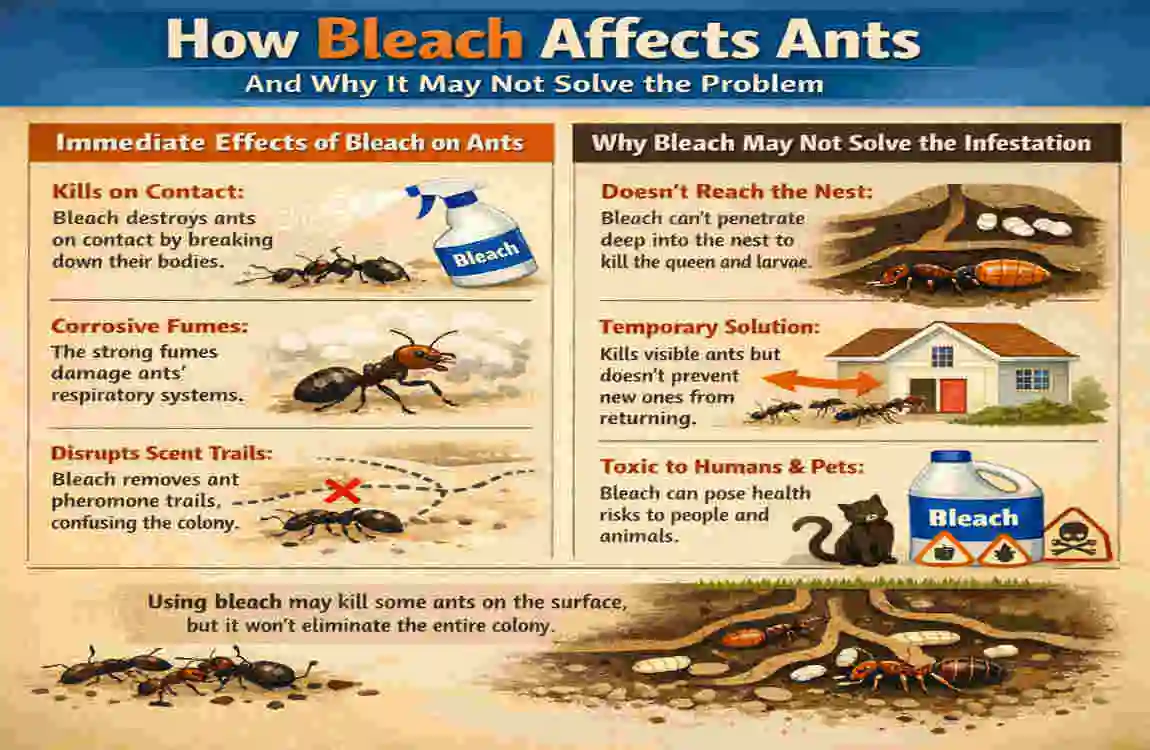
At its core, standard household bleach is a liquid solution of sodium hypochlorite. This chemical compound is highly corrosive, oxidizing, and exceptionally good at breaking down organic matter. When you spray bleach directly onto an ant, you are launching a devastating chemical assault on their tiny bodies.

Breaking Down the Exoskeleton

Ants, like all insects, do not have internal bones. Instead, they are protected by an external armour called an exoskeleton, primarily made of the tough substance chitin. To prevent themselves from drying out, ants also have a very thin, delicate waxy coating over their exoskeletons. This waxy layer is their ultimate survival tool, holding in precious moisture.

When sodium hypochlorite comes into contact with the ant, it immediately begins to react with the ant’s protective barrier.

Here is exactly how the breakdown happens:

  • Destroys the waxy outer layer: The corrosive nature of bleach strips away the protective waxes on the ant’s cuticle almost instantly.
  • Corrodes respiratory systems: Ants do not breathe through mouths like humans do. They take in oxygen through tiny microscopic holes along the sides of their bodies called spiracles. Bleach easily seeps into these spiracles, causing severe chemical burns to their internal respiratory systems.
  • Causes rapid dehydration: Once that waxy layer is gone, the ant loses its ability to retain moisture. The high pH of the bleach disrupts their cellular structure, leading to rapid, catastrophic dehydration.

This entire process is incredibly fast. Once the bleach contacts the ant, the contact-killing action takes 1 to 5 minutes. For the ants caught in the crossfire, it is a swift and lethal event.

The Pheromone Eraser

Beyond the physical destruction of the ants themselves, bleach performs another fascinating function: it temporarily destroys their communication lines.

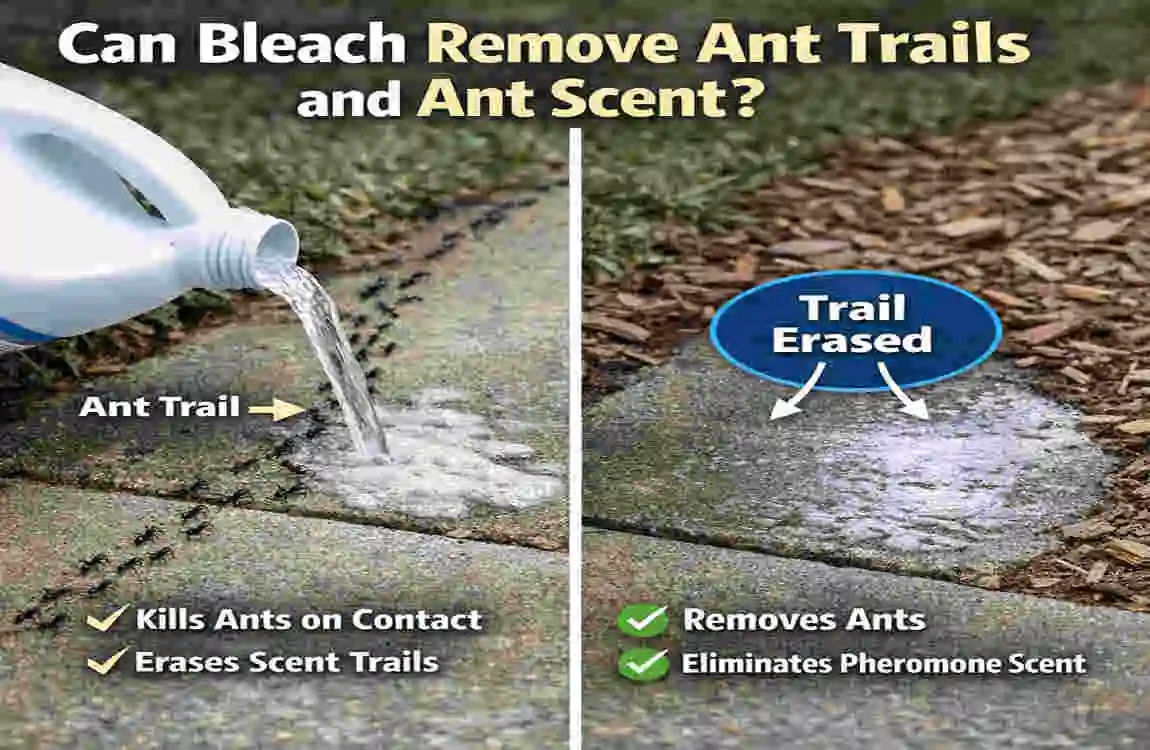
Ants are virtually blind. When a “scout” ant finds your dropped cookie crumbs, it runs back to the colony, leaving behind a chemical scent trail called a pheromone trail. This invisible chemical highway guides hundreds of other worker ants to the food.

When you wipe down a counter with bleach, the strong oxidizing agents completely obliterate these pheromones.

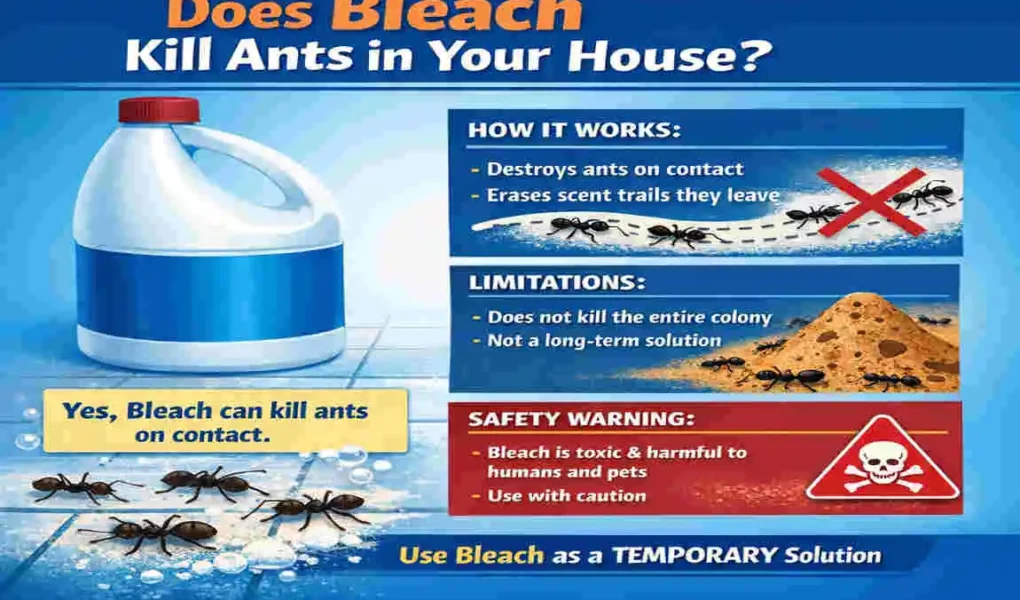
  • Erases pheromone trails temporarily: The bleach’s intense chemical composition breaks down the scent molecules. Suddenly, the ants have no road map. They wander, unable to find the food source or their way back home.

The Missing Piece: Colony Penetration

While this sounds like an absolute victory, there is a massive catch.

Contact killing and pheromone disruption are strictly surface-level actions. Bleach has absolutely no colony penetration. The spray only affects the specific ants that you can see with your own two eyes. It does nothing to the thousands of reinforcements waiting just behind your baseboards.

It is an isolated battlefield. The chemical burns their exoskeletons and disrupts their local pH, but it is a localized attack. To truly eliminate an ant problem, you have to think bigger than the individual soldier; you have to take down the entire fortress.

Does Bleach Kill Ants in House? The Evidence

So, let’s address the main question with a direct answer: Yes, bleach kills visible ants on contact—but absolutely no, it will not provide full elimination of an infestation.

If you are looking for a quick fix to wipe out the fifty ants swarming a spilled drop of honey, bleach will do the job in a matter of seconds. But if your goal is an ant-free house for the foreseeable future, bleach will leave you deeply disappointed.

Let’s look at the hard evidence. Pest control experts and scientific observations have given us a very clear picture of bleach’s ant-killing effectiveness.

The Pros and Cons Breakdown

When we weigh the effectiveness of bleach, the results are incredibly skewed toward short-term gains. Here is a clear look at how bleach performs across the most critical aspects of ant control:

AspectEffectiveness LevelThe Reality of the Results

On-contact kill High Instant lethality for most household species due to chemical burns.

Pheromone disruption Medium Temporarily erases scent trails, but evaporates quickly.

Colony/queen reach Low/None Completely ineffective. The queen and the nest remain entirely untouched.

Real-World Tests and Rapid Returns

In real-world tests where homeowners rely strictly on bleach vs ants house trails, the outcome is almost always the same. You spray the trail, wipe up the dead ants, and enjoy a clean, chemical-smelling kitchen.

However, because bleach evaporates and dissipates into the air, its masking effect on pheromones is shockingly short-lived. Tests show that while the initial foragers die quickly, new ants generally return to the same spot within 1 to 2 days.

Why? Because the original scout ants that found the food source already communicated its general location to the colony. Once the overpowering scent of the bleach fades from your countertops, new workers are dispatched to re-establish the broken supply line.

The Species Factor

It is also important to consider that not all ants act the same way, and bleach’s effectiveness can vary wildly depending on the species invading your home.

Take Argentine ants, for example. These are the tiny, fast-moving ants that often invade in massive, overwhelming numbers. Argentine ants form what are known as “supercolonies,” containing multiple queens and millions of workers spanning entire neighborhoods. Killing a few hundred of them with a spray of bleach is literally less than a drop in the bucket. They will simply replace their lost numbers within hours.

Then you have carpenter ants. These larger ants actually chew through the structural wood of your home to build their nests. If you see carpenter ants in your kitchen, they are just foraging for food. Spraying them with bleach does nothing to stop the ongoing structural damage happening inside your walls. You might win a small skirmish on the kitchen island, but you are actively losing the war behind the drywall.

Why Bleach Fails Long-Term: The Hidden Fortress

does bleach kill ants in house

To fully grasp why bleach fails as a long-term solution, we have to understand the brilliant, terrifying efficiency of an ant colony.

An ant colony is not just a random gathering of bugs; it is a highly organized, deeply complex superorganism. A typical household colony can range from a few thousand to several hundred thousand members, all working with a single, unified purpose: survival and expansion.

The Disposable Foragers

When you ask, “does bleach kill ants in house,” you are only thinking about the ants you can see. These visible ants are known as forager workers.

Here is a harsh reality of nature: to the ant colony, forager workers are entirely disposable.

They are the oldest, most expendable members of the nest, sent out into the dangerous world to find food and bring it back. If a few dozen foragers do not return because they met the business end of your bleach bottle, the colony does not panic. The colony simply promotes a new batch of younger ants to take over foraging duties.

New foragers replace dead ones quickly. You can spray bleach every single day, and the colony will just keep sending out recruits. You are treating a symptom, not the underlying disease.

The Untouchable Queen

Deep inside the hidden nests—usually located safely behind your baseboards, under your foundation, or deep within wall voids—sits the true target: the Queen.

The queen ant has one job: to lay eggs. She can live for years, constantly repopulating the colony and replacing the workers you killed. Because bleach is a contact killer, it doesn’t travel through the air. It stays exactly where you sprayed it. It will never reach the queen. As long as the queen is alive, safe, and laying eggs, your ant infestation will never truly end.

Bleach vs. Baits: A Study in Success

Compare the surface-level action of bleach to the success rates of commercial or DIY ant baits.

Baits work on a completely different philosophy. Instead of killing the ant on contact, baits act as a Trojan Horse. They use a slow-acting poison mixed with a delicious food source (like sugar or grease).

The forager ant finds the bait, eats it, and crucially, survives long enough to carry it back to the hidden nest. Through a process called trophallaxis, the workers regurgitate the poisoned food and share it with the rest of the colony, including the larvae and the queen.

While bleach offers a 0% chance of colony destruction, properly applied slow-acting baits boast an 80-90% colony wipeout rate. Baits use the ants’ own biology and social behavior against them, destroying the hidden fortress from the inside out.

Health & Home Risks of Bleach: Is It Worth It?

Beyond its complete failure as a long-term ant-control method, using bleach as a makeshift pesticide introduces serious health and safety risks to your living environment. We often treat bleach casually because itis readily available at the grocery store. Still, it remains a volatile and dangerous chemical.

Respiratory Dangers and Irritation

Bleach releases strong, pungent fumes composed of chlorine gas. When you liberally spray bleach across your floors, counters, and baseboards to chase down ant trails, you are significantly degrading your indoor air quality.

These fumes are highly irritating to the mucous membranes. Breathing them in can cause coughing, wheezing, and a burning sensation in the lungs and throat. It also heavily irritates the eyes, causing watering, redness, and stinging. For anyone in your home with asthma or respiratory sensitivities, a bleach-heavy environment can trigger severe medical reactions.

The Deadly Ammonia Trap

One of the most terrifying risks of using bleach haphazardly is the potential for accidental chemical mixing.

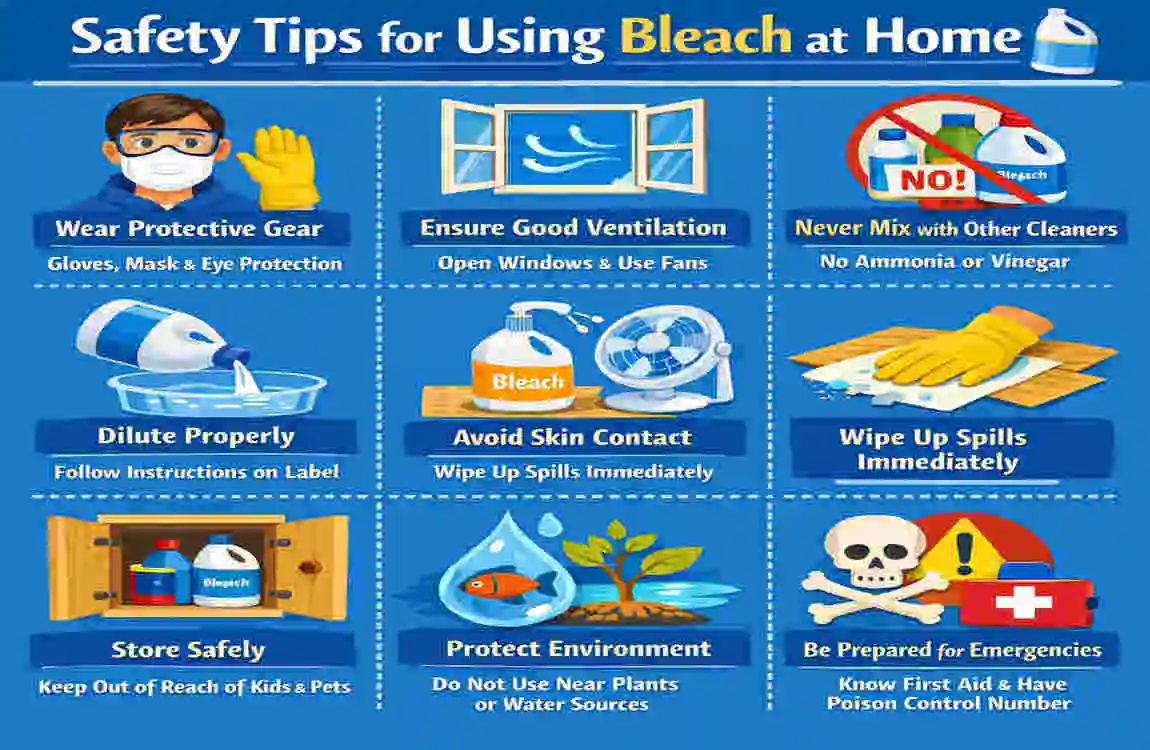
Many common household cleaners (like glass cleaners, floor waxes, and certain all-purpose sprays) contain ammonia. If you spray bleach onto a surface that was recently cleaned with an ammonia-based product, or if you unknowingly mix the two liquids, they react violently.

This reaction produces chloramine gas, a highly toxic vapor that can cause severe respiratory distress, chest pain, and in extreme cases, can be fatal. It is a dangerous game to play just to get rid of a few bugs.

Surface Damage and Pet Safety

Let’s not forget the physical damage bleach can do to your home. It is a powerful bleaching agent that can permanently discolor carpets, strip the finish off hardwood floors, and ruin the sealant on granite or marble countertops.

Furthermore, the Environmental Protection Agency (EPA) strongly warns about the indoor volatility of bleach, especially concerning children and pets.

Think about your dog or cat walking across a floor you just treated with a bleach spray to stop ants. The bleach gets onto their paws. When they groom themselves later, they ingest those toxic chemicals directly. Even dried bleach residue can cause chemical burns to sensitive pet paws.

Is there a safer way to use it? If you absolutely must use bleach to clean up an ant trail in a pinch, you must ventilate the area thoroughly by opening all windows and running exhaust fans. However, even with precautions, it remains a heavily suboptimal, risky, and ultimately ineffective pest control strategy.

Proven Alternatives to Bleach (Safe and Effective)

Now that we have thoroughly debunked the “bleach as a pest control” myth, let’s focus on solutions that actually work. If you want safe ant control for your home that targets the root of the problem, you need to step away from the cleaning aisle and look toward scientifically proven remedies.

Here are the top DIY methods that vastly outperform bleach in both safety and effectiveness.

Top DIY Remedies Table

Pest Control MethodKey Ingredient ActionHow It Beats BleachApplication Strategy

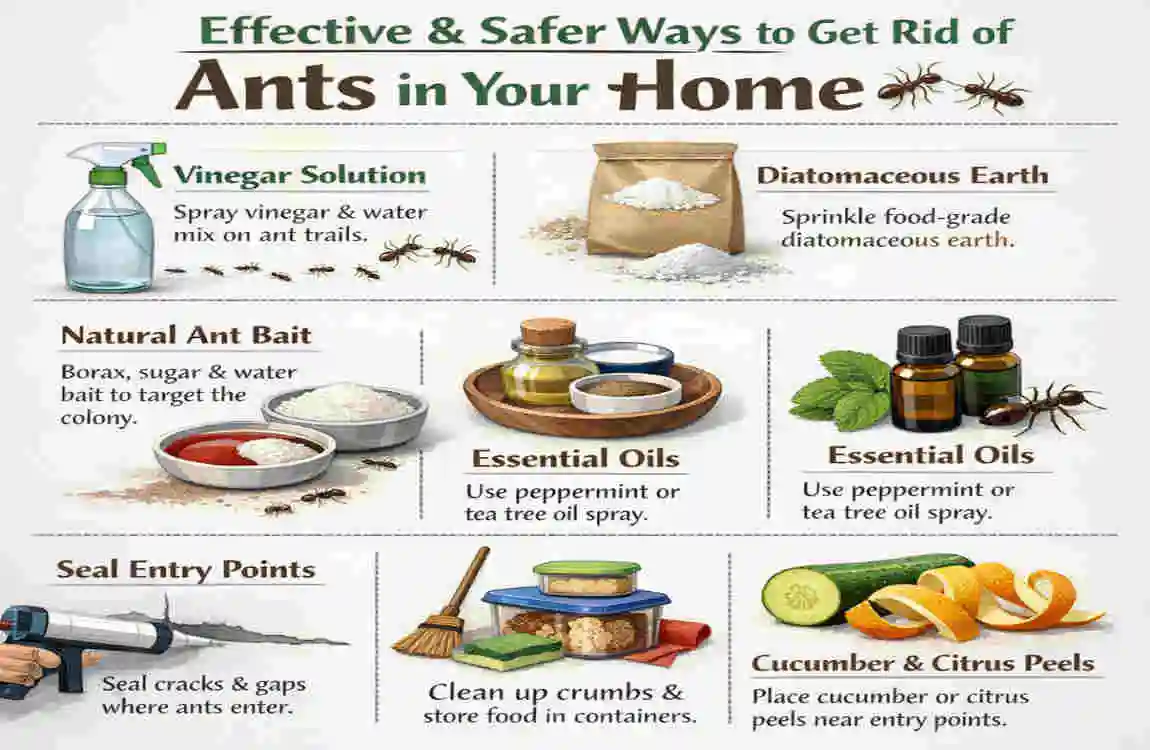
Borax Bait Borax mixed with sugar/syrup Kills the queen and colony. Acts as a slow stomach poison. Mix 1/2 tsp borax, 8 tsp sugar, 1 cup warm water. Soak cotton balls and place near trails.

Diatomaceous Earth (DE) Crushed fossilized algae Dehydrates safely. Destroys the exoskeleton mechanically, not chemically. Lightly dust dry powder along baseboards, window sills, and active trails.

Essential Oils Peppermint, cinnamon, or lemon eucalyptus Repels naturally. Overwhelms their senses without toxic fumes. Apply a few drops to cotton balls and replace weekly at entry points.

The Ultimate Borax Recipe (Step-by-Step)

If there is a gold standard for DIY ant control, it is Borax. Borax (sodium tetraborate) is a naturally occurring mineral that is deadly to ants but has a very low toxicity to humans and pets when used correctly. When an ant consumes Borax, it destroys their digestive system slowly, giving them plenty of time to share the poison with the queen.

Here is the step-by-step recipe to create a highly effective Borax bait:

  1. Gather Your Supplies: You will need regular Borax (found in the laundry aisle), regular white table sugar, warm water, and a handful of cotton balls.
  2. Mix the Solution: In a small bowl, dissolve 8 teaspoons of sugar and 1/2 teaspoon of Borax into 1 cup of warm water. Stir vigorously until the powders are completely dissolved. (The high sugar ratio ensures the ants are attracted to it and cannot taste the Borax).
  3. Prepare the Bait Stations: Drop several cotton balls into the liquid until they are fully saturated.
  4. Strategic Placement: Place these soaked cotton balls on small pieces of wax paper or shallow bottle caps right next to the active ant trails. Do not wipe away the existing ant trail yet! You want the ants to find the bait easily.
  5. Be Patient: Over the next 24 to 48 hours, you will see a massive swarm of ants around the cotton balls. Do not panic, and do not kill them. Let them gorge themselves. They are taking the poison back to the nest. Within a few days, the colony will collapse, and the ants will vanish.

Diatomaceous Earth: Nature’s Glass

If you want a contact killer that doesn’t involve toxic chemical fumes, Food Grade Diatomaceous Earth (DE) is your best friend. DE looks like fine white powder to us. Still, under a microscope, it is made of millions of razor-sharp fossilized aquatic organisms.

When an ant walks through DE powder, the microscopic sharp edges physically slash open their waxy exoskeleton. Just like bleach, this causes rapid dehydration and death, but it does so mechanically, meaning ants can never build up an immunity to it. Plus, it is completely non-toxic and safe to use around food preparation areas.

Prevention: Keep Ants Out Permanently

does bleach kill ants in house

Eliminating the current colony is only half the battle. If your home remains an attractive target, a new colony of ants will eventually move in to take their place. To keep ants out permanently, you have to adopt a total prevention mindset.

Seal the Fortress

Ants are tiny opportunists. They can slip through cracks so small you barely notice them. Your first line of defense is physical exclusion.

  • Seal cracks and crevices: Take a weekend to walk around the exterior and interior of your home with a tube of high-quality silicone caulk. Seal gaps around window frames, under doors, and where utility pipes enter the house.
  • Fix all leaks: Ants need water just as much as they need food. A dripping sink pipe or a continuously sweating toilet tank is an oasis for thirsty ants. Fix plumbing leaks immediately to cut off their water supply.

Eliminate Food Sources

You must make your home completely inhospitable to foragers.

  • Clean spills instantly: Never leave sticky spills on the counter overnight.
  • Use vinegar wipes: Instead of bleach, wipe down your counters with a 50/50 mixture of white vinegar and water. Vinegar safely destroys the pheromone trails without releasing toxic fumes, and ants actively hate the lingering smell.

Outdoor Barriers and Seasonal Planning

Stop them before they even reach your foundation.

  • Create natural barriers: Ants despise the strong smells of cinnamon, coffee grounds, and cayenne pepper. Sprinkling a thick line of these around the perimeter of your foundation can act as an excellent natural deterrent.

An Annual Checklist (The Lahore Context): Depending on where you live, weather plays a massive role in ant behavior. For example, in the annual checklist for homes in highly humid climates like Lahore, weather preparation is critical. During the intense heat and heavy monsoon rains, ants are aggressively driven indoors seeking shelter and high ground.

  • Pre-Monsoon (April/May): Clear all rotting wood and leaf litter from the garden, as these are prime nesting sites.
  • Monsoon Season (July/August): Apply robust perimeter treatments (like DE) and ensure all weather-stripping on exterior doors is tight to prevent rain-fleeing colonies from migrating into your kitchen. Adapt these seasonal checks to your local climate’s wet and dry seasons for maximum effectiveness.

FAQs

Even with all this information, you might still have a few lingering questions. Let’s tackle the most common homeowner queries about bleach and ant control.

Does bleach kill ants in house instantly? Yes, on contact. If you spray a foraging ant directly with undiluted or slightly diluted bleach, the chemical burns will destroy its exoskeleton and kill it within a few minutes. However, this only applies to the ants physically hit by the liquid.

Is bleach safe to use for wiping down ant trails? No, it is highly risky due to the fumes. While it will temporarily erase the pheromone trail, the strong chlorine gas can cause respiratory irritation, pose a risk of dangerous chemical reactions with other cleaners, and damage your home’s surfaces. Vinegar is a much safer, non-toxic alternative for wiping away scent trails.

What are the absolute best bleach-free ant killers? The best long-term solution is sweet Borax bait. It is highly effective because it acts as a Trojan horse, allowing the ants to carry the fatal compound back to the hidden queen, successfully wiping out the entire colony rather than just the surface-level workers. For safe contact killing, Food Grade Diatomaceous Earth is the best non-chemical choice.

You may also like...

Leave a Reply

Your email address will not be published. Required fields are marked *