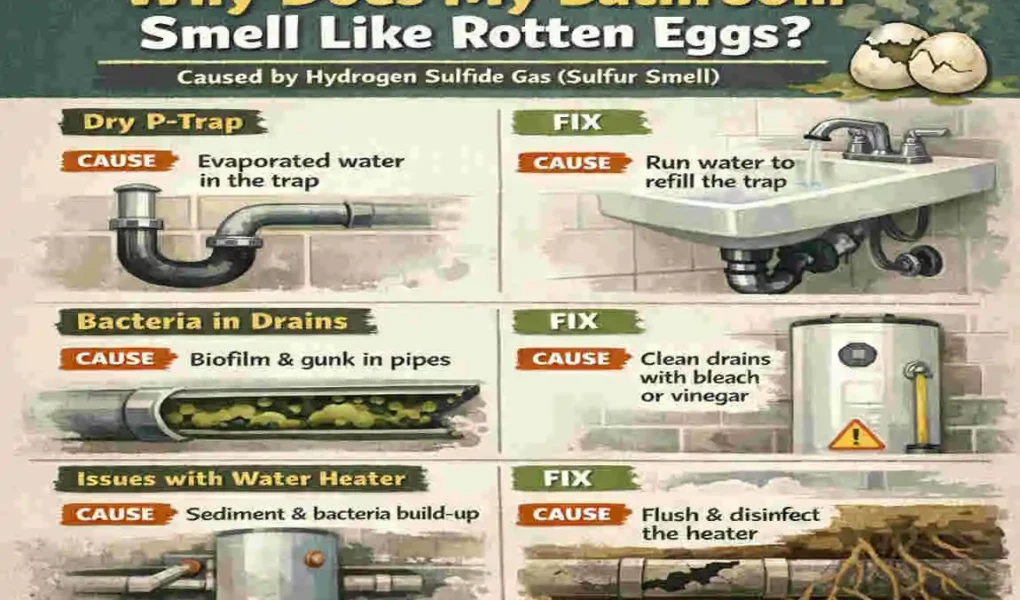
If your bathroom smells like rotten eggs, you are probably dealing with a plumbing or water issue. That smell is usually linked to sulfur, sewer gas, or bacteria somewhere in the system.
It is not a smell you should ignore. Sometimes the cause is simple, like a dry drain. Other times, it may indicate a damaged pipe, a faulty toilet seal, or even a water heater problem.
Why Does My Bathroom Smell Like Eggs?
What Causes the Rotten Egg Smell?
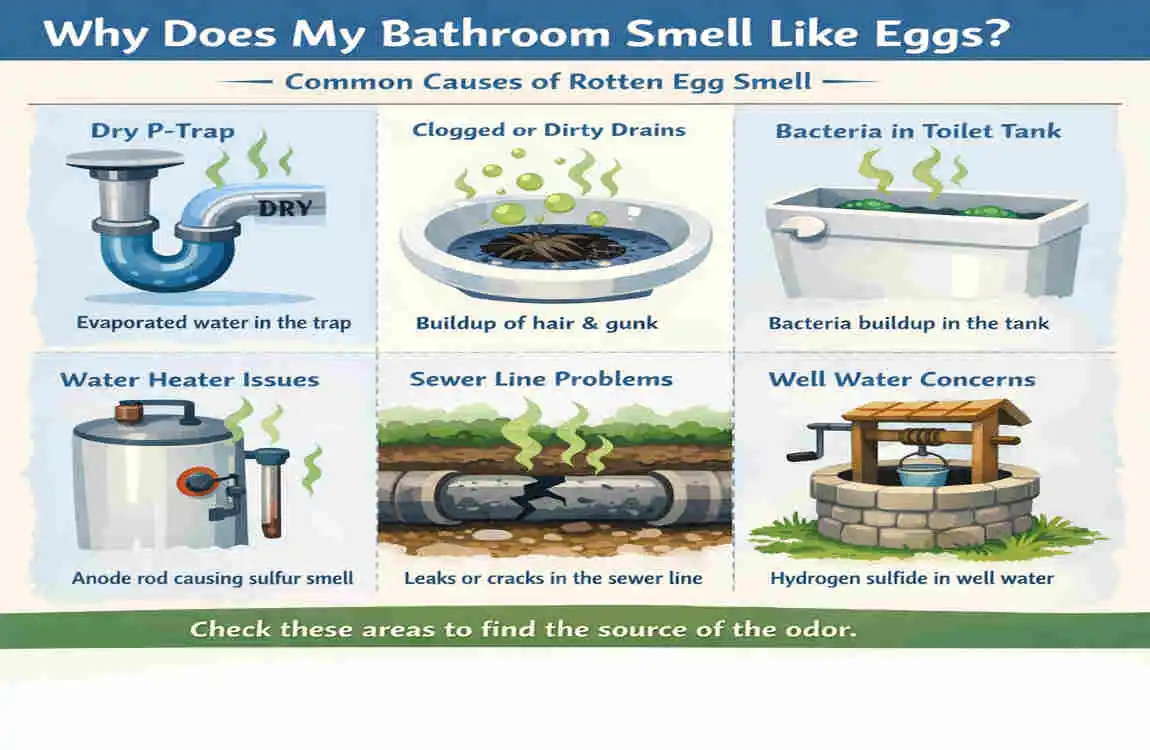
That rotten egg smell usually comes from hydrogen sulfide gas. This gas can be created by:
- Sewer gases
- Sulfur bacteria
- Water heater issues
- Organic buildup in drains
The smell may come and go, or it may stay strong all the time. If it gets worse after running water, flushing the toilet, or turning on hot water, that can help you narrow down the source.
Is the Smell Dangerous?
Sometimes the odor is just unpleasant. Other times, it may point to a more serious plumbing problem.
A small amount of sewer gas may cause headaches, nausea, or irritation. A strong smell in the bathroom should be checked quickly, especially if it spreads through the house.
If you notice the smell getting stronger or if you feel unwell, take action right away.
Common Causes of Egg Smell in the Bathroom
Dry P-Trap
A P-trap is the curved pipe under sinks, showers, and some drains. It holds water, which blocks sewer gas from coming back into your bathroom.
If a drain is not used for a while, the water in the P-trap can dry out. When that happens, sewer gas can escape into the room.
This is one of the easiest problems to fix. Run water for a few seconds to refill the trap.
Sewer Gas Leak
A sewer gas leak can happen when there is a broken pipe, a loose toilet seal, or a damaged vent pipe.
You may notice:
- A strong rotten egg smell
- Odor coming from around the toilet
- Smell getting worse near drains
This type of issue should not be ignored. Sewer gas can enter the room through gaps in the plumbing system.
Sulfur Bacteria in Water
Sometimes the smell is not from the bathroom itself. It comes from the water supply.
This is more common with well water, but it can happen in other systems too. Sulfur bacteria react with natural minerals and create that egg-like odor.
If both the sink and shower water smell bad, the water supply may be the issue.
Water Heater Problems
If the smell only comes from hot water, the water heater may be the cause.
A common reason is a reaction involving the anode rod inside the tank. Over time, this can create a sulfur smell in the hot water.
If this happens, you may need to flush the water heater or have it checked by a plumber.
Dirty Bathroom Drain
Bathroom drains collect a lot of buildup over time, including:
- Hair
- Soap scum
- Skin cells
- Other organic debris
When this material sits in the drain, it can start to smell bad. Sometimes the odor isn’t exactly sewage, but it can still smell like rotten eggs.
Mold or Mildew
Bathrooms stay damp, which makes them a good place for mold and mildew to grow.
While mold usually smells musty, hidden moisture can sometimes create a strong, foul odor reminiscent of sulfur or rot.
Check behind the toilet, under the sink, and around the shower for moisture problems.
How to Identify the Source of the Smell
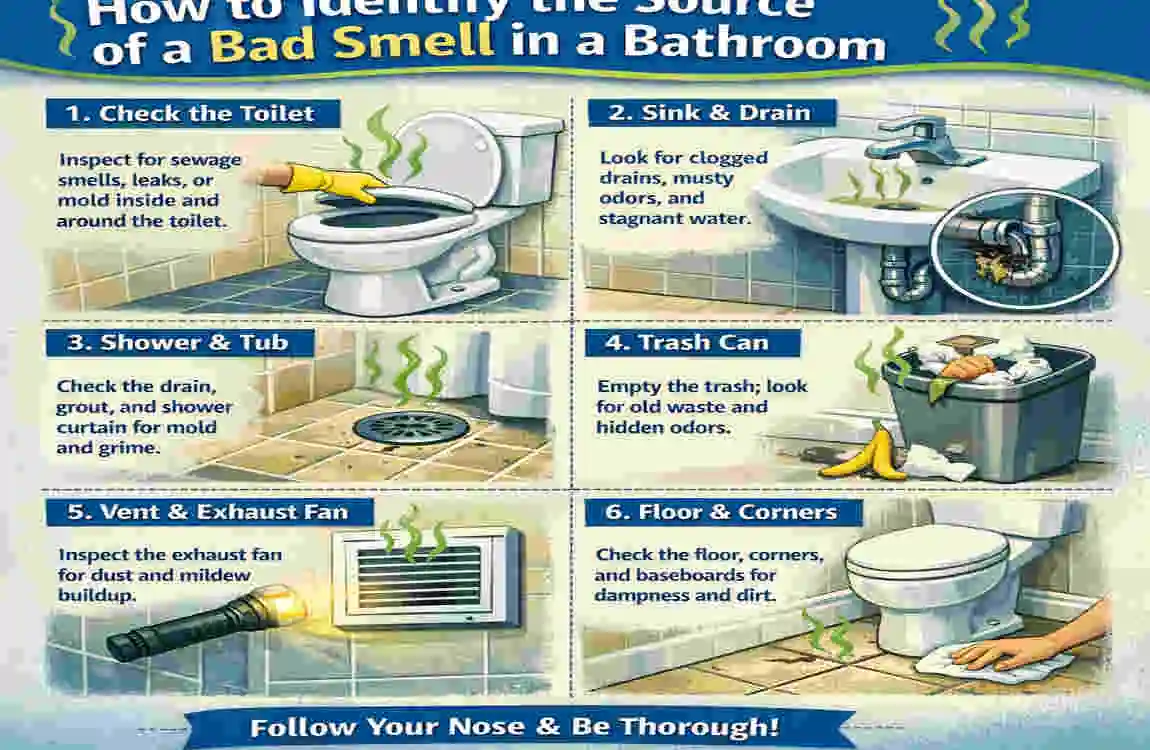
Check Every Drain
Start by checking each drain one by one:
- Sink
- Shower
- Bathtub
- Floor drain
Try to notice whether the smell comes from only one drain or from all of them. If it is just one, the problem is probably local. If all of them smell, the issue may be bigger.
Test Hot and Cold Water
Turn on both hot and cold water and compare the smell.
If only the hot water smells like eggs, the problem is likely the water heater. If both smell bad, the problem may be in the water supply or pipes.
This quick test can save you a lot of time.
Inspect the Toilet
The toilet can also be a hidden source of odor.
Check for:
- A loose toilet base
- Water around the bottom
- A damaged wax ring
- Loose bolts
If the seal under the toilet is broken, sewer gas can escape into the bathroom.
Look for Hidden Leaks
Leaks are not always easy to see. Check:
- Under the sink
- Around the toilet
- Behind walls
- Near the shower or tub
Even a small leak can lead to mold, trapped moisture, and bad smells.
Quick Ways to Fix Bathroom Egg Smell
Pour Water into Unused Drains
If a drain has not been used in a while, pour a cup or two of water into it. This refills the P-trap and prevents sewer gas from entering.
This simple fix often works right away.
Clean the Drain Naturally
You can try a basic cleaning method using:
- Baking soda
- Vinegar
- Hot water
Pour baking soda into the drain, add vinegar, wait a few minutes, and then flush with hot water. This can help remove buildup and reduce odor.
Clean the Overflow Drain
The overflow opening in sinks can collect grime and bacteria. If it is dirty, it may smell bad even if the main drain looks fine.
A drain brush or cleaning solution can help remove the buildup.
Replace the Toilet Wax Ring
If the smell seems strongest near the toilet, the wax ring may be failing.
This is not always a quick DIY fix, but it is important. A bad wax ring can let sewer gas escape and may also cause small leaks.
Flush the Water Heater
If only hot water smells, your water heater may need a flush. Sediment can build up inside the tank and contribute to odor problems.
In some cases, the anode rod may also need to be replaced.
Install or Repair Plumbing Vent
Plumbing vents help move sewer gas safely out of the home. If a vent is blocked or damaged, gas can build up inside the bathroom.
This issue usually needs professional help.
When to Call a Professional Plumber
Persistent Sewer Gas
If the smell keeps coming back after basic cleaning, you may have a deeper plumbing problem.
Water Heater Replacement
If the water heater is old or the smell will not go away after flushing, a plumber should inspect it.
Cracked Sewer Pipes
A cracked or damaged sewer pipe can create a strong odor and may lead to serious damage.
Strong Sulfur Smell Throughout the House
If the smell is not limited to one bathroom, the problem may affect the whole plumbing system. That is a strong sign you need expert help.
How to Prevent Bathroom Odors
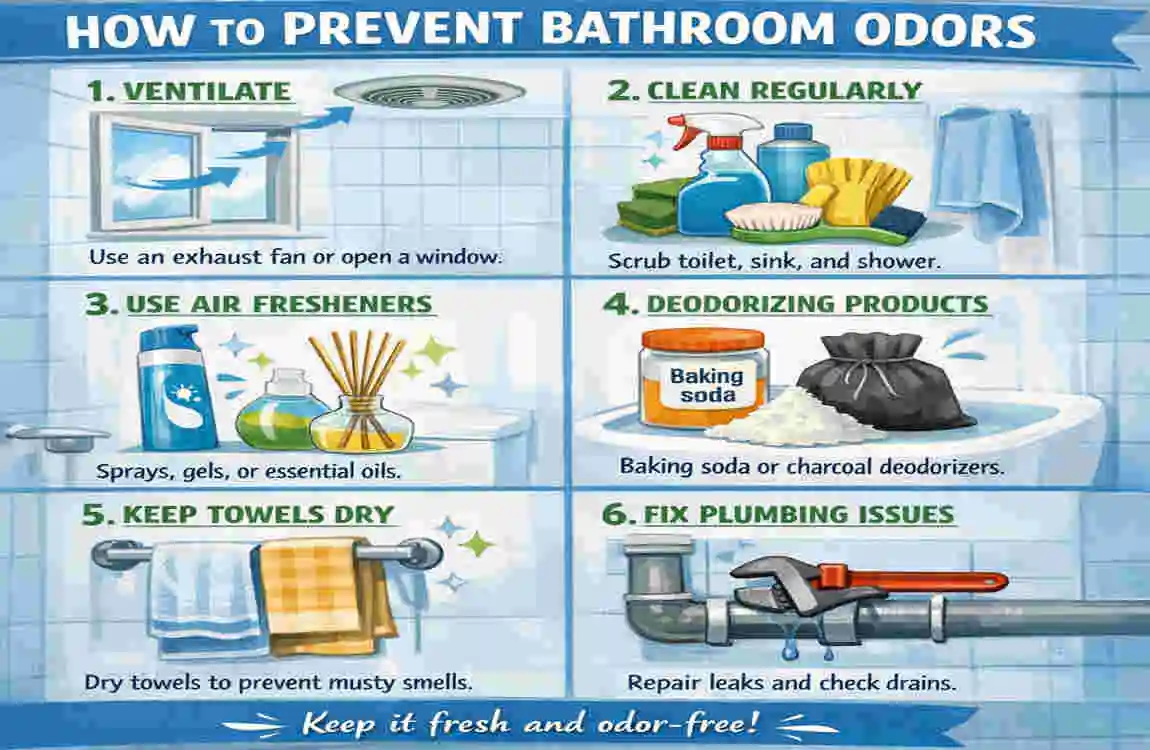
Run Water in Unused Fixtures
If you have a guest bathroom or floor drain you rarely use, run water through it once in a while. This keeps the trap full.
Clean Drains Monthly
A simple monthly cleaning routine can prevent buildup before it becomes a problem with odor.
Maintain Your Water Heater
Flush your water heater as needed and check for signs of wear. This helps reduce odors and extends its life.
Check Plumbing Vents
Make sure vents are clear and working properly. Good airflow helps keep sewer gases out of your bathroom.
Fix Leaks Quickly
Small leaks can turn into moisture problems fast. The sooner you fix them, the better.
Signs the Problem May Be Serious
Watch for these warning signs:
- Rotten egg smell throughout the house
- Sewage backups
- Gurgling drains
- Slow drainage
- Water damage
- Multiple plumbing fixtures affected
If you notice more than one of these signs, do not wait too long. Call a plumber before the issue gets worse.
Common Bathroom Smell Causes Comparison
Table: Quick Cause Guide
CauseCommon SignsEasy FixProfessional Help Needed
Dry P-trap Smell from unused drain Add water No
Dirty drain Slow drain, odor Clean drain Sometimes
Sewer gas leak Strong sewage smell No Yes
Water heater Hot water smells Flush heater Sometimes
Sulfur bacteria Water smells like eggs Water treatment Yes
Broken toilet seal Smell around toilet Replace wax ring Yes
Frequently Asked Questions
Why does my bathroom smell like eggs only at night?
This can happen when airflow changes at night. A dry trap, weak venting, or sewer gas buildup may become more noticeable.
Can a dry drain cause a rotten egg smell?
Yes. A dry P-trap is one of the most common causes of this smell.
Is hydrogen sulfide dangerous?
In small amounts, it is usually more annoying than harmful. But a strong or constant smell should be checked.
Why does only my hot water smell like eggs?
That usually points to the water heater. The tank or anode rod may be causing the odor.
Can mold smell like rotten eggs?
Mold usually smells musty, but heavy moisture and hidden growth can sometimes create a strong bad odor.
Should I call a plumber for a sulfur smell?
Yes, if the smell keeps coming back or seems strong. A plumber can find the source faster.
How do I permanently remove bathroom odors?
You need to find the real source. Cleaning helps, but a leak, a bad seal, or a water issue may require repair.
Can well water make my bathroom smell like eggs?
Yes. Well water can contain sulfur bacteria or minerals that create the smell.
| Cause | Why It Smells Like Eggs | How to Fix It |
|---|---|---|
| Dry P-Trap | Water in the drain trap evaporates, allowing sewer gases to enter. | Run water in the sink, shower, or floor drain for 30–60 seconds. |
| Clogged Drain | Hair, soap scum, and bacteria produce foul-smelling gases. | Clean the drain with a drain brush or an enzyme-based cleaner. |
| Sewer Gas Leak | Cracked pipes or loose drain connections let sewer gas escape. | Inspect plumbing and contact a licensed plumber if needed. |
| Faulty Toilet Wax Ring | A damaged wax seal allows sewer gas to leak around the toilet base. | Replace the toilet wax ring and reseal the toilet. |
| Blocked Vent Pipe | A clogged plumbing vent prevents sewer gases from venting outdoors. | Clear the vent or have a plumber inspect the vent system. |
| Sulfur in Water | Well water or certain water heaters may contain hydrogen sulfide. | Flush the water heater or install a water treatment system. |