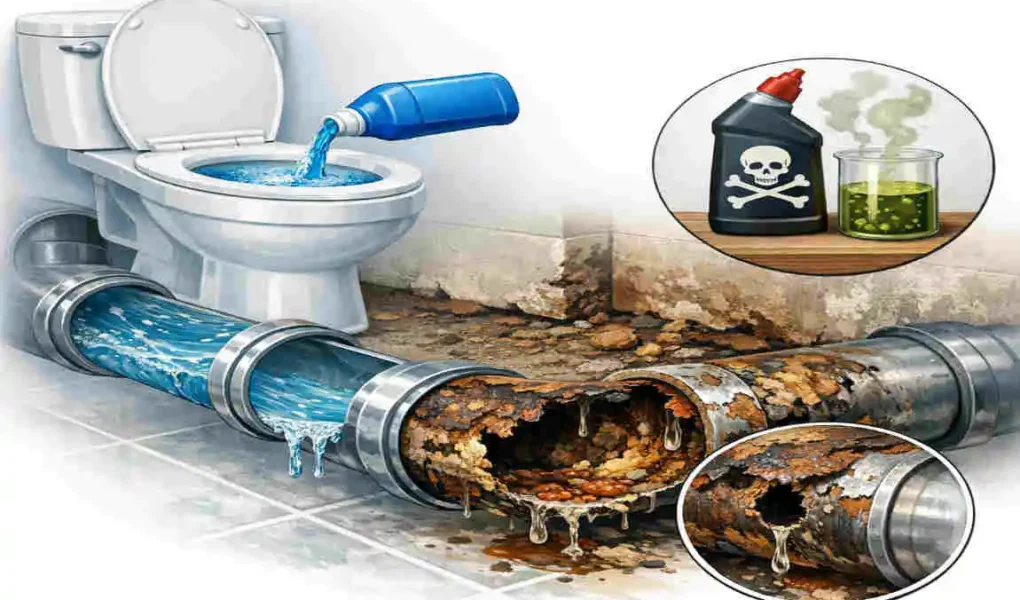
Toilet cleaner isn’t inherently bad for pipes. In most homes, it is safe when used properly and in the right amount. The real problem usually starts when people use too much cleaner, leave it in the toilet for too long, or mix different products.
If you have ever wondered if toilet cleaner is bad for pipes, the answer depends on the type of cleaner, the material of your pipes, and how often you use it. Some cleaners are gentle. Others are much harsher and may slowly wear down older plumbing.
Is Toilet Cleaner Bad for Pipes?
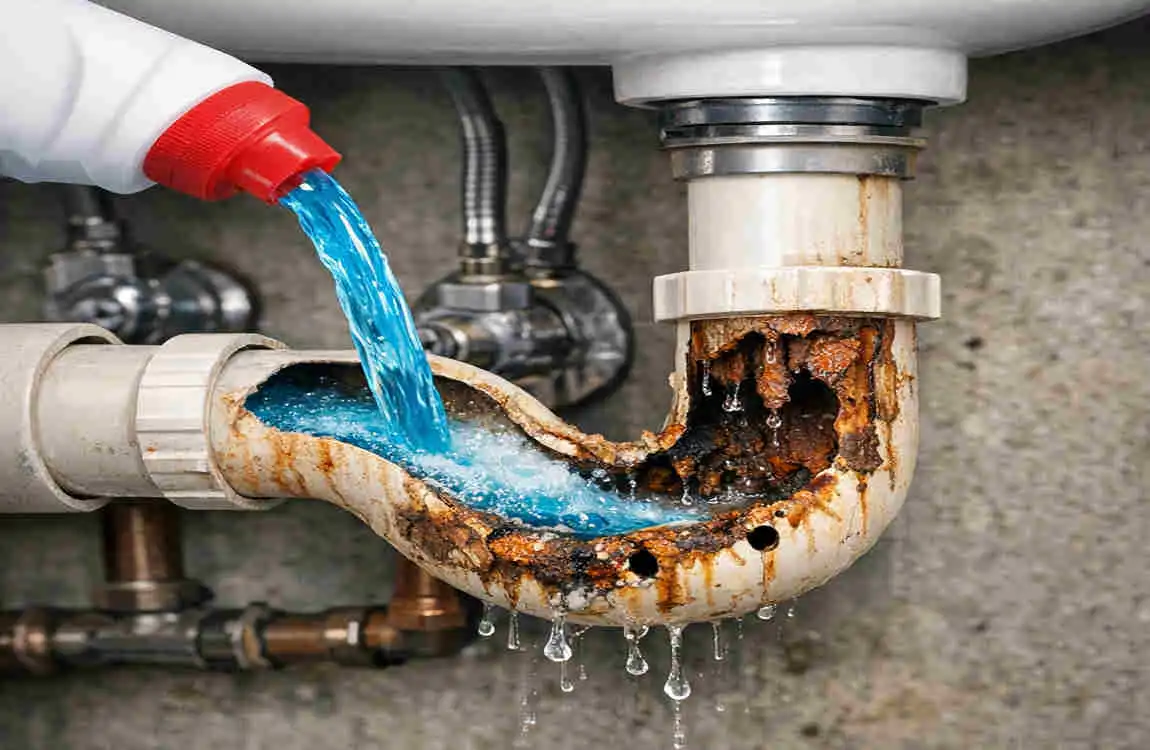
The Short Answer
Most household toilet cleaners are safe when used as directed. They are made to clean toilet bowls, break down stains, and kill germs without harming normal plumbing right away.
But if you use strong chemical cleaners too often, they can slowly damage older pipes, seals, and even septic systems. So the cleaner itself is not always the problem. Misuse is usually the issue.
Why This Question Matters
This question matters because plumbing repairs can be expensive. A cleaner that seems harmless today may cause problems later if it is used incorrectly.
It also matters for corrosion, pipe life, and septic health. If your home has older pipes or a septic tank, you need to be a little more careful with the products you choose.
How Toilet Cleaners Work
Acid-Based Toilet Cleaners
Acid-based cleaners are strong. They are often used to remove hard water stains, rust marks, and mineral buildup.
These products work very well, but they can be rough on plumbing if you use them too often. They may also be a bad choice for older metal pipes if left sitting for long periods.
Bleach-Based Cleaners
Bleach-based cleaners help kill bacteria and make toilets look bright and clean. Many homeowners like them because they are easy to use.
Used in moderation, bleach is usually fine. But too much bleach over time may harm septic bacteria and may also contribute to wear in older plumbing systems.
Enzyme-Based Cleaners
Enzyme cleaners are a gentler choice. They use natural cleaning action to break down waste and grime.
These are often the best choice for septic systems and for homeowners who want a less harsh option. They are slower than strong chemical cleaners but easier on pipes.
Can Toilet Cleaner Damage Different Types of Pipes?
PVC Pipes
PVC pipes are common in many homes. They are usually resistant to household toilet cleaners.
That said, even PVC should not be exposed to very strong acid for long periods. If you use a cleaner properly and flush it down the drain after cleaning, PVC is usually not a concern.
Copper Pipes
Copper is strong, but it can still be affected by harsh chemicals over time.
Repeated use of strong cleaners may increase corrosion. You may not see damage right away, but long-term exposure is not ideal.
Cast Iron Pipes
Older homes may have cast-iron pipes, which can be more susceptible to chemical damage.
Acidic cleaners can speed up deterioration in cast iron, especially if the pipes are already old or weakened. If your home has older plumbing, be extra careful.
ABS Plastic Pipes
ABS pipes are also common and are usually fine with most normal cleaners.
Still, follow the product instructions. Just because a cleaner is safe for one type of plastic does not mean you should leave it in the system longer than needed.
Is Toilet Cleaner Safe for Septic Systems?
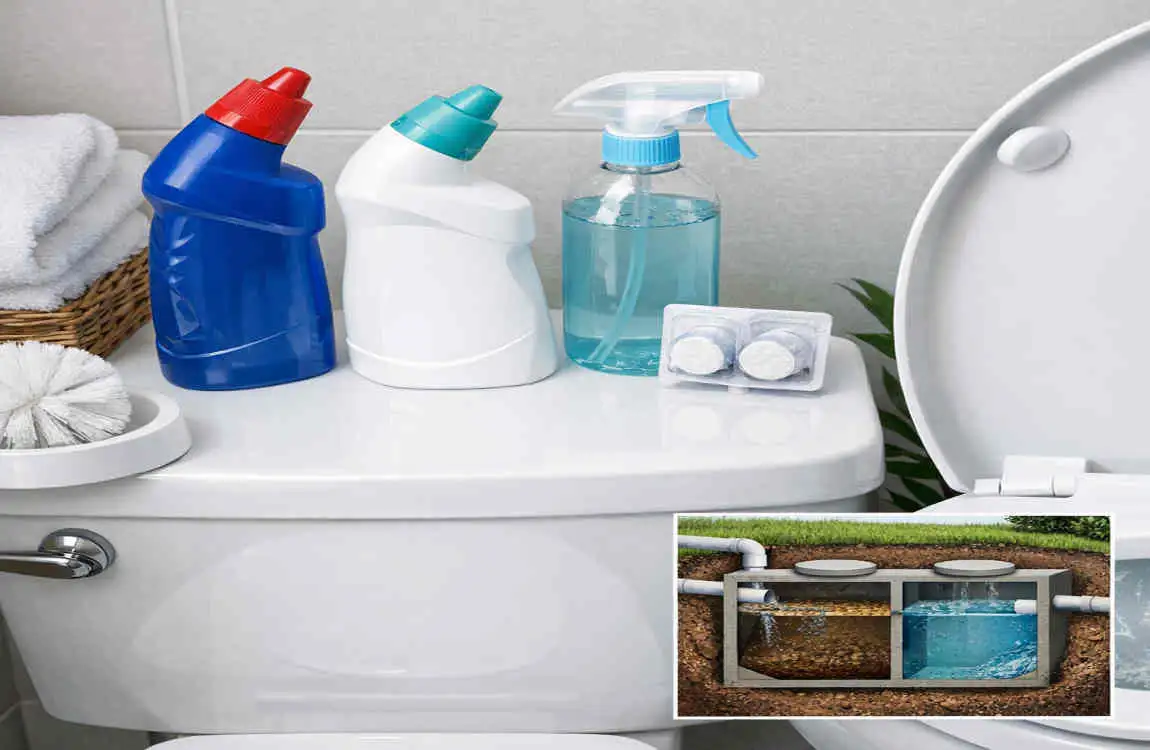
Septic-Friendly Products
If your home uses a septic tank, look for products labeled septic safe. These are designed to clean without harming the helpful bacteria in the tank.
That bacteria is important. It helps break down waste naturally.
Chemicals That Harm Beneficial Bacteria
Some products can damage the bacteria your septic system needs to work well.
These include:
- Excess bleach
- Strong disinfectants
- Heavy acid cleaners
A little may not cause instant trouble, but repeated use can upset the balance inside the system.
Best Practices
To protect your septic system:
- Use the recommended amount
- Avoid over-cleaning with harsh products
- Never mix cleaners
- Choose septic-safe products when possible
These simple habits can help your plumbing last longer.
Signs Toilet Cleaner May Be Causing Plumbing Problems
Frequent Leaks
If you start seeing leaks around joints, seals, or nearby fixtures, it could be a sign that chemicals are wearing down parts over time.
Corrosion Around Fixtures
Look for rust, green stains, or worn areas around pipes and fittings. These signs can point to chemical damage.
Slow Drainage
If water starts draining slowly even though the toilet is clean, there may be buildup or damage deeper in the system.
Strange Odors
Strong chemical smells or sewer odors can point to a problem. Sometimes the cleaner is reacting badly with old plumbing or trapped waste.
Pipe Discoloration
Discolored pipes or stained fittings may mean the surface is being affected by harsh products.
Common Mistakes That Can Damage Pipes
Using Too Much Cleaner
More cleaner does not mean better cleaning. It only increases the chance of damage.
Mixing Bleach and Acid
This is one of the biggest mistakes. Never mix toilet cleaners. Bleach and acid can create dangerous gas.
Leaving Cleaner Overnight
Some people leave cleaner in the bowl for hours thinking it will work better. That can be risky, especially with older plumbing.
Using Industrial Cleaners at Home
Industrial products are much stronger than normal household cleaners. They are not made for everyday home toilets.
Ignoring Manufacturer Instructions
The instructions are there for a reason. They tell you how long to use the product and how much is safe to use.
Safe Alternatives to Harsh Toilet Cleaners
Baking Soda and Vinegar
This is a popular home cleaning method. It can help with mild buildup and odor.
It is gentle and easy to use, though it may not remove very tough stains as quickly as strong chemical cleaners.
Citric Acid
Citric acid is a milder option that can help with mineral deposits and stains. It is often a better choice than harsh acid cleaners.
Mild Soap Solutions
A simple soap-and-water mix is good for routine cleaning. It will not remove heavy buildup, but it is safe and easy to use.
Enzyme Cleaners
Enzyme cleaners are one of the safest choices for regular use. They are especially useful for people with septic systems.
Eco-Friendly Commercial Products
Some commercial cleaners are made to be safer for pipes and septic systems. These are worth looking at if you want a balance between cleaning power and safety.
Tips to Keep Your Toilet Clean Without Damaging Pipes
To keep your toilet fresh and protect your plumbing, try these simple habits:
- Clean weekly
- Use only the amount needed
- Flush thoroughly after cleaning
- Avoid unnecessary chemical use
- Keep the bathroom ventilated
A little regular cleaning is better than using a very strong cleaner once in a while.
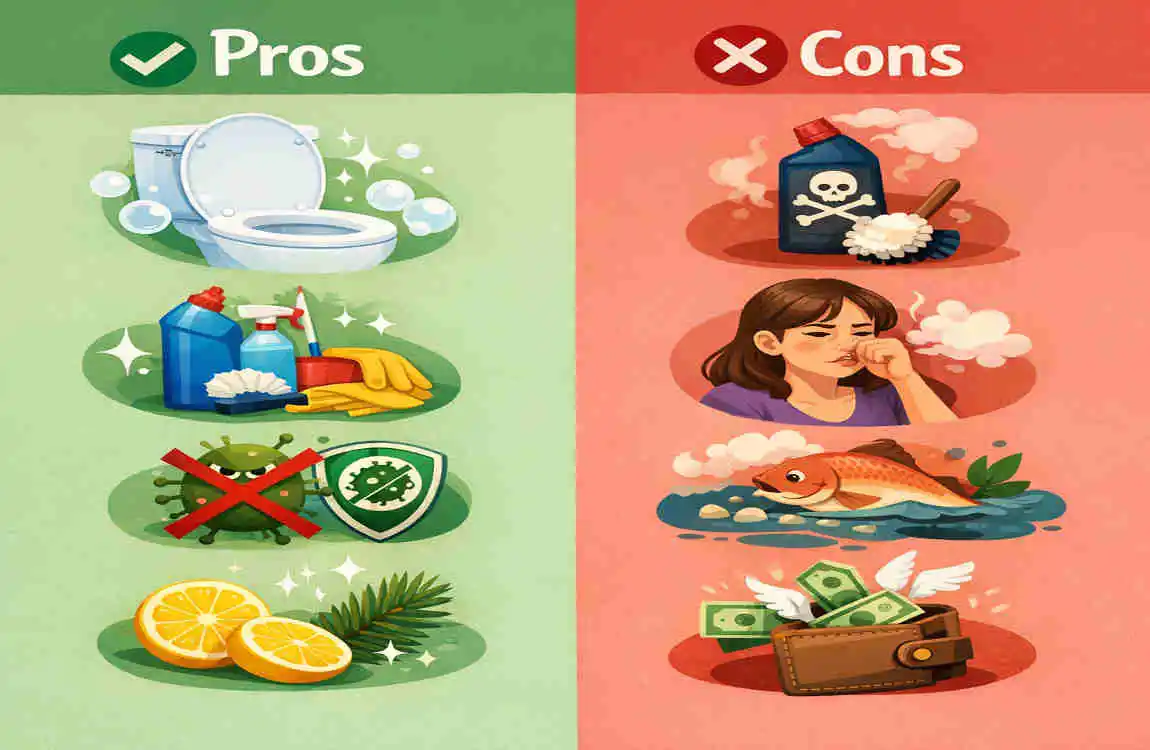
Pros and Cons of Toilet Cleaners
ProsCons
Removes stains Excess use may affect older pipes
Eliminates bacteria Some chemicals may corrode metal plumbing
Controls odors Can harm septic bacteria
Easy to use Mixing chemicals is dangerous
Improves hygiene Harsh products may shorten pipe lifespan
This table shows the main trade-off: toilet cleaners are useful, but only when used wisely.
When Should You Call a Plumber?
You should call a plumber if you notice:
- Persistent clogs
- Recurring leaks
- Rust-colored water
- Slow drains despite cleaning
- Strong sewer odors
If the issue keeps coming back, it may not be about the cleaner anymore. It may be a plumbing problem that needs expert help.
Frequently Asked Questions
Is toilet cleaner bad for pipes?
Most household toilet cleaners are safe when used as directed. Problems usually happen when harsh cleaners are overused, especially in older pipes.
Can bleach damage plumbing?
Occasional use is usually fine. But frequent heavy use may cause corrosion and may also harm septic bacteria.
Which toilet cleaner is safest for septic systems?
Enzyme-based and septic-safe toilet cleaners are usually the best choices.
Can acidic toilet cleaners damage PVC pipes?
PVC is generally resistant to household cleaners, but very strong acids should not be left in contact with pipes for long periods.
Is it safe to leave toilet cleaner in the bowl overnight?
Only if the product instructions allow it; leaving harsh cleaners too long may increase the risk of damage.
What is the safest natural toilet cleaner?
A mix of baking soda and vinegar or an enzyme-based cleaner is usually safe for most systems.
| Topic | Information |
|---|---|
| Short Answer | Most toilet cleaners are safe for pipes when used as directed. |
| PVC Pipes | Generally safe with standard toilet bowl cleaners. |
| Metal Pipes | Frequent use of harsh acidic cleaners may contribute to corrosion over time. |
| Septic Systems | Some strong chemical cleaners can disrupt beneficial bacteria if overused. |
| Main Risk | Excessive use or mixing cleaners (especially with bleach or ammonia) can damage plumbing and create hazardous fumes. |
| Safe Alternatives | Enzyme-based cleaners, mild dish soap, baking soda, and vinegar (for light cleaning only, not mixed with bleach). |
| Best Practices | Follow label directions, avoid overusing chemicals, flush thoroughly, and never mix different cleaning products. |