Ticks can end up indoors more easily than many homeowners expect. A single tick in the house does not always mean you have a full infestation, but it does mean you should pay attention. These pests often come inside on pets, clothing, shoes, backpacks, or outdoor gear. In some cases, wildlife near the home can also help bring ticks closer to your living space.
| Topic | Key Information |
|---|---|
| Tick Survival | Ticks may survive indoors for varying periods depending on temperature, humidity, and access to a host. |
| Common Entry Routes | Pets, clothing, shoes, outdoor gear, and wildlife can bring ticks into the home. |
| Where Ticks Hide | Check carpets, pet bedding, furniture, cracks, and other sheltered areas. |
| Cleaning Steps | Vacuum floors and furniture, wash bedding, and clean areas where pets spend time. |
| Pet Protection | Check pets regularly, especially after outdoor activities, and use veterinarian-recommended tick prevention. |
| Prevention | Keep grass trimmed, remove leaf litter, reduce brush, and limit wildlife access around the property. |
| Professional Help | Contact a pest-control professional if ticks continue appearing or seem widespread. |
If you find a tick indoors, first stay calm and look at the bigger picture. Try to identify where it may have come from and whether pets, people, or outdoor areas could be the source. A common question is how long can ticks live in a house?
How Long Can Ticks Live in a House?

Ticks can survive indoors for different lengths of time depending on the conditions in your clean home. In general, they last longer in warm, humid, quiet places. With access to moisture and a host, they can survive much longer than many people expect.
Some ticks may survive only a short time indoors if the air is dry and no host is nearby. Others may hide in soft, dark, protected places and wait. That is why carpets, pet bedding, furniture seams, and cracks can become hiding spots.
Ticks do not automatically form a population inside a clean home. For that to happen, the right conditions must exist for feeding and reproduction. Different species also behave differently, so the tick type matters.
Indoor Condition Effect on Tick Survival
Warm temperature Helps ticks stay active longer
High humidity Prevents drying out
Access to a host Supports feeding and survival
Dry air Shortens survival time
Hidden shelter Gives ticks a place to wait
If you find a tick inside, treat it as a warning sign rather than a reason to panic. It usually means you need an inspection, not that your clean home is overrun.
How Ticks Get Into Your House

Ticks usually enter homes by hitching a ride. Pets are one of the most common ways. Dogs and cats can carry ticks indoors after walks, yard time, or contact with brushy areas. Even indoor pets can pick them up if they spend time outside.
People also bring ticks inside on clothing, shoes, blankets, backpacks, and outdoor tools. If you have been hiking, gardening, or spending time in tall grass, a tick can easily move from your body or gear into the house.
Wildlife can also play a role. Rodents, deer, and birds may bring ticks close to your property, especially if your yard has tall grass, leaf piles, brush, or overgrown edges. These areas give ticks more places to wait for a host.
Quick checklist after finding a tick
- Check pets, especially around ears, neck, belly, and between toes
- Inspect clothing, shoes, and bags from outdoors
- Look at pet bedding, rugs, furniture seams, and cracks
- Review yard areas with thick grass or piles of leaves
- Watch for repeated sightings in the same rooms
If you keep spotting ticks, the source may be outside the house or on a pet rather than deep inside the home.
How To Remove and Manage Ticks Inside Your Home

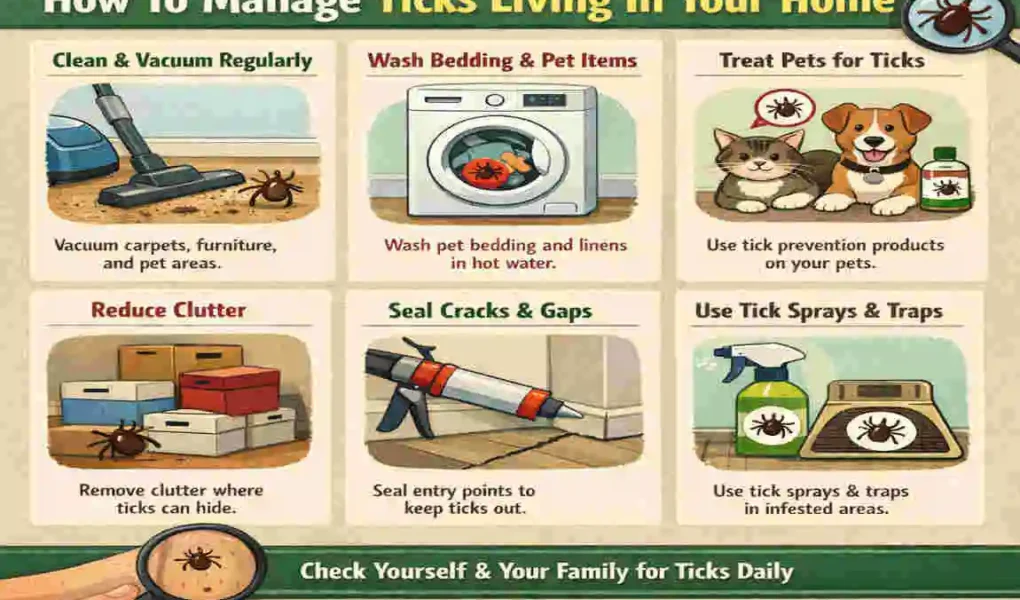
When you discover a tick, act quickly but carefully. If the tick is on skin, remove it with fine-tipped tweezers. Grip it close to the skin and pull upward with steady pressure. Do not twist, crush, or burn it.
If you find a tick on a pet, remove it carefully if you can do so safely. If the tick is attached deeply or you are unsure, contact a veterinarian. Pets may need extra care if they have been exposed in a tick-heavy area.
After removal, clean home the area well. Vacuum carpets, floors, furniture, baseboards, and pet sleeping spots. Wash pet bedding often and launder clothing that may have been exposed outdoors. This helps reduce the chance that hidden ticks remain in the home.
Do not rely on crushing one tick and assuming the problem is solved. That only handles the one you saw. If ticks keep showing up, the source may still be active.
If the issue continues, household pest-control treatment may be worth considering. Always follow label directions for any pesticide product, and consider professional help if the problem persists or is widespread.
How To Prevent Ticks From Coming Back
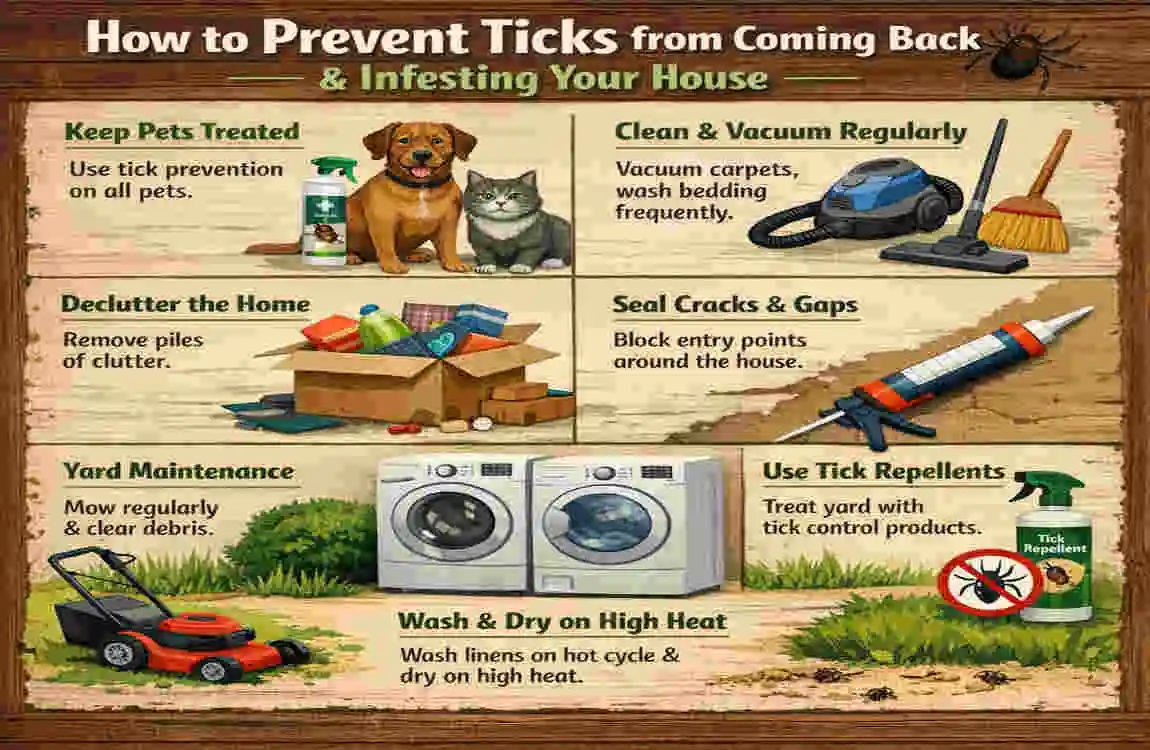
The best way to manage ticks is to reduce the chance they enter in the first place. Start outside the home. Keep grass trimmed, remove leaf piles, and clear away brush or unnecessary yard debris. These changes make your property less inviting to ticks and the animals that carry them.
Also inspect pets after outdoor time. A quick check after walks, hiking, gardening, or yard play can stop a tick from getting deeper into the clean home. Wash or dry outdoor clothing properly after exposure, especially if you have been in wooded or grassy areas.
Inside the home, keep pet sleeping areas clean and vacuum often. Sealing cracks and keeping entry points in good repair can also reduce pest movement.
Simple tick-prevention checklist
- Trim grass and clear yard clutter
- Remove leaves and dense brush
- Check pets after outdoor activity
- Wash outdoor clothing and gear
- Vacuum regularly, especially near pet areas
- Seal small cracks and gaps indoors
- Keep pet bedding clean and dry
Small habits make a big difference in tick prevention.
When To Call a Professional and Frequently Asked Questions
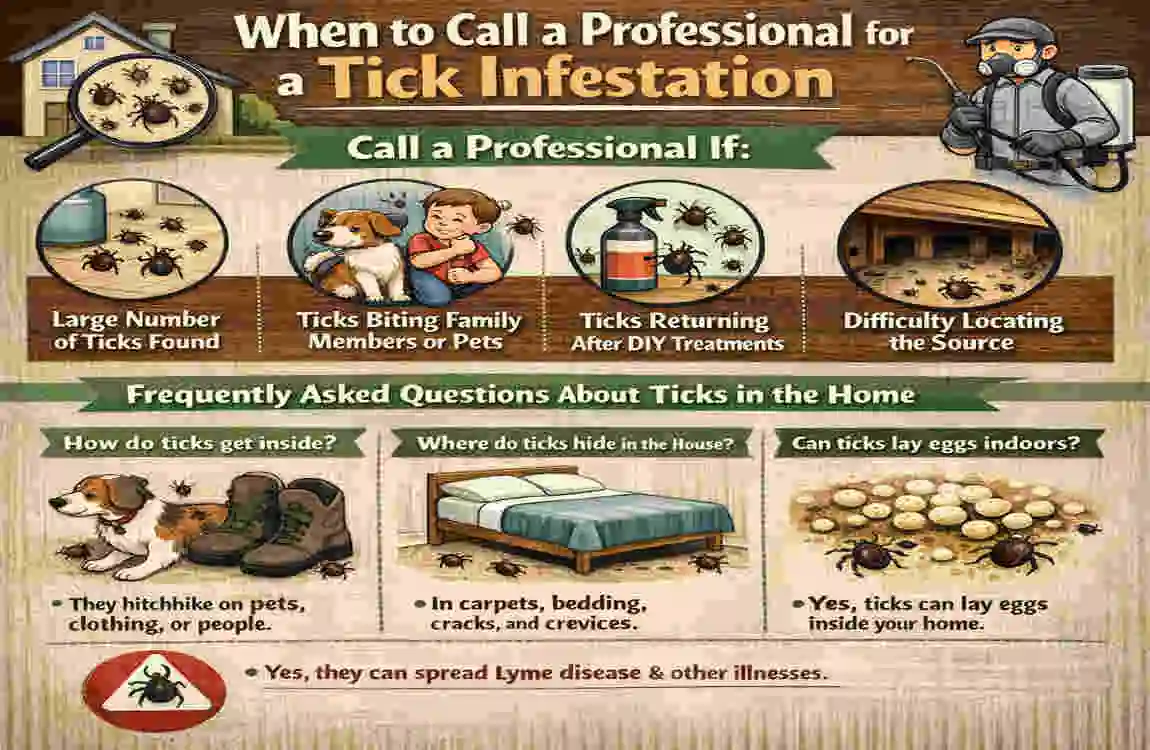
If you keep finding ticks in multiple rooms, or if you suspect the source is coming from pets or wildlife around the property, it may be time to call a professional. This is especially important if someone in the clean home is at higher risk or if the exposure seems heavy.
A pest-control professional can help identify the likely source and recommend a treatment plan. If possible, keep a sample of the tick so it can be identified. Knowing the species can help explain where it came from and what to do next.
FAQs
How long can ticks live in a house?
It depends on temperature, humidity, and access to a host. Some may survive only a short time indoors, while others can last much longer in suitable conditions.
Can ticks survive indoors without a host?
Yes, some ticks can survive without a host for a period, especially if the indoor space is warm and humid.
Can ticks reproduce inside a house?
In rare cases, they can reproduce, but most homes don’t provide the right conditions for ticks to build a lasting indoor population.
Where do ticks hide indoors?
They often hide in carpets, furniture seams, pet bedding, baseboards, cracks, and other dark, sheltered places.
Can ticks live in carpets and furniture?
Yes, they can hide there for a while, especially if the area is warm and undisturbed.
How do ticks get into the house?
They usually come in on pets, clothing, shoes, bags, gear, or wildlife activity near the property.
Can pets bring ticks inside?
Yes, pets are one of the most common ways ticks enter a home.
Does vacuuming kill ticks?
Vacuuming helps remove ticks, but it should be combined with cleaning, washing fabrics, and checking the source.
Should I wash bedding after finding a tick?
Yes, especially pet bedding and any fabric that may have been exposed outdoors.
When should I call pest control for ticks?
Call a professional if you keep seeing ticks, cannot find the source, or suspect a larger problem around the home or yard.