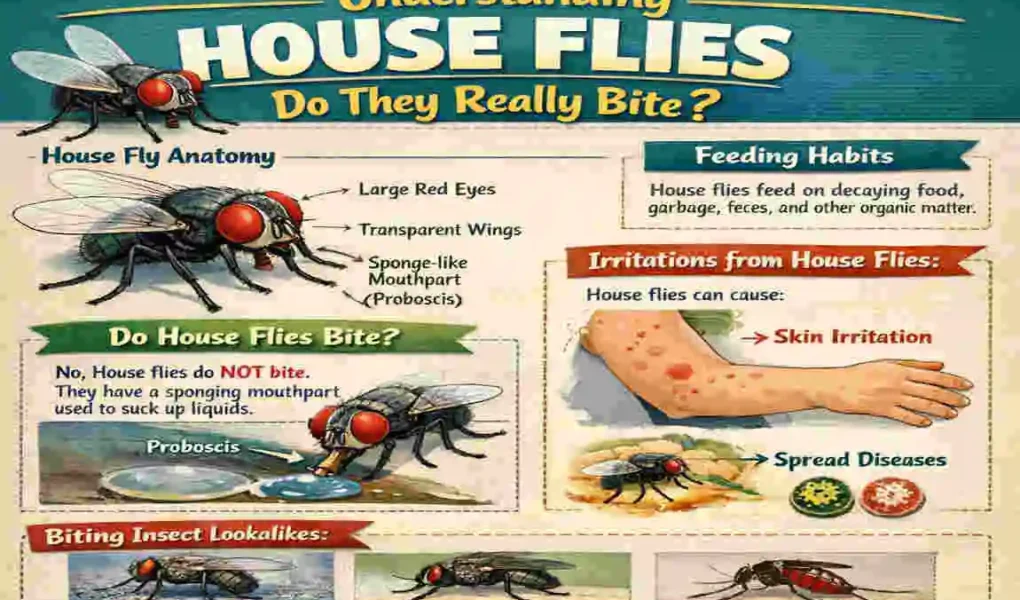
People often ask “do house flies bite” because these flies can be annoying when they land on skin, food, or around your face. Their constant buzzing can make them feel more aggressive than they really are. In most cases, the real issue isn’t a bite, but irritation from a fly’s behavior and the germs it may carry.
What a common house fly is
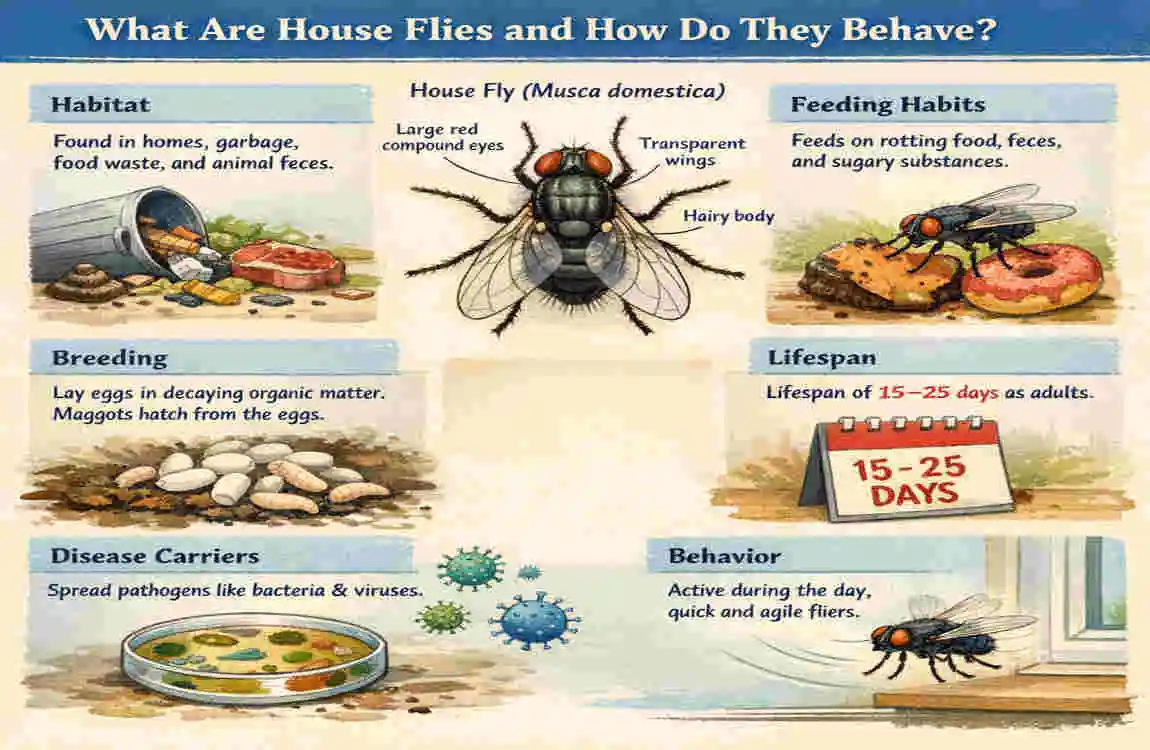
A clean house fly is one of the most common flies found indoors and around homes. It is small, gray, fast-moving, and very good at finding food. It is not built to hunt or attack people.
Where house flies commonly live and breed
House flies often live near trash, pet waste, drains, rotting food, and other damp organic matter. These places give them the moisture and food they need to survive and reproduce.
How house flies find food
They use their strong sense of smell to locate food from far away. That is why they quickly show up around kitchens, garbage bins, spills, and outdoor eating areas.
Why they frequently land on people, food, and household surfaces
House flies land where they think food or moisture may be present. Sweat, skin oils, and food crumbs can all attract them. That is why they may keep landing on your arms, face, or hands.
How house flies differ from other common flies
Not all clean flies are the same. Some flies bite, while others do not. House flies mainly feed on liquids and decaying material, while certain other flies use mouthparts that can pierce skin.
Why their behavior can sometimes feel like biting
A house fly may crawl on your skin, tickle it with tiny feet, or keep returning to the same spot. That can feel like a bite even when no bite happens at all.
Do House Flies Bite? The Facts Explained
Clear answer to do house flies bite
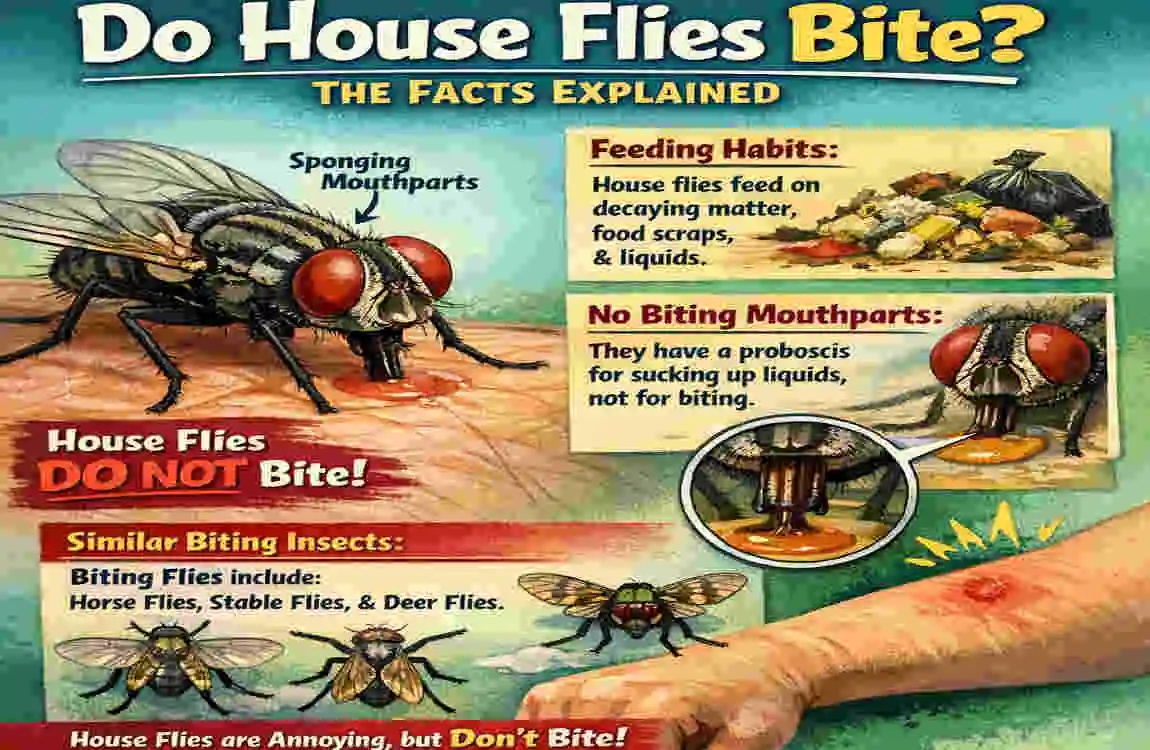
The simple answer is no, ordinary house flies do not bite people. Their mouthparts are not made for biting skin.
How a house fly’s mouthparts work
House flies have sponge-like mouthparts. Instead of biting or clean flies, they use these mouthparts to soak up liquid food.
Why house flies cannot bite or chew human skin
Their mouths are soft and made for sipping. They lack the sharp tools needed to pierce skin the way mosquitoes, horse flies, or stable flies can.
How flies feed by consuming liquids and dissolving food
When a clean flies fly finds food, it may first release saliva to soften it. Then it sucks up the liquid part. This is why you often see them on spilled drinks, fruit, and other soft foods.
Why a fly landing on your skin may cause an unusual sensation
A fly walking on your skin can feel strange, especially if it keeps moving around. Its feet may feel light and irritating, which can make you think you have been bitten.
Difference between biting flies and non-biting house flies
Biting flies feed on blood. House flies do not. That is the key difference, and it helps explain why house flies are annoying but usually not bite-causing insects.
Why Does a House Fly Land on or Irritate Your Skin?
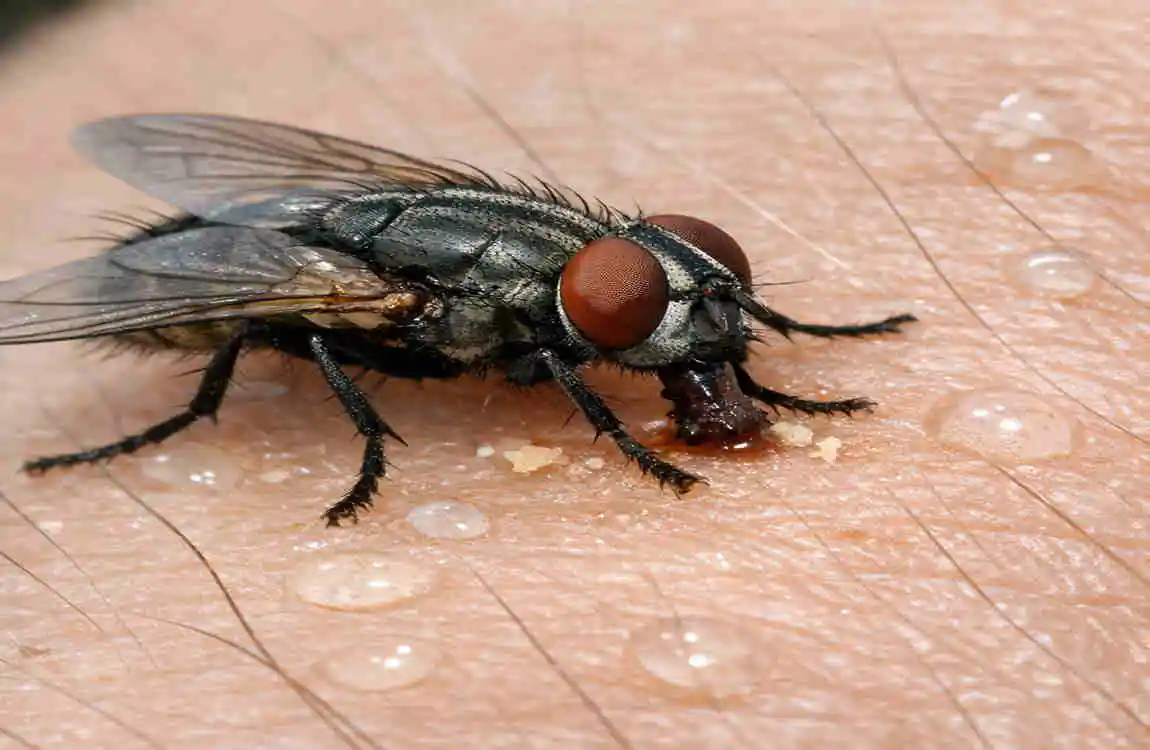
Attraction to sweat, body odors, moisture, and food particles
House flies may land on your skin because of sweat, salt, body odor, or tiny food particles. Even a clean flies of something sticky or sweet can attract them.
Why flies repeatedly return after being swatted away
If a fly keeps coming back, it usually means it still senses something interesting. It may be reacting to heat, moisture, or odor rather than trying to bite.
Whether house flies can cause itching or skin irritation
House flies usually do not cause true bite marks. Still, their feet may carry dirt and germs, and their movement can irritate your skin.
How contamination can occur when flies land on the body
A fly may pick up germs from garbage, waste, or rotting food and then carry them to your skin, food, or surfaces. That is why their presence is more of a cleanliness concern than a biting concern.
When a suspected fly bite may actually come from another insect
If you notice red marks, swelling, or repeated bites, another insect may be responsible clean flies. Mosquitoes, biting midges, fleas, and stable flies are more likely causes.
House Flies vs. Biting Flies: How to Tell the Difference
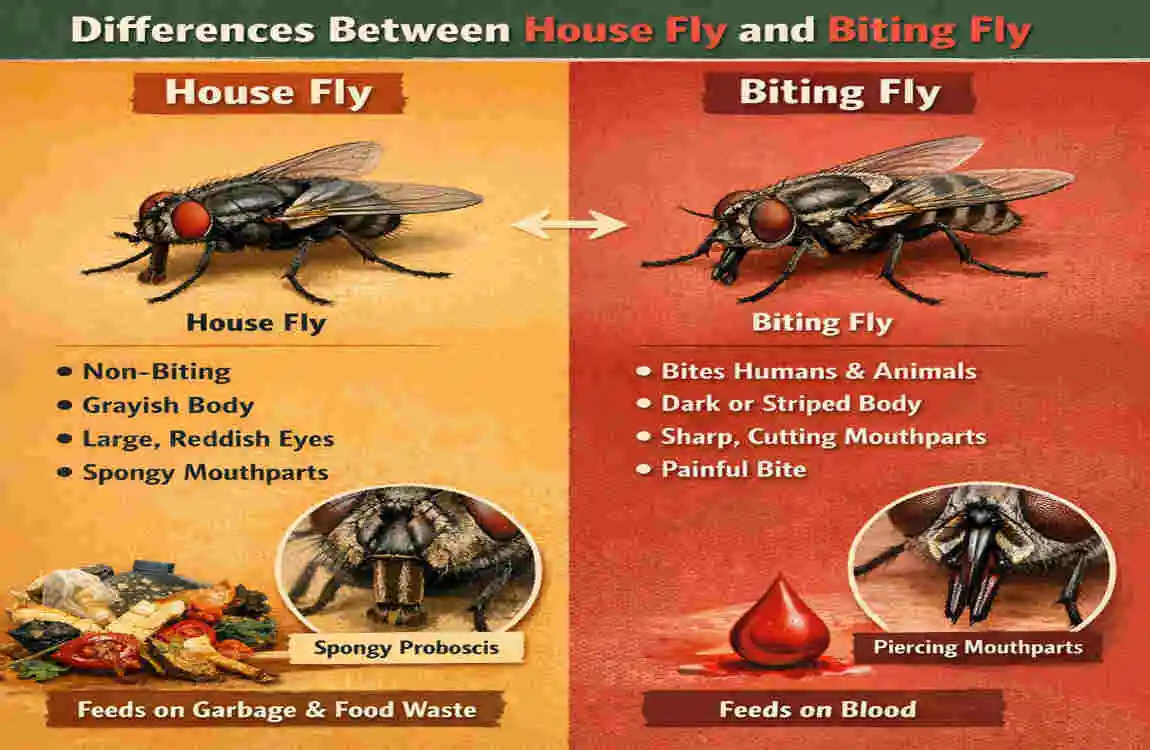
House flies compared with stable flies, horse flies, deer flies, and mosquitoes
House flies are often confused with insects that truly bite. Stable flies and horse flies are known for painful bites, while mosquitoes feed on blood by piercing the skin.
Differences in appearance and feeding behavior
Insect TypeBites People?Main Food SourceCommon Signs
House fly No Liquids, waste, decaying matter Buzzing, landing on food or skin
Stable fly Yes Blood Painful bite on legs or arms
Horse fly Yes Blood Large, painful bite
Mosquito Yes Blood Itchy raised bump
Which fly species can actually bite humans
The flies most likely to bite people are stable flies, horse flies, and deer flies. These insects have mouthparts clean flies to pierce skin.
Typical symptoms associated with genuine biting flies
A real bite may cause redness, swelling, itching, or pain. Some bites can be sharp or burning right away.
How to identify the insect before treating a suspected bite
Try to notice the insect’s size, shape, and behavior. If it lands and crawls around without causing immediate pain, it may be a house fly instead of a biting fly.
Why identifying the pest matters for prevention
Knowing what kind of fly you are dealing with helps you choose the right control method. A house fly problem needs sanitation and cleanup, while biting flies may need different outdoor control steps.
Are House Flies Dangerous to People?
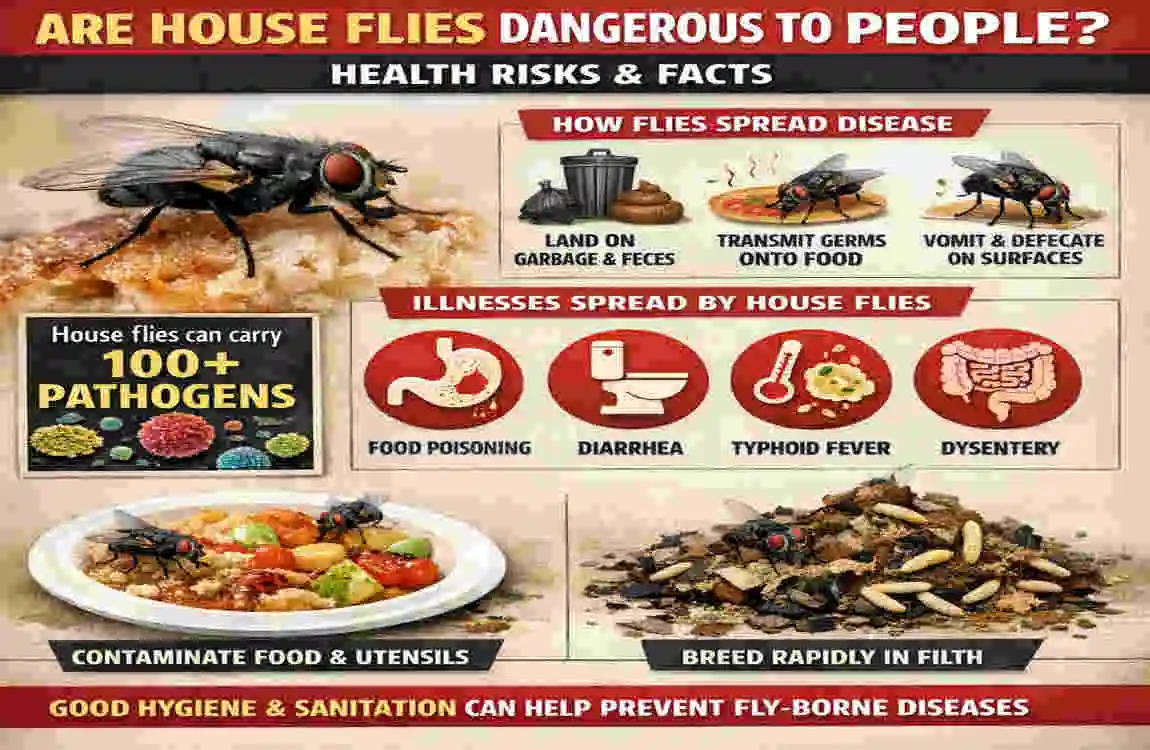
Can house flies spread germs and bacteria?
Yes, house flies can spread germs and bacteria. They may pick up contamination from dirty surfaces and carry it to food, counters, or other household areas.
How flies can contaminate food and household surfaces
When a fly lands on food, it may leave behind tiny traces of contamination. Even brief contact can make food unsafe, especially if it’s uncovered.
Common health concerns associated with poor fly control
A clean flies with many flies may have nearby sanitation problems. Dirty drains, uncovered trash, or pet waste often attract them and increase contamination risk.
Why flies are considered sanitation pests
House flies are called sanitation pests because they thrive around filth and waste. Their presence often points to a cleanup issue rather than a bite issue.
Situations requiring extra attention to fly infestations
If flies keep showing up indoors, especially near kitchens or trash areas, pay closer attention. A small fly problem can grow quickly if you don’t remove the source.
Safe household hygiene practices to reduce contamination
- Keep food covered
- Clean spills right away
- Empty trash often
- Wash dishes quickly
- Clean pet areas regularly
Install or repair window and door screens.
Screens are a simple way to keep flies out. Make sure they fit tightly and have no holes.
Reduce moisture and eliminate standing organic waste.
Dry, clean spaces are less attractive to flies. Remove standing water, rotten food, and other organic waste whenever possible.
Safe ways to remove individual flies
Use a fly swatter, sticky trap, or vacuum to remove a fly. Quick action helps prevent it from landing on food or surfaces.
When a persistent infestation may require professional pest control
If flies keep coming back even after cleaning, a hidden breeding source may be present. In that case, professional help may be the best next step.
FAQ Section
Do house flies bite humans?
No, ordinary house flies do not bite humans. They may land on your skin, but they do not have biting mouthparts.
Can house flies bite babies or pets?
House flies do not bite babies or pets. If you see bite marks, another insect is likely the cause.
Why do house flies land on me?
They may be attracted to sweat, skin oils, food residue, or moisture on your body.
Can house flies cause itching?
Not usually through biting. But they can still irritate you by crawling on the skin or spreading contamination.
What flies actually bite humans?
Stable flies, horse flies, deer flies, and mosquitoes are common biting insects.
Are house flies dangerous in the home?
They are not dangerous in the same way as biting pests, but they can spread germs and contaminate food.
How can I get rid of house flies quickly?
Keep food covered, clean spills, empty trash, and remove breeding spots. For stubborn infestations, pest control may help.