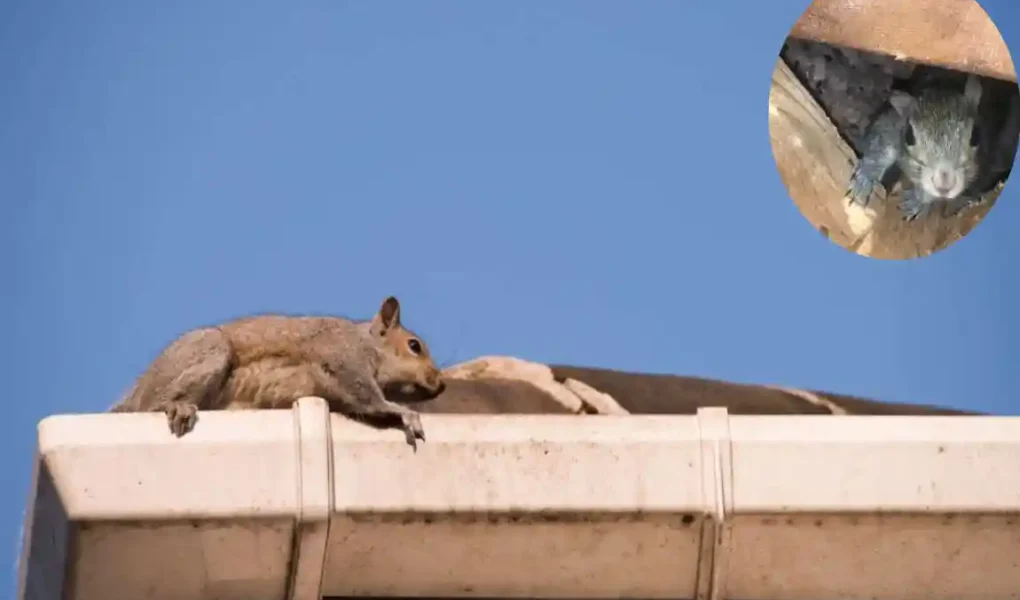
One day your home feels calm and normal. Then suddenly, you hear scratching above the ceiling or light running sounds in the attic. It can feel confusing at first, especially when you cannot see anything obvious.
Squirrels are small, but they are surprisingly determined. They don’t need a big opening to enter. In fact, even a gap the size of a small coin can be enough for them to squeeze through. Once inside, they quickly move into warm, quiet spaces such as attics, wall cavities, or roof corners.
| Prevention Method | How It Works | Tips |
|---|---|---|
| Seal Entry Points | Blocks access to roofs, walls, and attics | Use steel mesh, caulk, or metal flashing |
| Trim Tree Branches | Reduces easy roof access | Keep branches at least 6–8 feet away from house |
| Install Chimney Caps | Prevents squirrels from entering chimneys | Use a strong metal cap with mesh cover |
| Secure Food Sources | Removes attraction like birdseed or garbage | Store food in sealed containers |
| Use Squirrel Repellents | Discourages squirrels with smell or taste | Apply natural repellents like peppermint oil |
Common Entry Points (How Squirrels Get Inside Your Home)
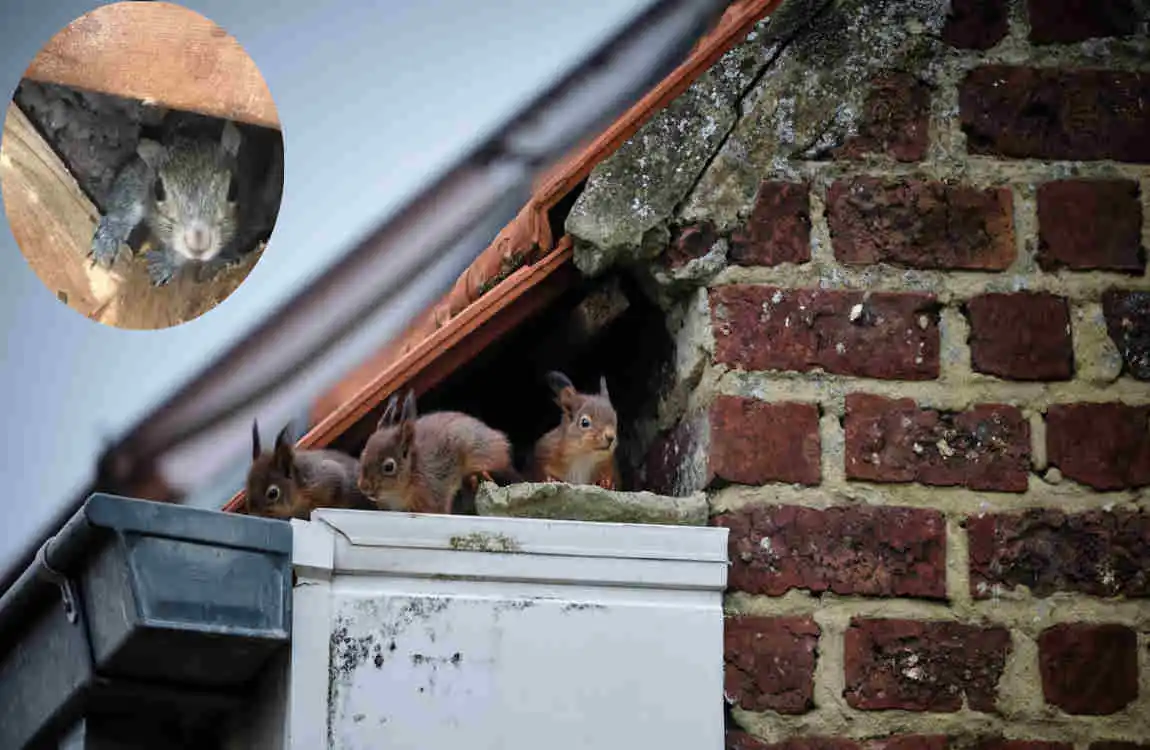
To understand how do squirrels get in the house, you need to think like a squirrel. They are natural climbers, jumpers, and chewers. If they see a weak spot, they will test it—and, if possible, enter.
Below are the most common squirrel entry points found in clean homes.
Roof Vents and Gable Vents
Roof vents are one of the easiest and most common entry points.
Squirrels often chew plastic or weak mesh coverings. Once the material breaks, they push through and enter the attic directly.
They prefer these areas because they are high, quiet, and usually unnoticed by homeowners.
What makes them risky:
- Plastic covers weaken over time
- Metal mesh may bend or loosen
- Vents are often left uninspected
Warning signs:
- Scratching sounds above ceilings
- Small debris near vent openings
- Visible chew marks
This is one of the clearest answers to how do squirrels get in the house.
Soffits and Roofline Gaps
Soffits are hidden areas under the roof edge. Most people rarely inspect them.
Over time, moisture and weather can soften the wood. Once it weakens, squirrels can easily chew through it and enter your attic space.
This is one of the most common squirrel entry points found in older homes.
Why it happens:
- Aging wood becomes soft
- Small cracks expand over time
- Poor maintenance allows easy access
This area is critical when you try to seal squirrel gaps and build a squirrel proof home.
Chimneys and Uncapped Openings
An open chimney is like an unlocked door.
Squirrels are excellent climbers. They can scale walls, reach rooftops, and drop directly into chimney openings. If there is no protective cap, they can easily fall inside.
Plumbing vents without covers also create hidden access points.
Common risks:
- No chimney cap installed
- Broken metal coverings
- Open vertical pipe spaces
This is a simple but serious explanation of how do squirrels get in the house.
Tree Branches and Overhanging Limbs
Trees are one of the biggest reasons squirrels reach homes.
They use branches as bridges. Once they are close enough to the roof, they jump onto it and explore for weak spots.
This makes tree management a key step in prevent squirrels attic entry.
Important rule:
Keep tree branches at least 8–10 feet away from your roof.
Without this distance, squirrels can easily travel straight onto your clean house.
Attic Fans and Roof Turbines
Attic fans and roof turbines are often overlooked.
If the protective mesh is loose or damaged, squirrels can squeeze through small gaps. Once inside, they move quickly into the attic.
Even a slightly bent cover can become an entry point over time.
Quick Reference Table: Squirrel Entry Points
Entry PointHow Squirrels Use ItBest Prevention Method
Roof Vents Chew weak mesh or plastic Install metal covers
Soffits Break soft or aging wood Seal with hardware cloth
Chimneys Drop through open tops Add chimney cap
Tree Branches Jump onto roof easily Trim branches 8–10 ft away
Attic Fans Enter through loose screens Reinforce with metal mesh
Signs of Squirrel Intrusion
Before fully understanding how do squirrels get in the house, you should know how to detect them early.
Squirrels are active and noisy, but their signs are often ignored until damage becomes serious.
Scratching or Running Sounds
One of the earliest signs is movement in the attic.
You may hear scratching, rolling, or quick running sounds—especially in the morning or evening.
Nesting Materials and Droppings
Squirrels build nests using soft materials such as:
- Leaves
- Paper
- Fabric or insulation
Droppings may also appear in corners or hidden spaces.
Chewed Wood and Wires
This is one of the most dangerous signs.
Squirrels chew constantly to keep their teeth sharp. This can lead to:
- Damaged wooden beams
- Exposed electrical wires
- Increased fire risk
Dark Grease Marks
Over time, squirrels leave rub marks along walls and entry routes. These show repeated use of the same squirrel entry points.
Strange Smells
Urine and nesting materials can create strong, unpleasant odors in closed areas.
Why this matters
Ignoring these signs squirrels inside your clean home can lead to:
- Expensive repairs
- Health concerns
- Structural damage
Early detection is key to quickly stopping the issue.
Prevention Strategies (How to Stop Squirrels Before They Enter)
Once you understand how do squirrels get in the house, the next step is prevention.
A strong prevention plan helps you build a long-term, squirrel-proof home.
Seal All Gaps Properly
This is the most important step.
Use strong materials that squirrels cannot chew through:
- Metal mesh
- Steel wool or hardware cloth
- Aluminum flashing
Steps:
- Inspect roof and exterior walls
- Locate small openings
- Seal every gap tightly
This step helps reduce almost all squirrel entry points.
Trim Trees and Remove Access Routes
Trees give squirrels direct access to your roof.
Regular trimming is one of the simplest ways to prevent squirrels attic entry.
Do this regularly:
- Cut branches close to the roof
- Remove dead or weak limbs
- Keep food sources away from home
Install Physical Barriers
Barriers are a long-term solution for a squirrel proof home.
Examples include:
- Chimney caps
- Metal vent guards
- Roof edge flashing
These stop squirrels from accessing weak areas directly.
Use Repellents and Deterrents
These are supportive tools, not permanent solutions.
You can try:
- Peppermint-based sprays
- Motion lights
- Sound or vibration devices
They help discourage movement near squirrel entry points.
Prevention Checklist
- Seal all roof gaps
- Install metal barriers
- Trim nearby trees
- Remove outdoor food sources
- Inspect the attic twice yearly
When to Call Professionals
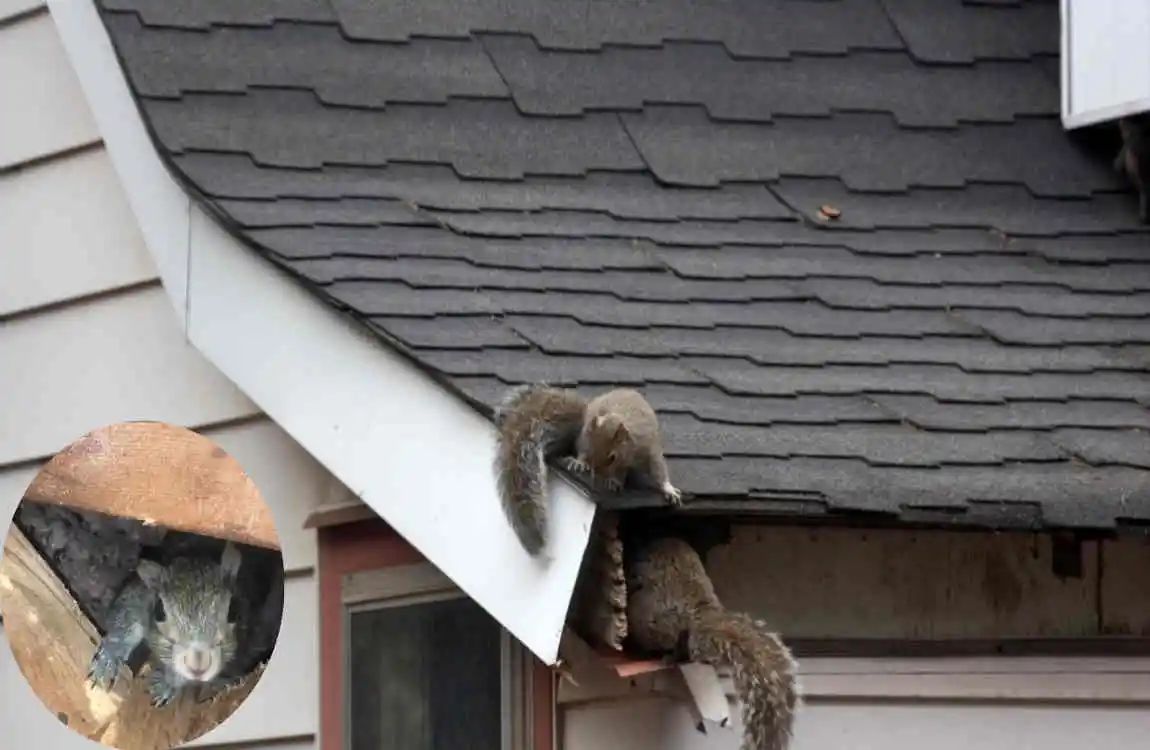
Sometimes the problem becomes too difficult to handle alone.
You should call experts when:
- You hear constant attic movement
- You cannot find all the entry points
- You see strong signs of squirrels inside
- Damage has already spread
Professionals not only remove squirrels safely, but also ensure all squirrel entry points are fully sealed afterward.
This step is essential to prevent squirrels’ attic returns permanently.
FAQs About How Squirrels Get in the House
How do squirrels get in the house so easily?
They can squeeze through very small openings—sometimes just 1.5 inches wide. Their flexible bodies help them enter hidden squirrel entry points, such as vents and roof gaps.
Can squirrels chew through walls?
Yes. They can chew wood, insulation, and even drywall if they need to expand an entry point.
How can I keep squirrels out of the attic?
To prevent squirrel problems in the attic, seal gaps, install metal barriers, and trim trees away from your roof.
Are squirrels dangerous inside a home?
Yes. They can damage wiring, create fire hazards, and spread contamination through nesting areas.
What does it cost to make a home squirrel-proof?
Costs vary, but making a squirrel-proof home can range from simple DIY fixes to more complex professional repairs, depending on the damage.