Have you ever seen a house centipede dart across the floor and thought, “Are house centipedes harmful or clean?” If so, you are not alone. These fast, many-legged insects can look scary, especially when they appear in a home that seems neat.
The good news is that house centipedes are not harmful to people in most cases. Still, they can be upsetting to find, and their presence often means your home has a little too much moisture or a few hidden pests. That is why learning how to keep centipedes out of your home is so important.
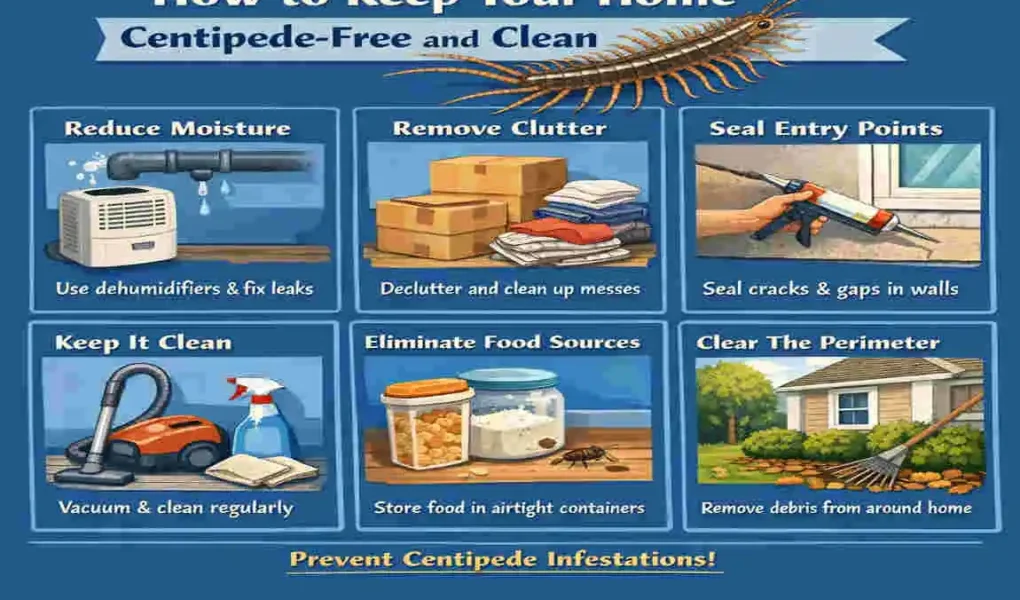
| Tip | How It Helps Keep Centipedes Away |
|---|---|
| Reduce Moisture | Fix leaks and use ventilation to keep bathrooms, kitchens, and basements dry |
| Seal Entry Points | Close cracks, gaps, and openings in walls, floors, and windows |
| Keep Home Clean | Regular cleaning removes insects that centipedes feed on |
| Control Other Insects | Use pest control methods since centipedes are attracted to food sources like ants and flies |
| Declutter Storage Areas | Remove piles of cardboard, clothes, or paper where centipedes can hide |
| Use Dehumidifier | Lowers humidity levels in damp rooms and discourages centipede survival |
What Are House Centipedes?
What They Look Like
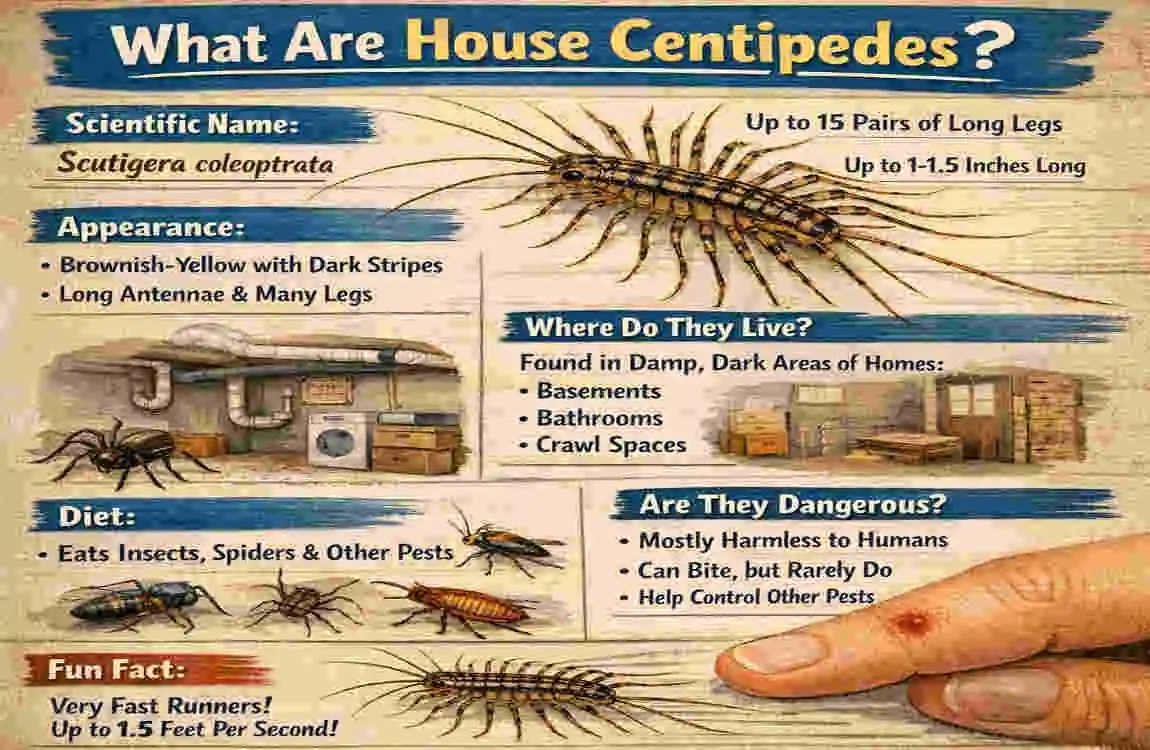
House centipedes are long, thin insects with many legs. They usually have a yellowish or gray body with dark stripes. Their long, delicate legs make them look bigger and faster than they really are.
They often move quickly, which is why people notice them right away. Even one centipede can feel like a big problem when it runs across your bathroom or basement floor.
Where They Hide
You will most often find house centipedes in:
- Basements
- Bathrooms
- Kitchens
- Laundry rooms
- Damp corners or crawl spaces
They prefer dark, moist places where they can stay hidden during the day.
Are House Centipedes Harmful or Clean?
To answer the focus question: No, house centipedes are not harmful to humans. They do not damage your home, and they are not a sign of filth in and of themselves. In fact, they often eat other pests, such as spiders, ants, flies, and cockroaches.
Still, most people do not want them indoors. That is why house centipede prevention matters, even in a clean home.
Why Do House Centipedes Enter Clean Homes?
Moisture Attracts Them
Centipedes love damp places. If your home has leaks, humidity, or poor airflow, it can become a welcoming spot for them. Even a very clean home can attract centipedes if it has moisture problems.
They Follow Their Food
House centipedes hunt smaller insects. If your home has ants, flies, spiders, or cockroaches, centipedes may move in to feed on them. So, the real issue is often not dirt, but other pests.
They Need Shelter
Cracks in walls, clutter, cardboard boxes, and piles of clothes can provide hiding places for centipedes. A clean home can still have these hiding spots if it is not well-organized.
How to Prevent House Centipedes in Your Home
Remove Moisture
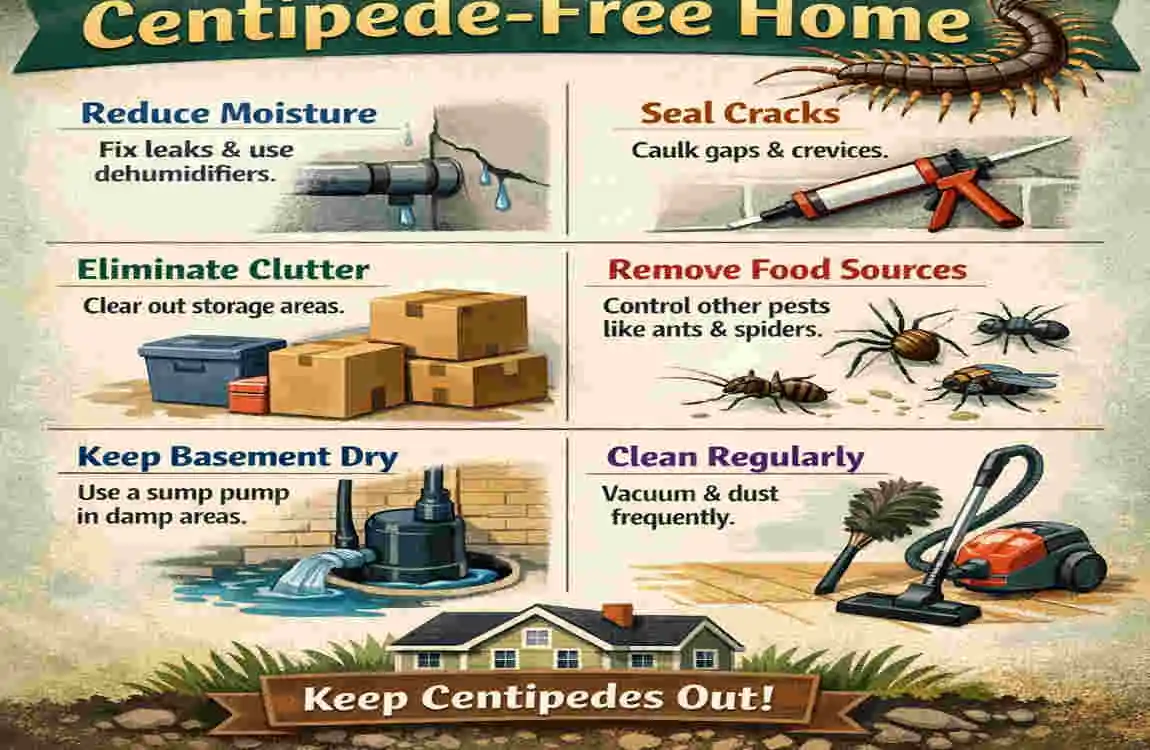
This is the most important step. Use a dehumidifier in damp rooms such as basements. Fix leaking pipes, dripping faucets, and water damage as soon as possible.
Also, open windows or run exhaust fans in bathrooms and kitchens. Good airflow helps reduce humidity and makes your home less inviting.
Seal Entry Points
Centipedes can enter through tiny cracks. Use caulk to seal gaps around windows, baseboards, and walls. Add weatherstripping to doors and windows to reduce pests’ entry points.
Remove Food Sources
Keep counters, floors, and sinks clean. Wipe away crumbs, store food properly, and take out the trash often. If you already have ants or spiders, treat those pest problems too. When centipedes lose their food source, they are more likely to leave.
Declutter Regularly
Centipedes hide in clutter. Store items in sealed containers instead of cardboard boxes when possible. Keep piles of paper, clothes, and storage items off the floor. A neat space leaves fewer hiding spots.
Maintain Outdoor Areas
What happens outside can affect what happens inside. Trim plants near your home, move firewood away from the foundation, and keep gutters clear. If water collects near your house, centipedes may move in more easily.
Quick Prevention Checklist
Task Why It Helps
Fix leaks , reduce moisture
Seal cracks, Blocks entry points
Clean regularly. Remove food sources
Declutter rooms, remove hiding spots
Clear gutters lowers dampness near the home
Natural Remedies to Repel House Centipedes

Essential Oils
Some people use peppermint, tea tree, or eucalyptus oil to help keep centipedes away. Mix a few drops with water in a spray bottle and spray around baseboards, corners, and entry points.
These scents may help repel centipedes, but they work best when combined with cleaning and moisture control.
Diatomaceous Earth
Diatomaceous earth is a fine powder that can help dry out crawling insects. Lightly place it in dry areas where centipedes may travel, such as behind furniture or along cracks.
Use it carefully and keep it away from children and pets unless the product label says it is safe for your home.
Sticky Traps
Sticky traps can catch centipedes and help you see where they are hiding. Place them near walls, sinks, and basement corners. This is a simple and low-cost way to monitor the problem.
Why Natural Remedies Help
These options are popular because they are simple and often safer for families, pets, and the environment. They are not a full solution by themselves, but they can support your natural remedies for centipedes plan.
When to Call a Professional Exterminator
If you keep seeing centipedes in different rooms, or if they keep coming back after you clean and seal your home, it may be time to call a pro.
A professional can inspect hidden areas, identify the source of the problem, and recommend a treatment that fits your home. This is especially helpful if you have a moisture issue or a larger pest problem behind the walls.
How to Maintain a Centipede-Free Home
Keep Cleaning Consistent
Vacuum often, wipe down surfaces, and clean corners where dust collects. Pay special attention to bathrooms, basements, and under sinks.
Check Your Home Regularly
Look for leaks, cracks, and signs of other pests. A small problem is easier to fix than a big one.
Stay Ahead of Seasonal Changes
Warm, humid, or rainy months can bring more pest activity. Prepare early by checking seals, ventilation, and damp areas before the season changes.
FAQs About House Centipedes
Are House Centipedes Harmful to Humans?
No. They are not dangerous to people, though they can look frightening and move very fast.
Do House Centipedes Mean My Home Is Dirty?
Not always. They often show up because of moisture or other pests, not because your home is dirty.
What Should I Do If I See One?
You can trap it with a cup and paper, vacuum it, or use a sticky trap. Then check the area for moisture and other insects.
Can I Keep Centipedes as Pets?
Some people do, but most homeowners prefer not to. They are interesting to watch, but not exactly lovable house guests.