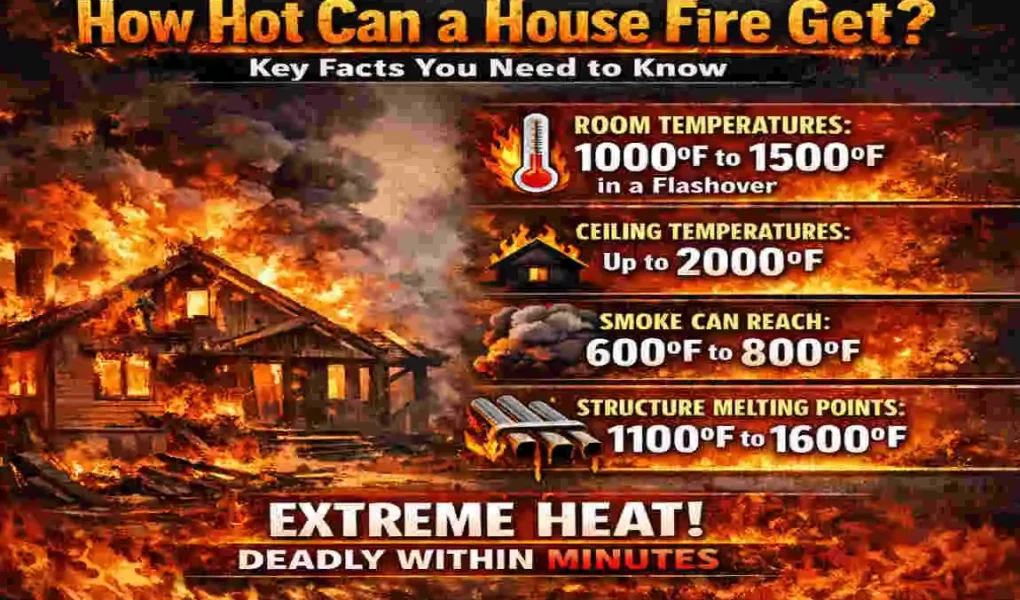
A house fire can become far hotter than most people expect. In just a few minutes, a small flame can turn into a life-threatening event that fills a room with heat, smoke, and toxic gases. What starts as a kitchen spark, an electrical fault, or a candle accident can quickly grow into a fire that damages walls, weakens the structure, and makes survival difficult.
Many people wonder, how hot does a house fire get, and the answer may surprise you. In the right conditions, a house fire can reach temperatures high enough to melt some metals, shatter glass, and make entire rooms impossible to enter. The danger is not only the flames. The smoke, heat, and lack of oxygen can be deadly even before the fire spreads throughout the whole home.
| Key fact | Short answer |
|---|---|
| Typical house fire temperature | About 1,100°F to 1,600°F in many fires . |
| Flashover temperature | Roughly 900°F to 1,200°F, when a room can ignite almost all at once . |
| Extreme heat | Peak temperatures can reach around 2,300°F in severe flashover conditions . |
| Speed | Temperatures can exceed 1,100°F in about 3.5 minutes . |
| Hidden danger | Even rooms not actively burning can reach over 300°F, hot enough to melt plastic and be deadly . |
This matters because fire heat affects property damage, limits on human survival, structural collapse risks, and firefighter challenges. A fire that looks small from the outside can already be extreme inside a room. That is why understanding fire temperature is so important for every homeowner.
How Hot Does a House Fire Get on Average?
Typical Temperature Range of a House Fire
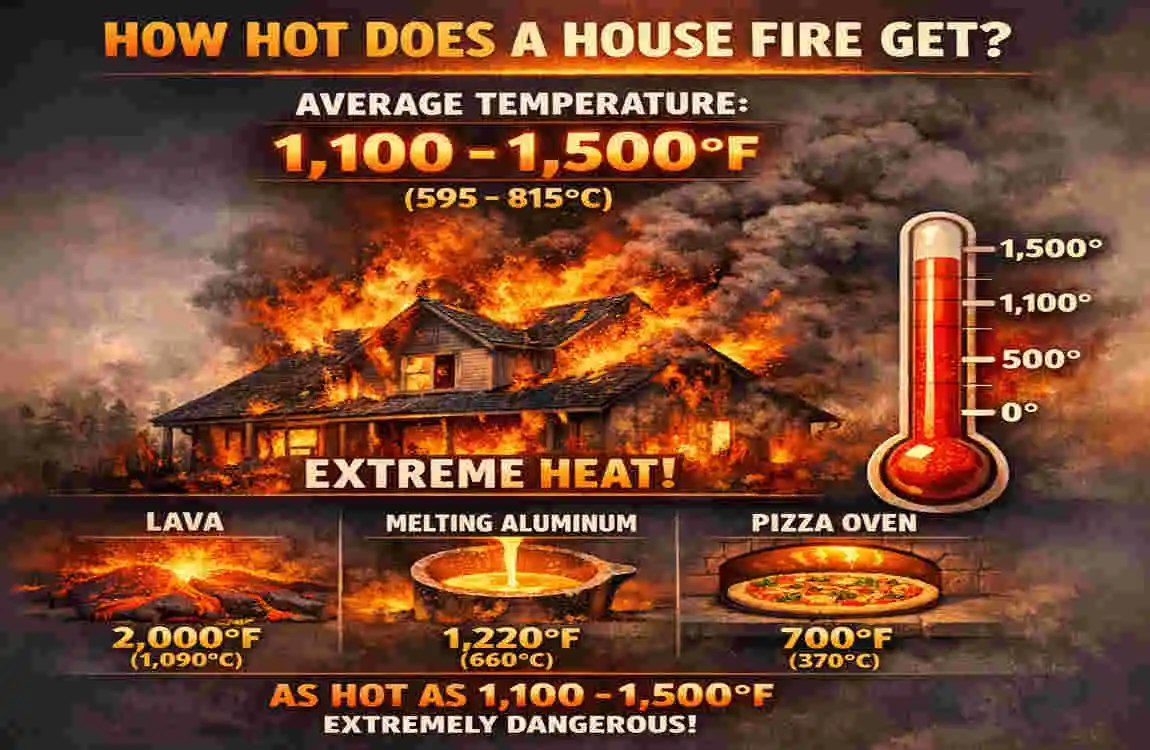
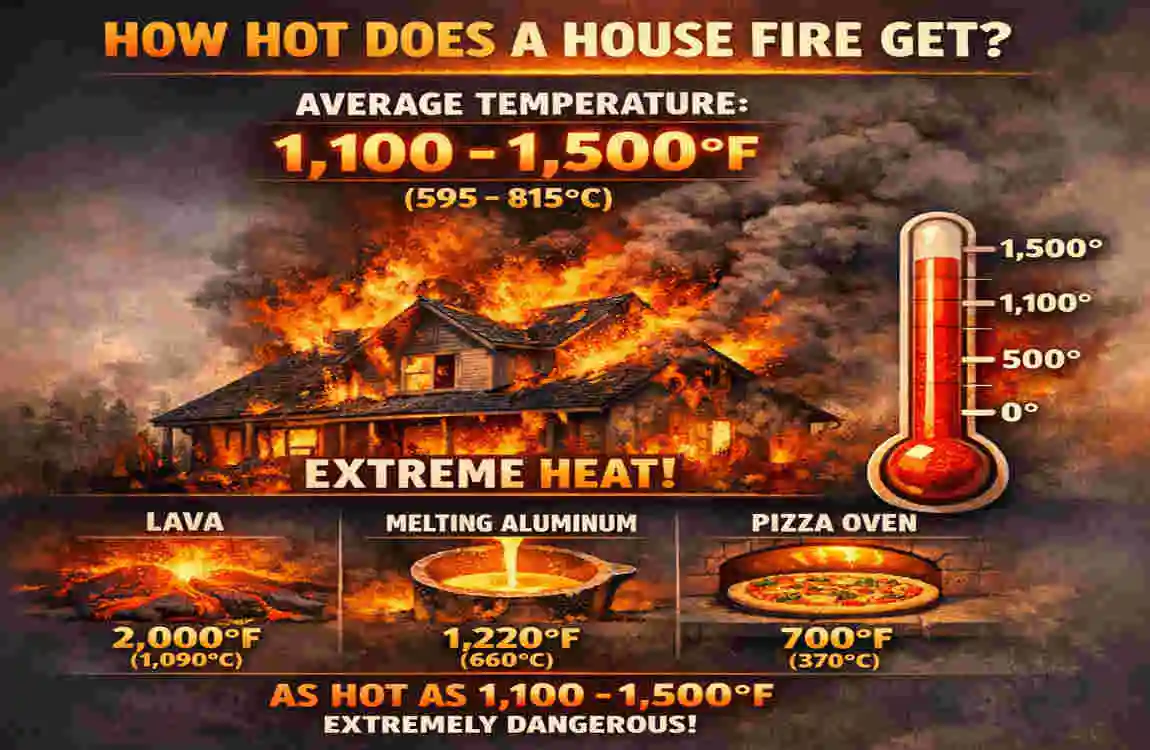
The average temperature of a house fire depends on how far it has developed. A small room fire may stay around 600°F to 1,100°F. Once the fire becomes fully developed, it can reach 1,100°F to 2,000°F or higher.
For readers who use Celsius, that is about 315°C to 593°C for the lower range, and roughly 593°C to 1,093°C+ for the higher range. That is intense enough to destroy furniture, weaken building materials, and make the air itself dangerous to breathe.
A simple way to think about it is this:
T_house_fire ≈ 600°F to 2000°F
That range shows just how violent a house fire can become.
Why House Fires Become Extremely Hot
House fires get so hot because homes contain many flammable materials. Furniture, curtains, flooring, paper, clothing, plastics, and wood all act as fuel. Once fire finds enough fuel and oxygen, it grows fast.
Modern homes often burn hotter and faster because they contain more synthetic materials. Foam cushions, plastic coverings, and engineered wood can produce intense heat and thick smoke. The enclosed space of a room also traps heat, so the temperature keeps rising instead of escaping.
Flashover Explained
One of the most dangerous moments in a house fire is flashover. This happens when nearly everything in a room ignites at once. The heat becomes so intense that the upper hot gases and the objects in the room reach their ignition point together.
Flashover is deadly because it transforms a growing fire into a fully engulfed one almost instantly. Once flashover happens, survival becomes far more difficult.
What Factors Affect the Temperature of a House Fire?
Building Materials
The materials in a home have a huge effect on fire heat. Wood burns easily and helps a fire spread quickly. Steel does not burn in the same way, but it can weaken badly under extreme heat. Concrete can resist fire better than wood, but it can still crack or spall when exposed to high temperatures.
Insulation also matters. Some insulation types slow down heat, while others can melt or release toxic smoke. Modern furnishings often make the problem worse because many are made with foam, glue, and plastic-based materials that burn fast and hot.
Ventilation and Oxygen Supply
Fire needs oxygen. When a room has open windows, broken doors, or structural gaps, more air enters, feeding the flames. That can make the fire hotter and faster.
But ventilation is a double-edged sword. If oxygen suddenly rushes into a fire that has been starved of air, it can trigger a backdraft. That is a dangerous explosion-like event that can seriously injure anyone nearby.
Fire Location Inside the House
Where the fire starts also changes the temperature.
- Kitchen fires often start with grease, oils, or appliances and can become intense very quickly.
- Garage fires may involve fuel, chemicals, tools, and stored items.
- Basement fires can trap heat and smoke, making them harder to escape.
- Attic fires spread through insulation, rafters, and hidden spaces.
A fire in one area may stay local at first, but some rooms can heat up faster than others.
Weather and Environmental Conditions
Weather can also affect fire behavior. Strong winds can push flames and feed the fire with oxygen. Dry conditions can make nearby materials catch fire more quickly. Even outdoor temperatures can play a role, especially when a fire vents through windows or reaches the outside of the structure.
How Fast Does a House Fire Heat Up?
The First 30 Seconds
The first seconds of a house fire are often full of smoke before heavy flames appear. A small ignition source may smolder, then grow into visible fire. At this stage, the room may already fill with toxic smoke, even if the flames still look small.
One to Three Minutes
Within one to three minutes, the fire can heat up sharply. Furniture, curtains, and other nearby materials start to warm, dry out, and break down. Toxic gases build quickly, and the air can become hard to breathe.
This is why a house fire is so dangerous in its early stages. People often underestimate it because it may not look large yet, but the heat and smoke can already be severe.
Flashover Timing
Flashover may happen in just a few minutes under the right conditions. Once it starts, the whole room can ignite almost at once. The temperature can rise to a level no longer survivable for anyone trapped inside.
Modern Homes Burn Faster Than Older Homes
Modern homes often burn faster than older ones because they contain more synthetic materials. Foam furniture, laminate surfaces, and lightweight building products can all feed the fire quickly. Open floor plans can also let heat and smoke move through the home faster.
That means a fire today may become dangerous much sooner than people expect.
What Is the Hottest Part of a House Fire?
Ceiling Temperatures vs Floor Temperatures
Heat rises, so the hottest part of a house fire is usually near the ceiling. Hot gases collect above, while the lower part of the room may stay cooler for a short time.
This is one reason smoke and heat create such a dangerous layer near the top of a room. The upper air can become extremely hot, while the floor may still offer slightly better conditions for escape.
Temperature Differences in a Room
A room fire does not heat every part of the room evenly. The ceiling area may be much home hotter than the floor. The smoke layer also grows thicker over time, reducing visibility and making breathing more difficult.
Near the floor, the temperature may still be lower for a short time, but that does not mean it is safe. Smoke can still harm you, and toxic gases spread fast.
Why Crawling Helps During Fires
Crawling lowers your body closer to cooler air near the floor. It can reduce heat exposure and help you avoid the densest smoke layer.
This does not make a fire safe, but it can improve your chance of getting out quickly. Staying low is one of the simplest and most important fire safety actions.
Can a House Fire Melt Metal or Concrete?
Metals That Can Melt in House Fires
Yes, some metals can melt in house fires. Aluminum has a lower melting point than steel so that it can warp or melt more easily. Copper wiring can be damaged badly by high heat, even if it does not fully melt right away.
Steel is more likely to weaken than melt in a typical house fire. T_steel weakening ≈ 1000°F. At that point, steel can lose much of its strength and may bend or fail under load.
What Happens to Concrete During Extreme Heat?
Concrete may seem solid and fireproof, but it can still be damaged by intense heat. When trapped moisture in concrete turns to steam, the surface can break apart, a process called spalling. It can also crack and weaken structurally.
That is why concrete is not invincible in a major fire. It resists heat better than wood, but severe fire still takes a toll.
Electronics and Appliances in Fires
Electronic devices and appliances are not safe in extreme heat. Batteries can fail, swell, or explode. Plastic parts melt and release smoke. Wiring can short out. Even devices that do not burn directly may become dangerous as the heat rises.
How Hot Is a House Fire Compared to Other Fires?
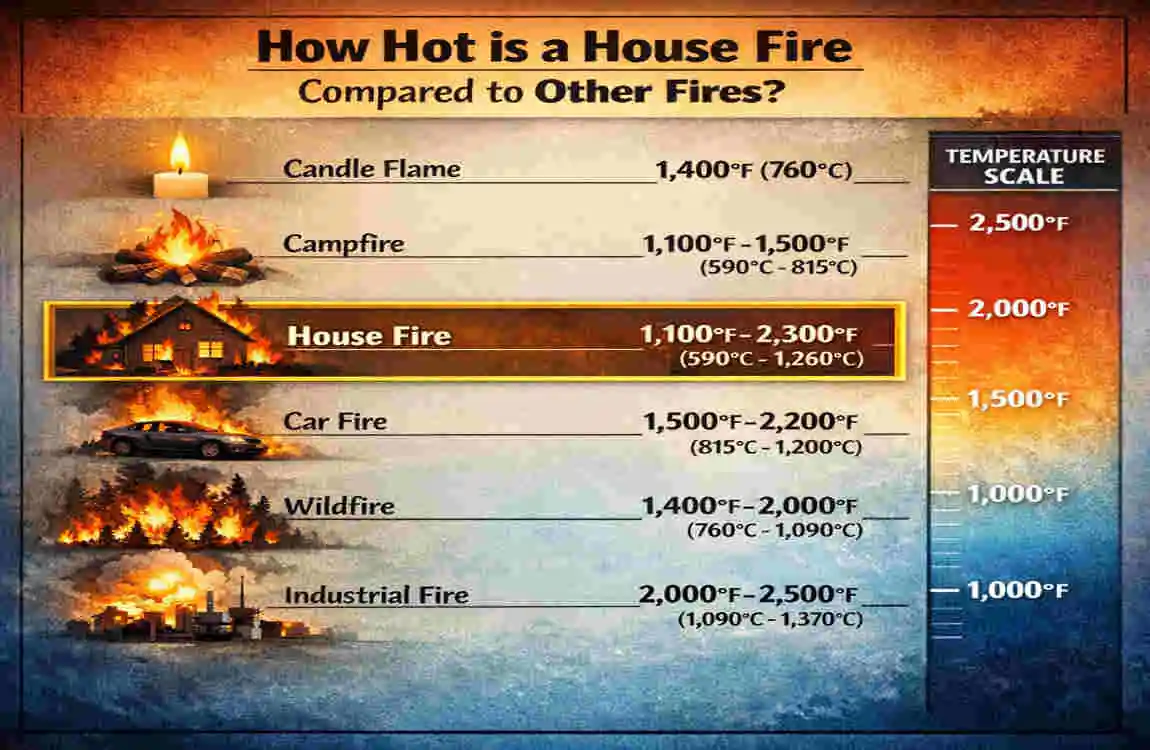
A house fire is often hotter and more dangerous than people expect. The table below gives a simple comparison.
Fire TypeAverage Temperature
Candle Flame 1,000°F
Campfire 1,500°F
House Fire 1,100–2,000°F
Wildfire 1,470°F+
Car Fire 1,500°F+
House Fire vs Campfire
A campfire can get very hot, but it usually has more open air and less enclosed heat buildup than a house fire. A house traps heat indoors, which can make the temperature rise faster.
House Fire vs Wildfire
Wildfires can be intense and spread over a large area, but they behave differently. A house fire is often more concentrated inside a structure, which means the heat can build to extreme levels in a smaller space.
House Fire vs Car Fire
Car fires can become explosive because they involve fuel, plastic, rubber, and enclosed spaces. They can reach very high temperatures quickly. A house fire can be just as dangerous, especially when it spreads through multiple rooms and hidden spaces.
House Fire vs Candle Flame
A candle flame looks small, but it can still start a dangerous fire. A candle is a tiny heat source compared with a full-room fire. Once furniture or curtains catch, the temperature can rise far beyond what a candle ever produces.
How Dangerous Is Heat During a House Fire?
Human Heat Tolerance Limits
The human body cannot handle extreme fire heat for long. Skin can burn quickly at high temperatures, and breathing superheated air can damage the lungs. Even short exposure to very hot air can become life-threatening.
You may not need direct flame contact to get hurt. Radiant heat alone can cause serious burns and make escape difficult.
Smoke Inhalation Risks
Smoke is one of the leading causes of death in house fires. It often contains carbon monoxide, carbon dioxide, and chemicals released from burning plastics, foam, and paint. These gases can disorient you, make it hard to breathe, and lead to unconsciousness.
The danger is simple: you can be overcome by smoke before the flames ever reach you.
Structural Collapse Risks
When a fire burns long enough, it can weaken beams, floors, and roof supports. That raises the risk of collapse. If that happens, escape becomes much harder for anyone inside and much more dangerous for firefighters.
Why Most Fire Deaths Are Smoke-Related
Many fire deaths are caused by smoke inhalation, not direct burns. Smoke reduces oxygen in the room, fills the lungs with toxic fumes, and can cause a person to lose consciousness quickly. That is why escape time matters so much.
What Happens to Household Items in Extreme Heat?
Furniture and Fabrics
Furniture often ignites fast, especially if it contains foam. Sofas, mattresses, and curtains can produce intense flames and thick smoke. Synthetic materials may melt, drip, and release toxic fumes.
Glass and Windows
Glass windows can crack or shatter from heat stress. Once windows fail, fresh oxygen can enter the fire, making it spread faster. Broken glass also makes escape more dangerous.
Plastic and Household Chemicals
Many household plastics do not just burn; they melt and produce toxic smoke. Cleaning products, stored chemicals, and sprays can also become hazardous in high heat.
Electrical Systems
Electrical wiring may fail, melt, or short out. That can cause the fire to spread behind walls or into hidden spaces. Once the electrical system is damaged, the entire home becomes more dangerous.
How Firefighters Handle Extreme House Fire Temperatures
Protective Gear Temperatures
Firefighters wear heavy protective clothing designed to resist heat and flame. Their gear includes a helmet, gloves, boots, and breathing equipment. Even with this gear, fire conditions are still extremely dangerous.
Their protection helps, but it does not make them immune to heat. They still work in short bursts and carefully monitor conditions.
Thermal Imaging Technology
Firefighters often use thermal imaging cameras to see heat through smoke. These tools help them identify hot spots, locate people, and detect dangerous areas that may not be visible to the naked eye.
Cooling Techniques
Water is the main tool for cooling a fire. Firefighters apply it in controlled ways to lower temperature and slow the spread. They may also ventilate the building to remove heat and smoke. Still, they do so carefully to avoid worsening the fire.
Why Firefighters Avoid Certain Rooms
Some rooms are too unstable to enter right away. If flashover is likely or the structure looks weak, firefighters may stay out until they can cool the fire and assess the risk. Safety has to come first.
Fire Prevention Tips Every Homeowner Should Know
Fire prevention is always easier than fire recovery. A few simple habits can lower the chance of a serious fire.
Install Smoke Detectors Properly
Smoke detectors should be placed in key areas of the home, especially near bedrooms, hallways, and on every level. Test them often and replace batteries when needed. A working smoke alarm gives you time to escape.
Avoid Common Fire Hazards
Here are a few common mistakes to avoid:
- Do not overload outlets or power strips.
- Never leave cooking unattended.
- Keep candles away from curtains, bedding, and paper.
- Store flammable products safely.
- Do not ignore damaged cords or outlets.
Create a Family Fire Escape Plan
Every family should know two ways out of the house. Practice the plan often so everyone knows what to do in an emergency. Pick a meeting point outside and make sure children understand it.
Use Fire-Resistant Materials
Whenever possible, choose safer building and furnishing materials. Fire-rated doors, better insulation, and flame-resistant fabrics can slow fire spread and give you more time to react.
Keep Fire Extinguishers Accessible
Keep fire extinguishers where they are easy to reach, especially in the kitchen and garage. Make sure everyone in the home knows how to use them. An extinguisher is useful for very small fires, but if the fire grows, get out right away.
Frequently Asked Questions
How hot does a house fire get at its peak?
At its peak, a house fire can reach 1,100°F to 2,000°F or more, depending on the fuel, oxygen, and structure. In some cases, temperatures may go even higher in limited spots.
Can you survive inside a burning house?
Survival depends on the size of the fire, the smoke level, and how quickly you escape. In many cases, conditions become dangerous very fast. It is always safer to leave immediately and call emergency services.
How long does it take for a house fire to become deadly?
A house fire can become deadly in just a few minutes. Smoke and toxic gases may build up before flames spread through the room. That is why early escape is so important.
Can house fires melt steel?
House fires usually do not melt steel, but they can severely weaken it. Around 1000°F, steel can lose strength and bend or fail. That makes the structure unsafe.
What room do most house fires start in?
Many house fires start in the kitchen, often because of cooking accidents, grease fires, or appliance problems. Bedrooms, garages, and living rooms are also common starting points.
Are modern homes more flammable?
Modern homes can burn faster because they often contain more synthetic materials, are lightweight, and feature open layouts. These features may help with design and comfort, but they can also allow fire to spread quickly.
What temperature causes flashover?
Flashover usually occurs when the upper layer of gases in a room reaches a critical temperature, often around 1,000°F or higher. It depends on the room, fuel load, and ventilation.