
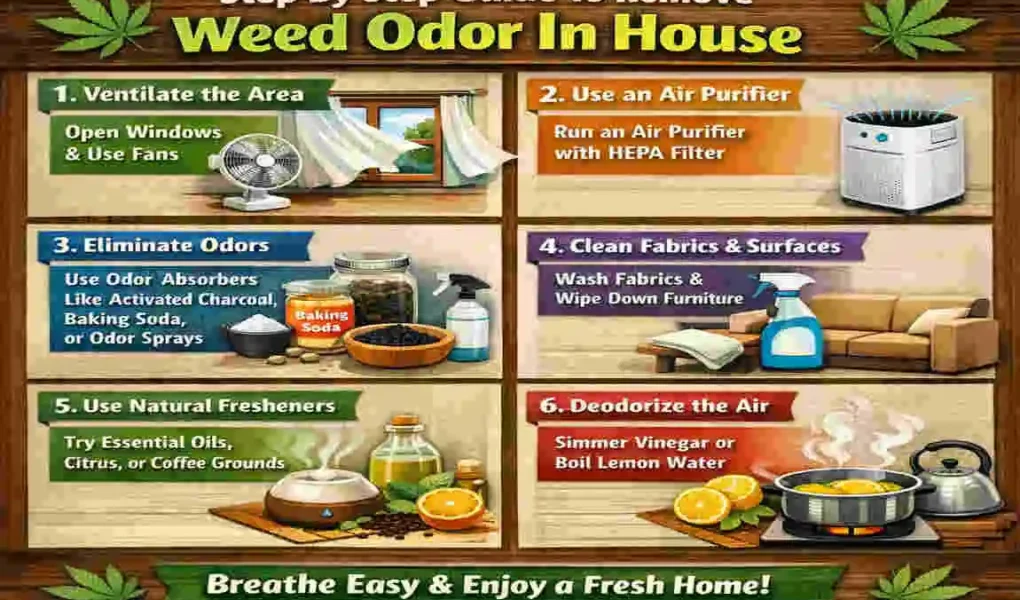
Cannabis smoke carries aromatic oils that cling to everything they touch. When you light up indoors, tiny particles settle on furniture, carpets, curtains, walls, and even clothing. Over time, these particles create a lingering scent that can feel impossible to shake.
| Method | How It Helps |
|---|---|
| Open Windows | Improves ventilation and moves stale air outside. |
| Use Exhaust Fans | Helps remove smoky air from kitchens, bathrooms, and other rooms. |
| Clean Fabrics | Washing curtains, blankets, and pillowcases removes trapped odors. |
| Vacuum Carpets | Removes dust and particles from carpets and upholstery. |
| Wipe Hard Surfaces | Cleans residue from tables, shelves, doors, and windowsills. |
| Use an Air Purifier | An activated-carbon filter can help reduce lingering odors. |
| Replace HVAC Filters | Helps reduce particles and odors circulating through the home. |
| Prevent Odor Buildup | Regular cleaning and ventilation help keep indoor air fresher. |
Why Does Weed Smell Linger Inside a House?
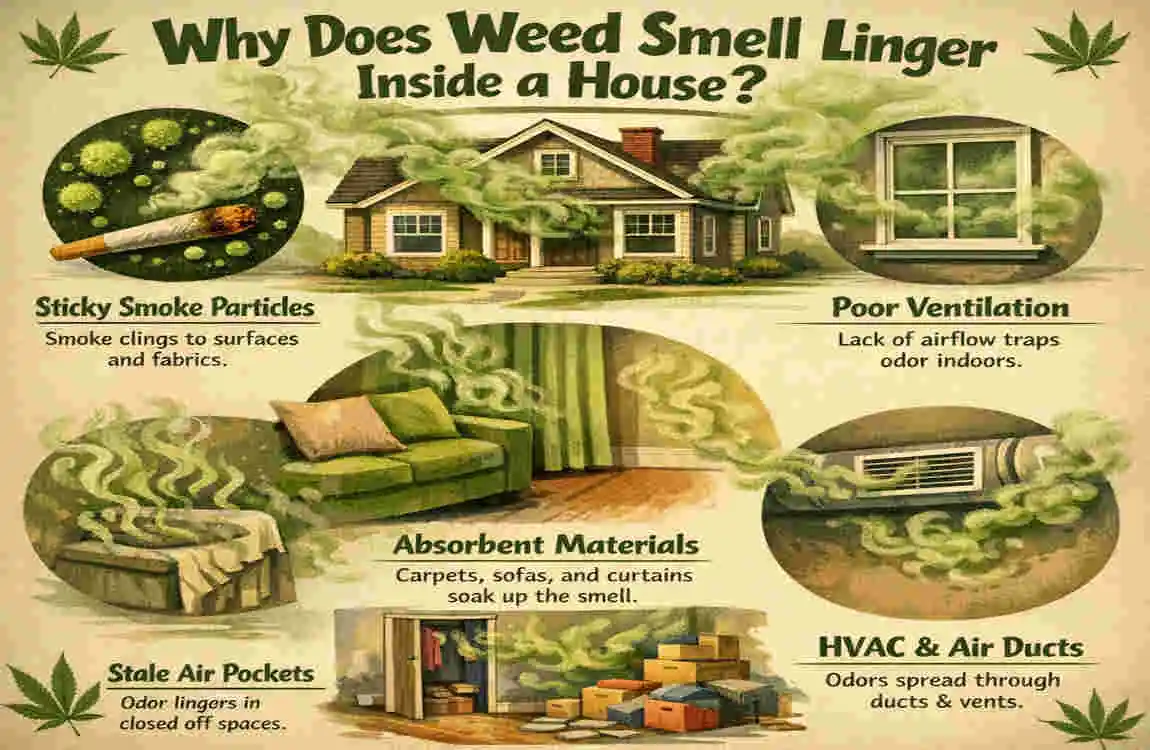
- Aromatic compounds such as terpenes give cannabis its distinctive smell.
- Enclosed rooms with limited airflow trap these molecules, letting them settle for hours or days.
- Soft furnishings act like sponges, absorbing smoke particles and slowly releasing the odor again.
- Heating, ventilation, and air‑conditioning (HVAC) systems can circulate the scent from one room to another, spreading the problem.
Typical signs the smell has embedded itself include a faint scent on curtains after the smoke clears, a musty odor when you sit on the couch, or a lingering smell when you open a closet door.
Step-by-Step Guide on How to Get Rid of Weed Smell in the House
Improve Ventilation and Circulate Fresh Air
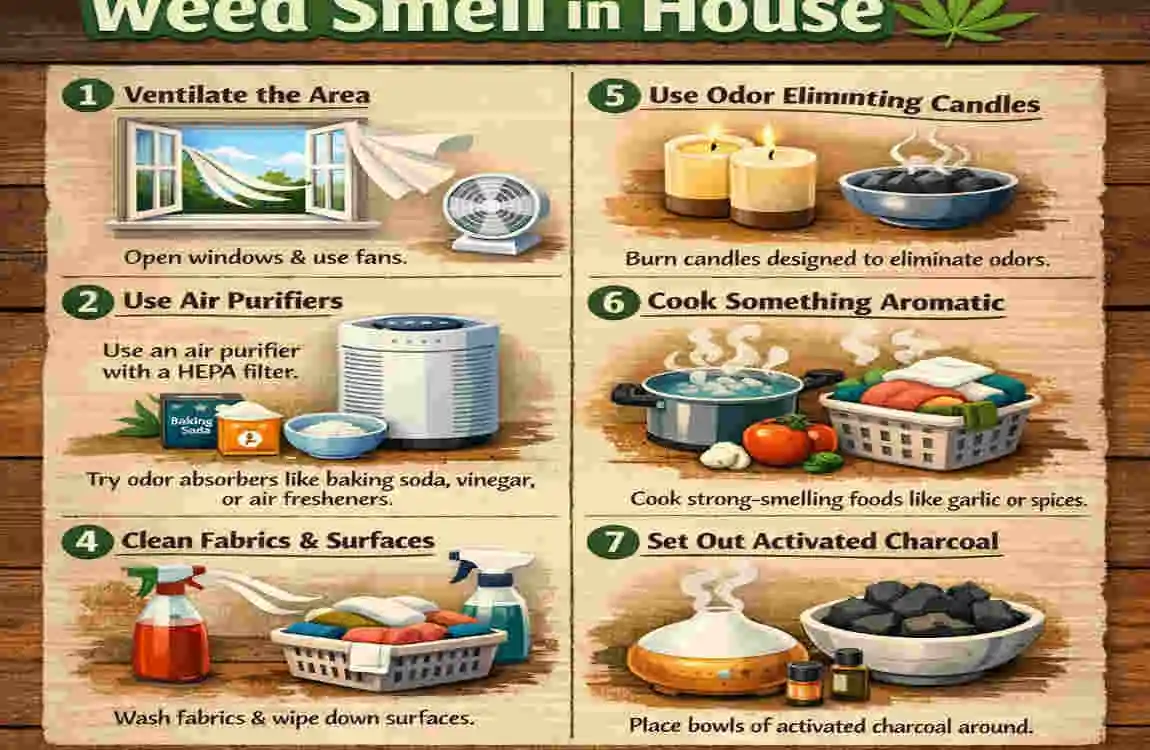
- Open windows whenever the weather permits.
- Turn on the kitchen or bathroom exhaust fan to push stale air outside.
- Create a cross‑breeze by opening windows on opposite sides of the home – this moves fresh air through the space instead of just shuffling smoky air from room to room.
Remove Odors from Furniture, Curtains, and Carpets
- Wash any removable fabrics (curtains, blankets, pillowcases) according to their care labels.
- Vacuum carpets and upholstered furniture thoroughly; a high‑efficiency vacuum helps lift out trapped particles.
- Use upholstery‑safe cleaners for stubborn spots, or consider a professional cleaning service for deep‑set odors.
Clean Hard Surfaces and Frequently Touched Areas
- Wipe down tables, shelves, doors, and window frames with a mild cleaner appropriate for the material.
- Empty and clean ashtrays, and safely dispose of any smoke‑related waste.
- Never mix cleaning chemicals, especially bleach with ammonia or acidic products, to avoid dangerous fumes.
Use Air Purifiers and Odor‑Absorbing Products
- A standard HEPA filter traps particles but does not eliminate gases. Pair it with an activated‑carbon filter to reduce odors.
- Sprinkling baking soda on carpets or inside shoes can help absorb some odor. Still, it should complement—not replace—thorough cleaning.
- Remember, scented air fresheners only mask odor; they don’t remove the source.
Clean the HVAC System and Replace Filters When Needed
- Check heating and cooling filters; replace them if they look dirty or haven’t been changed in a few months.
- Keep vents clear of dust and debris to ensure proper airflow.
- If the smell persists, a professional HVAC inspection can identify hidden buildup in ducts.
Natural Remedies and Long‑Term Prevention Tips

Action How It Helps
Baking soda on rugs & fabrics Mildly absorbs lingering odors
Vinegar wipe (diluted) on hard surfaces Neutralizes odor molecules (never mix with bleach)
Regular ventilation (10‑15 min daily) Flushes out fresh air, prevents buildup
Frequent fabric cleaning (laundry, upholstery care) Stops smoke from embedding in soft materials
Activated‑carbon air purifier Captures odor‑causing gases effectively
- Use baking soda on carpets and fabric that can tolerate a mild powder; let it sit for 30 minutes before vacuuming.
- A quick wipe with a diluted vinegar solution (one part vinegar to three parts water) works well on countertops and tiles, but never combine it with bleach.
- Keep windows open briefly each day to maintain air turnover.
- Ozone generators might sound tempting, but they can harm lungs and should never be run in occupied spaces.
- No single natural trick will erase all odor; combine ventilation, cleaning, and proper filtration for the best results.
Frequently Asked Questions (FAQ)
How long does weed smell last inside a house?
It varies. Good ventilation can cut the airborne scent in minutes, while embedded odors in fabrics may linger for weeks if not cleaned.
What is the fastest way to get rid of weed smell in a house?
Open windows for cross‑ventilation, clean or launder all fabrics, vacuum carpets, and run an activated‑carbon air purifier.
Does opening windows remove weed smell completely?
Fresh air dilutes airborne odor quickly, but smoke settled on furniture or carpets will need cleaning to disappear fully.
Does baking soda help remove weed odor?
It absorbs mild smells on surfaces like carpets or shoes, but it’s a support tool, not a replacement for washing or ventilation.
Can an air purifier eliminate weed smell?
A purifier with an activated‑carbon filter can significantly reduce odor gases. At the same time, a HEPA‑only unit will only catch particles.
How can I remove weed smell from carpets and couches?
Vacuum first, then apply an upholstery‑safe cleaner or a baking‑soda paste (baking soda mixed with a little water). For persistent smells, professional steam cleaning works best.
Can weed smell travel through air vents?
Yes – the HVAC system can move odors from one room to another, which is why regular filter changes are essential.
How do I prevent weed odor from returning?
Maintain a regular cleaning routine, keep windows open when possible, and use an activated‑carbon air purifier to capture future smoke particles.