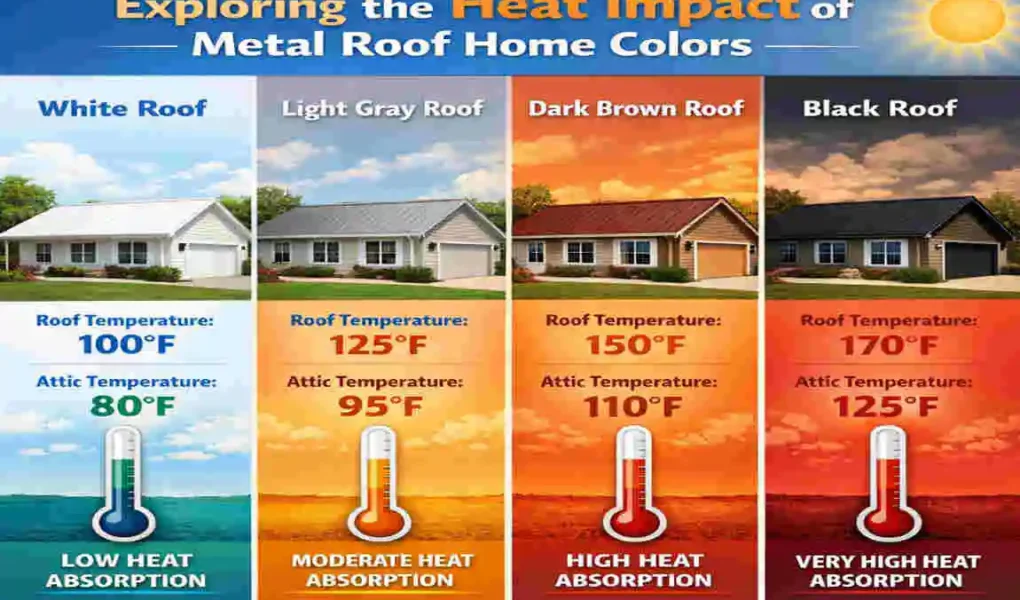
Metal roofing has become a popular choice for many homeowners because it looks clean, lasts a long time, and can help with energy savings. But one question comes up again and again: are different color metal roofs hotter?
| Metal Roof Color | Heat Absorption | Surface Temp vs. Dark Roof | Cooling Impact (Hot Climate) | Best For |
|---|---|---|---|---|
| White / Light Beige | Reflects ~80% sunlight | Up to 50°F cooler | Lowers cooling costs 15–20% | Hot climates |
| Light Gray / Tan | High reflectivity | ~30–40°F cooler | Moderate cooling savings | Warm climates |
| Medium Brown / Green | Moderate absorption | ~15–25°F cooler | Slight cooling impact | Mixed climates |
| Dark Gray / Black | Absorbs most sunlight | Baseline (hottest) | Increases AC use 5–10°F indoors | Cold climates |
| Dark Green / Blue | High absorption | ~5–10°F hotter than mid-tones | Higher cooling costs | Cold climates |
The short answer is yes, color does affect heat, but it is not the only thing that matters. Darker roofs usually absorb more sunlight, while lighter roofs reflect more of it. Still, the actual temperature inside your home depends on more than color alone. Things like insulation, attic ventilation, roof coating, and climate all play a big role.
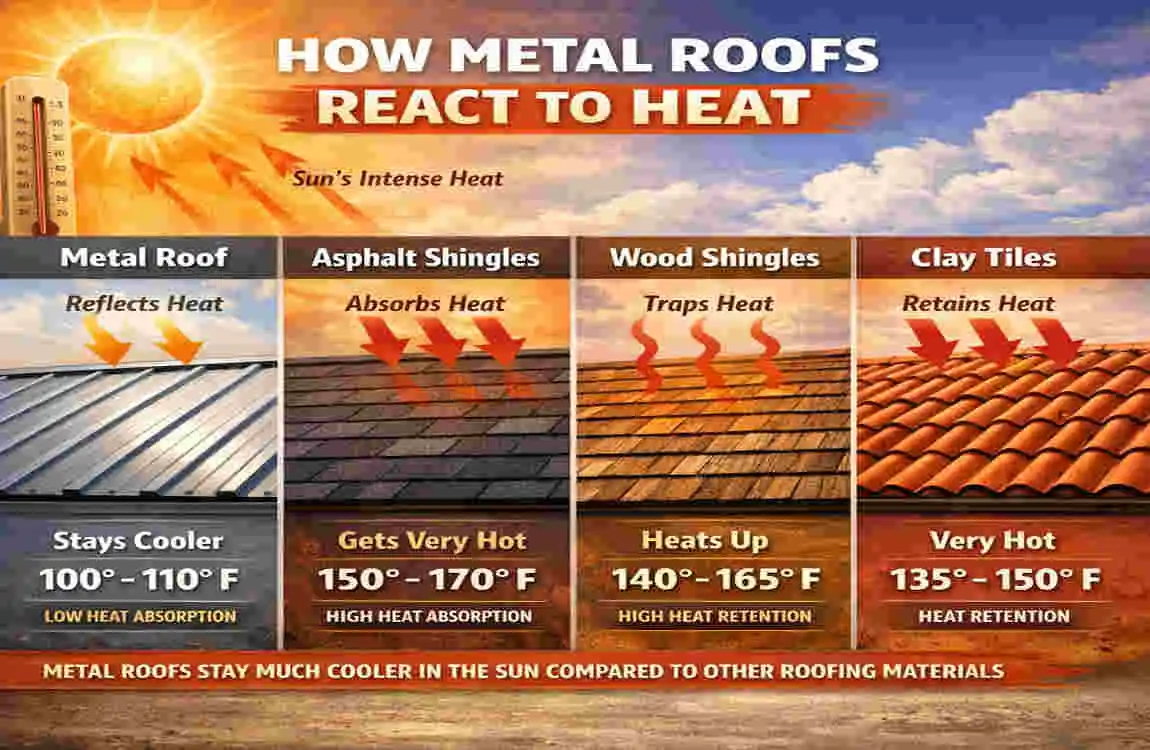
How Metal Roofs React to Heat Compared to Other Roofing Materials
Understanding Heat Absorption in Roofing Materials
Roofing materials respond differently to sunlight. Some absorb heat quickly, while others reflect or release it more quickly. This matters because the sun sends energy straight to your roof all day.
Metal roofs tend to perform better than many traditional materials because they shed heat more quickly. They do not hold heat as well as thick or dense materials often do.
Why Metal Roofs Behave Differently
Metal is a strong conductor, which means it can transfer heat quickly. That sounds bad, but it also means metal roofs can cool down faster after the sun goes away.
Compared with asphalt shingles, metal roofing often stays cooler on the surface when the right color and coating are used. That is one reason many homeowners ask whether does roof color affect heat in a meaningful way. The answer is yes, especially on hot, sunny days.
Are Different Color Metal Roofs Hotter? The Direct Answer
How Roof Color Influences Surface Temperature
Yes, the question of whether different-coloured metal roofs are hotter is a valid concern, because roof colour affects how much sunlight is absorbed.
- Dark colors like black, charcoal, and dark bronze absorb more solar energy.
- Light colors like white, silver, and pale gray reflect more sunlight.
That means a black metal roof usually gets hotter on the outside than a white metal roof.
Measuring Temperature Differences
In real-world conditions, the difference can be noticeable. On a sunny day, a dark roof can become significantly warmer than a light reflective roof. The exact gap depends on sun strength, coating quality, and weather.
Does a Dark Metal Roof Make the House Hotter?
Not always. A hotter roof surface does not automatically mean a hotter indoor space.
If your home has good insulation and proper attic ventilation, the heat may not transfer much into the living areas. So while a dark roof can make the surface hotter, the inside of the house may still stay comfortable.
The Science Behind Heat Reflection and Solar Reflectance
What Is Solar Reflectance?
Solar reflectance is the amount of sunlight a roof reflects rather than absorbs. The higher the reflectance, the cooler the roof usually stays.
This is a big reason why energy efficient metal roof colors are often lighter shades. They reduce heat gain and help limit cooling demand.
Emissivity and Heat Release
Emissivity is the roof’s ability to radiate heat after absorbing it. Metal roofs usually perform well here, meaning they can shed heat more quickly than many other roofing materials.
Why Coatings Matter More Than Color Alone
Color matters, but coating matters too. A roof with a special reflective coating can perform better than a standard painted roof in the same color.
That means two white metal roofs may not behave the same if one has advanced solar reflective roofing technology and the other does not.
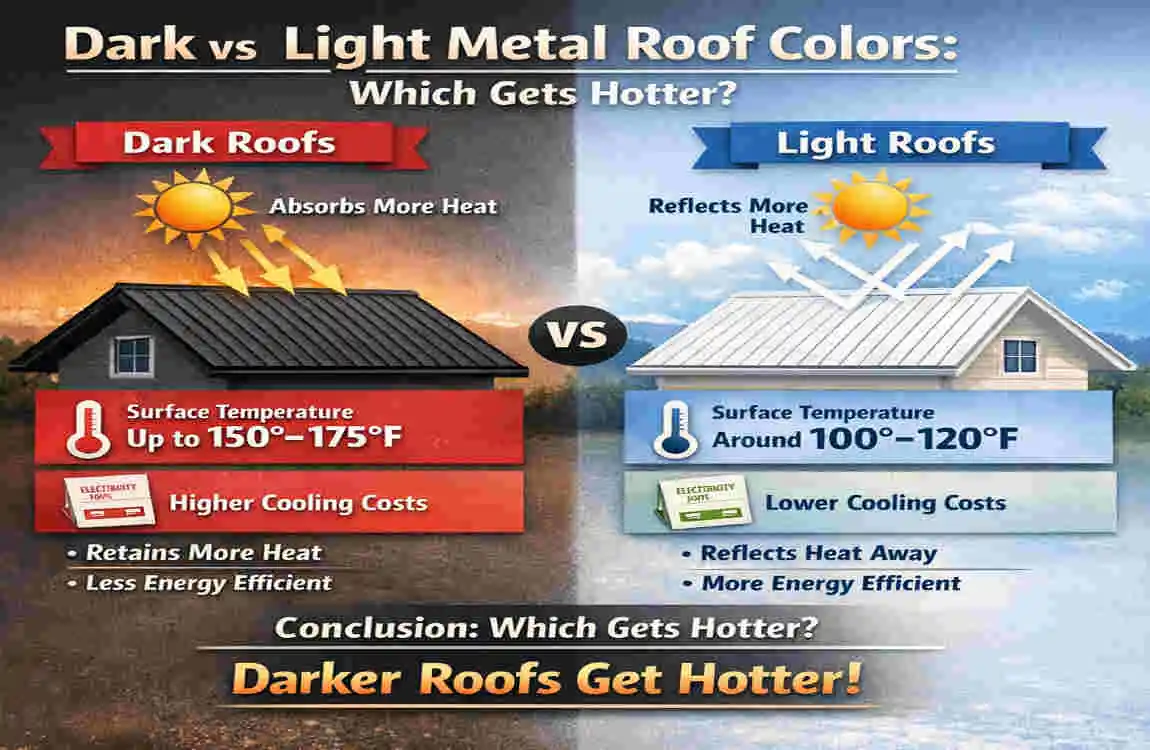
Dark vs Light Metal Roof Colors: Which Gets Hotter?
Dark Roof Colors
Dark colors include:
- Black
- Charcoal
- Dark bronze
- Forest green
These roofs usually look modern and stylish, and they can hide dirt well. But they often reach higher surface temperatures because they absorb more sunlight.
Light Roof Colors
Light colors include:
- White
- Beige
- Light gray
- Silver
These are often the best metal roof colours for hot climates because they reflect more sunlight and stay cooler.
Quick Temperature Comparison
Roof Color Heat Absorption Surface Temperature Best For
Black High Hotter Style-focused homes, colder climates
Dark Bronze High Warm to hot Traditional looks
Light Gray Medium-low Cooler Mixed climates
White Low Coolest Hot climates, energy savings
Silver Low Cool Sunny regions
Does Roof Color Affect Indoor Home Temperature?
Role of Attic Ventilation
A well-ventilated attic helps move heat out before it spreads into the home. Ridge vents and soffit vents work together to improve airflow and lower trapped heat.
Insulation and Underlayment
Insulation is just as important as color. Good insulation slows heat transfer, so even a darker roof may not raise indoor temperatures much.
Underlayment also provides an additional protective layer beneath the roof panels.
Climate Zone Differences
In hot climates, roof colour matters more because roofs are exposed to strong sunlight for long hours. In colder regions, dark roofs may feel more practical because they can absorb more warmth.
So, the answer to the question “Does roof colour affect heat?” is yes, but the effect depends on your home’s setup and location.
Best Metal Roof Colors for Hot Climates
If you live in a sunny area, the best metal roof color for hot climate conditions is usually one of these:
- White
- Light gray
- Sandstone
- Aluminum
- Reflective tan
- Pale blue
These colours work well because they reflect more sunlight, helping reduce cooling costs.
Why These Colors Perform Better
The main reason is simple: less absorbed heat means a cooler roof surface. That can support better energy savings, especially during long summers.
Are Dark Metal Roofs Bad for Cold Climates?
Not necessarily. Darker roofs can be useful in colder places because they absorb more sunlight, which may help melt snow and improve winter comfort.
Still, the overall energy trade-off matters. A roof that helps in winter may cost more in summer if your area gets intense heat.
Factors More Important Than Roof Color Alone
Roof Coating Technology
A high-quality reflective coating can improve performance even on darker colors. This is why roof color and energy savings are not just about paint shade.
Insulation Thickness
Thicker insulation helps block heat transfer and often matters more than roof color once the roof is installed.
Ventilation Systems
Good airflow keeps hot air from building up in the attic. That makes a big difference in indoor comfort.
Roof Orientation and Climate
A roof that gets full afternoon sun will heat up more than one shaded by trees or nearby buildings. Humid and dry climates also affect performance differently.
Pros and Cons of Light vs Dark Metal Roof Colors
Light Metal Roof Colors
Pros:
- Cooler roof temperatures
- Lower AC demand
- Better energy efficiency
Cons:
- Dirt may show more easily
- Some shades may not fit every home style
Dark Metal Roof Colors
Pros:
- Strong curb appeal
- Great for some home designs
- Better in colder areas
Cons:
- Higher heat absorption
- Can lead to warmer attic spaces if the home is poorly insulated
Common Myths About Metal Roof Heat
Metal Roofs Always Make Homes Hotter
This is not true. In many cases, metal roofs perform better than asphalt shingles at managing heat.
Black Roofs Will Overheat the House
A black roof surface can get hotter, but insulation and ventilation often matter more for indoor comfort.
All White Roofs Are Equal
Not all white roofs perform the same. The coating quality makes a big difference.
Metal Holds Heat Longer
Metal usually cools faster than many heavy roofing materials, which is one reason it is popular.
How to Choose the Right Metal Roof Color for Your Home
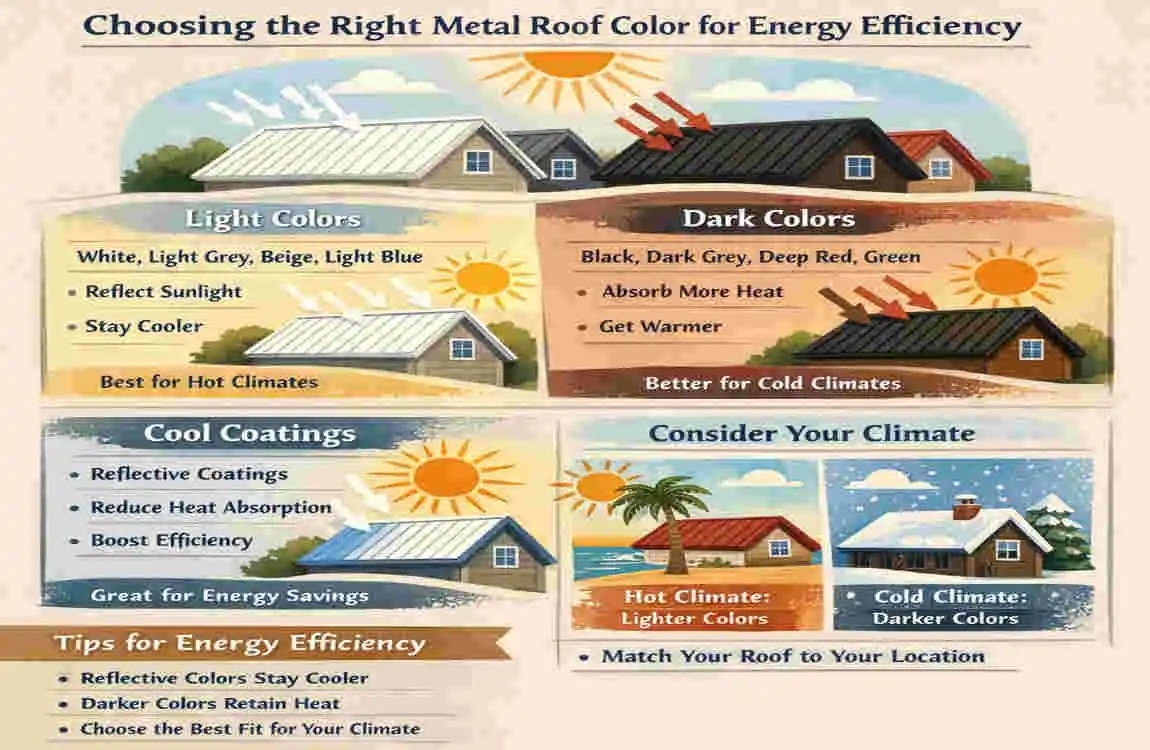
When choosing a roof color, think about:
- Your climate
- Your energy bills
- Your home’s style
- HOA rules
- Maintenance needs
- Resale value
If you live in a hot area, lighter shades are often the smarter choice. If you want a bold look and live somewhere cooler, a darker roof may still be a good fit.
Frequently Asked Questions
Are black metal roofs hotter than white ones?
Yes. Black metal roofs usually absorb more sunlight and become hotter on the surface than white roofs.
Does a dark metal roof increase cooling bills?
It can, but the real impact depends on insulation, ventilation, and coating quality.
Which metal roof color is best for hot weather?
White, light gray, silver, and other reflective shades usually work best in hot weather.
Do reflective coatings reduce roof heat?
Yes. Reflective metal roof coatings can lower heat absorption and improve energy performance.
Is a light grey metal roof energy-efficient?
Yes, it often is. Light gray can reflect more sunlight than darker colors while still looking neutral and modern.
Are matte metal roofs hotter than glossy roofs?
Usually, matte finishes absorb a bit more heat than glossy reflective finishes, but the exact result depends on the coating.