If you are planning a new build or a renovation, it helps to understand the electrical wiring cost per square foot in house before work begins. Wiring is one of those home expenses that can grow quickly if you do not plan for it early.
Electrical wiring includes the wires, outlets, switches, light connections, breaker panel work, and labor needed to make your home safe and fully powered. It is not just about running wire through walls. It also includes proper setup, code compliance, and testing.
What Is the Electrical Wiring Cost Per Square Foot in a House?
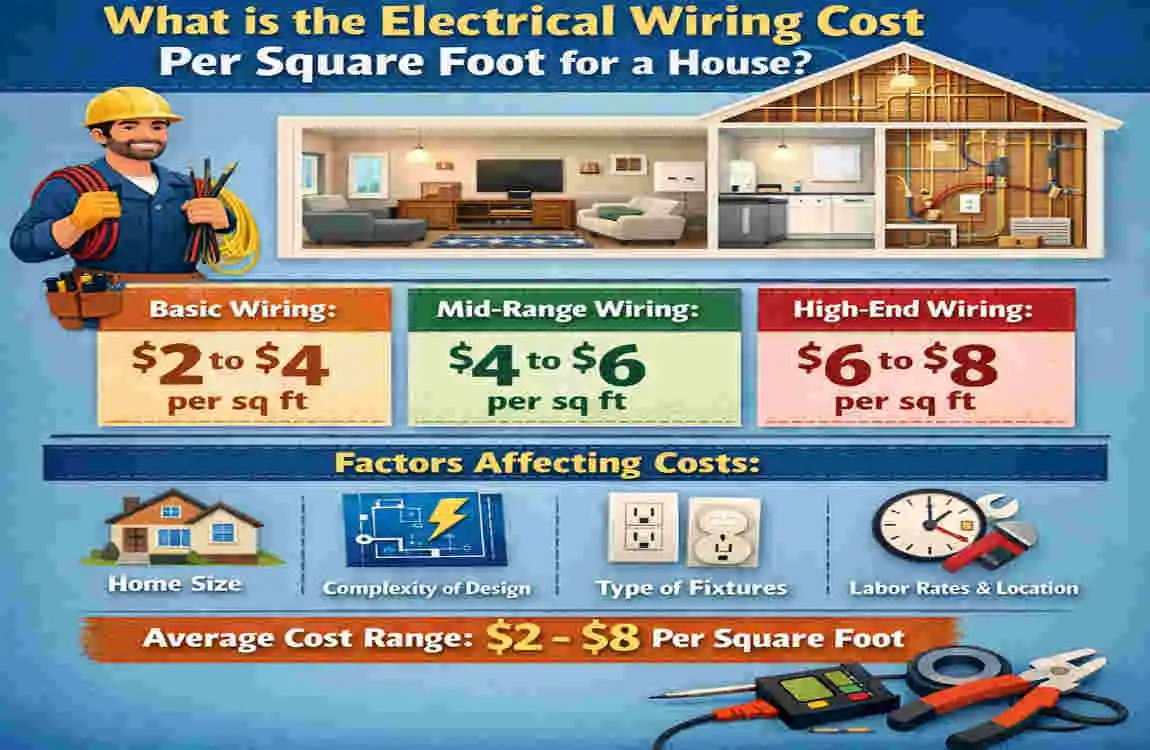
Average Cost Per Square Foot
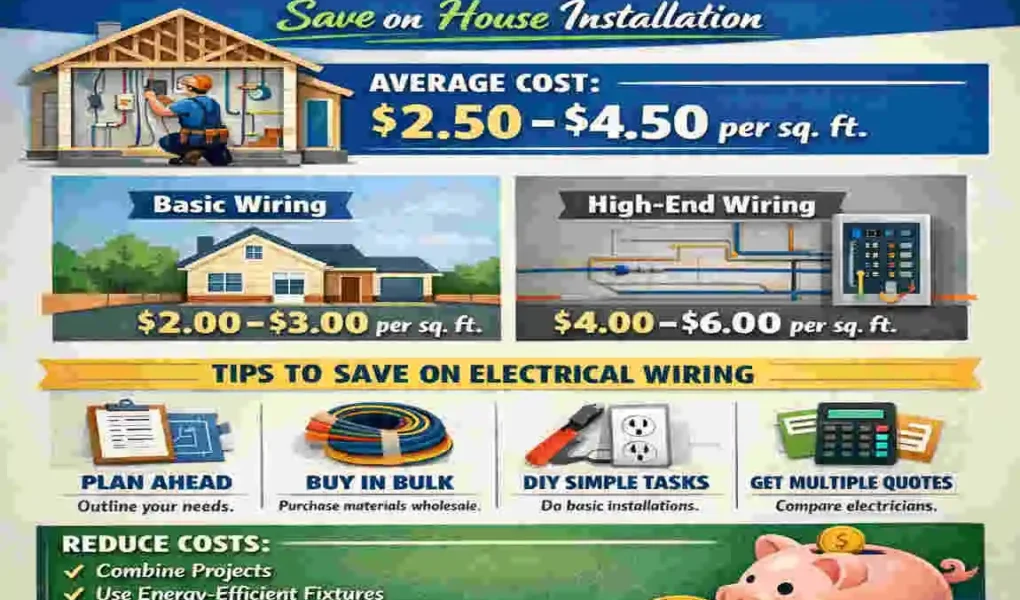
The cost of electrical wiring per square foot in a house usually varies widely because every project is different. For a basic new build, wiring may cost around $4 to $8 per square foot. For more complex projects, it can rise to $10 to $15 or more per square foot.
Standard wiring uses common materials and a simple layout. Premium wiring may include extra outlets, stronger panel systems, upgraded lighting, and smart home features.
Cost by House Size
Here is a simple estimate based on common home sizes:
House Size Estimated Wiring Cost
800 sq ft $3,200 – $6,400
1,000 sq ft $4,000 – $8,000
1,500 sq ft $6,000 – $12,000
2,000 sq ft $8,000 – $16,000
2,500 sq ft $10,000 – $20,000
3,000 sq ft $12,000 – $24,000
These are only general ranges. Your actual cost may be higher if your home has special features or if labor costs in your area are high.
Factors That Affect Electrical Wiring Cost
Size of the Home
A larger home needs more wire, more outlets, more switches, and more labor. This is the most basic reason wiring costs rise with square footage.
New Construction vs Rewiring
Wiring a new house is often cheaper than rewiring an older one. In new construction, electricians can install everything while the walls are open.
Rewiring is harder because workers must remove old materials, work around finished walls, and often repair drywall afterward.
Local Labor Costs
Electrician rates vary by city and state. In some places, labor is much more expensive due to demand, licensing requirements, or higher living costs.
Electrical Panel Size
A larger home or one with many appliances may need a larger panel. Upgrading the panel can add several hundred to several thousand dollars.
Number of Outlets and Switches
More outlets and switches mean more wiring, more boxes, and more labor. If you want outlets in every room corner or special switch locations, the price goes up.
Lighting Installation
Basic light wiring is less expensive than installing recessed lights, pendant lights, or decorative fixtures. Complex lighting plans cost more because they require more planning and labor.
Smart Home Features
Smart switches, smart thermostats, security devices, and home automation systems add to the total. They are useful, but they also increase installation time.
Permit and Inspection Fees
Many areas require permits and inspections. These are part of the total project cost and should be included in your budget.
Average Electrical Wiring Costs by Project Type
New House Wiring
New house wiring is usually the most straightforward job. Electricians install the full system before the home is finished, which saves time.
This type of project often has the best cost per square foot.
Full House Rewiring
Rewiring a whole house is more expensive. Workers may need to open walls, remove old wire, and bring the system up to current code.
This is common in older homes with outdated or unsafe wiring.
Room Addition Wiring
If you are adding a bedroom, office, or family room, wiring costs will depend on the size of the addition and how close it is to the existing system.
Garage Wiring
Garage wiring is usually simpler than main-home wiring, but it still needs lighting, outlets, and possibly a separate circuit.
Basement Wiring
Basements can add cost due to moisture concerns, ceiling layout, and additional safety needs.
Kitchen Electrical Installation
Kitchens are among the most expensive rooms to wire because they require more outlets, dedicated appliance circuits, and more robust electrical planning.
Bathroom Electrical Installation
Bathrooms also require special wiring for safety. GFCI outlets, lighting, and ventilation fans can increase the cost slightly.
Cost Breakdown of Electrical Wiring Materials
Electrical Wires
Wire type matters. Copper wire costs more than aluminum, but it is usually preferred because it is safer and more durable.
Electrical Panel
The panel is the main control center for your home’s electricity. A panel upgrade can be a major part of the total budget.
Circuit Breakers
Breakers protect the home from overloads. They are not expensive by themselves, but many breaker additions can increase the cost.
Electrical Boxes
These hold outlets, switches, and other connections. Small parts like these add up over a whole house.
Switches
Basic switches are cheap, but dimmer switches, smart switches, and specialty controls cost more.
Power Outlets
Standard outlets are affordable, but GFCI and USB outlets are more expensive.
GFCI and AFCI Protection
These safety devices are often required by code in kitchens, bathrooms, bedrooms, and other areas. They help prevent shocks and electrical fires.
Smoke Detectors
Hardwired smoke detectors are often part of new wiring jobs and can increase the material list slightly.
Light Fixtures
Simple ceiling fixtures are less costly than designer lights, recessed cans, or accent lighting.
Labor Cost for Electrical Wiring Installation
Electrician Hourly Rates
Electricians often charge by the hour or by the project. Hourly rates commonly range from $50 to $120 per hour, depending on location and experience.
Labor Cost by Project
A small project may take only a few hours. A full house wiring job can take days or even weeks.
Labor is often the biggest part of the final bill because electrical work requires skill, precision, and safety checks.
Regional Price Differences
Prices tend to be higher in large cities and lower in smaller towns. Local demand also matters. In busy housing markets, contractors may charge more.
Cost Comparison: Copper vs Aluminum Wiring
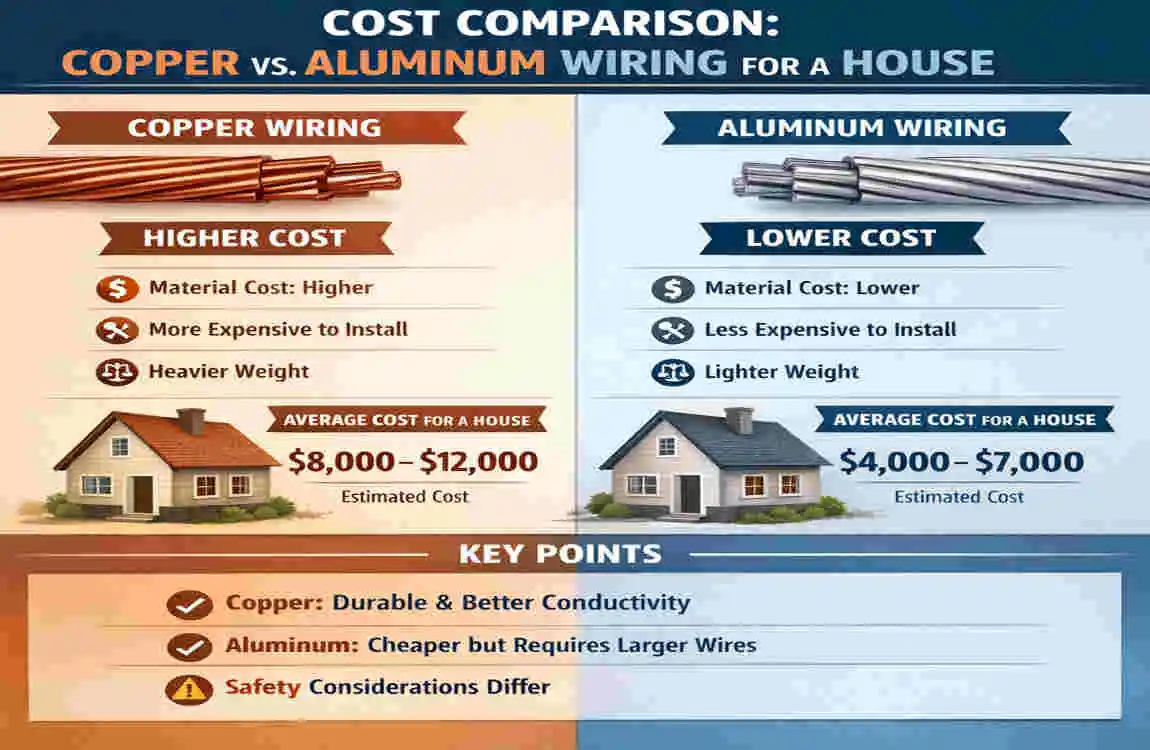
FeatureCopper WiringAluminum Wiring
Initial Cost Higher Lower
Durability Very strong Good, but less stable
Safety Excellent Needs careful installation
Maintenance Low Higher
Best Use Most homes Limited situations
Copper wiring costs more upfront, but many homeowners prefer it because it lasts longer and performs better.
Aluminum wiring can lower the initial price, but it may need extra care and is not always the best choice for modern residential systems.
Hidden Costs Homeowners Should Consider
Permit Fees
Many wiring projects need permits. These fees are usually not huge, but they should still be part of your budget.
Drywall Repairs
If the electrician needs to cut into walls, you may also have to pay for drywall patching and painting.
Electrical Panel Upgrade
Sometimes the old panel is not strong enough for the new system. If that happens, the upgrade can become a major extra cost.
Code Compliance
Older homes may need updates to meet modern code. That can add both time and money.
Emergency Repairs
If the wiring problem is urgent or dangerous, emergency service fees can be higher than planned work.
How to Save Money on House Electrical Wiring
Get Multiple Quotes
Talk to more than one electrician. This helps you compare pricing and understand what is included.
Plan Before Construction
The earlier you plan, the fewer change orders you will face later. That saves money and stress.
Bundle Electrical Projects
If you need several electrical tasks done, bundle them together. One visit is often cheaper than several separate jobs.
Use Energy-Efficient Fixtures
Energy-efficient lighting and fixtures may cost a little more upfront, but they can save money over time.
Avoid Last-Minute Design Changes
Changing the layout after wiring starts can lead to wasted labor and extra material costs.
Hire a Licensed Electrician
A licensed electrician may not always be the cheapest option, but they help reduce mistakes, delays, and safety problems.
Signs Your Home Needs Rewiring
Frequent Circuit Breaker Trips
If breakers trip often, your system may be overloaded.
Flickering Lights
Lights that dim or flicker may point to wiring trouble.
Burning Smell
A burning smell near outlets or walls is a serious warning sign.
Warm Outlets
Outlets should not feel hot. Heat can mean loose or damaged wiring.
Outdated Wiring
Older homes with outdated wiring may need an upgrade for safety and performance.
DIY vs Professional Electrical Wiring
What Homeowners Can Safely Do
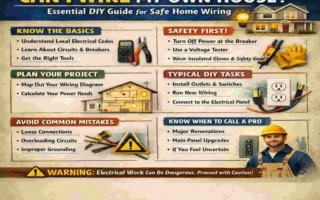
Some small tasks, like replacing a light bulb or changing a cover plate, are fine for most homeowners.
Why Major Wiring Should Be Left to Professionals
Running new wire, upgrading panels, or rewiring rooms should be handled by trained electricians. This is not the place to guess.
Safety Risks of DIY Electrical Work
DIY electrical mistakes can lead to shocks, fires, code violations, or expensive repairs. It is usually not worth the risk.
Tips Before Hiring an Electrician
Before you choose someone, make sure to:
- Verify licensing
- Check insurance
- Read customer reviews
- Ask for a written estimate
- Confirm warranty
- Request a project timeline
These steps help you choose a reliable contractor and avoid surprise costs.
Electrical Wiring Cost Calculator Basics
Information You’ll Need
To estimate costs, you should know:
- Home size
- Number of rooms
- Electrical panel size
- Number of outlets
- Lighting fixtures
- Smart home devices
How Estimates Are Calculated
Electricians usually look at labor, materials, layout complexity, and safety requirements. A simple home with fewer circuits costs less than a home with many rooms, appliances, and advanced features.
Frequently Asked Questions
What is the average electrical wiring cost per square foot in a house?
Most homeowners pay roughly $4 to $15 per square foot, depending on the project type and materials.
How much does it cost to wire a 2,000-square-foot house?
A 2,000-square-foot house may cost around $8,000 to $16,000 or more, depending on complexity.
Is rewiring a house more expensive than wiring a new home?
Yes. Rewiring is usually more expensive because workers must remove old wiring and work around finished walls.
How long does it take to wire an entire house?
It may take a few days for a simple project or several weeks for a larger or more complex home.
What factors increase electrical wiring costs?
Home size, labor rates, panel upgrades, extra outlets, lighting, and permit fees can all raise the total cost.
Can I reduce electrical installation costs?
Yes. You can plan early, compare quotes, bundle projects, and avoid last-minute changes.
| Category | Details |
|---|---|
| Average Cost Per Sq. Ft. | $4–$9 per square foot (including labor and materials). |
| New Construction Cost | Usually $4–$7/sq. ft., as wiring is easier before walls are finished. |
| Rewiring Existing House | Around $6–$12/sq. ft. due to wall repairs and extra labor. |
| Small Home (1,000 sq. ft.) | Estimated total cost: $4,000–$9,000. |
| Medium Home (2,000 sq. ft.) | Estimated total cost: $8,000–$18,000. |
| Large Home (3,000 sq. ft.) | Estimated total cost: $12,000–$27,000+. |
| Main Cost Factors | Home size, wiring type, electrical panel upgrades, labor rates, permits, and local building codes. |
| Ways to Save Money | Compare electrician quotes, wire during new construction, keep the existing panel if possible, and bundle electrical upgrades into one project. |