Choosing how to build a home is one of the biggest decisions a homeowner can make. It affects cost, durability, energy use, maintenance, safety, and even resale value. That is why the question comes up so often: which type of house construction is best?
The honest answer is simple: there is no single best option for every home. A construction type that works well in a dry, hot region may not be the best choice for a snowy or hurricane-prone area. A budget-friendly home may need a different structure than a high-end custom build.
| Factor to consider | What to ask yourself / decide |
|---|---|
| Budget | Can you afford a low‑cost method (e.g., simple brick‑in‑mud or AAC blocks) or a higher‑end one (ICF, steel‑frame, premium RCC)? |
| Climate and location | Do you need strong insulation and storm‑resistance (ICF, insulated brick‑RCC), or mainly heat‑resistance and low‑cost (simple masonry or hollow‑block)? |
| Project size and complexity | Is this a small, simple house (load‑bearing masonry) or a larger, more open‑plan design that needs beams and columns (RCC frame)? |
| Speed of construction | How fast must you finish? Prefab, panelized, or modular systems are faster than traditional on‑site brick‑or‑wood framing. |
| Durability and safety | Do you need high earthquake‑ or fire‑resistance (RCC frame, steel frame, insulated concrete) over purely cheap options? |
| Maintenance and upkeep | Are you okay with more frequent repairs (traditional brick‑and‑timber) or prefer low‑maintenance, long‑life systems (well‑detailed RCC/ICF)? |
| Future expansion | Might you add floors later? RCC frame or steel frame is better for future upper floors than basic load‑bearing walls. |
Your location, climate, budget, and long-term plans all matter. Some homeowners want the lowest upfront price. Others want the strongest, most energy-efficient home possible. Some want something fast and practical. Others care most about style and long-term value.
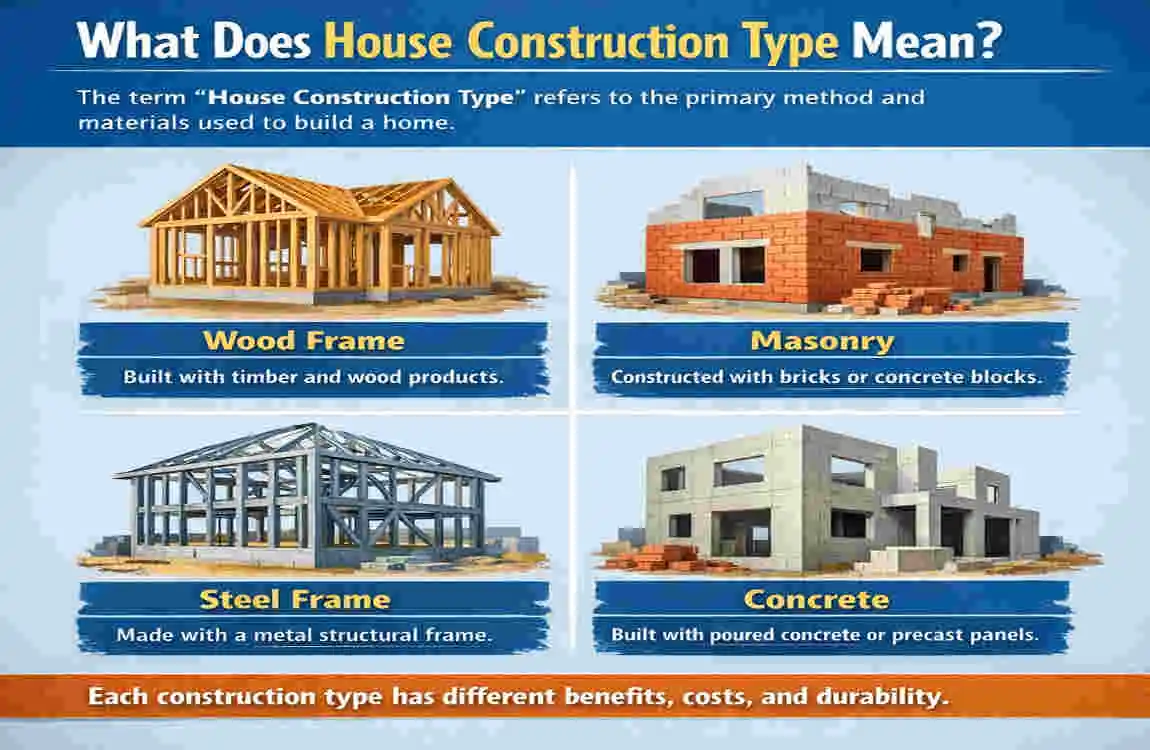
What Does House Construction Type Mean?
Definition of House Construction Type
A house construction type is the structural system used to build a home. It includes the main materials, the building method, and the engineering approach behind the structure.
In simple terms, it tells you whether the home is built with wood, concrete, steel, brick, panels, or forms. It also affects how the house handles weight, weather, heat, sound, and wear over time.
Why Construction Type Matters
This choice matters more than many people think. A home’s construction type can affect:
- How long the home lasts
- How well it stands up to weather
- How much you spend on repairs
- How comfortable the home feels
- How much energy it uses
- What insurance might cost
- How easy it is to sell later
If you are trying to decide which type of house construction is best, you need to think beyond the first price tag. The cheapest home to build is not always the cheapest home to own.
Main Types of House Construction
Before we compare them in detail, here is a quick look at the most common residential construction methods:
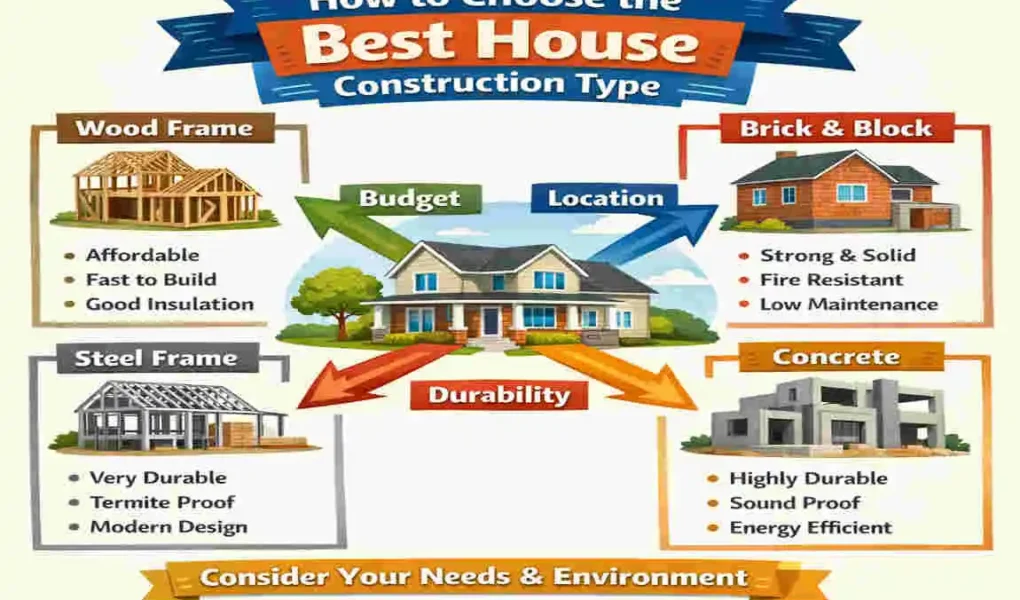
- Wood frame construction
- Concrete block construction
- Steel frame construction
- Brick masonry construction
- Modular and prefabricated homes
- SIP homes
- ICF homes
Each of these has strengths and weaknesses. The best one depends on what you need most.
Wood Frame Construction
What Is Wood Frame Construction?
Wood-frame construction is the most common residential building method in many areas. It uses wooden studs, beams, and joists to form the home’s structure.
Many houses in suburban and rural areas use this method because it is simple, flexible, and widely available.
Advantages
Wood frame homes are popular for good reasons. They are usually:
- Affordable
- Faster to build
- Easy to design in many styles
- Simple to remodel later
This makes wood a strong choice for families who want a practical home without a very high starting cost. It also works well if you want future changes, like adding a room or moving walls.
Disadvantages
Wood also has limits. It can be:
- Vulnerable to termites and pests
- At risk from fire
- Damaged by moisture and rot
If the house is in a humid area or a place with heavy rain, wood needs careful maintenance. Good sealing, proper insulation, and regular inspections become very important.
Best Uses
Wood frame construction is often best for:
- Moderate climates
- Budget-friendly homes
- Homes that may be remodeled later
If you want flexibility and lower starting costs, wood may be the right answer.
Average Cost
Wood-frame homes are often among the least expensive options per square foot. Costs vary by region, design, and labour rates. Still, they are usually considered a lower-cost option compared with concrete, steel, or brick.
Concrete Block Construction
What Is Concrete Block Construction?
Concrete block construction uses concrete masonry units, or CMUs. These are large concrete blocks reinforced with aggregate. Builders stack and reinforce them to form strong walls.
This type of construction is common in areas where homes must handle strong weather.
Advantages
Concrete block homes are valued for their strength. They offer:
- Excellent durability
- Good fire resistance
- Strong hurricane resistance
- Better heat control in hot climates
A concrete block wall can withstand wind, moisture, and impact. That is why it is often chosen in storm-prone regions.
Disadvantages
There are trade-offs. Concrete block construction can have:
- Higher labor costs
- Longer construction time
The structure is more labour-intensive than wood-framed construction. It may also need more planning during the build, which can add time and cost.
Best Uses
Concrete block construction works especially well in:
- Coastal areas
- Storm-prone regions
- Hot climates
If your area is prone to hurricanes or intense heat, concrete block can be a smart and reliable option.
Maintenance Requirements
Concrete block homes usually need less frequent maintenance than wood homes. Still, you should watch for cracks, seal gaps, and check for moisture issues. Good finishing and waterproofing help the home stay strong for years.
Steel Frame Construction
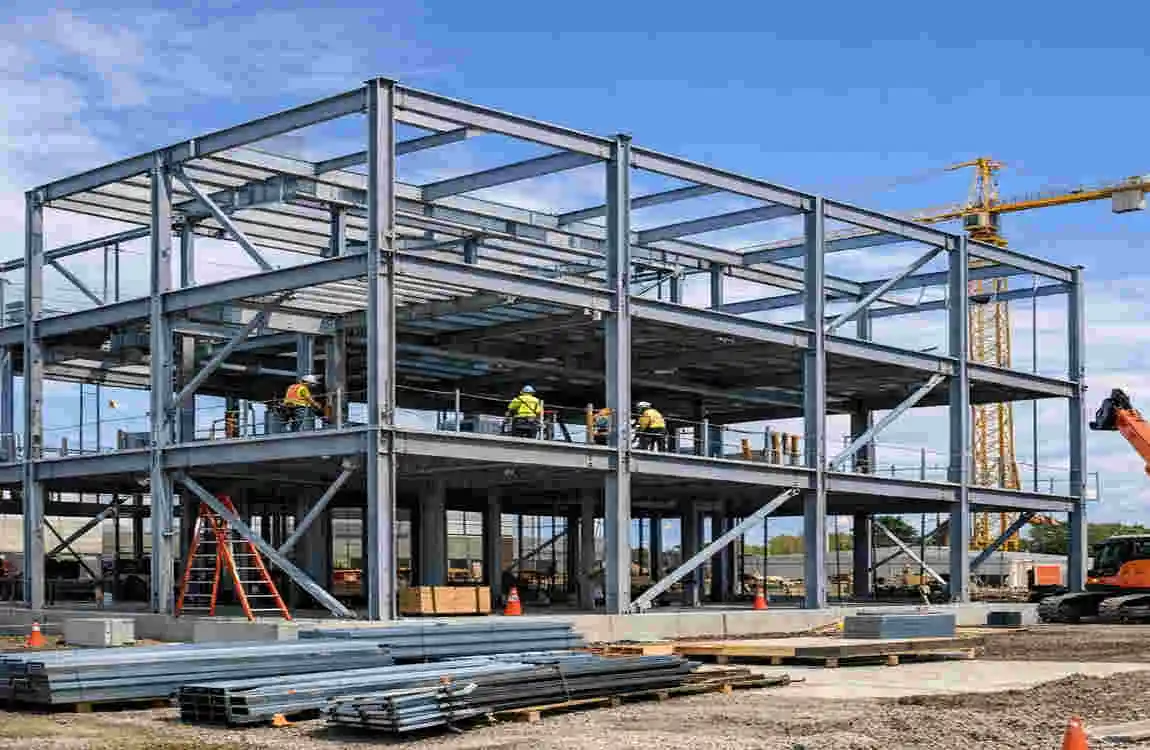
What Is Steel Frame Construction?
Steel frame construction uses steel beams and studs instead of wood. It is a strong structural system that can support modern home designs and larger spans.
This type of construction is often linked with contemporary homes, but it can be used in many styles.
Advantages
Steel frame homes offer several major benefits:
- Very strong structure
- Pest resistant
- Non-combustible
- Long lifespan
Steel does not attract termites, and it does not burn the way wood can. It is a solid choice when strength and safety are top priorities.
Disadvantages
There are also challenges:
- Higher initial cost
- Thermal conductivity issues
Steel can transfer heat and cold more easily than other materials. That means insulation must be planned carefully. Without good insulation, energy bills may rise.
Ideal Applications
Steel frame construction is often ideal for:
- Modern homes
- Areas with severe weather
- Homes that need extra structural strength
If you want a durable, low-maintenance structure and can handle the higher upfront cost, steel is worth considering.
Brick Masonry Construction
Overview of Brick Homes
Brick homes use bricks as a major part of the exterior wall system. In some homes, brick is structural. In others, it is a veneer over another frame.
Brick has been used for a very long time, and many people still love its classic look.
Benefits
Brick homes are known for:
- Timeless appearance
- Excellent durability
- Good fire resistance
- Noise reduction
Brick also gives a home a solid, high-quality feel. Many homeowners value it because it can maintain its look for decades with very little visible wear.
Drawbacks
The main drawbacks are:
- Expensive materials
- Labor-intensive installation
Brick costs more to install because the work is slow and skilled. That usually makes the total price higher than wood framing.
How Long Brick Homes Last
Brick homes can last many decades and often much longer when properly built and maintained. In many cases, the brick exterior outlasts other parts of the home. That is one reason people often see brick as a premium long-term option.
Modular and Prefabricated Homes
What Are Modular Homes?
Modular homes are built in sections in a factory and then assembled on-site. Prefabricated homes use similar ideas, though the exact building process can vary.
These homes are not “cheap shortcuts” like some people assume. Many are well built and efficient.
Advantages
Modular homes offer real benefits:
- Faster build times
- Lower labor costs
- Less material waste
Because many parts are built in a controlled factory setting, the process can move quickly and cleanly. This also helps reduce weather delays.
Disadvantages
There are a few downsides:
- Transportation limitations
- Financing challenges in some regions
Large sections must be moved from factory to site, so size and design can be limited by transport rules. Some lenders and local markets may also be less familiar with modular homes.
Are Modular Homes Durable?
Yes, modular homes can be very durable when built well. Many meet or exceed local building codes. The final strength depends on the design, materials, and on-site installation quality.
SIP and ICF Construction Explained
What Are SIP Homes?
SIP stands for structural insulated panels. These panels usually have a foam core sandwiched between structural boards. They form walls and roofs that are both strong and well insulated.
What Are ICF Homes?
ICF stands for insulated concrete forms. These are hollow foam blocks or panels that are filled with concrete. The foam stays in place after the pour and acts as insulation.
Energy Efficiency Benefits
Both SIP and ICF homes are known for excellent energy efficiency. They help keep indoor temperatures more stable, which can lower utility bills and make the home feel more comfortable year-round.
This is a major reason many buyers ask which type of house construction is best for long-term savings.
Durability Comparison
ICF homes are especially known for strength because they combine concrete and insulation. SIP homes are also strong, but their performance depends more on proper sealing and installation.
Cost Comparison
These homes usually cost more upfront than standard wood framing. However, some homeowners see the higher cost as a long-term investment because of lower energy use and fewer comfort problems.
Which One Is Better for Modern Homes?
If your goal is high energy performance, both can be excellent. If your goal is strong storm resistance and long-term durability, ICF often has the edge. If you want faster panel-based building with good insulation, SIP can be a smart option.
Which Type of House Construction Is Best for Different Climates?
Best Construction for Hot Climates
In hot regions, heat control is crucial. Good choices include:
- Concrete
- ICF
- Brick
These materials handle heat well and can help keep the home cooler inside.
Best Construction for Cold Climates
In cold areas, insulation is critical. Good choices include:
- SIPs
- Wood frame with strong insulation
These options help reduce heat loss and improve comfort during long winters.
Best Construction for Humid Areas
Humidity can cause wood rot and mold problems. Better choices include:
- Steel
- Concrete block
These hold up better when moisture levels stay high.
Best Construction for Earthquake Zones
In earthquake-prone areas, flexibility and engineering matter. Good choices include:
- Steel frame
- Reinforced wood systems
These systems can perform well when designed correctly by professionals.
Comparing House Construction Types
Here is a simple comparison of house construction to help you see the differences more clearly.
Construction TypeCostDurabilityEnergy EfficiencyMaintenanceBest For
Wood Frame Low Medium Medium Medium Budget homes
Concrete Block Medium-High High High Low Storm areas
Steel Frame High Very High Medium Low Modern homes
Brick Masonry High Very High Medium Low Long-term value
Modular Medium Medium-High High Medium Fast construction
ICF/SIP High Very High Very High Low Energy efficiency
This table does not yield a single winner, but it makes the trade-offs easier to understand.
Factors to Consider Before Choosing a Construction Type
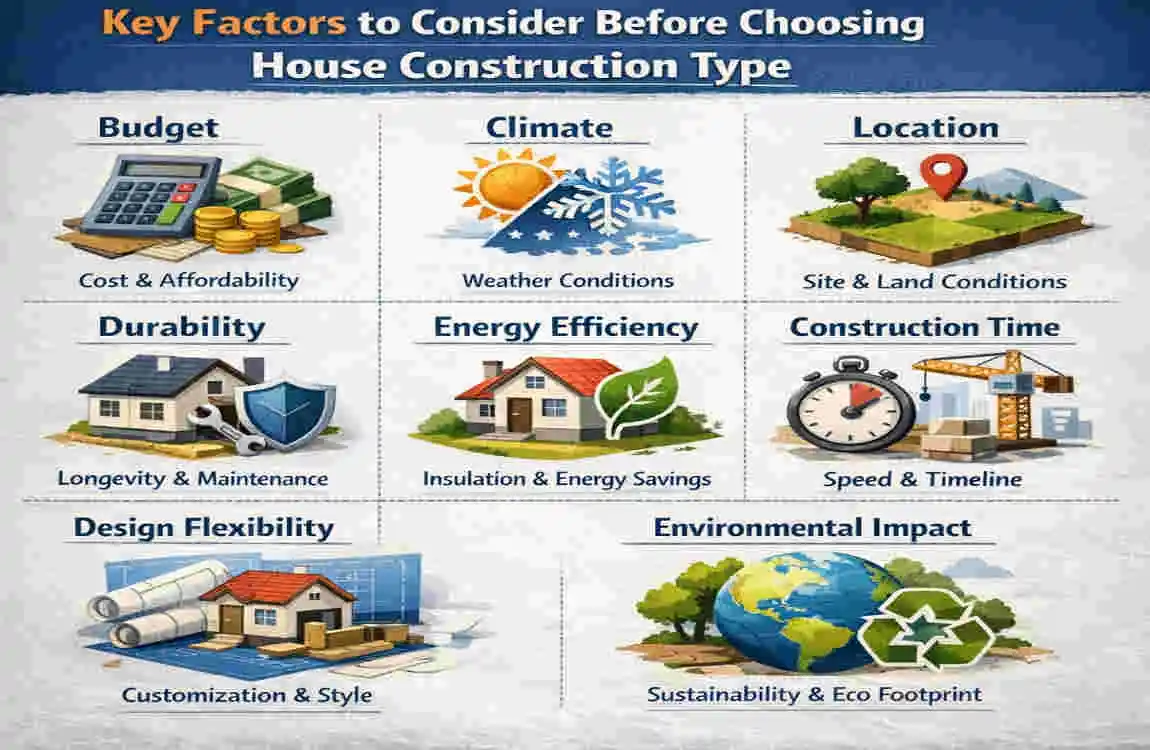
Budget
Your budget matters, but do not look only at the initial price. Think about long-term ownership costs too.
A cheaper home to build may cost more over time if it requires frequent repairs, uses more energy, or requires expensive maintenance.
Climate and Weather
Your local weather should strongly shape your decision.
Ask yourself:
- Is the area hot or cold?
- Is humidity a problem?
- Do storms happen often?
- Is there a hurricane risk?
- Is snow heavy in winter?
The right material should match the environment, not fight against it.
Local Building Codes
Some areas have strict rules about wind, fire, insulation, or earthquake resistance. A good design must follow those rules from the start.
Energy Efficiency Goals
If you want lower utility bills, choose a system that supports insulation and airtight construction. ICF and SIP homes are strong options here.
Maintenance Expectations
Some homeowners are fine with regular upkeep. Others want a low-maintenance home. If you prefer fewer repairs, concrete, brick, and steel may suit you better than wood.
Construction Timeline
If time matters, modular homes and wood framing often move faster than brick or concrete block construction.
Resale Value
Buyers often like homes that feel solid, efficient, and easy to maintain. Strong resale value often comes from a smart mix of durability, comfort, and location.
Most Durable House Construction Types
When people ask which type of house construction is best for long-term strength, durability is usually part of the answer.
The most durable choices are often:
- Concrete
- Brick
- Steel
- ICF
These systems generally last a long time and withstand tough conditions. Their lifespan depends on quality design and proper maintenance, but they usually outperform basic framing in extreme conditions.
A well-built durable house can give you peace of mind for decades. It can also reduce repair stress over time.
Most Energy-Efficient House Construction Types
If you care most about efficiency, the best options are often:
- SIP homes
- ICF homes
- Insulated wood framing
These construction types help keep indoor temperatures steady. That can mean lower utility bills, better indoor comfort, and fewer drafts.
Energy-efficient home construction also supports a more comfortable living space. In hot or cold weather, that makes daily life better for everyone inside.
Common Mistakes Homeowners Make When Choosing Construction Types
Focusing Only on Initial Cost
This is one of the biggest mistakes. A low starting price can be tempting, but it may not be the cheapest option in the long run.
Ignoring Climate Conditions
A home should match the climate. A system that works well in one region may fail or cost more in another.
Choosing Trends Over Practicality
A modern look is nice, but style should not come at the expense of safety, comfort, and performance.
Not Considering Maintenance Costs
Some materials need more care than others. If you want a low-hassle home, choose with maintenance in mind.
Hiring Inexperienced Contractors
Even the best material can fail if the build is poor. The contractor’s skill matters just as much as the construction type itself.
Expert Tips for Choosing the Right House Construction Type
Here are a few smart steps to take before you decide:
- Talk to architects and engineers
- They can help match the structure to your land, climate, and goals.
- Study local weather risks
- Look at heat, snow, humidity, wind, and earthquake concerns.
- Compare lifetime costs, not just build price
- Include repairs, energy use, and maintenance.
- Visit completed homes if possible
- Seeing a finished home in person can help you understand the space and feel.
- Ask about insulation and warranties
- These can make a huge difference in comfort and peace of mind.
If you take your time, you are more likely to choose a home that fits your life well.
FAQ
Which type of house construction lasts the longest?
Brick, steel, concrete, and ICF homes are often among the longest-lasting types when built well and maintained properly.
What is the cheapest type of house construction?
Wood-frame construction is usually the least expensive to build upfront in many regions.
Which house construction type is most energy efficient?
ICF and SIP homes are often the most energy efficient because they provide excellent insulation and airtight performance.
Are concrete homes better than wood homes?
It depends on your needs. Concrete homes are usually stronger and more weather-resistant, while wood homes are often cheaper and easier to modify.
Which house construction is best for hurricanes?
Concrete block, ICF, and steel frame construction are often strong choices for hurricane-prone areas.
Is steel frame construction worth the cost?
Yes, if you want strength, pest resistance, and long-term durability. It can be worth the higher upfront cost, especially in severe weather regions.