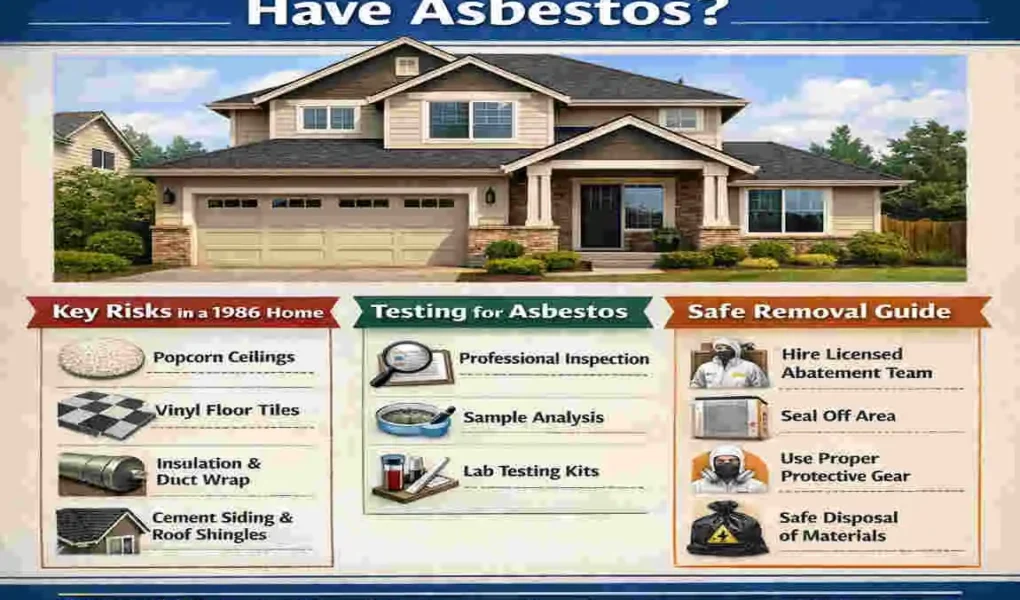
Many homeowners worry about asbestos when they move into an older home or start a renovation. That concern makes sense. For decades, asbestos was used in many building products because it was strong, inexpensive, and heat-resistant. Even though its use dropped in the 1970s and 1980s, it was not fully gone from homes by 1986.
| Topic | What to Know About a 1986 House |
|---|---|
| Likelihood of asbestos | Asbestos use was being phased out by the mid‑1980s, so a 1986 house is less likely to have it than older homes, but some materials may still contain asbestos, especially if old stock or imported products were used. |
| Common locations | Possible locations include textured or popcorn ceilings, some vinyl floor tiles and adhesives, pipe or duct insulation, some cement boards, siding, roofing materials, and certain joint compounds. |
| Main health risks | When asbestos-containing materials are damaged, sanded, drilled, or removed, tiny fibers can become airborne and, if inhaled over time, increase the risk of lung diseases such as asbestosis, lung cancer, and mesothelioma. |
| When risk is highest | The risk is highest during renovation or demolition work that disturbs suspect materials; intact, sealed materials are usually considered lower risk if left undisturbed. |
| How to test safely | Do not scrape, drill, or sand suspect materials yourself; instead, hire a certified asbestos inspector or environmental lab to collect samples and test them, especially before major renovations. |
| Safe removal options | If asbestos is confirmed and needs removal, use a licensed abatement contractor who will seal off the work area, use protective equipment, control dust, and dispose of waste in approved facilities according to local regulations. |
| If you choose to leave it | If asbestos is present but in good condition and not likely to be disturbed, professionals may recommend encapsulation (sealing it) or simply monitoring it instead of removal. |
What Is Asbestos and Why Was It Used in Homes?
What Is Asbestos?
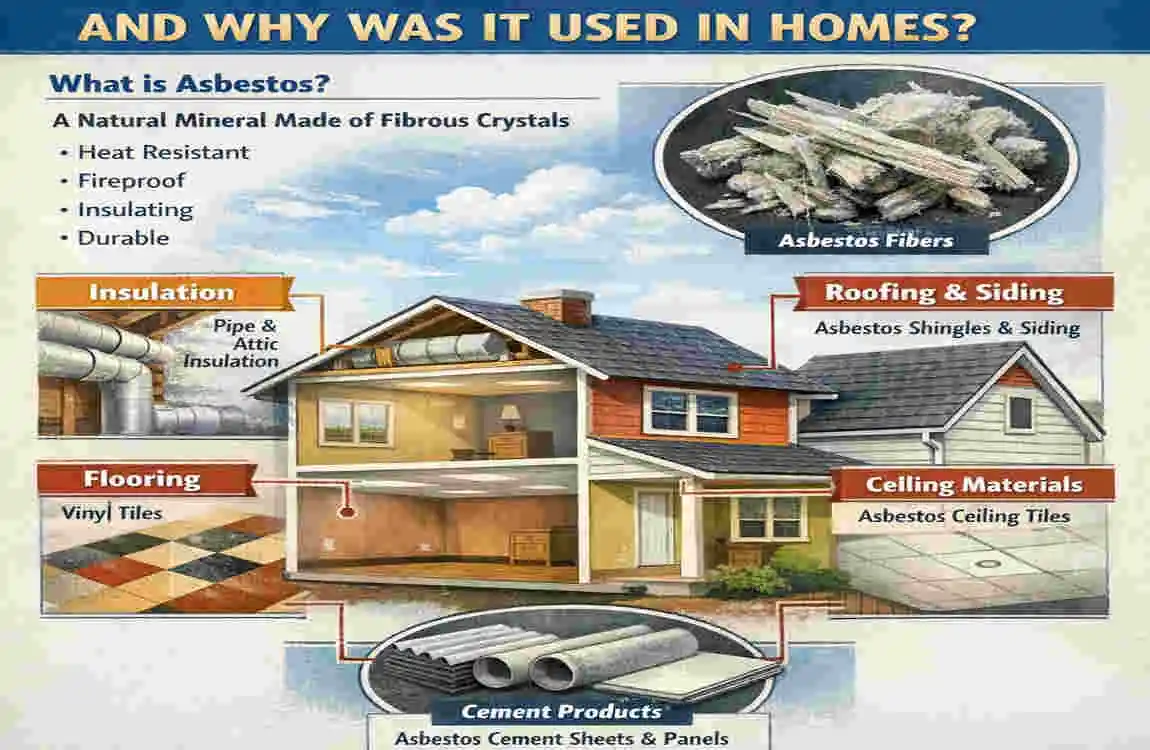
Asbestos is a group of naturally occurring minerals composed of tiny fibers. These fibers are very strong and can resist heat, fire, and wear. That is why asbestos in homes became so common in the past.
Why Builders Used Asbestos
Builders liked asbestos because it added strength to many asbestos building materials. It was used in insulation, flooring, ceiling texture, roof products, and pipe wrapping. It was also affordable, making it popular for both small and large projects.
Why Asbestos Became Dangerous
The danger arises when asbestos fibers are released into the air and inhaled. Once inside the body, these fibers can stay there for years and cause serious health problems. That is why asbestos insulation and other damaged materials should never be handled casually.
Would a House Built in 1986 Have Asbestos?
The Short Answer
Yes, it might. A house built in 1986 can still contain asbestos materials, especially if it was built with older stock or common products that still included asbestos at the time.
Why Asbestos Was Still Used in 1986
Asbestos was not always banned everywhere at once. In many places, some products were still allowed, and builders often used materials already sitting in warehouses. So even if a home was built in the mid-1980s, asbestos in 1980s homes is still a real possibility.
Common Factors That Increase the Chance
The chance of asbestos is higher when:
- The home has original materials that were never replaced
- The house was built in a region with slower regulatory changes
- Previous owners did older DIY renovations
- The home used budget materials common at the time
Homes Most Likely to Contain Asbestos
Homes with untouched ceilings, old floor coverings, aging pipe insulation, or original siding may be more likely to contain asbestos. Still, you cannot confirm the presence of asbestos by looking at it. Testing is the only reliable way to know.
Common Places Asbestos May Be Found in a 1986 House
Ceiling Materials
One of the most common places is the ceiling. Textured or popcorn ceilings may contain asbestos, especially in older finishes that were sprayed or applied for sound control.
Flooring Products
Old vinyl tiles, floor backing, and adhesive often contained asbestos. Even if the tiles look harmless, the glue underneath may also be a problem.
Insulation Areas
Asbestos was often used around pipes, boilers, and attics. These areas can be especially risky because insulation may crumble over time, making it easier for fibers to be released.
Roofing and Exterior Materials
Cement siding, shingles, and soffits are other possible sources. These materials are usually less risky when intact, but cutting or breaking them can create danger.
HVAC and Ductwork
Some furnace parts and duct materials may also contain asbestos. If heating systems are old and have been repaired many times, this risk may be higher.
Bathroom and Kitchen Areas
Older wallboard, backing panels, and heat-resistant surfaces in kitchens and bathrooms can also contain asbestos. These are often overlooked during small remodels.
Area of Home Possible Asbestos Material Risk Level if Disturbed
Ceiling Popcorn texture Medium
Flooring Vinyl tile Medium
Pipe insulation wrap High
Roof Cement shingles Low–Medium
HVAC Duct insulation High
How Dangerous Is Asbestos in a Home?
When Asbestos Is Usually Safe
If asbestos materials are in good condition and left alone, they may not pose an immediate threat. Sealed or encapsulated materials are often managed safely this way.
When It Becomes Dangerous
Asbestos becomes a real hazard when you:
- Cut it
- Sand it
- Drill it
- Break it
- Demolish it
These actions can quickly release fibers into the air.
Health Risks Linked to Asbestos Exposure
The main asbestos health risks include mesothelioma, lung cancer, and asbestosis. These are serious illnesses that can take years to develop after exposure.
Symptoms of Long-Term Exposure
Possible asbestos exposure symptoms may include:
- Persistent cough
- Shortness of breath
- Chest pain
- Ongoing breathing trouble
If you have concerns about possible exposure, speak with a medical professional.
Signs Your 1986 Home May Contain Asbestos
Clues Based on Building Materials
Look closely at old vinyl tiles, textured ceilings, and insulation that looks worn or fuzzy. These are common warning signs, but they are not proof.
Renovation History Matters
If a house still has original features from the 1980s, the chance of asbestos may be higher. DIY changes can also hide older materials under newer finishes.
Professional Inspection Indicators
Inspectors may look at product age, labels, and building records. Even then, testing is still needed because appearance alone is not enough.
Important reminder: Never rely on appearance alone. Many dangerous materials look ordinary.
How to Test a House Built in 1986 for Asbestos
DIY Test Kits
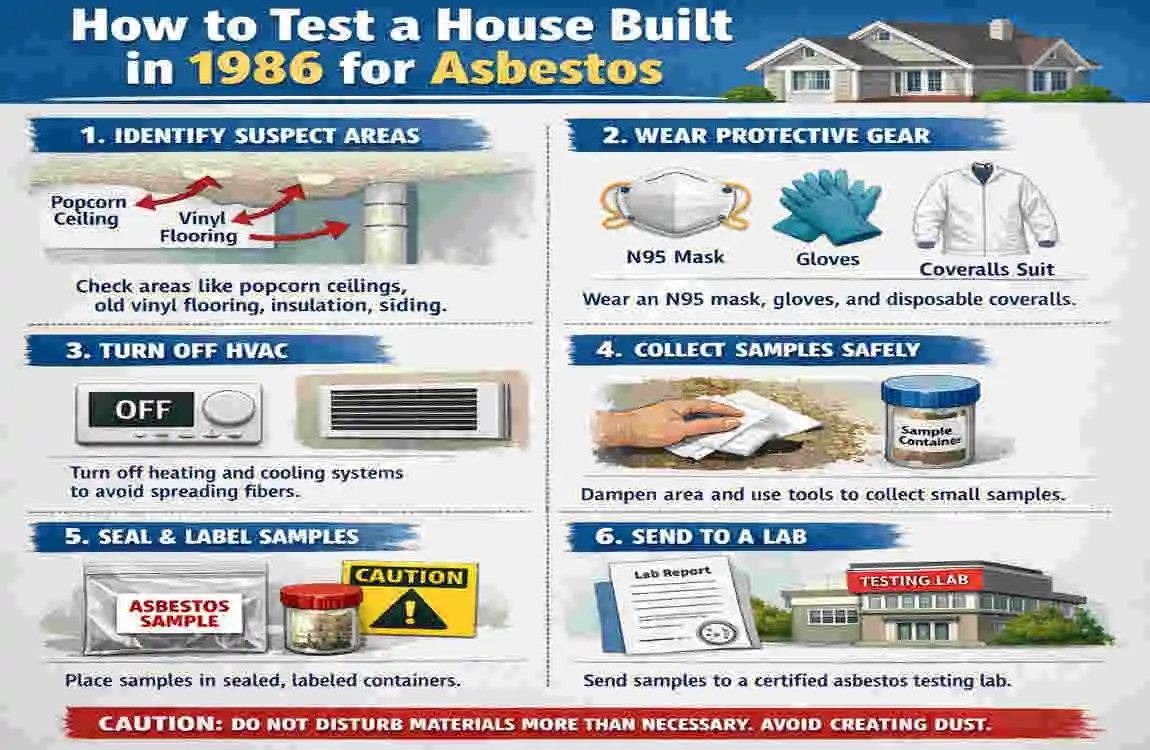
A home asbestos test kit can be an option if you want a basic check. But the risk is that you may disturb the material while collecting the sample. That is why this is not the safest route.
Hiring a Licensed Asbestos Inspector
A licensed inspector is the safer choice for asbestos testing for homes. They know how to collect samples with less risk and send them to a lab for proper analysis.
What Happens During Inspection
A professional usually:
- Checks the suspected materials
- Collects small samples safely
- Sends them to a certified lab
- Gives you a report with the results and next steps
Average Testing Costs
Testing costs vary, but a simple sample test is usually cheaper than a full inspection. A whole-house review costs more because it includes more areas and more samples.
Testing Option Average Cost Accuracy Safety
DIY Kit Low Moderate Low
Professional Testing Higher High High
What to Do If Asbestos Is Found
Do Not Panic
Finding asbestos does not always mean you need major work right away. Many cases are manageable.
Leave It Alone if Undamaged
If the material is sealed and in good shape, it may be safer to leave it in place. In some cases, encapsulation is the best choice. This means sealing the material so fibers cannot escape.
Professional Asbestos Removal
If the material is damaged or will be disturbed during renovation, asbestos abatement may be needed. Licensed professionals use containment methods to protect the home and its occupants.
Avoid DIY Removal
Do-it-yourself removal can be risky and may even break local rules. It can also spread fibers through the home. That is why trained workers should handle asbestos removal safely.
Disposal Regulations
Asbestos waste must be wrapped, labeled, and disposed of in accordance with local regulations. Never place it in normal trash unless your local authority clearly allows it.
How Much Does Asbestos Removal Cost?
Factors Affecting Cost
The price depends on:
- Material type
- Home size
- Location of the material
- How damaged it is
- How easy it is to reach
Typical Removal Price Ranges
Some jobs are small and simple. Others take more time, more containment, and more labor.
Material Type Estimated Removal Cost
Popcorn Ceiling $1,500–$4,000
Floor Tiles $1,000–$5,000
Pipe Insulation $2,000–$10,000
Cost vs Risk Comparison
The cheapest option is not always the safest one. If a material is likely to be disturbed, paying for professional removal can save you from bigger problems later.
Buying or Renovating a 1986 Home: What You Should Know
Questions to Ask Before Buying
Ask the seller:
- Has asbestos testing been done?
- Are there records of past removal?
- Were any permits used for renovations?
Renovation Precautions
Always test before demolition. If a material looks old or suspicious, do not cut into it to check.
Insurance and Disclosure Considerations
Disclosure rules vary by location. Sellers may have to share known asbestos issues, and contractors may need to follow special safety steps.
Safety Tips for DIY Homeowners
If you plan to work on the house yourself:
- Wear proper protective gear
- Avoid power tools on suspect materials
- Stop work if you find anything unusual
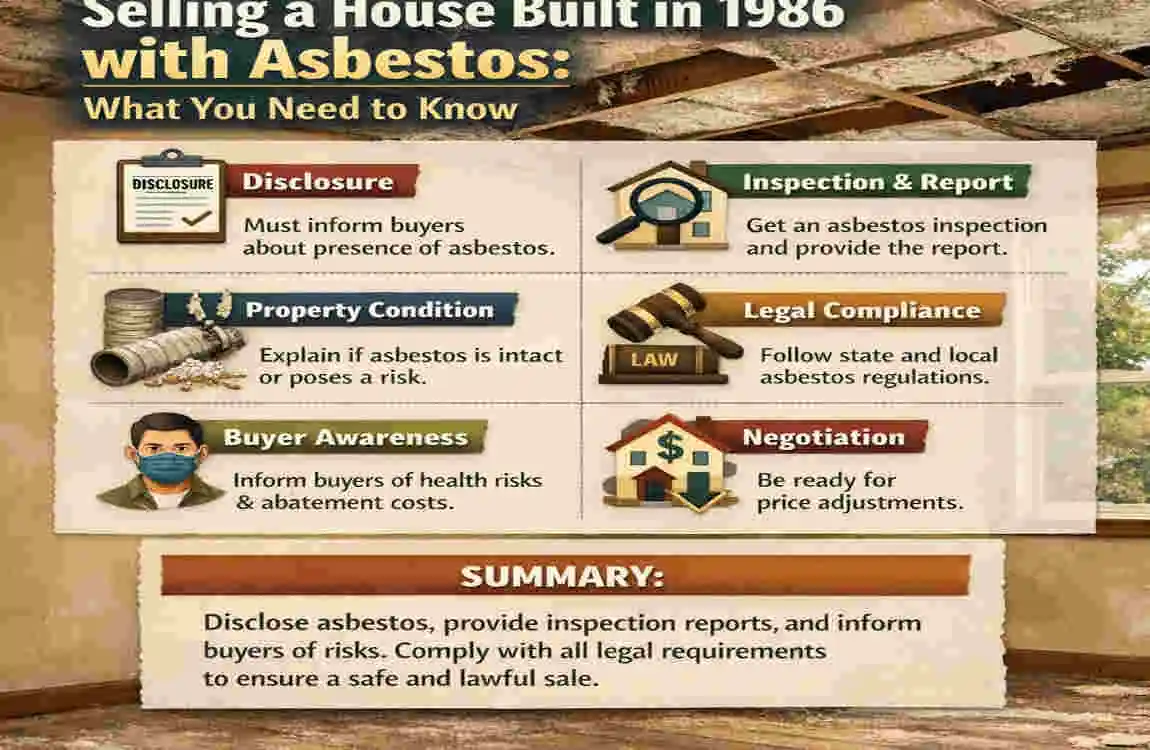
Can You Sell a House With Asbestos?
Legal Disclosure Requirements
Yes, many homes with asbestos are sold every year. But disclosure laws depend on where you live.
Does Asbestos Lower Home Value?
It can, especially if the material is damaged or there is no testing record. On the other hand, a well-managed home with sealed asbestos may still sell normally.
How Sellers Handle Asbestos
Sellers often share:
- Testing reports
- Removal records
- Encapsulation documents
These papers help buyers feel more confident.
Frequently Asked Questions
Would a house built in 1986 have asbestos everywhere?
No. Asbestos in homes built in 1986 was usually found in certain products, not every surface.
Is the popcorn ceiling in a 1986 home asbestos?
It sometimes can be. Testing is the only way to know for sure.
Can I live in a house with asbestos?
Yes, if the material is intact and undisturbed. The real risk comes from damage or remodeling.
How do I know if floor tiles contain asbestos?
You usually cannot tell by looking. A lab test is needed.
Is asbestos removal mandatory?
Not always. If the material is stable, sealing or leaving it in place may be enough.
How long does asbestos removal take?
It depends on the size of the job. A small area may take a day, while larger projects can take longer.