The UK property market is always changing, and many buyers want to know what UK real estate house prices are really like. The answer is not simple because home prices depend on many factors, such as location, property type, local demand, and the wider economy.
Some areas are expensive, while others are much more affordable. A house in London can cost far more than a similar home in Northern England, Scotland, or Wales. That is why it helps to understand the market before you buy.
How Much Does a House Cost in the UK?
Average UK House Prices Overview
The cost of a modern house in the UK varies a lot from one region to another. London stays at the top of the market, while many areas outside the South East offer better value.
Here is a simple look at average price ranges:
UK Region Average House Price Range
London £450,000+
South East England £350,000+
North England £180,000–£250,000
Scotland £150,000–£220,000
Wales £180,000–£250,000
Northern Ireland £160,000–£220,000
Why Prices Differ So Much
The main reason is location. Homes near major cities, strong job markets, schools, and transport links usually cost more.
The type of property also matters. A flat, semi-detached house, and detached home all sit in different price brackets. Bigger homes and homes in popular areas usually cost more.
Factors That Affect UK House Prices
Location and Neighborhood Demand
Location is the biggest price driver. Buyers often pay more for areas with good train links, top schools, nearby shops, and strong local jobs.
If people want to live in the same area, prices often rise. That is why homes in popular neighborhoods can become expensive very quickly.
Property Type and Size
Not all homes cost the same. A flat is usually cheaper than a semi-detached house. A detached house usually costs more because it offers more space and privacy.
Luxury homes sit in their own category. They often come with premium features, larger plots, and high-end finishes.
Economic Conditions
The wider economy also affects house prices. Mortgage rates, inflation, and job security all play a role.
When interest rates go up, borrowing becomes more expensive. This can cool the market. When rates are lower, more buyers can afford to move, which can push prices up.
UK Property Market Trends
Current Housing Market Conditions
In 2026, the UK market continues to show mixed conditions. Some areas are seeing steady demand, while others are more affordable and attract first-time buyers.
Many buyers remain cautious due to mortgage costs, but there is also strong interest in homes that offer good value and lower energy bills.
Urban vs Rural Property Trends
Urban homes usually cost more because they are close to jobs, transport, and services. They also tend to have stronger rental demand.
Rural homes may offer more space and a quieter lifestyle. In some areas, they are cheaper than city homes, which makes them attractive to families and remote workers.
Where Demand Is Growing
Some cities and commuter areas remain popular because they offer a balance between price and convenience. Buyers are also looking more at places where they can get extra space without paying London-level prices.
Cost of Buying a House in the UK
Deposit Requirements
Most buyers need a deposit of 5% to 20% of the property price. A bigger deposit often means better mortgage options and lower monthly payments.
First-time buyers may be able to start with a smaller deposit, but saving more can still help a lot.
Stamp Duty and Other Charges
Stamp duty is a tax paid when buying property in England and Northern Ireland above certain price levels. The amount depends on the property price and whether you are a first-time buyer.
Scotland and Wales use different property tax systems, so the charges are not the same everywhere.
Additional Buying Costs
Many people focus only on the house price, but that is not the full cost. You should also budget for legal fees, surveys, mortgage charges, and moving expenses.
Expense Estimated Cost
Deposit 5%–20% of property price
Solicitor Fees £1,000–£2,500
Property Survey £300–£1,500
Mortgage Fees £0–£2,000
Moving Costs £500–£3,000
Cheapest and Most Expensive Places to Buy Property in the UK
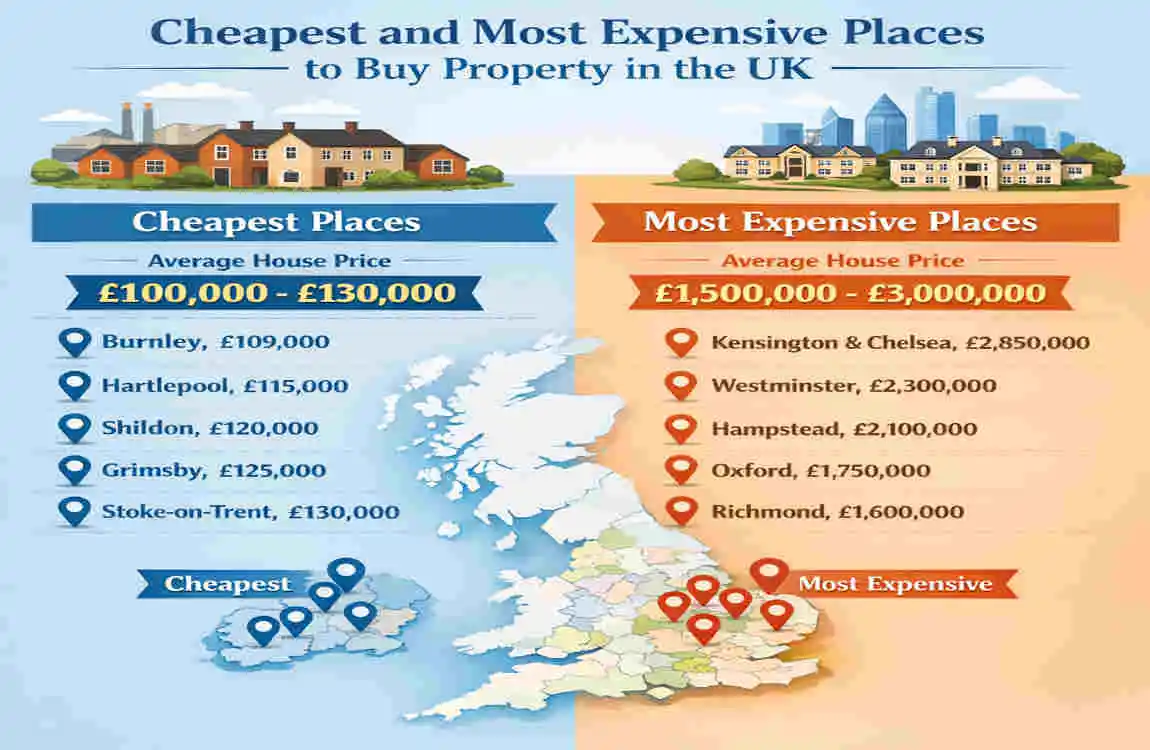
Most Expensive Markets
London is usually the most expensive place to buy in the UK. Other costly areas include Oxford, Cambridge, and several parts of the South East.
These places are expensive because demand stays high and housing supply can be limited.
More Affordable Areas
If you want better value, look at parts of Northern England, Scotland, and Wales, as well as smaller towns. These areas often offer lower prices and more space for your money.
For many buyers, this is where the cost of UK real estate becomes more manageable.
Is Buying UK Property a Good Investment?
Benefits
UK property can be a strong long-term investment. Prices may rise over time, and rental income can provide an additional source of return.
Property is also a physical asset, which many investors like because it feels more stable than some other investments.
Challenges
There are still risks. Property prices can fall in some areas, and maintenance costs can add up. Landlords also need to manage tenants, repairs, and taxes.
So while property can be a good investment, it works best when you buy carefully and plan.
Tips for Buying a House in the UK
Research the Local Market
Before you buy, compare prices in different streets and neighborhoods. Two houses that look similar can have very different prices depending on the area.
Improve Mortgage Approval Chances
A good credit score, a larger deposit, and lower debts can help you get approved more easily. Lenders like buyers who look financially stable.
Get Professional Advice
It helps to work with a mortgage advisor, estate agent, or property surveyor. They can guide you through the process and help you avoid costly mistakes.
Common Mistakes to Avoid

- Ignoring extra costs beyond the asking price
- Skipping a property survey
- Buying too quickly without research
- Overlooking neighborhood issues
- Stretching your budget too far
These mistakes can turn a good purchase into a stressful one. Take your time and check everything carefully.
Frequently Asked Questions
Q: How much does an average house cost in the UK?
It depends on the region, but prices usually range from about £150,000 to over £450,000.
Q: What is the cheapest place to buy a house in the UK?
More affordable homes are often found in parts of Northern England, Scotland, and Wales, as well as in smaller towns.
Q: How much deposit do I need?
Most buyers need 5% to 20% of the property price.
Q: Are UK house prices expected to rise?
That depends on interest rates, demand, and housing supply. Some areas may grow faster than others.
Q: What extra costs should I expect?
You should plan for solicitor fees, surveys, mortgage fees, stamp duty, insurance, and moving costs.
| Topic | Key Information |
|---|---|
| Current UK House Prices | The average UK property price is around £271,000 (May 2026), with annual growth of about 2.7%. |
| Most Expensive Area | London remains the highest-priced market, with average property values above £540,000, although prices have faced pressure recently. |
| Affordable Regions | Areas such as the North East, North West, and parts of Scotland generally offer lower average house prices compared with southern England. |
| Market Trend | The UK housing market is showing slow but steady growth, with regional differences becoming more noticeable. |
| Buyer Demand | Buyers are becoming more price-conscious due to mortgage costs and affordability concerns. |
| Popular Property Types | Detached and semi-detached homes remain valuable, while flats have experienced weaker price performance in some areas. |
| Buying Costs | Buyers should consider deposit, mortgage fees, stamp duty, solicitor fees, surveys, and moving expenses. |
| Renovation Costs | Home improvement expenses vary widely depending on project size, materials, and location. |
| Investment Outlook | Long-term property investment remains attractive due to housing demand, but investors must consider interest rates and rental returns. |
| Future Market Direction | Experts expect a more balanced market with moderate price growth rather than rapid increases. |