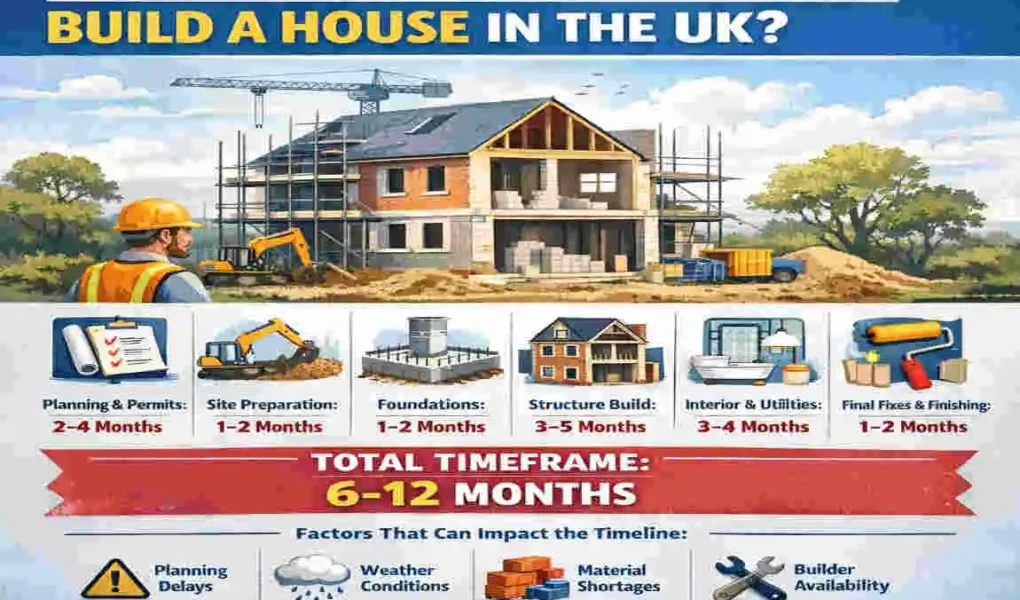
If you are asking how long does it take to build a house uk, the short answer is this: the construction itself often takes 6 to 12 months, but the full self-build timeline UK can stretch to 1 to 3 years once you include land searches, planning permission, approvals, and final finishing work.
| House Building Stage | Typical UK Timeline |
|---|---|
| Buying Land & Site Preparation | 1–3 Months |
| Planning Permission & Approvals | 2–6 Months |
| Groundworks & Foundations | 2–4 Weeks |
| Structural Build (Walls & Roof) | 3–6 Months |
| First Fix (Plumbing & Electrical) | 2–4 Weeks |
| Interior Finishing & Second Fix | 2–3 Months |
| Final Inspections & Snagging | 1–3 Weeks |
That wider timeline surprises many first-time builders. A house does not just appear after the land is bought. You need the right plot, planning approval, building regulations sign-off, groundworks, materials, tradespeople, and time for every stage to line up properly. Even a well-organized project can face delays due to weather, labor shortages, or design changes.
Average Time It Takes to Build a House in the UK
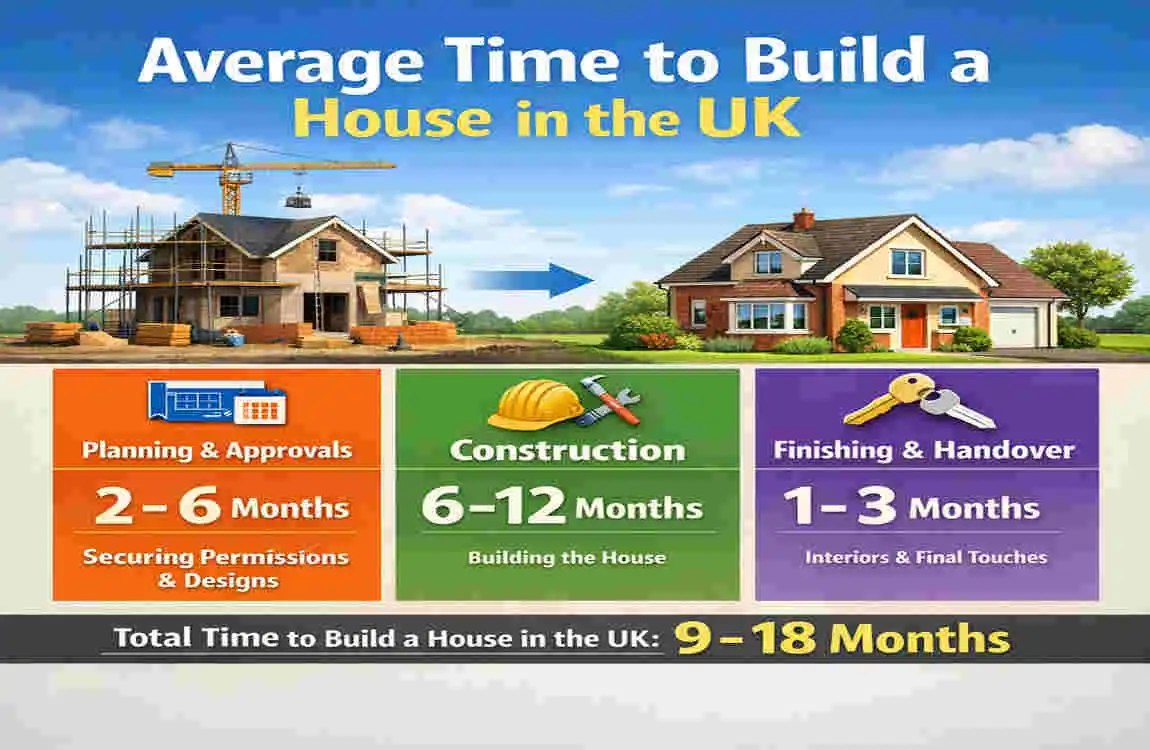
The average time to build a house UK depends on size, home design, and build method. A small home may finish much faster than a large custom property.
Typical Timeline for a Standard UK House
- Small home: 6–9 months
- Medium family home: 9–12 months
- Luxury or custom home: 12–24+ months
A simple design with a clear plan usually moves faster. A larger home with unusual features, special materials, or complex structure usually takes longer.
Why the Timeline Varies So Much
A build can move quickly in one area and slowly in another. For example, a rural site may have easier space for construction but slower access to trades. An urban plot may have better access to workers but more limits on deliveries, parking, and noise.
Other factors matter too:
- Site conditions such as slope, poor soil, or drainage issues
- Design complexity with extra floors, extensions, or custom layouts
- Contractor efficiency and how well the work is managed
- Weather and supply problems that slow progress
Quick Timeline Snapshot
Stage Usual Time
Planning and approvals 2–6 months
Groundworks 2–4 weeks
Structural build 3–6 months
Interior finishing 2–4 months
Step-by-Step House Building Timeline in the UK
Buying Land and Site Preparation
Before any building starts, you need a suitable plot. This can take time because not every piece of land is ready for a house. You may need surveys, soil tests, and checks for access, drainage, and utilities.
This stage can also slow down because of legal paperwork. Land searches, title issues, and missing documents often add delay. If the plot has no proper road access or connections for water and electricity, those issues need to be addressed early.
Planning Permission and Building Regulations
This is one of the biggest stages in the planning permission UK timeline. In most cases, the local council takes around 8 to 13 weeks to decide on a standard application. However, the process can take longer if the design is unusual or the council requests changes.
You also need UK building regulations approval, which ensures the house is safe, efficient, and built to the required standard. This is separate from planning permission, and both are important.
Delays often happen when the site is in a conservation area, green belt, or near protected land. Neighbour objections can also slow things down. If your design needs changes, that may push the start date back by weeks or even months.
Groundworks and Foundations
Once approval is in place, the team can begin clearing the site. This includes digging, levelling, setting foundations, and installing drainage. It is not the most visible part of the project, but it is one of the most important.
Weather can cause trouble here. Heavy rain makes excavation harder, and poor soil may require extra work. If the ground is unstable, the foundations may need redesigning, which adds time.
Structural Build Stage
This is when the house starts to take shape. The walls go up, the roof is fitted, and windows and doors are installed. At this point, the building reaches a watertight stage, meaning the inside is protected from the weather.
The build method matters a lot here. A timber frame house build time in the UK is often faster than a brick house construction project. Timber frame homes can be assembled quickly, while brick builds usually take longer because they rely more on site-based work.
Modern methods can speed this stage up even more. Factory-made parts and pre-made panels reduce the amount of time spent on site.
First Fix and Internal Work
After the shell is complete, the inside work begins. This includes plumbing, electrical wiring, insulation, and plastering. This stage needs careful coordination because different trades must work in the right order.
Inspections may also be needed before work can continue. If one trade runs late, the next one usually has to wait. That is why this stage can feel slower than expected, even when the house looks nearly finished from outside.
Second Fix and Finishing Touches
This is the stage where the home becomes livable. Kitchens, bathrooms, flooring, painting, sockets, switches, and final fixtures are installed.
Many people think this part should be quick, but it often takes longer than expected. Why? Because finishing work involves lots of small tasks, and every detail matters. A delayed kitchen delivery or a late flooring order can hold up the whole project.
Final Inspections and Moving In
Before you move in, the house needs final checks. This includes snagging, completion certificates, and any last council inspections. If there are problems, they must be fixed before occupancy approval is given.
This final step is usually short but important. It ensures the dream house is safe, legal, and ready for use.
What Causes Delays When Building a House in the UK?
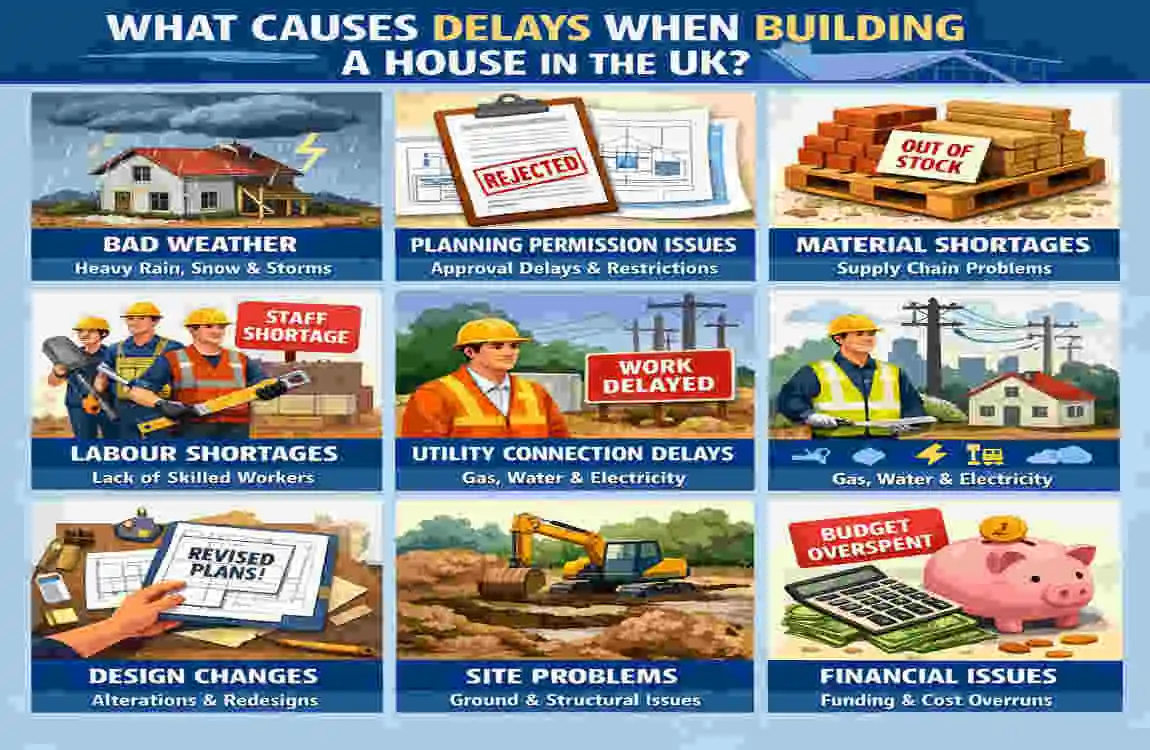
Even the best-planned build can run late. If you are wondering why house builds get delayed UK, the reasons are usually practical rather than dramatic.
Planning Permission Problems
A rejected application, a request for changes, or slow council response can all push the timeline back. This is one of the most common construction delays UK.
Weather Conditions
Rain, frost, and strong wind can all stop work. Roofing is especially affected by bad weather, and winter conditions can also slow groundworks.
Labour and Material Shortages
Skilled workers are not always easy to book at short notice. Materials can also take longer to arrive, especially if there are supply chain issues or rising costs.
Budget Issues
If money runs short, work can stop while more funds are arranged. Even a temporary cash flow problem can delay the whole schedule.
Design Changes Mid-Project
Changes after work has started almost always cost time. A small upgrade can seem harmless, but if it affects structure, wiring, or plumbing, the impact can be much bigger.
Common delay triggers include:
- Late design changes
- Planning objections
- Bad weather
- Missing materials
- Trade scheduling conflicts
How to Speed Up the House Building Process
You cannot remove every delay, but you can reduce risk. If you want to know how to build a house faster UK, the answer is mostly about planning well from the start.
Choose an Experienced Contractor
A good contractor will manage the project properly, coordinate trades, and spot problems early. Ask to see past work and check references before making a decision.
Use Modern Construction Methods
A modular homes UK timeline is often shorter than that of a traditional build because much of the work is done off-site. Timber frame and prefabricated systems can also save time.
Finalise Designs Early
Changing the plan halfway through creates delay and extra cost. Clear drawings and fixed decisions help everyone stay on schedule.
Order Materials in Advance
Some items take much longer to arrive than others. Windows, roofing materials, kitchens, and specialist fittings should be ordered early so they are ready when needed.
Self-Build vs Developer-Built Homes: Which Takes Longer?
A self-build house project in the UK usually takes longer than buying from a developer because you make more decisions and take on more responsibility.
Self-Build Homes
Self-builds offer more freedom. You choose the layout, finish, and materials. That is a big advantage, but it also means more chances for delays.
Developer-Built Homes
Developer homes are usually faster because the process is standardised. The builder follows a set system, leaving less room for change.
Which Option Is Better?
It depends on what matters most to you.
- Self-build: more control, but slower
- Developer-built: faster, but less customisation
If time is most important, a developer build may suit you better. If control matters more, self-build may be worth the wait.
Cost vs Time: Does Faster Building Mean Higher Costs?
In many cases, yes. Speed often costs more. If you want a faster build, you may need more workers, better planning, and sometimes overtime payments.
Labour Costs and Accelerated Timelines
When a project moves quickly, more trades may need to work simultaneously. That can increase costs, especially if the schedule is tight.
Prefabrication and Efficiency
Factory-built parts can reduce site time and improve efficiency. This is why fast house construction projects in the UK often use modern methods.
Balancing Budget and Speed
The smartest approach is usually balance. Do not rush the design stage; prepare early and avoid unnecessary changes. That gives you a better chance of staying on budget and on time.
Realistic Expectations for UK Homeowners
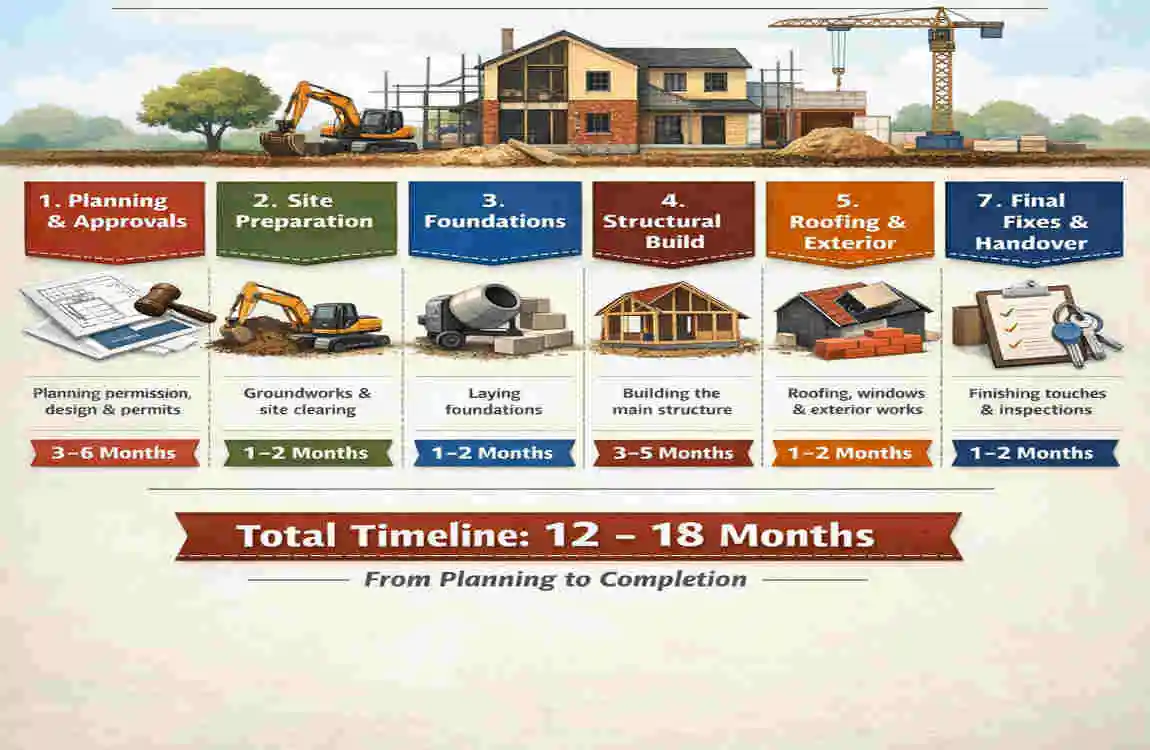
Most home builds face at least one or two small delays. That is normal. The key is to plan for them rather than hope they will not happen.
If you are a first-time self-builder, keep both time and money contingency in your plan. It helps to stay calm when small problems appear, because they usually do.
Also, schedule inspections early and keep in touch with your builder. Clear communication prevents confusion and keeps the project moving.
Frequently Asked Questions
How long does it take to build a 3-bedroom house in the UK?
Usually 6 to 12 months for construction, depending on design, weather, and the build method.
Can a house be built in 6 months in the UK?
Yes, it can. This is more likely with modular or timber frame construction and a well-managed site.
What is the slowest part of building a house?
The slowest parts are often planning permission and interior finishing, because they involve approvals, coordination, and many small tasks.
Do modular homes build faster?
Yes. Modular homes are often much quicker because much of the structure is made off-site before it arrives.
How long does planning permission take in the UK?
A standard application usually takes 8 to 13 weeks, although delays can happen.
Is building your own house cheaper in the UK?
It can be, but not always. The final cost depends on land prices, materials, labor, and the amount of custom work you want.