Have you ever wondered how square footage affects a home’s value? It’s one of the most critical factors in real estate, influencing listing prices, buyer interest, and overall marketability. But one question often leaves homeowners scratching their heads—“Does the square footage of a house include the basement?”
Understanding square footage is essential for anyone buying or selling a home. Whether you’re a seller aiming to maximize your property’s value or a buyer looking for the best deal, knowing how square footage is calculated can make all the difference.
Does the Square Footage of a House Include the Basement?
Short Answer
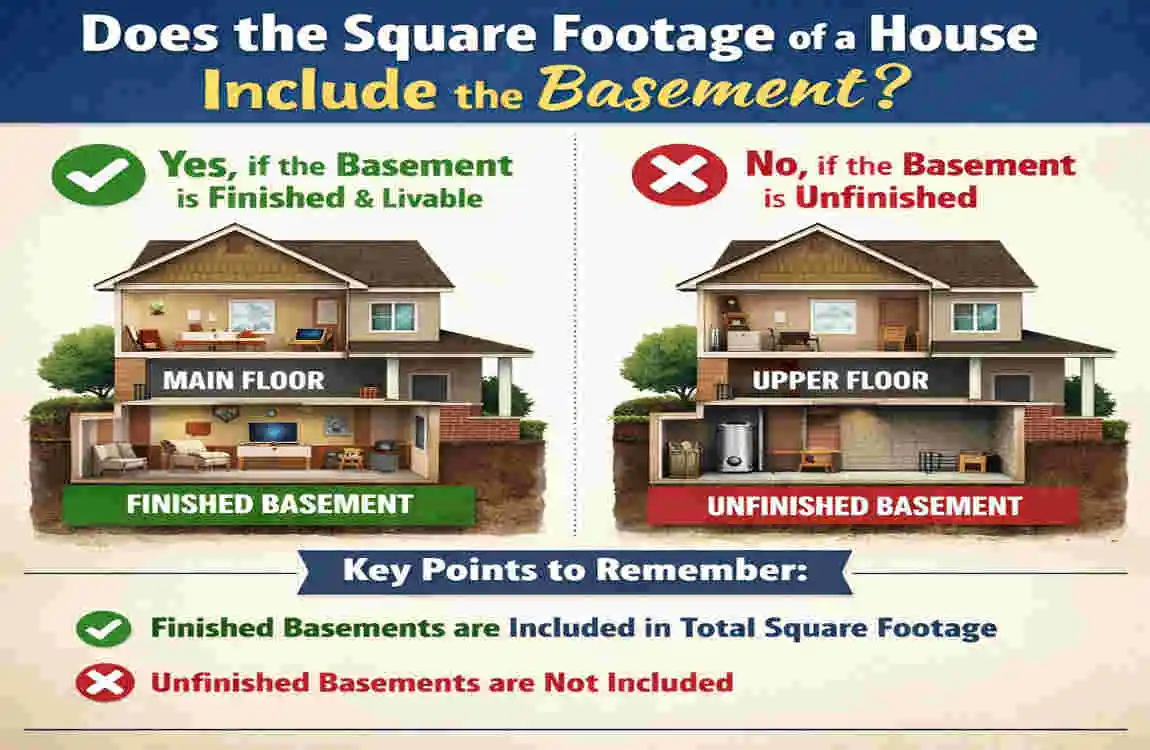
The short answer is: It depends. Whether a basement is included in a home’s square footage depends on several factors, including its finish level, local regulations, and industry standards.
Factors That Determine Inclusion
- Finished vs. Unfinished Basements
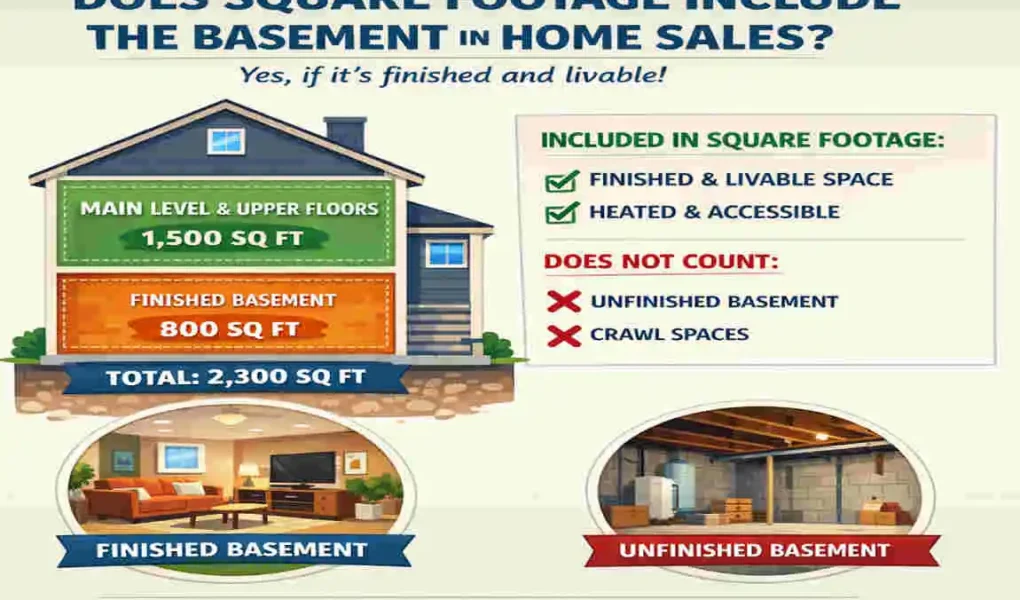
- A finished basement is generally included in square footage calculations. For a basement to be considered “finished,” it must have flooring, walls, ceilings, and sometimes heating or cooling systems. On the other hand, unfinished basements, which are often used for storage or utilities, are typically excluded.
- Local Regulations
- Rules about square footage and basements vary widely by location. Some states or cities explicitly exclude basements in square footage calculations unless they meet certain criteria, such as egress requirements or minimum ceiling height.
- Industry Standards
- Standards like those from ANSI guide how square footage is calculated. According to ANSI, basements—whether finished or unfinished—are usually excluded unless they are at or above grade (ground level). This means basements that are entirely or partially below ground may not be counted.
By considering these factors, you can better understand whether your basement will be included in your home’s square footage.
How to Determine if Your Basement is Included in Square Footage
Criteria for Inclusion
Here are some practical factors that determine whether your basement qualifies as part of your home’s square footage:
- Ceiling Height
- Most jurisdictions require a minimum ceiling height of seven feet for any space to qualify as livable square footage. If your basement ceiling is too low, it might not be included.
- Finished Space
- A finished basement includes flooring, walls, ceilings, and often climate control. If your basement is unfinished or partially finished, it may not count.
- Accessibility and Egress
- Basements with a separate entrance or windows large enough for emergency exits (e.g., egress windows) are more likely to be included in the square footage.
Practical Tips
- Hire a Professional Appraiser
- If you’re unsure, a certified appraiser can provide an accurate measurement of your home’s square footage, including whether your basement qualifies.
- Use Online Tools
- Several online tools and apps can help measure your home’s square footage. While these may not be as precise as professional appraisals, they can give you a rough estimate.
By understanding these criteria and taking action, you can determine if your basement should be included in your home’s square footage.
Common Misconceptions About Square Footage and Basements
- Misconception: All basements are included in square footage
- Not all basements qualify. Factors like finish level and regulations play a significant role.
- Misconception: Finished basements automatically increase home value
- While a finished basement can boost your home’s value, it doesn’t always translate to a higher square footage.
- Misconception: Square footage calculations are the same everywhere
- As mentioned, local regulations and industry standards can differ, so assumptions based on one location may not apply universally.
Clarifications
For example, a finished basement in a colder climate might be highly valued due to its functionality. However, it might still not count as square footage if it’s below grade. Understanding these nuances can save you from costly misunderstandings.
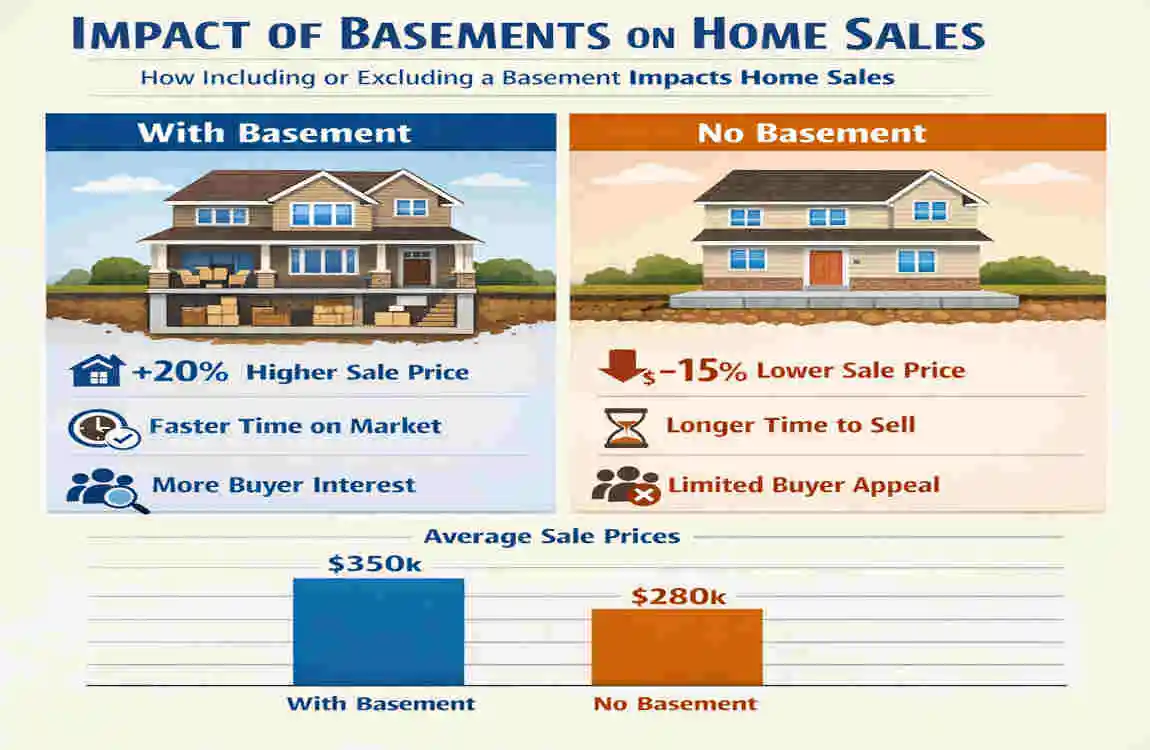
How Including or Excluding a Basement Impacts Home Sales
Impact on Home Value
- For Sellers: Including a finished basement in your square footage can potentially increase your listing price. However, it’s crucial to be transparent about what’s included to avoid any disputes with buyers.
- For Buyers: Buyers need to understand what’s included in a home’s square footage to make informed comparisons between properties.
Market Trends
In markets with colder climates, basements are often seen as a valuable addition because they provide extra space for living or storage. However, their inclusion in square footage varies by local practice.
Tips for Homeowners: Maximizing the Value of Your Basement
- Finishing Your Basement
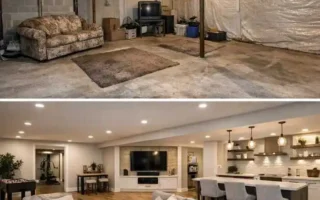
- Turning an unfinished basement into a livable space can significantly increase its value. Consider adding drywall, flooring, and proper lighting.
- Adding Value
- Features such as a bathroom, natural light, or a separate entrance can make your basement more attractive to potential buyers.
- Understanding ROI
- While finishing a basement has upfront costs, it often yields a high return on investment (ROI) when it’s time to sell your home.
Expert Opinions and Insights

Real estate professionals often emphasize that clarity is key when listing square footage. A real estate agent might share how a finished basement increased a home’s appeal, while an appraiser might highlight the importance of following local regulations.
One example: In a recent appraisal, a homeowner discovered that their basement didn’t meet egress requirements, so it was excluded from the square footage. However, after renovations, the basement qualified and added significant value.
Frequently Asked Questions (FAQs)
What is considered livable square footage?
Livable square footage refers to areas in a home that are finished, heated, and accessible year-round.
Why are some basements excluded from square footage?
Basements are often excluded if they are unfinished, below grade, or fail to meet local regulations.
How do I calculate the square footage of my home?
To calculate square footage, measure each room’s length and width, then multiply them to find the area. Add all the areas together, excluding spaces like garages or unfinished basements.
| Aspect | Includes Basement? | Details |
|---|---|---|
| Finished Basement | Sometimes | Included if it meets criteria like ceiling height, egress, and finished living space standards. |
| Unfinished Basement | No | Generally excluded from total square footage calculations. |
| Local Regulations | Varies | Different cities/states may have unique rules on basement inclusion. |
| Appraisal Standards | Depends | ANSI and other bodies set guidelines, often excluding basements unless fully finished. |
| Impact on Home Value | Can increase value if included | Finished basements can add livable space but may be reported separately in listings. |