Are bathrooms included in square footage? This is one of the most common questions people ask when they are buying, selling, or appraising a home. It sounds simple at first, but the answer depends on how the bathroom is built, where it sits in the home, and which measurement rules apply in your area.
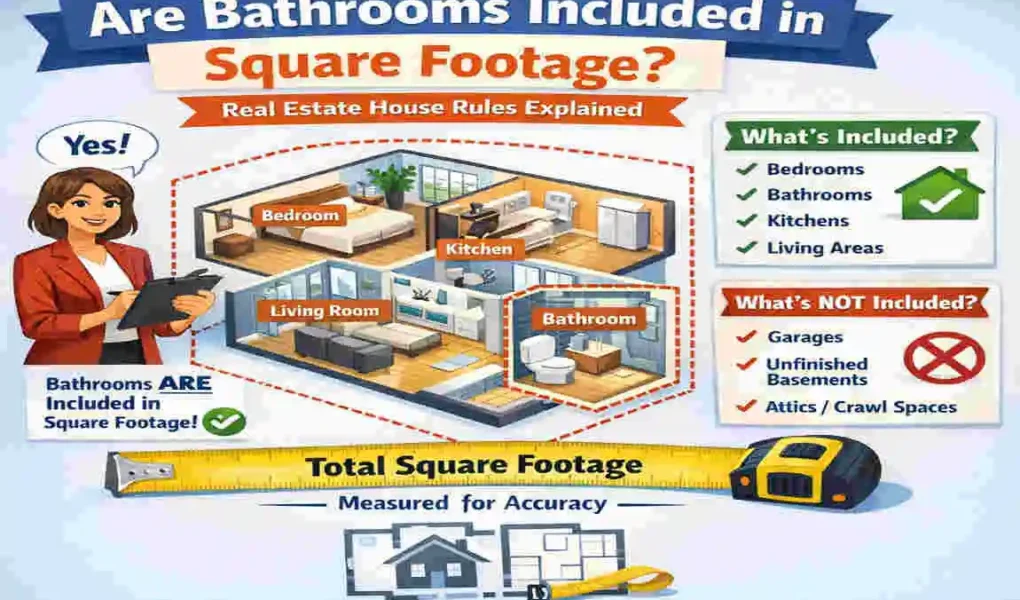
In most cases, yes, bathrooms are included in square footage if they are part of the finished living space, are heated or cooled, and are attached to the main structure of the home. That means a full bath, a half-bath, or a powder room can count when it meets the normal standards for livable space. But not every bathroom makes the cut. Detached bath areas, unfinished basement bathrooms, or spaces that are too rough or too low in ceiling height may be left out.
This matters more than many people realize. A home’s square footage can have a major effect on listing price, buyer interest, and appraisal value. In many markets, size can influence value by 20% to 30% or more, depending on location, layout, and condition. So if a bathroom is counted when it should not be, or ignored when it should be included, the numbers can become misleading fast.
| Topic | What’s included in square footage? | What’s usually excluded? |
|---|---|---|
| Bathrooms | Full and half‑baths inside the main house (heated, finished, attached). | Bathrooms in detached garages, sheds, or unfinished areas not connected to the main living space. |
| Living areas | Bedrooms, living room, dining room, kitchen, hallways, closets, staircases. | Unfinished basements, attics, garages, and storage rooms without finished walls or heating. |
| Other spaces | Enclosed, finished porches or sunrooms that are heated and connected to the main house may count. | Open patios, decks, balconies, unfinished basements, and “bonus” rooms not finished to code. |
What Counts as Square Footage?
Square footage is not just about how much space a home appears to have. It is a measurement of the finished, livable area of a property, and real estate professionals use it to fairly compare homes. The key idea is that square footage should reflect the space people can actually use in everyday life.
Finished, Heated, and Above Grade Space
In most home measurement standards, square footage includes areas that are:
- Finished
- Heated or cooled
- Above grade or at least part of the main living structure
- Accessible as living space
This means rooms like bedrooms, kitchens, dining rooms, family rooms, and bathrooms usually count if they are fully built out and part of the house. The room does not have to be large to count. It simply has to meet the standard for livable space.
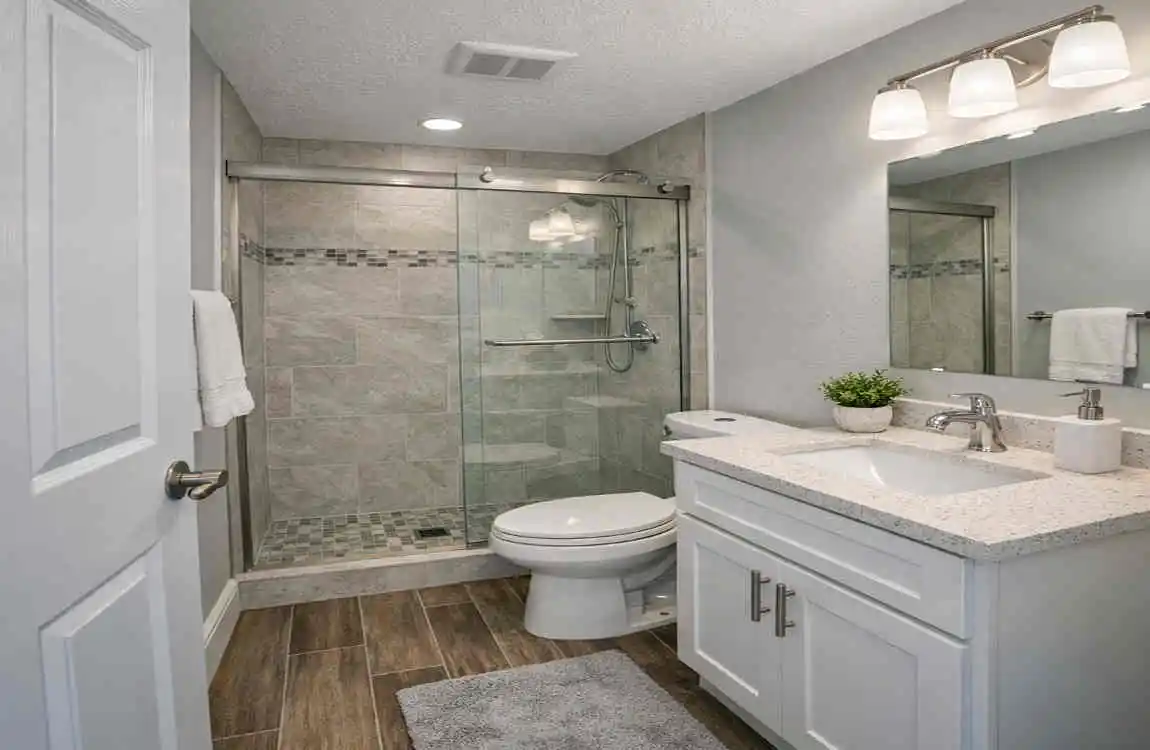
A bathroom is a good example. If it has finished walls, a finished floor, plumbing, proper access, and it sits within the main home, it usually gets counted just like any other room. The size may be small, but it still serves a real living function.
What Usually Counts and What Usually Does Not
A few common spaces are almost always included:
- Living rooms
- Bedrooms
- Kitchens
- Bathrooms
- Hallways
- Laundry rooms inside the home
- Closets that are part of the finished interior
A few spaces are usually excluded:
- Garages
- Open porches
- Unfinished attics
- Unfinished basements
- Detached guest houses
- Outdoor bathrooms
- Utility areas not finished as living space
The reason is simple. Square footage is supposed to show usable living area, not every square inch of the property. So a garage may be valuable, but it is not counted the same way as a living room or bathroom.
Finished Basements and Other Gray Areas
This is where things can get confusing. Some finished basements may be listed separately, but they are not always included in the main square footage total. The same is true for basement bathrooms. If the basement is below grade, meaning below ground level, the bathroom may not count in the same way as an upstairs bath.
That does not mean it has no value. It absolutely can improve the home’s usefulness and appeal. But from a measurement standpoint, it may be handled differently depending on local MLS rules, appraiser practices, and regional standards.
Why Accurate Measurement Matters
If you are buying a home, you want to know exactly what you are paying for. If you are selling, you want to present your home fairly and avoid disputes later. If you are a real estate professional, accuracy protects your credibility and helps clients make smarter decisions.
Related post: Home valuation basics
Related post: Plumbing code considerations
Related post: Flooring trends that increase buyer appeal
Image Placeholder: Floor plan diagram showing included and excluded areas
Are Bathrooms Included? The Direct Answer
The short answer is yes, bathrooms are generally included in square footage when they are part of the finished, livable area of the home. That includes both full and half baths, provided they are inside the main structure and built to normal residential standards.
Why Bathrooms Usually Count
Bathrooms are part of daily living. They are not bonus space or decorative extras. They serve an essential purpose and are usually counted in a home’s total square footage.
A bathroom usually counts when it has:
- Finished flooring
- Finished walls and ceiling
- Plumbing installed
- Proper heating or cooling
- Adequate ceiling height
- Access from the main home
If the bathroom is part of the main living area and not a detached structure, it usually counts toward the total square footage.
Full Baths and Half-Baths Both Qualify
Many people assume only full bathrooms count, but that is not true. A half-bath, also called a powder room, usually counts too. Even though it lacks a shower or bathtub, it is still a finished room in the home.
A small half-bath may add only a few square feet, but it still contributes to the total. For example, an 8-by-6 bathroom adds 48 square feet. A powder room may be smaller than that, but it still fits the same general rule if it is properly finished and attached to the house.
When Bathrooms Do Not Count
Bathrooms are excluded when they fall outside normal living-area rules. Common examples include:
- Detached garage bathrooms
- Unfinished basement bathrooms
- Outdoor pool bathrooms
- Spaces without proper ceiling height
- Rooms that are not finished or heated
If the bathroom is not part of the primary living structure, it usually does not count toward the official square footage. It may still add value, but it is not measured the same way.
Bathroom Type Comparison Table
Bathroom TypeIncluded?Why?
Main floor full bath Yes Finished, heated, above grade, and part of the main structure
Half-bath / powder room Yes Finished living-space room inside the home
Finished basement bath Maybe Depends on local rules, ceiling height, and whether below-grade space is counted
Garage bath No Not part of the main living structure
Detached bath / guesthouse bath No Separate from the main home
Unfinished bathroom space No Not completed as livable space
A Simple Example
Let’s say a home has:
- 1,500 square feet of living space
- A master bath measuring 10 x 8 feet
- A powder room measuring 5 x 6 feet
- A hallway bath measuring 7 x 8 feet
Bathrooms are typically included in the total because they are part of the finished interior. In that case, the home’s square footage includes the area occupied by those bathrooms just like it includes bedrooms or closets.
This is why bathroom count and square footage often go hand in hand in listings. A home with three bedrooms and two and a half baths may not just feel larger. It may actually be larger in measured living space as well.
Why This Confuses People
The confusion usually happens because people mix up usable space, market value, and official square footage. A bathroom clearly adds value, but value and square footage are not always identical. Some spaces increase appeal without changing the measurement rules much. Bathrooms often do both.
So, if you are asking whether bathrooms are included in square footage, the safest everyday answer is this: yes, if they are finished, attached, and part of the main livable area of the house.
Official Standards: ANSI and MLS Rules
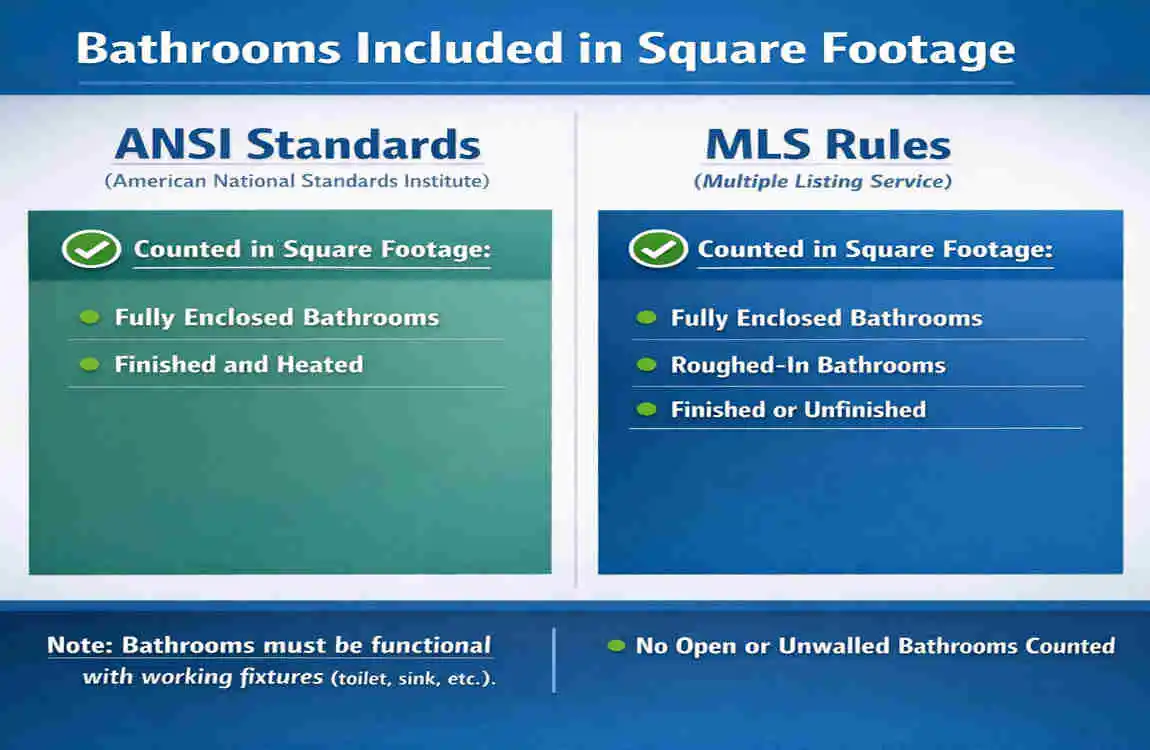
If you want the most accurate answer about square footage, you need to look at the rules that real estate professionals use. In the United States, one of the most recognised standards is ANSI Z765, which defines how homes should be measured for gross living area.
What ANSI Means for Home Measurement
ANSI stands for the American National Standards Institute, and its home measurement standard is widely used in residential real estate. Under ANSI-style rules, square footage is generally measured as gross living area (GLA). That means the finished, heated, above-grade space inside the home.
Bathrooms can be included under this standard if they are part of that finished living area. If the bathroom is inside the home, has proper ceiling height, and is above grade, it normally counts.
Ceiling Height and Livable Space Rules
One important detail is ceiling height. A room usually needs to meet a minimum ceiling height to count. In many cases, the standard is at least 7 feet throughout much of the room. However, exceptions may apply to sloped ceilings or limited areas.
That matters for bathrooms in attic conversions, basement remodels, or older homes where the ceiling may be lower. If the room does not meet the height requirement, it may not count even if it is finished.
How MLS Rules Can Change the Answer
MLS stands for Multiple Listing Service, and MLS rules can vary from one region to another. That is why two homes with similar layouts may be measured differently depending on where they are listed.
Some MLS systems:
- Include finished basements separately
- Exclude all below-grade space from main square footage
- Require specific ceiling height standards
- Allow local exceptions for older homes
So the answer to whether bathrooms are included in square footage can shift depending on local MLS rules. A bathroom may count in one market and be listed separately in another.
Appraisers and Loan Programs Also Matter
Appraisers often follow similar standards, but they also need to consider lender requirements. FHA, VA, and conventional loan guidelines may all influence how a property is reviewed. That means the same bathroom could be treated differently depending on whether it’s being used for a listing, an appraisal, or a loan file.
For example, a basement bathroom might be shown as a home feature but not included in the main living area total. That is not a mistake. It is often just a matter of using the right measurement category.
Common Mistakes People Make
A few errors come up again and again:
- Counting detached spaces as living area
- Including unfinished bathrooms
- Measuring from inside walls when the standard calls for a different method
- Double-counting hallways or closets
- Forgetting to check local MLS rules
These mistakes can lead to inflated square footage, creating problems during negotiations, appraisals, or inspections. If a buyer discovers the listing was inaccurate, trust can break down quickly.
Expert Note for Local Markets
In many local real estate markets, including Punjab and Lahore, property measurement practices may blend formal standards with local valuation customs. That means a bathroom may be considered part of the home’s functional value, even if it is not counted the same way in every official report. Always confirm with a local property professional who understands your market.
Image Placeholder: Side-by-side diagram of ANSI compliant versus non-compliant measurements
How to Calculate Bathroom Square Footage
If you want to understand how bathrooms fit into square footage, the calculation itself is not complicated. You need the right measurements and a clear understanding of what should be included.
Sketch the Floor Plan
Start with a rough drawing of the home. You do not need a perfect architectural plan. A simple sketch works well as long as it clearly shows each room.
Mark the bathrooms, bedrooms, kitchen, hallways, and other finished areas. This helps you keep track of what is counted and what is not.
Measure the Exterior or Interior Based on the Standard
Depending on the system used in your market, you may measure from the exterior walls or from the interior. ANSI commonly uses exterior measurements for the overall footprint. In contrast, some room-by-room checks use interior dimensions to confirm areas.
For a bathroom, you can usually calculate the room size by measuring:
- Length
- Width
Then multiply those numbers.
For example:
10 feet x 8 feet = 80 square feet
Add Qualified Bathrooms to the Total
Once you know the bathroom size, add it to the other finished rooms that count. If the bathroom is part of the main living space, it should be included in the total square footage.
Here is a simple example:
RoomDimensionsSquare FeetIncluded?
Living room 18 x 14 252 Yes
Kitchen 12 x 10 120 Yes
Bedroom 1 12 x 12 144 Yes
Bedroom 2 11 x 10 110 Yes
Main bath 10 x 8 80 Yes
Half-bath 5 x 6 30 Yes
Hallway 3 x 12 36 Yes
In this example, the bathrooms total 110 square feet. That is not a small amount. In smaller homes especially, bathroom space can make a meaningful difference in the final total.
Subtract Excluded Areas
Now remove areas that do not count as livable space. Common exclusions include:
- Garage
- Open porch
- Unfinished basement
- Detached storage area
- Mechanical room if not finished as living space
This step is important because square footage is not just about adding rooms. It is also about leaving out spaces that do not qualify.
Use the Right Tools
You do not need fancy equipment, but accurate tools help. A laser measurer is one of the easiest ways to get good room dimensions. There are also room-measuring apps that can help create a basic floor plan.
If you are doing a quick home estimate, a tape measure can work too. Just be careful, because even a small mistake in a bathroom can change the total more than you might think.
Watch for Odd Shapes
Bathrooms are not always simple rectangles. Some have:
- Cut-out corners
- Alcoves
- Linen closets
- Sloped ceilings
- Built-in shower niches
If the room is oddly shaped, break it into smaller rectangles. Measure each section separately, then add them together. This makes the calculation easier and more accurate.
Quick Measurement Tip
Bathrooms often make up 10% to 15% of a home’s total interior living space in smaller floor plans, especially when there are multiple bathrooms. That is why even a compact bathroom can matter during valuation.
Image Placeholder: Bathroom measurement infographic showing length x width calculation
Exceptions and Regional Variations
Even though the general rule is clear, there are important exceptions. This is the part that causes the most confusion because not every bathroom is treated the same way.
Unfinished Bathrooms Usually Do Not Count
If a bathroom is half-built, stripped to the studs, or missing major finishes, it usually will not count as square footage. It may be a renovation project, but it is not yet a finished living space.
That includes bathrooms with:
- Exposed subfloor
- Unpainted drywall
- No fixed toilet or sink
- Temporary plumbing
- Missing trim, flooring, or fixtures
These spaces may add future potential, but they do not usually count in current square footage totals.
Below-Grade Bathrooms Are Tricky
A bathroom in a basement can be finished and attractive. However, it may still be treated differently because it is below grade. Some local rules count finished basement space separately. Others do not include it in the main square footage at all.
This is why a listing may say a home has 2,000 square feet plus a finished basement. The downstairs bathroom is real and useful, but the measurement system may keep it from being part of the upper-level living area.
Low-Ceiling Bathrooms May Be Excluded
If a bathroom has a low ceiling, especially in an attic or older addition, it may not qualify fully. The room needs to meet minimum height standards for most of the area. If it does not, the room may be partially counted or not counted at all, depending on the rules used.
Renovated Bathrooms May Need Re-Evaluation
If you remodel a bathroom, the square footage may need to be reevaluated. A renovation can change a space’s classification.
For example:
- A rough storage room can become a finished half-bath
- A basement area can become a proper full bath
- A detached guest space can become a legal accessory unit in some markets
When that happens, the measurement and valuation should be updated to match the new condition.
Regional Variations Table
ExceptionImpact on Square Footage
Unfinished basement bath Excluded
Low-ceiling powder room Partial or excluded
Detached bath Excluded
Finished upstairs bath Included
Renovated en-suite bath Included if permitted and finished
Local Rules Can Override General Expectations
This is the key point: local rules matter. A bathroom should count, and in many cases it does, but real estate standards vary from place to place. MLS boards, appraisers, and local assessors may all handle the space a little differently.
So if you are comparing homes, always ask how the square footage was measured. That one question can save you from a lot of confusion later.
Why This Matters for International or Regional Buyers
If you are buying in a different city, state, or country, do not assume the rules are the same as the ones you know. Home measurement standards are not universal. A buyer in one region may see a bathroom counted as part of the total area. In contrast, another region may treat it as a separate feature.
That is why local expertise matters so much. It helps you read the numbers correctly and compare homes fairly.
Why It Matters for Real Estate Value
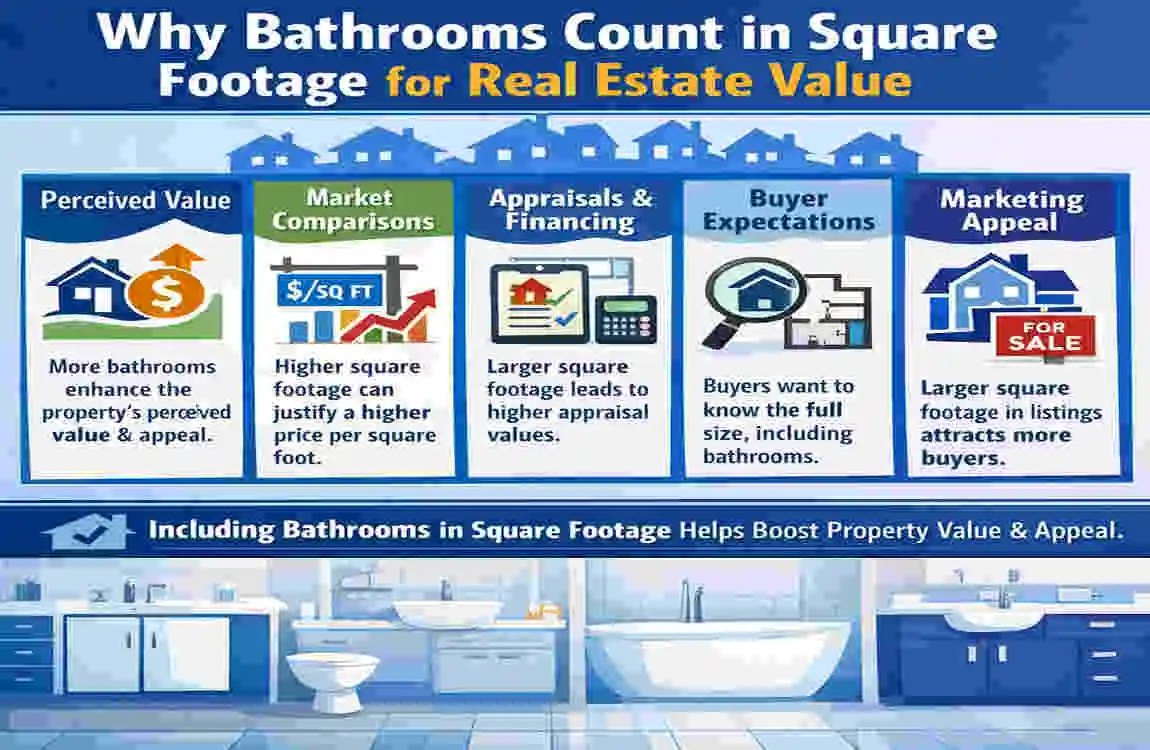
Square footage is one of the strongest signals buyers use when comparing homes. It influences first impressions, pricing, and even negotiation strategy. Bathrooms matter because they affect both function and perceived size.
Square Footage Helps Set the Price
When agents price a home, they often look at price per square foot. That number gives a rough way to compare similar homes in the same area.
For example, if homes in a neighborhood sell for around $200 per square foot, then a larger home with accurately measured square footage may justify a higher asking price. If a bathroom is counted correctly, that can improve the total number and support a stronger valuation.
Bathrooms Improve Buyer Appeal
Even if a bathroom does not add many square feet, it can still add significant value in the buyer’s mind. A well-placed bathroom makes a home easier to live in. It reduces morning traffic, improves privacy, and often makes a floor plan feel more practical.
That is why a half-bath near the living room or a second bathroom near the bedrooms can change how buyers feel about a home. It may not increase the square footage dramatically, but it can certainly improve the property’s saleability.
Small Measurement Errors Can Cause Big Problems
A small mistake in square footage can lead to:
- A lower offer than expected
- A buyer dispute
- A failed appraisal
- A listing correction
- A trust issue between buyer and seller
If a bathroom was left out by mistake, the home may appear smaller than it really is. If it was wrongly included, the seller may face questions later. In either case, the goal is accuracy.
Sellers Need Clean Numbers
If you are selling, accurate square footage helps protect you. Buyers expect transparency. If the numbers are wrong, you could face a renegotiation after inspection or appraisal. In serious cases, inaccurate listing data can even create legal issues.
That is why real estate professionals take this question seriously. Are bathrooms included in square footage? Yes, but only when they meet the standards that make them part of the home’s livable area.
Buyers Should Ask for Verification
If you are buying, do not rely on a listing headline alone. Ask how the square footage was measured. Ask whether the bathroom is included in the main total or shown separately. If there is a basement bath, detached bath, or renovated addition, make sure you know how it was classified.
That one conversation can help you compare homes more accurately and negotiate with confidence.
The Bigger Picture
Square footage is important, but it is not the whole story. A smaller home with a smart layout and an extra bathroom can feel more livable than a larger home with poor design. So while the number matters, the quality of the space matters too.
Related post: Property valuation checklist
Related post: Bathroom remodel and value guide
FAQs
Are bathrooms included in square footage?
Yes, usually. Bathrooms are included in square footage if they are finished, heated or cooled, and part of the home’s main living structure.
What about half-baths?
Half-baths usually count too. A powder room is still a finished room used for everyday living, so it generally counts toward the total square footage.
Do basement bathrooms count?
Sometimes. If the bathroom is in a finished basement, the answer depends on local MLS rules and how below-grade space is measured in your area.
How do you measure an oddly shaped bathroom?
Break the room into smaller rectangles, measure each part, and add the numbers together. This is the easiest way to get an accurate result.
Do closets count in square footage?
Often, yes, if they are finished and attached to the living area. Like bathrooms, closets are part of the interior layout and may be included when they meet the standard.
Can a detached bathroom be included?
Usually no. If the bathroom is not attached to the main house, it generally does not count as part of the home’s square footage.
What should I do if the listing seems wrong?
Ask the agent how the home was measured. If needed, request a re-check or an appraisal review. It is always better to verify than to guess.