When you plan a new home, garage size matters more than many people think. A garage is not just a place to park cars. It can also hold bikes, tools, boxes, sports gear, and even a small work area. If the garage is too small, daily use becomes frustrating fast.
Many homeowners ask the same question: how many square feet is a 2-car garage? The answer is not always one fixed number. Garage dimensions can vary depending on the builder, the type of home, and the amount of storage space you want. Some garages are built for basic parking, while others are designed for comfort and extra use.
That is why garage square footage is such an important part of home planning. A small garage may save money at first, but a larger one can improve convenience, usefulness, and even resale value. If you are building your dream house, choosing the right 2-car garage size is a smart decision that affects your everyday life.
Standard Square Footage of a 2-Car Garage
A 2-car garage usually falls within a few common size ranges. The exact square footage depends on the width and depth of the space.
Here are the most common examples:
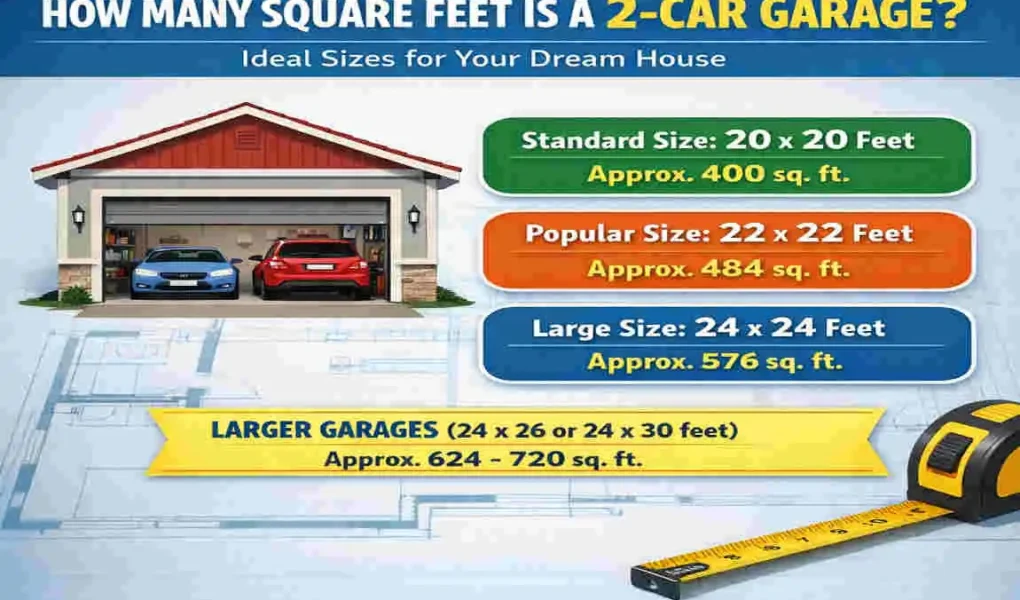
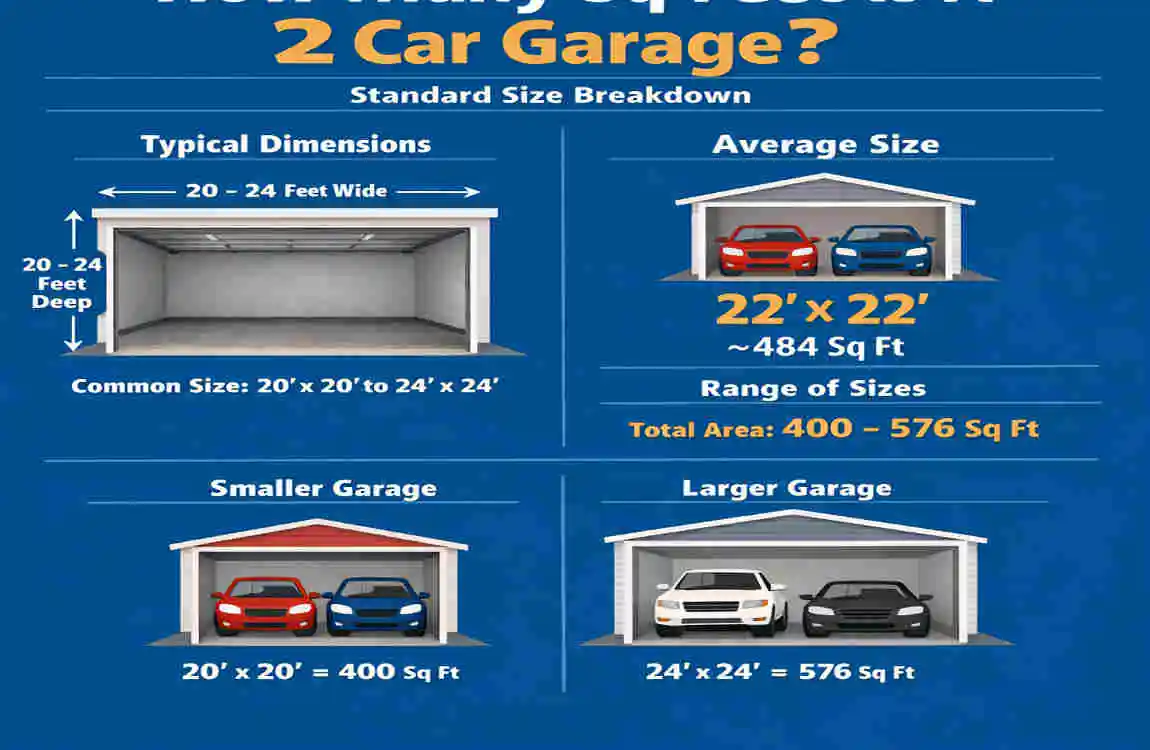
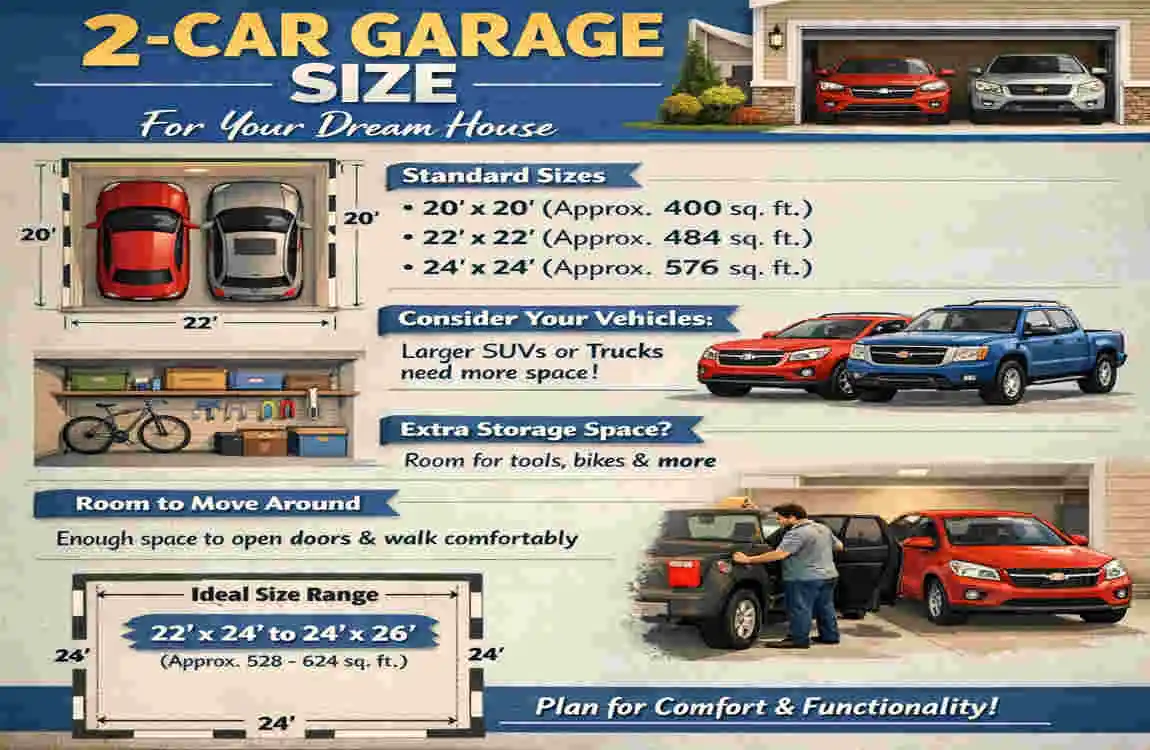
- 20×20 garage = 400 sq ft
- 20×22 garage = 440 sq ft
- 22×22 garage = 484 sq ft
- 24×24 garage = 576 sq ft
These sizes are often used because they fit two vehicles without taking up too much space from the house plan. Still, the best size depends on the type of cars you own and how you want to use the garage.
A smaller garage may work fine for basic parking, but a larger one gives you more room to open doors, walk around the vehicles, and store extra items. That is why builders often offer several options rather than a single standard answer.
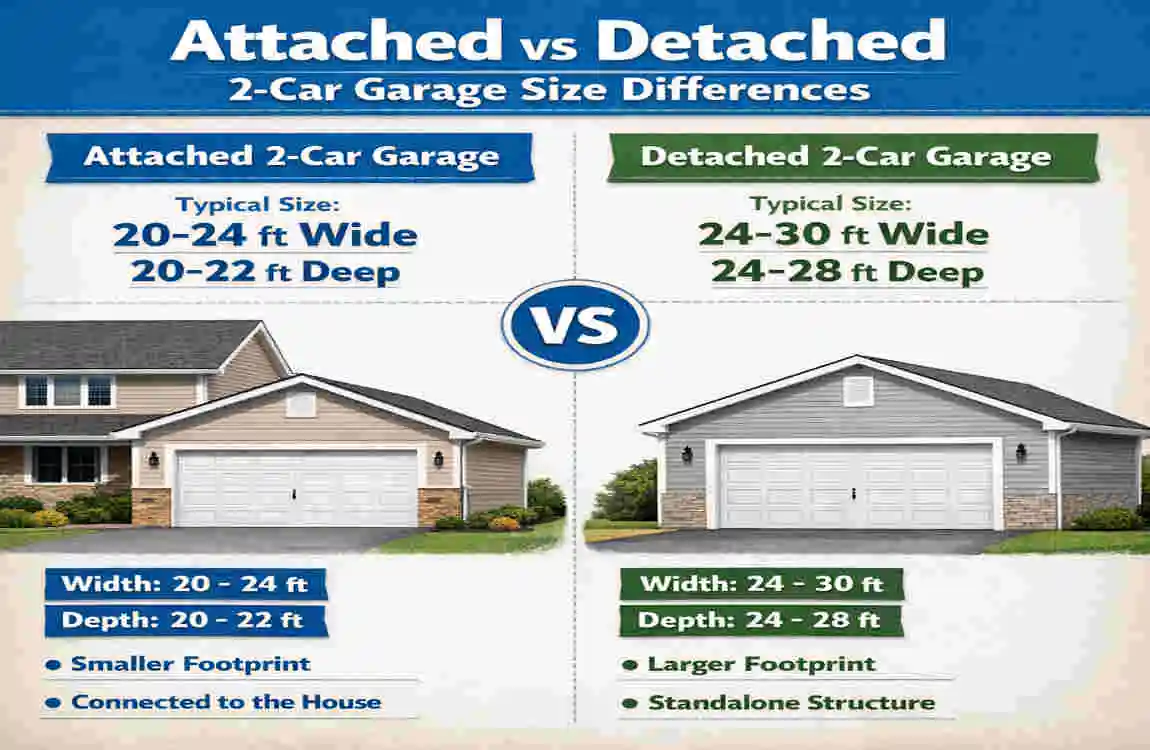
Attached vs. detached garages can also affect the size of the home. An attached garage may be built closer to the home’s layout and sometimes stays more compact. A detached garage often offers greater design freedom, so it may be larger or include extra storage.
Average Width and Depth
Most 2-car garages range from:
- 18 to 24 feet wide
- 20 to 30 feet deep
A wider garage usually feels more comfortable, especially if you drive larger vehicles. A deeper garage helps if you need storage along the back wall or want to move around more easily.
So, when someone asks how many sq ft a 2-car garage is, the most honest answer is: usually between 400 and 576 square feet, with some smaller or larger options depending on your needs.
What Is the Smallest Functional 2-Car Garage?
The smallest practical 2-car garage is often around 18×20 feet, which equals 360 square feet. This size can technically fit two cars, but it is usually a tight fit.
In a garage this small, parking takes more care. You may have limited space to open car doors fully, and walking between the cars can feel cramped. Storage is also limited, so you may not have room for shelves, bins, or large tools.
This size works best for compact sedans or smaller vehicles. If you own an SUV, pickup truck, or van, you will likely want more space.
Is 18×20 Too Small?
For many families, yes, it is a bit too small.
Here is why:
- Parking is tight
- Door swing space is limited
- Storage space is minimal
- Moving around vehicles can be difficult
If you only care about parking two smaller cars, it may work. But if you want comfort and flexibility, a bigger garage will serve you better in the long run.
Best Garage Size for Comfort and Convenience
For most homeowners, the ideal garage dimensions are around 22×22 feet or 24×24 feet. These sizes give you a much better daily experience.
A 22×22 garage gives you more room to park, walk, and store items without constantly shifting things around. A 24×24 garage is even better if you own larger vehicles or want some extra storage.
This is where the garage starts to feel useful instead of just functional. You can open doors more easily, carry groceries in without bumping into the car, and keep shelves along the sides.
Why Builders Often Recommend Larger Garages
Builders often suggest a larger garage because it works better for real life.
A bigger garage offers:
- More comfort
- Better access
- Space for storage
- Room for future needs
It also helps with future-proofing. Today you may drive a compact car, but later you might own an SUV, truck, or electric vehicle. A larger garage protects you from having to deal with a space that becomes too small too quickly.
If you are asking how many square feet a 2-car garage should be for a dream home, many builders would say at least 484 square feet is a smart target.
Comparing Common
Here is a simple comparison of common 2-car garage sizes:
Garage Size Square Feet Best For
18×20 360 sq ft Compact cars
20×20 400 sq ft Standard sedans
20×22 440 sq ft Small storage
22×22 484 sq ft SUVs
24×24 576 sq ft Large vehicles + storage
24×30 720 sq ft Workshop + storage
This table makes it easier to see how garage square footage changes with size. A small jump in dimensions can make a big difference in comfort.
Which Size Fits Your Lifestyle?
The best choice depends on how you live.
Think about these questions:
- Do you have one or two large vehicles?
- Do you need room for bikes, tools, or bins?
- Do you want a space for DIY work?
- Will your family likely grow in the future?
If your garage will be used only for parking, a smaller size may be enough. But if you want a flexible space, choose a larger one.
Key Things to Consider Before Building
The right garage size depends on more than just the number of cars. You also need to think about how your garage will work day to day.
Vehicle Size
Your vehicle size matters a lot.
- Compact cars need less room
- SUVs need more width and depth
- Pickup trucks usually need the most space
- Vans can also require extra clearance
If you own larger vehicles, a small garage can become annoying very quickly.
Storage Needs
Many people use their garages for more than just parking.
Common storage items include:
- Bikes
- Lawn equipment
- Seasonal decorations
- Sports gear
- Boxes and tools
If you want these items inside the garage, you should size up.
Workspace Needs
Some homeowners want a garage that does more than hold cars. A workbench, tool cabinet, or DIY corner can be very useful.
That means you need extra room to:
- Move around safely
- Open drawers and cabinets
- Work without blocking the car space
Future Expansion
Think ahead, not just about today.
You may later want:
- EV charging
- Smart storage systems
- A home gym corner
- Extra shelving
A larger garage gives you more freedom later, which can save you money and reduce stress.
Does Garage Type Affect Square Footage?
Yes, the type of garage can affect both size and layout.
Attached Garage
An attached garage is connected to the house. It is often built for convenience and may be a little smaller to fit the home design.
Benefits include:
- Easy access to the house
- Lower construction cost
- Convenient in bad weather
Detached Garage
A detached garage stands apart from the main house. It usually offers more design freedom.
Benefits include:
- More flexible layout
- Extra space for storage or a workshop
- Potential attic storage
- Less impact on the main home layout
If you want the garage to serve more than just parking, a detached garage can be a smart choice.
Can a 2-Car Garage Fit More Than Cars?
Absolutely. A 2-car garage can become a very useful multipurpose space if you plan it well.
Possible uses include:
- Home workshop
- Gym area
- Storage loft
- Laundry area
- Hobby station
- Motorcycle or ATV parking
A garage with extra square footage gives you room to do more than store vehicles. It can become one of the most useful spaces in the house.
Smart Garage Organization Tips
A smart layout makes a big difference.
Try these ideas:
- Use vertical shelving
- Add ceiling racks
- Choose foldable workstations
- Keep rarely used items up high
- Store everyday items where they are easy to reach
Good organization helps even a medium-sized garage feel much bigger.
Garage Door Dimensions Matter Too
Garage door size affects how easy it is to park and move around.
Common garage door widths include:
- 8 ft
- 9 ft
- 16 ft
- 18 ft
A single wide door or two separate doors can change the way the garage feels. Bigger doors usually make parking easier, especially for larger vehicles.
If the opening is too narrow, even a good garage size can feel cramped. So when you plan the garage, do not focus only on square footage. Also think about door clearance and how comfortably you can drive in and out.
Does Bigger Garage Mean Higher Cost?
Yes, a bigger garage usually costs more. That is because you need more materials, more labor, and often more electrical and finishing work.
What Affects Garage Cost?
Common cost factors include:
- Square footage
- Materials used
- Labor costs
- Attached vs. detached design
- Insulation
- Electrical wiring
- Storage or workspace additions
A simple garage costs less than one with insulation, custom shelving, or a workshop setup.
Is the Extra Cost Worth It?
For many homeowners, yes.
A larger garage often brings value because it improves:
- Daily comfort
- Home appeal
- Storage capacity
- Resale value
If you plan to stay in the home for years, the extra space often feels worth the investment.
Avoid These Planning Errors
Many homeowners make the same mistakes when choosing garage size.
Common Mistakes to Watch For
- Choosing the minimum size only
- Ignoring storage needs
- Forgetting about door swing space
- Underestimating the size of SUVs or trucks
- Not planning for future use
A garage should not feel too tight from the start. If it does, you may regret it every day.
Think beyond parking. Think about how you will live with the garage over time.
Quick Checklist Before Designing
Before you settle on a garage size, use this simple checklist.
- Measure the width and length of your vehicles
- Add space for open doors and movement
- Decide how much storage you want
- Think about resale value
- Consider your future family needs
If possible, choose a garage that gives you a little extra room. That extra space often feels like a luxury later.
FAQs About 2-Car Garage Square Footage
How many square feet is a standard 2-car garage?
A standard 2-car garage is usually between 400 and 576 square feet. The exact number depends on the layout and builder.
Is a 20×20 garage enough for 2 cars?
Yes, but it is usually tight. It works better if you only want basic parking and minimal storage.
What is the best size for SUVs?
For SUVs, a 22×22 garage or larger is usually better. Bigger vehicles need more room to park and open doors comfortably.
Can I add storage to a 2-car garage?
Yes, you can. With the right layout, shelving, wall storage, and ceiling racks, you can save space.
Does garage size increase home value?
It often does. A larger garage usually makes a home more attractive because buyers like extra parking and storage space.