A two-car garage looks simple at first glance, but the real story is often more practical than that. For many homeowners, the garage is not just a place to park vehicles. It also becomes a storage zone, a workshop, a home gym, or even a place for extra household supplies.
That is why garage size matters so much. If the space is too small, parking becomes tight and storage turns messy fast. If the space is too large, you may end up paying more to build or maintain it than you really need. So, before you plan a new garage or compare home options, it helps to know the real answer to how many square feet are in a two car garage.
| Garage Type / Feature | Typical Interior Size (W × D) | Approx. Area (sq ft) | Fits What Comfortably? | Best For |
|---|---|---|---|---|
| Compact 2‑car | 18 ft × 20 ft | 360 sq ft | 2 small cars, very tight storage along one wall | Driveway overflow, budget builds |
| Standard 2‑car | 20 ft × 22 ft | 440 sq ft | 2 average sedans/SUVs, limited side + rear storage | Typical suburban homes |
| Comfortable 2‑car | 22 ft × 24 ft | 528 sq ft | 2 larger vehicles, walk‑around space, tool bench | Daily use + light workshop |
| Oversized 2‑car | 24 ft × 24 ft | 576 sq ft | 2 vehicles, bikes, shelving, deep storage/work area | Storage + hobby/workspace |
| Extra‑deep “Tandem‑ready” 2‑car | 22 ft × 30 ft | 660 sq ft | 2 cars plus trailer/motorbikes or big work zone | DIY projects, large tools |
| With side storage bump‑out (2–4 ft) | Add 2–4 ft to one side | +40–100 sq ft | Dedicated tool wall, lawn gear, freezer | Keeping cars clear of clutter |
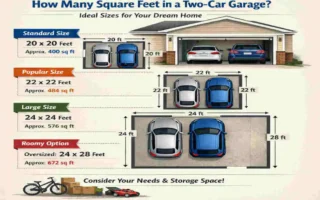
The short answer is that a two-car garage usually ranges from 360 to 576 square feet, depending on the layout. The most common size is around 400 square feet, usually in a 20×20 garage. But that is only the starting point. Real-life garage sizes can vary depending on your vehicles, storage needs, local rules, and how you want to use the space.
What Is the Standard Size of a Two-Car Garage?
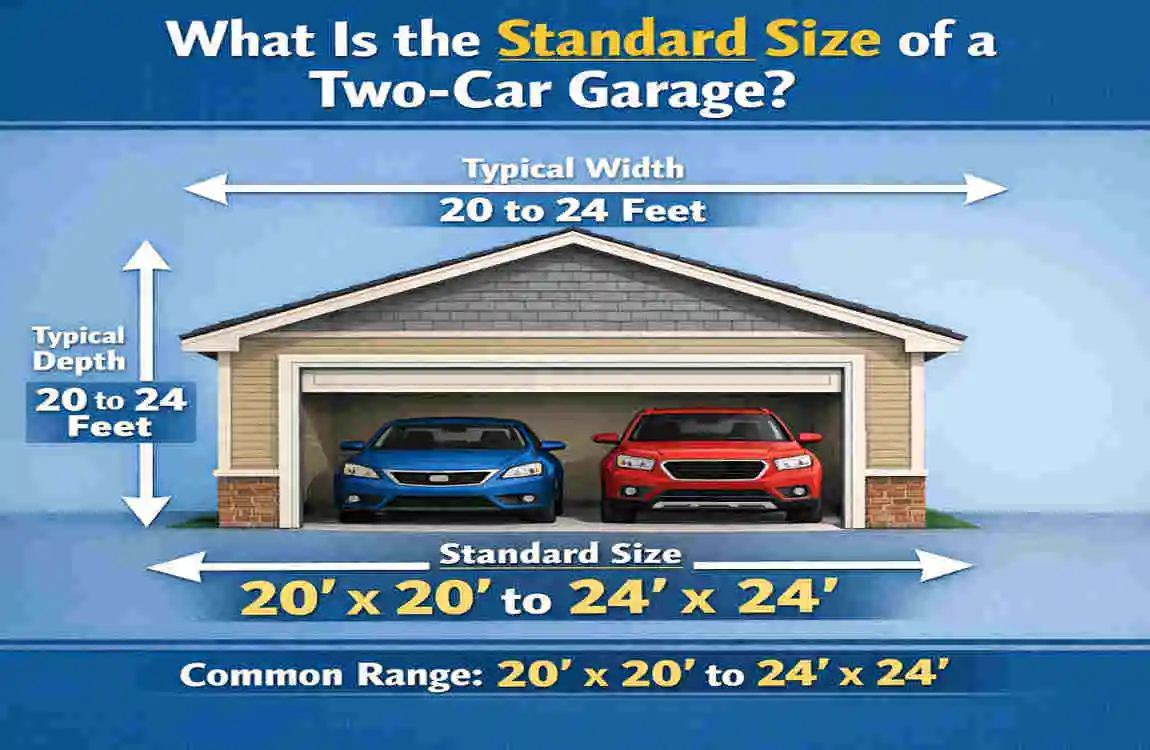
A standard two-car garage is usually built to fit two vehicles side by side, with enough room for doors to open and for people to walk around safely. But “standard” does not always mean one exact size.
Most two-car garages fall within a common range of widths and lengths. Builders often adjust the design based on the home style, lot size, and the homeowner’s needs.
Average Width of a Two-Car Garage
The width of a two-car garage usually falls between 18 and 24 feet.
A narrower garage may feel tight, especially if you drive larger vehicles. A wider garage gives you more room to open doors, move around, and store items along the walls. If you want better comfort, width matters just as much as total square footage.
Average Length of a Two-Car Garage
The depth, or length, of a two-car garage is usually around 20 to 24 feet.
This gives enough room for most cars to park without sticking too far into the driveway or leaving too little walking space behind them. A deeper garage also gives you more flexibility for shelves, storage bins, and work areas.
Standard Square Footage
Here are some common two-car garage sizes and their square footage:
- 18 x 20 = 360 sq ft
- 20 x 20 = 400 sq ft
- 22 x 22 = 484 sq ft
- 24 x 24 = 576 sq ft
These sizes are common because they offer a balance between function and cost. The smaller sizes work for compact vehicles. The larger ones are better for SUVs, trucks, or homeowners who want extra storage.
Why Sizes Vary
Two-car garages are not all built the same. Several factors can change the size.
Some of the biggest reasons include:
- Builder preferences
- Home design
- Lot size restrictions
- Local building codes
- Whether the garage is attached or detached
In other words, the answer to how many square feet are in a two car garage depends on the home, the location, and how the space will be used.
How Many Square Feet Are in a Two-Car Garage? Quick Breakdown
If you want a quick reference, this table gives you a simple view of common garage sizes and what they usually fit best.
Garage Dimensions Square Footage Suitable For
18×20 360 sq ft Compact cars
20×20 400 sq ft Standard family vehicles
22×22 484 sq ft SUVs + storage
24×24 576 sq ft Trucks + workshop
The average size of a 2-car garage is often around 400 square feet. Still, many homeowners choose bigger spaces because today’s vehicles are larger than older cars.
A 20×20 garage size is usually the minimum that feels workable for two average cars. Still, it can feel tight if you want extra storage or easier movement.
If you want more comfort, a 22×22 or 24×24 garage gives you more breathing room. That extra space can make a big difference in daily use.
Factors That Affect Two-Car Garage Square Footage
Two-car garage square footage is not just about parking two cars. It also depends on the design choices made during planning and construction.
Vehicle Size
The first thing to think about is the type of vehicles you own.
A pair of sedans takes up less space than two SUVs Trucks need even more space because they are wider, longer, and often taller. If your garage is sized only for compact cars, it may feel too small once you upgrade to a larger vehicle.
This is why many homeowners now prefer garage dimensions that allow for more than just a basic fit.
Door Configuration
Garage doors also affect how usable the space feels.
Some garages use a single double-width door, while others use two separate doors. Both can work well, but they change the layout inside.
A double door can make access easier, while two separate doors may help with organization and give each vehicle its own lane. The choice depends on convenience, style, and the amount of wall space available.
Interior Storage Requirements
Many garages do more than hold vehicles. They also store tools, lawn equipment, holiday boxes, sports gear, and cleaning supplies.
If you add shelves, cabinets, overhead racks, or bins, the available floor space gets smaller. That is why a garage that looks large on paper may still feel crowded in real life.
Think about what you want to store before you decide on the size.
Local Building Codes
Local rules can also affect garage size. Some areas have zoning requirements, setback rules, or property line limits that shape what you can build.
In some neighbourhoods, garages must fit within a specific footprint. In others, the height or placement may also be controlled. These limits can reduce your design choices, even if you want a larger garage.
Attached vs Detached Garage Layout
An attached garage often shares space and design flow with the home. That can make it easier to enter the house, but the layout may be more limited.
A detached garage offers greater design freedom. It may allow better shape options, more storage, or even future expansion. However, it usually needs more planning because it stands separate from the main house.
Is a 20×20 Garage Big Enough for Two Cars?
A 20×20 garage is one of the most common choices for homeowners, but is it big enough?
The honest answer is yes, but just barely for some situations.
For two average-sized cars, a 20×20 garage can work. It gives you a total of 400 square feet, which is often enough for parking and basic movement. But if your vehicles are wide, long, or tall, the fit may feel tight.
What It Handles Well
A 20×20 garage can usually work well for:
- Two compact cars
- Two standard sedans
- One car plus storage
- One car and one small SUV
Where It Starts to Feel Tight
It may feel cramped if you have:
- Two large SUVs
- Two trucks
- Wide doors that need extra opening room
- Shelving or storage along both walls
Space-Saving Tips for a 20×20 Garage
If you already have a 20×20 garage or are planning one, smart planning helps a lot.
Try these ideas:
- Keep wall storage shallow
- Use overhead racks for seasonal items
- Choose compact cabinets
- Avoid blocking the center driving lane
- Leave room for door opening on both sides
A 20×20 garage can be enough, but the fit depends on how much comfort you want. If you like a little more breathing room, a larger size is usually better.
How to Calculate Garage Square Footage
The math is simple, which is good news.
Formula
Square Feet = Length × Width
That is all you need for a basic measurement.
Example Calculations
- 20 x 20 = 400 sq ft
- 22 x 24 = 528 sq ft
- 24 x 24 = 576 sq ft
If you are comparing garage sizes, this formula helps you understand what you are getting before you build or buy.
Common Mistakes
People sometimes make simple planning mistakes when they calculate garage size.
A few common ones are:
- Forgetting wall thickness
- Not accounting for storage areas
- Ignoring door swing space
- Measuring only the parking area, not the full interior
Always measure the full usable space, not just the area where the tires sit. That gives you a more realistic idea of how the garage will work in daily life.
Ideal Two-Car Garage Size Based on Usage
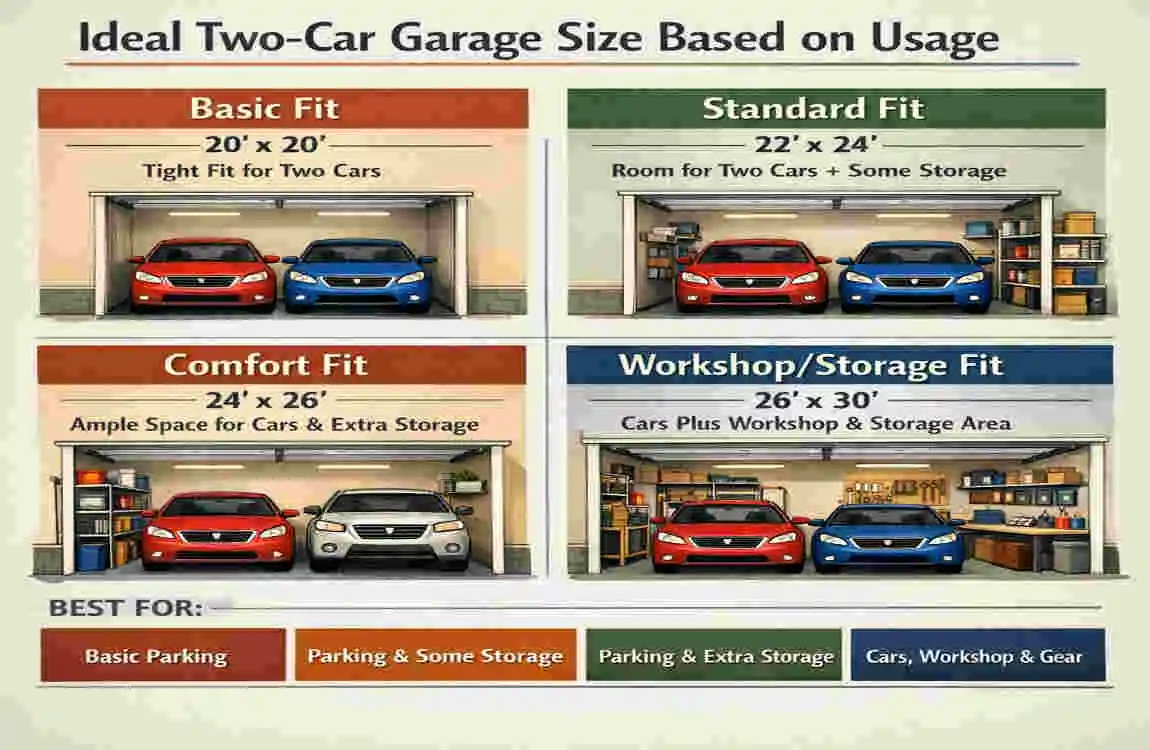
The best garage size depends on how you plan to use it. Some people only want parking. Others want storage, hobbies, or extra workspace.
For Parking Only
If you only want room for two vehicles and little else, 20×20 may be enough.
This is the most basic practical choice. It works best when your cars are not oversized and you do not need much wall storage.
For Parking + Storage
If you want room for boxes, tools, and seasonal items, 22×22 is a better option.
This size gives you more flexibility without becoming too large. It is a very good middle ground for many families.
For Large SUVs or Trucks
If you drive bigger vehicles, 24×24 is a smarter choice.
The extra width and depth make parking easier and reduce the stress of opening doors or walking around the vehicles. It also helps if one of your vehicles has roof racks, mirrors, or a lifted frame.
For Workshop or Hobby Area
If you want a workshop, craft area, or home project zone, consider 24×30 or larger.
This lets you keep two cars inside while still leaving room for a workbench, tool wall, or storage station. For hobby use, extra size is always helpful.
For Home Gym Conversion
If you may convert the garage later, flexible space matters.
A larger garage gives you more options for exercise equipment, mats, and open floor area. Even if you keep parking inside, the added room makes the garage easier to adapt later.
How to Maximize Space in a Two-Car Garage
You do not always need a bigger garage to get better results. Sometimes you just need a smarter layout.
If you want to maximise the space in a two-car garage, focus on the walls, ceiling, and layout. These areas often hold more value than the floor itself.
Vertical Storage Systems
Use your walls before you use up floor space.
Wall racks, hooks, and pegboards can store tools, garden gear, and smaller household items. This keeps the floor open and makes the garage feel cleaner.
Overhead Ceiling Storage
The ceiling is a useful place for items you do not need every week.
Seasonal decorations, camping gear, and rarely used bins can go overhead. This helps you save floor and wall space for the things you use more often.
Foldable Workbenches
A foldable workbench is a smart choice if you want a workspace but not a permanent one.
You can open it when needed and fold it away when you need more parking room. This is a simple way to keep the garage useful without making it crowded.
Built-In Cabinets
Cabinets make garage storage look tidy and keep small items under control.
They work well for tools, paint supplies, car care items, and hardware. If you want a clean look, cabinets are often better than open shelves.
Wall-Mounted Bike Hooks
Bikes can take up a lot of space if they’re left on the floor.
Wall-mounted hooks let you hang them up, freeing valuable floor space. This is especially useful in smaller garages where every inch matters.
Smart Parking Layout
The way you park matters just as much as the size of the garage.
Try to leave a clear center path and enough space for both doors to open. If possible, keep storage on one wall or in the corners rather than across the middle.
Decluttering Tips
A garage often becomes a dumping spot for things people do not know where else to put.
Take a few minutes to sort through items and remove what you no longer use. The less clutter you keep, the larger your garage will feel.
Attached vs Detached Two-Car Garage Size Comparison
Attached and detached garages can both work well, but they offer different advantages.
FeatureAttached GarageDetached Garage
Accessibility Easy access Separate walk
Expansion Limited Flexible
Construction Cost Lower Higher
Storage Options Moderate Larger potential
An attached garage is often more convenient because you can walk straight into the house. It also tends to cost less to build because it shares part of the structure.
A detached garage usually gives you more design freedom. You may be able to make it larger, add more storage, or use it for other purposes later. If you want a future workshop or separate studio, detached garages are often the better choice.
Cost to Build a Two-Car Garage Based on Square Footage
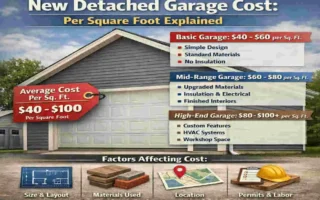
The cost of a two-car garage depends on many things, not just size. Materials, labor, foundation type, electrical work, insulation, and garage doors all affect the final budget.
Main Cost Factors
Here are the biggest things that influence cost:
- Materials
- Foundation
- Roofing
- Electrical
- Insulation
- Garage doors
A simple garage with basic finishes will usually cost less than one with more features or upgraded materials.
Approximate Cost Estimates
Size Sq Ft Estimated Cost Range
20×20 400 sq ft Basic build
22×22 484 sq ft Mid-range
24×24 576 sq ft Premium build
These are general estimates, not exact prices. Local labour costs and material prices can significantly change the total.
If you are comparing build options, remember that a larger garage may cost more up front. Still, it may also give you better long-term value and usefulness.
Common Mistakes When Planning a Two-Car Garage
Garage planning sounds easy until real-life use starts. That is when small mistakes become big annoyances.
Choosing Too Little Width
One of the biggest mistakes is making the garage too narrow.
A garage may fit two cars on paper, but if the doors cannot open comfortably, it will not feel practical. Width is one of the most important things to get right.
Ignoring Future Vehicle Upgrades
Many people plan for the cars they own now but forget about the ones they will own next.
If you later buy a larger SUV or truck, a small garage may suddenly feel too tight. Planning helps you avoid this problem.
No Room for Storage
A garage without storage quickly becomes cluttered.
Even if you only need a little space for tools or seasonal items, plan for it early. That way the garage stays useful instead of messy.
Poor Door Clearance
Door clearance is easy to overlook.
If doors cannot open fully, getting in and out becomes frustrating. This is especially true when car seats, bags, or large passengers are involved.
Underestimating Ceiling Height
Height matters too.
A taller ceiling gives you room for overhead storage, garage door hardware, and sometimes even lifts or taller vehicles. Many homeowners focus on floor area and forget the vertical space.
No Workspace Planning
If you think you may want a workbench later, plan for it now.
It is much easier to reserve a corner during construction than to try to squeeze one in later. A small amount of planning can save a lot of frustration.
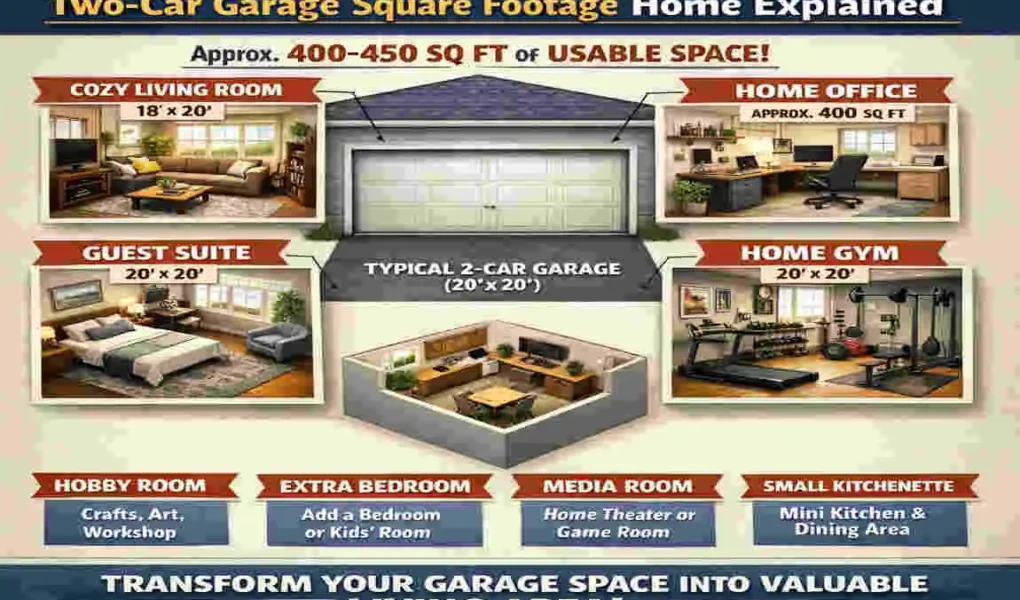
Can You Convert a Two-Car Garage Into Living Space?
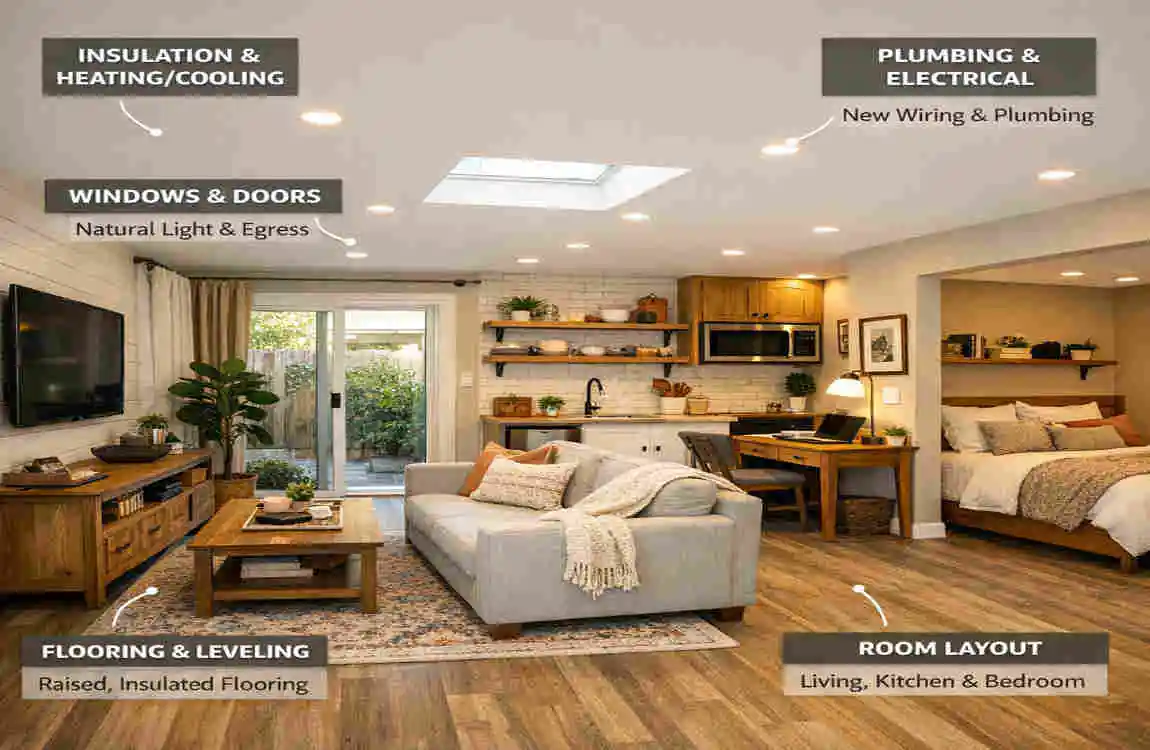
Yes, a two-car garage can often be converted into living space, but there are important things to check first.
People commonly turn garages into:
- Home offices
- Gyms
- Studios
- Guest rooms
- Rental spaces
The final use depends on your needs, your local rules, and your budget.
Permit Considerations
Garage conversions usually need permits. That is because the space is changing from vehicle storage to habitable space.
You may need to meet local codes for windows, exits, insulation, plumbing, and electrical work. It is always important to check before starting.
Insulation and HVAC
If you want to use the garage comfortably all year, insulation matters.
Heating and cooling also matter, especially in places with hot summers or cold winters. Without these upgrades, the room may be too uncomfortable to use as living space.
A Flexible Option
A garage conversion can be a smart way to add usable space without altering the home’s footprint. Just make sure the space still works well for your household if you no longer use it for parking.
Frequently Asked Questions
How many square feet are in a standard two car garage?
A standard two-car garage is usually around 400 square feet, but common sizes range from 360 to 576 square feet depending on the layout.
Is 400 square feet enough for two cars?
Yes, 400 square feet can be enough for two cars, especially if they are average-sized vehicles. But it may feel tight if you want extra storage or want to drive larger SUVs
Can two SUVs fit in a 20×20 garage?
They can fit, but the space may feel cramped. A 20×20 garage is usually better for standard cars than two large SUVs. A larger garage gives you more comfort and easier door clearance.
What is the minimum width for a two-car garage?
The minimum width is often around 18 feet, but many homeowners prefer 20 to 24 feet for better movement and easier parking.
Is a 24×24 garage oversized?
Not really. A 24×24 garage is a very practical size for many families. It gives you extra storage space, larger vehicles, and better comfort.
How much storage fits in a two-car garage?
That depends on the size of the garage and how well you use the walls and ceiling. With smart storage, even a small garage can hold a lot. Cabinets, racks, and overhead storage make a big difference.