Ever wondered how high is a house in feet before you start planning a build or any other city? It’s a very practical question, and it matters more than most people think. A house that looks “normal” from the street can vary widely in height depending on the number of stories, roof shape, ceiling height, and even the climate in which it was built.
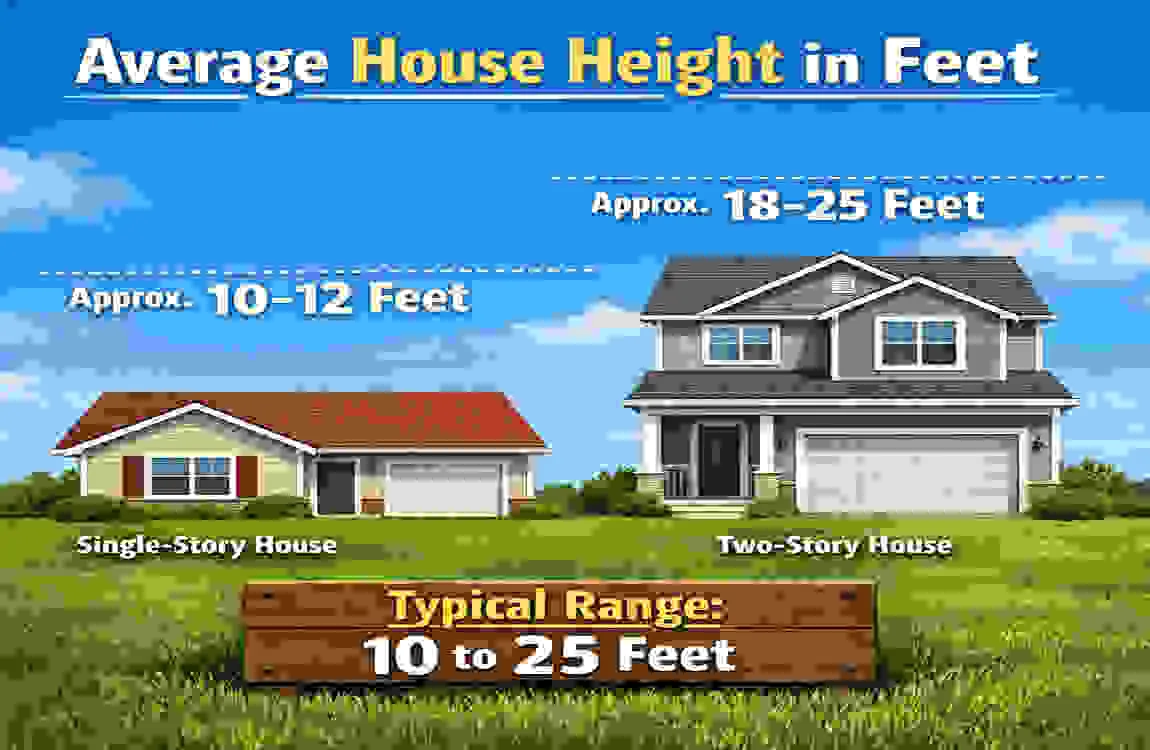
In simple terms, a single-story house is often around 10 to 13 feet tall, while a two-story house usually sits around 20 to 26 feet. Bigger homes with three floors or special roof designs can easily reach 30 to 40 feet or more. That is why the answer to how high is a house in feet is never just one number. It depends on the style, structure, and design choices.
| Aspect (type of house) | Typical height in feet | Notes & modern standards |
|---|---|---|
| One‑story house (modern) | 10–15 ft | Includes 8–10 ft ceilings plus roof structure and framing. |
| Standard room ceiling | 8–10 ft (≈2.4–3 m) | Common in modern homes; 8–9 ft is widely used for comfort and efficiency. |
| Two‑story house | 20–25 ft | Roughly 9–10 ft per floor plus roof; some designs reach up to 30 ft depending on style. |
| Three‑story house | 30–40 ft | Multi‑level homes; local zoning and engineering constraints often cap height. |
| Loft / tiny house with loft | 13–15 ft | Popular for compact modern designs with vertical space and storage. |
| Ranch‑style house | 13–16 ft | Single‑story but with higher roof lines or cathedral‑style ceilings. |
Understanding House Height Basics

Before we look at different home types, it helps to understand what “house height” actually means. People often use the term loosely, but in building terms, height can refer to several things.
What “house height” usually includes
When someone asks how high is a house in feet, they are usually asking for the total outside height of the building. That normally means measuring from the ground level up to the highest point of the roof.
That total height can include:
- the foundation
- the wall height on each floor
- the floor thickness
- the roof structure
- the roof peak or ridge
So, when you look at two houses with the same number of stories, they may still have different heights. One may have a flat roof and another may have a sloped roof. One may have tall ceilings and the other may use a standard ceiling height. These details matter more than many homeowners expect.
Why the answer is not the same for every house
A house in a warm climate may be built taller to improve airflow and reduce indoor heat. A house in a dense city may be kept lower to fit zoning limits or to save materials. A luxury home may have higher ceilings and decorative roof features that add several extra feet.
That is why standard house height is best understood as a range rather than a fixed number. When you ask how high is a house in feet, the better answer is: it depends on the number of stories, the roof style, and the local building rules.
Why this matters for homeowners
Knowing a house’s height is not just a design detail. It affects the cost of materials, the amount of wall and roofing work, the building’s appearance, and whether the design complies with local rules. It can also affect ventilation, sunlight, and long-term comfort.
If you are building in a hot place like, ceiling height and overall house height can make a big difference in indoor comfort. Taller rooms often feel cooler and more open, especially when paired with good windows and airflow planning.
Standard House Heights by Number of Stories
Now let’s get into the most useful part of the topic: the typical height of houses by story count. This is where most people start when they ask, “How high is a house in feet?”
Single-story houses
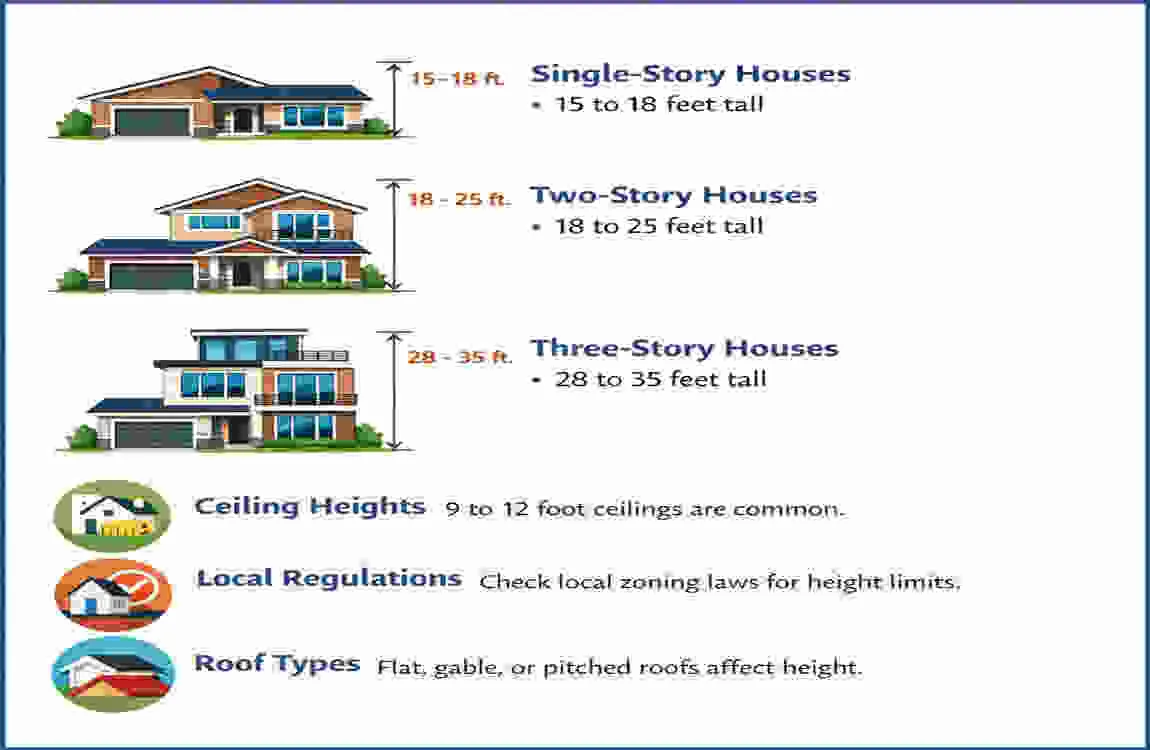
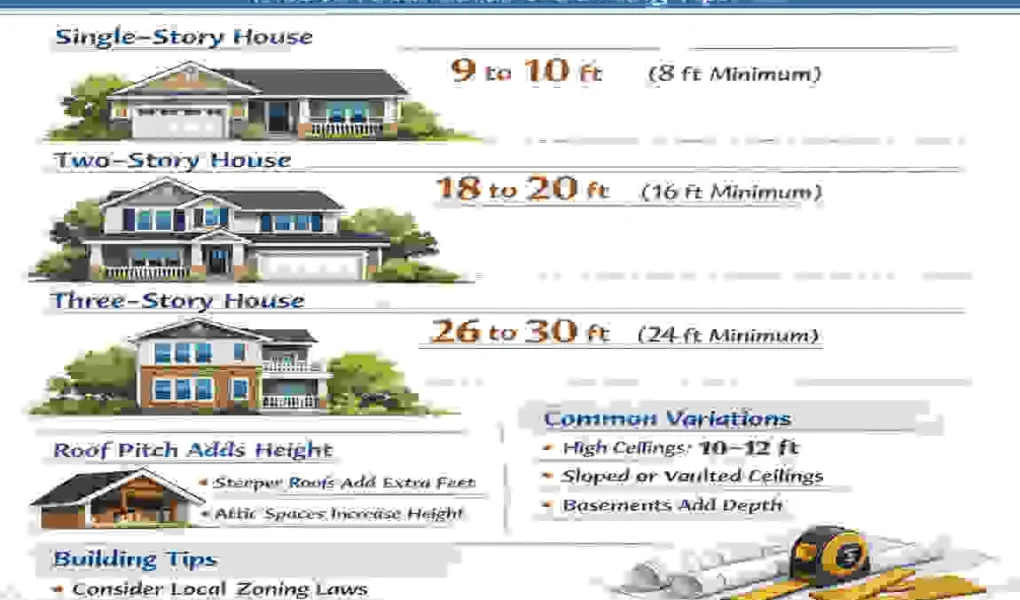
A single-story house is typically 10 to 13 feet tall. This range includes the walls and the roof structure. In many cases, the interior ceiling height is about 8 to 10 feet. At the same time, the rest is determined by the roof design and structural layers.
In flat-roof homes, which are common in many parts, the total height may stay closer to 9 to 10 feet for a very simple structure. However, many modern homes are taller than that for comfort and design reasons. A slightly higher roofline can also help with heat control and ventilation.
Single-story houses are popular because they are easier to build and maintain, and often more affordable than larger homes. They also suit smaller plots well. If you are trying to understand how high is a house in feet for a compact urban home, this is usually the best starting point.
Two-story houses
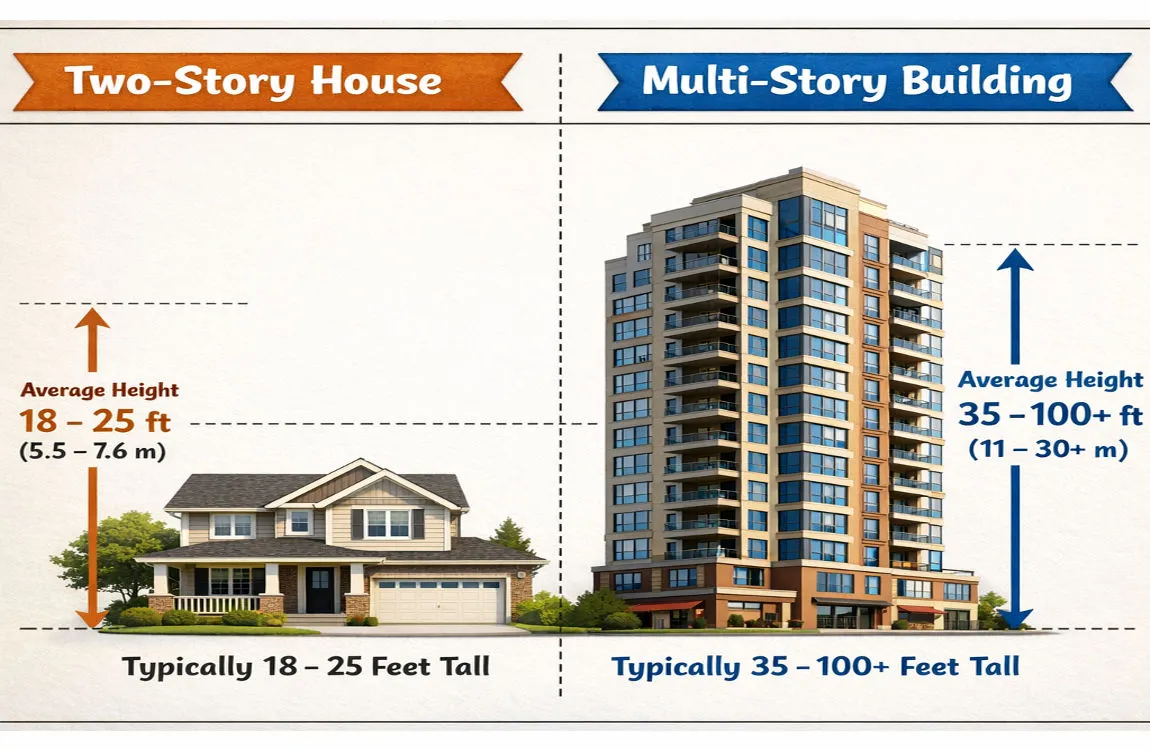
A two-story house usually measures around 20 to 26 feet tall. This is one of the most common ways to answer the question, “How high is a house in feet?” because two-story homes are so widely built in cities and suburban areas.
A simple way to think about it is this:
- first floor: about 9 to 10 feet
- second floor: about 9 to 10 feet
- roof structure: about 4 to 6 feet
That total adds up quickly. If the roof is steeper or the ceilings are taller, the house can become even higher.
Two-story homes are often chosen because they give you more living space without using too much land. In places where land is expensive, this can be a smart solution. Many families also like two-story homes because they keep private rooms upstairs and social spaces downstairs.
If you want the short version of two-story house height, think of it as “about the height of a medium-size tree or a small apartment block.” It is not huge, but it is clearly taller than a standard single-story home.
Three-story and taller homes
A three-story home or townhouse is often 30 to 40 feet tall. In some cases, the height may exceed that, especially if the building features a steep roof, attic space, or decorative top features.
This type of home is more common in dense urban settings, apartment-style buildings, or larger custom builds. It provides ample usable space but also imposes greater structural demands. The frame has to be stronger, the foundation has to be designed carefully, and the staircase layout becomes more important.
When people ask how high is a house in feet and they are thinking about bigger homes, this range is usually what they are looking for. It is also the point at which engineering, legal limits, and safety planning matter much more.
Quick comparison table
Here is a simple table to make the heights easier to compare.
House Type Typical Height in Feet Common Use
Single-story home 10–13 ft Small plots, bungalows, compact family homes
Two-story home 20–26 ft Urban family homes, larger living space on limited land
Three-story home 30–40 ft Townhouses, larger custom homes, dense city areas
Homes with lofts or attics 15–40+ ft Varied, depends on roof and internal layout
This table gives you a practical view of average house height feet without making things overly technical.
Ceiling Height Standards and Why They Matter
A big part of understanding how high a house is in feet is understanding its ceiling height. Ceiling height shapes how tall each floor feels and how much total height the house needs.
What standard ceiling height means
A standard ceiling height is the usual distance from the floor to the ceiling in a room. In many modern homes, this is around 8 to 10 feet. Some homes use even higher ceilings to create a more open, airy look.
Ceiling height matters because it affects:
- the feel of the room
- the amount of natural light
- airflow and ventilation
- heating and cooling needs
- the overall outside height of the house
A higher ceiling can make a room feel grand and spacious. A lower ceiling can make the home feel cozy and can sometimes reduce construction costs. Neither is automatically better. The right choice depends on your goals.
Global ceiling height trends
Different regions use different standards. In many places, 8 to 9 feet is normal for standard homes. In luxury homes, 10 feet or more is common.
In warmer climates, taller ceilings are often preferred because they help hot air rise and improve comfort. In cooler climates, lower ceilings can improve energy efficiency and make spaces easier to heat.
That is why the question how high is a house in feet is closely tied to climate. A house built in a tropical area may look very different from one in a cold region, even if both homes have the same number of stories.
Room-by-room ceiling height ideas
Different rooms can use different heights depending on their purpose.
Living rooms
Living rooms often look best with ceilings around 9 to 12 feet. This gives the room a welcoming, open feel. A taller living room also works well if you want big windows or a dramatic interior style.
Bedrooms
Bedrooms are often kept around 8 to 9 feet. That height usually feels comfortable without wasting materials or making the room feel too large.
Bathrooms
Bathrooms usually sit at around 8 feet or a little more. They do not need as much vertical space as living areas, but they still need enough height for comfort and ventilation.
Kitchens and utility spaces
Kitchens and utility rooms often work well with 8 to 9 feet ceilings. These rooms benefit more from practical layouts than from dramatic height.
Why ceiling height changes the total house height
If every floor is taller, the house itself becomes taller. That is why how high is a house in feet is not just about the number of stories. A two-story home with 10-foot ceilings can easily be taller than a similar home with 8-foot ceilings by several feet.
This is especially important if you are trying to stay within a legal limit or keep the structure balanced. Higher ceilings feel beautiful, but they also add cost, material use, and sometimes extra maintenance.
How House Height Changes by Design Style

The style of the house can significantly change its total height. Two homes with the same number of rooms can still have very different profiles.
Ranch-style homes
Ranch homes are usually low and wide. They often stay around 13 to 16 feet in total height. Because they spread out more horizontally, they do not need to rise as high.
These homes are popular for people who want easy movement, fewer stairs, and a simple design. If you are asking how high is a house in feet for a low-profile family home, ranch-style houses are a good example of a modest-height structure.
Colonial-style homes
Colonial homes are usually taller and more formal. A two-story colonial house can easily reach 22 to 28 feet or more, depending on the roof pitch and ceiling height.
These homes often have a symmetrical shape and a more traditional look. Their height gives them a strong visual presence, which is one reason they remain popular in many regions.
Modern minimalist homes
Modern minimalist homes often use clean lines and lower roof profiles. A single-story modern home may measure 10 to 13 feet. At the same time, a two-story version may remain fairly compact compared with older styles.
This style often aims for simplicity, sharp edges, and efficient use of space. So if you are trying to answer how high is a house in feet in a modern design context, the answer may be lower than you expect.
Villas and custom luxury homes
Custom homes and villas may feature taller walls, larger windows, and more dramatic rooflines. These features can raise the total height very quickly.
A luxury home can look “normal” from the ground but still have a much taller structure because of design extras like:
- double-height living rooms
- grand staircases
- decorative rooflines
- attic space
- parapet walls
This is why house height variations can be so wide. The same footprint can produce very different vertical results.
Regional and Climate Influences on House Height
The place where a house is built can change its height as much as its style does. Climate, local traditions, and daily living needs all shape the final design.
Hot climates and taller ceilings
In hot regions, taller ceilings are often helpful because warm air rises. That can make the home feel more comfortable. In cities with hot summers, homeowners often prefer higher ceilings and larger windows to improve airflow.
This is especially relevant if you are thinking about how high is a house in feet in a place like. Many homes in warmer areas use ceilings that feel more generous than the minimum standard because it improves comfort.
Cold climates and lower ceilings
In colder areas, homes may use lower ceilings to retain heat more efficiently. Lower ceilings can make the space easier to heat and may reduce energy use.
That does not mean the home has to feel cramped. Good interior design, window placement, and room planning can still create a comfortable atmosphere even with a lower ceiling.
Urban plots and height limits
In dense city areas, house height is often shaped by plot size and local regulation. Small plots may push the home upward rather than outward. That is why two-story and three-story homes are common in urban neighborhoods.
When land is limited, going taller can be the practical answer. But once you start going higher, you must carefully consider safety, stair design, structural integrity, and legal limits.
Traditional local building habits
Every region has its own building habits. Some areas prefer flat roofs. Others prefer sloped roofs. Some homes are built with wide open verandas, while others keep the design compact.
These habits affect how high a house is in feet by influencing the roof shape, wall height, and the amount of overhead structure. So even when two homes have the same number of floors, their overall height may still differ a lot.
A Simple Guide to House Height Variations
If you want to understand house height variations, it helps to see which features add height and which ones keep a home low.
Features that increase house height
Several design choices can make a house taller:
- Steep roof pitches add visible height at the top.
- Higher ceilings increase the height of each floor.
- Attic spaces add extra vertical structure.
- Vaulted ceilings raise the interior and often the exterior profile.
- Decorative roof elements like ridges, parapets, or gables can also add height.
These features may look small on paper, but they can add several feet to the total height.
Features that reduce house height
Some designs intentionally keep the house lower:
- Flat roofs
- Low ceiling layouts
- Compact rooflines
- One-level floor plans
- Minimal exterior decoration
These choices are often useful in urban projects, budget builds, or areas with strict height restrictions.
Table of common height variations
Variation Height Adjustment Best For
Steep roof +4 to 6 feet Snow-prone areas, decorative styles
Flat roof 0 to 2 feet extra Urban homes, warmer climates
Vaulted ceiling +2 to 5 feet perceived height Open and airy interiors
Attic space +6 feet or more Extra storage or flexible room use
Basement Does not raise roof height Extra space below ground
This table shows why the height of a house, measured in feet, can vary so much from one home to another. Some changes are visible from outside, while others are mostly inside.
Building Codes and Regulations You Should Know
If you are planning to build or renovate, building codes are a must. They can affect everything from ceiling height to total building height.
Why codes matter
Building codes exist to keep homes safe, usable, and properly ventilated. They also help make sure homes are structurally sound and suitable for occupancy.
For anyone asking how high a house is in feet, codes are important because they may limit the maximum height or specify the minimum room height.
International minimums
Many building systems set minimum ceiling height requirements for habitable rooms. In practical terms, that often means a minimum of 7.5 to 8 feet in many places, with some variation by region and room type.
This is usually the legal floor, not the design ideal. A home can meet code and still feel awkward if the proportions are poor. So while code is important, comfort matters too.
For multi-story homes, overall height limits can become important, especially where plot size, road width, and neighborhood rules are involved. Some areas may also require extra planning for stairs, setbacks, and structural support.
Because rules can change from one city or authority to another, it is always wise to confirm details locally before building. That is especially true if your project or another fast-growing urban area.
How to measure house height properly
If you want to calculate how high a house is in feet for your own project, use a clear, consistent method.
Measure from:
- the ground level or finished floor reference
- up through the wall height
- include floor thickness between levels
- add the roof structure
- finish at the highest peak or ridge
This gives you the true outer height, which is usually the number people want when they ask about house height.
A quick rule to remember
If the house has more stories, taller ceilings, or a steeper roof, the total height rises quickly. That is why exact measurements matter. A home that seems small from the street may still have a surprisingly tall structure.
Practical Building Tips for Getting House Height Right

Now that you understand the numbers, let’s talk about how to plan a house height that actually works in real life.
Balance comfort and cost
Taller houses often need more materials. More wall area means more bricks, more plaster, more paint, and more labor. A higher roof can also require extra framing and stronger supports.
So if you are thinking about how high is a house in feet for a new build, ask yourself what you really need. Do you want a grand look, or a practical, affordable home? The best answer is often somewhere in the middle.
A small increase in height can make a big difference in comfort. But adding too much height can quickly raise your budget.
Choose the right roof type
The roof is one of the biggest factors in the final height. Flat roofs keep the building compact. Sloped roofs add character but also increase the total height.
If you are building in a hot city and want a simple, modern look, a flat or lightly sloped roof may be the smartest option. If you want stronger visual presence or weather protection, a steeper roof may be worth the extra height.
Make tall spaces work harder
If you decide to go with a taller ceiling, make the extra height useful. Tall rooms can feel amazing when well-designed.
Here are a few easy ways to make taller spaces more effective:
- Use larger windows to bring in natural light.
- Add ceiling fans to improve airflow.
- Choose simple finishes so the room does not feel heavy.
- Use vertical storage to make the most of extra wall height.
- Keep proportions balanced so the room feels elegant, not empty.
Don’t forget ventilation and cooling
In warm climates, taller rooms can help with airflow, but only if the space is planned properly. If the room is high but poorly ventilated, it may still feel uncomfortable.
A taller house may need better fan placement, window design, and cooling planning. Otherwise, the extra height could make the house harder to manage.
Use measurement tools carefully
If you are checking height on-site, use accurate tools. A laser measurer or long tape measure can help you avoid errors. Height mistakes can lead to code issues, budgeting errors, and design problems later.
A tiny mistake in planning can become a big problem once the walls and roof are built. So take measurements seriously from the start.
Common Mistakes People Make When Estimating House Height
Even experienced homeowners make mistakes when they try to guess how high is a house in feet. Here are some of the most common ones.
Mistake : Forgetting the roof
People often measure only the wall height, ignoring the roof. But the roof can add several feet, especially if it is steep or decorative.
Mistake : Assuming every floor is the same height
Not every floor is built the same way. The ground floor may be taller than the upper floor. A living room may have a higher ceiling than a bedroom. These differences change the final total.
Mistake : Ignoring floor thickness
Each floor includes structure between levels. That thickness adds up and should not be skipped in the calculation.
Mistake : Overlooking design features
Parapets, roof trims, attic spaces, and rooftop water tank structures can all add height. These details are easy to miss, but they matter.
Mistake : Not checking local rules
A design might look fine on paper but still fail local height rules. Always check regulations before finalizing your plan.
When you understand these mistakes, the question how high is a house in feet becomes much easier to answer correctly.
Visualizing House Height in Everyday Terms
Numbers are useful, but sometimes a simple image in your head helps more.
Single-story home
Think of a single-story house as roughly the height of a large two-person stack of ceiling height plus a roof. In real terms, it often feels low, practical, and grounded.
Two-story home
A two-story home is a noticeable step up. It stands higher than nearby single-story homes and often gives a stronger street presence. It usually feels like a mid-sized building rather than a compact house.
Three-story home
A three-story house starts to look tall. It feels much more urban and much more vertical. At this point, the height is no longer just a design detail. It becomes a major part of how the house works.
This is why people asking how high is a house in feet often need more than one number. They need a mental picture too.
FAQs About House Height
How high is a house in feet on average?
For many modern homes, the average is around 10 to 13 feet for a single-story house and about 20 to 26 feet for a two-story house. Three-story homes often range from 30 to 40 feet depending on the roof and layout.
What is the standard ceiling height in feet?
A common standard ceiling height is around 8 to 10 feet. Some homes go higher for comfort, style, or climate reasons.
How high is a house in feet if it has a flat roof?
A flat-roof house is often lower than a sloped-roof house. A single-story flat-roof home may sit around 9 to 10 feet. At the same time, larger versions can be higher depending on wall height and interior ceilings.
How high is a house in feet?
In many residential homes fall within the same broad ranges: single-story homes around 10 to 13 feet, two-story homes around 20 to 26 feet, and taller homes that go beyond that, depending on design and local rules.
What is the two-story house height in feet?
A typical two-story house is about 20 to 26 feet tall, but it can be taller if the roof is steep or the ceilings are raised.
How can I increase the height of my house affordably?
You can heighten the sense of height with smarter design choices rather than major construction changes. For example, consider vaulted ceilings, a simple loft, taller windows, or an open living area. These can enhance the sense of space without making the entire house feel overly tall.
What is the maximum legal house height in feet?
There is no single universal answer. Legal height depends on local rules, zoning, road width, plot type, and city regulations. That is why checking locally is essential before you build.