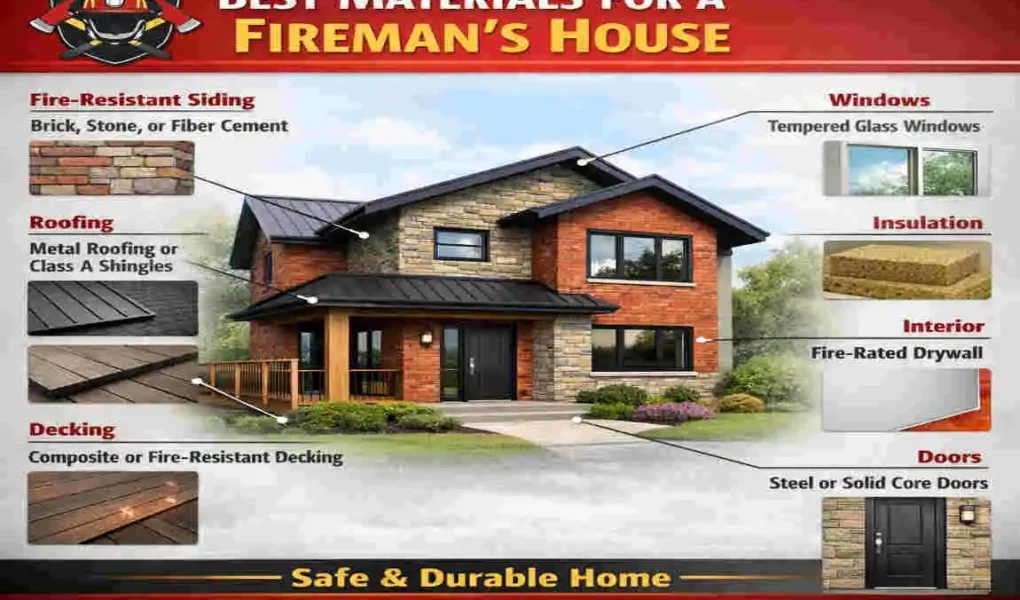
When it comes to designing a fireman’s house, the materials you choose are more than just building blocks—they’re critical to ensuring safety, functionality, and longevity. A firehouse isn’t just an ordinary structure; it’s a specialised space where firefighters rest, train, and prepare for emergencies. Selecting the best materials is vital not only for the structure’s durability but also for the safety of its occupants.
What is a Fireman House?
Definition and Purpose
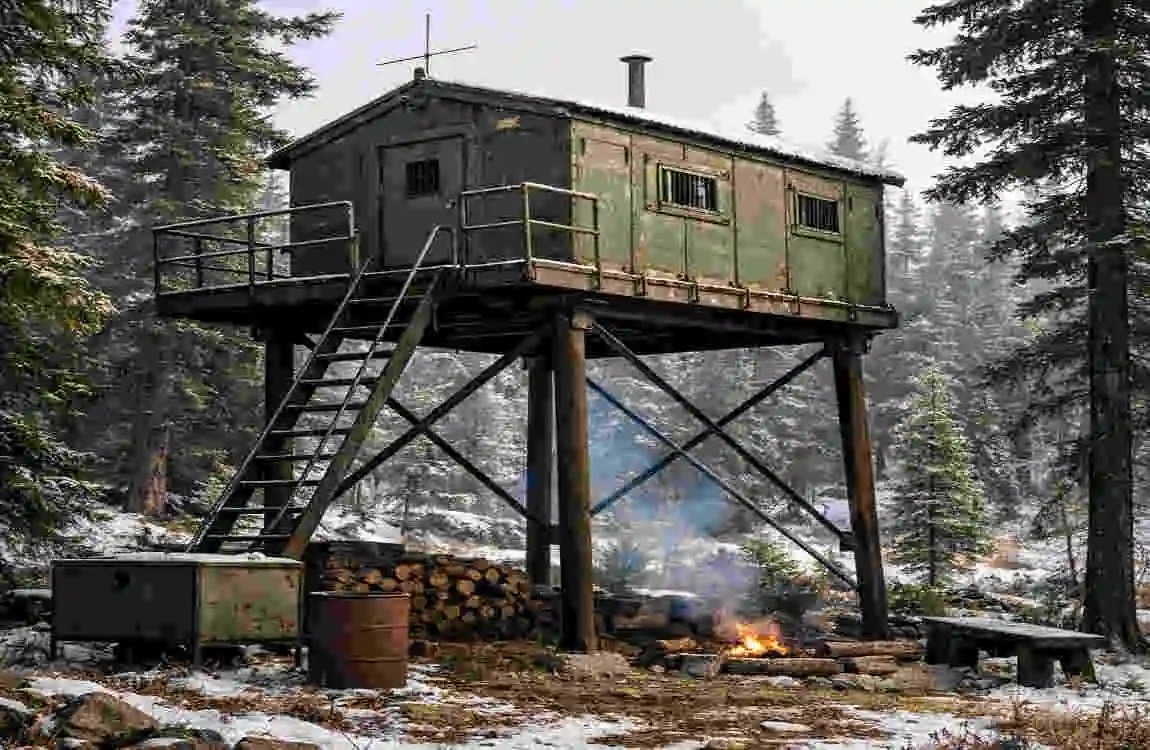
A fireman’s house serves as a living and resting space for firefighters. It’s designed to provide comfort and functionality while prioritising resilience and safety. Unlike regular residential homes, a firefighter’s modern house must meet strict standards for fire resistance, structural integrity, and ergonomic design.
Brief History and Evolution
Fireman houses have evolved significantly over time. Early versions were simple barracks focused solely on functionality. However, modern fireman houses now incorporate advanced materials, energy-efficient designs, and comfortable living spaces. This evolution reflects the growing recognition of firefighters’ need for restful and safe environments.
Why Do Materials Matter?
The materials used in a firefighter’s house directly impact its safety, durability, and functionality. Fire-resistant materials can save lives during emergencies, while sustainable options reduce the environmental impact. In short, the right materials ensure the structure is fit for its purpose.
Key Considerations When Choosing Materials for a Fireman’s House
Durability and Longevity
A firefighter’s house must withstand heavy usage and harsh conditions. Materials like concrete and steel are known for their durability and ability to last for decades with minimal maintenance. Choosing long-lasting materials reduces repair costs and ensures the structure remains safe over time.
Fire Resistance
Fire resistance is arguably the most critical factor when selecting materials for a fireman’s house. Fireproof materials such as gypsum board, treated wood, and fire-resistant glass provide an added layer of protection and ensure compliance with fire safety codes.
Energy Efficiency
Energy-efficient materials help maintain a comfortable indoor environment while reducing utility costs. For instance, insulation materials such as fibreglass or mineral wool help keep the building cool in summer and warm in winter, enhancing overall comfort.
Environmental Impact
Sustainable construction is becoming increasingly important. Using eco-friendly materials, such as engineered wood or recycled steel, minimises the project’s environmental footprint. Green building practices benefit not just the planet but also the firehouse’s long-term energy efficiency.
Budget and Cost
While quality is crucial, it’s important to balance it with affordability. Cost-effective materials such as pre-engineered steel or prefabricated components can reduce expenses without compromising on safety or durability.
Top Materials to Consider for a Fireman’s House
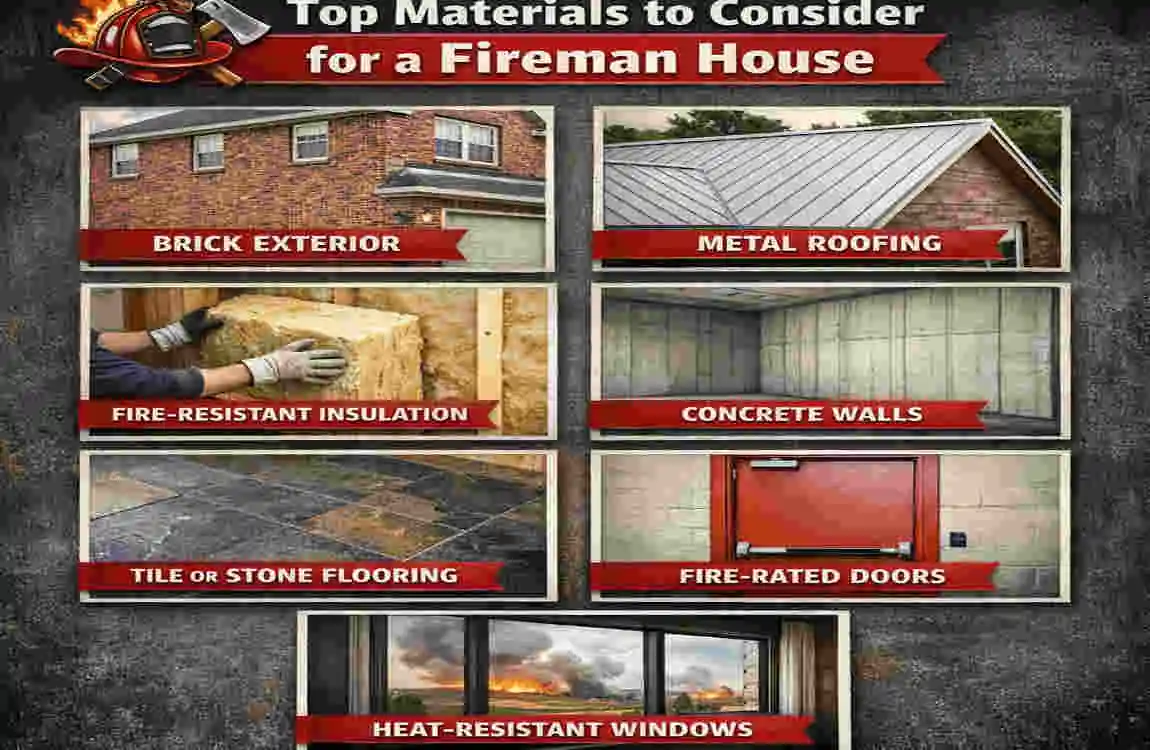
Here’s a detailed look at some of the best materials suited for building a fireman’s house.
Concrete
- Benefits: Concrete is incredibly durable, fire-resistant, and cost-effective. It’s an ideal choice for walls, flooring, and structural components.
- Common Uses: Load-bearing walls, fire barriers, and flooring.
Steel
- Pros: Steel offers unmatched structural integrity and fire resistance. It’s also highly adaptable to various designs.
- Applications: Frameworks, roofing, and reinforcements.
Gypsum Board (Drywall)
- Fire-Retardant Properties: Gypsum board is a popular choice for interior walls and ceilings due to its fire-resistant properties.
- Ease of Installation: It’s lightweight and easy to install, making it a practical option for both new builds and renovations.
Brick and Masonry
- Natural Fire Resistance: Bricks are inherently fire-resistant and offer excellent insulation.
- Aesthetic Appeal: Masonry also adds a timeless, classic look to the structure.
Fire-Resistant Glass
- Importance: Glass is typically a weak point in buildings, but fire-resistant glazing can significantly enhance safety.
- Types: Tempered and laminated glass are ideal for windows and doors in a firehouse.
Treated or Engineered Wood
- Treated Wood: Chemical treatments make wood more fire-resistant, while retaining its natural beauty.
- Engineered Wood: Options such as cross-laminated timber (CLT) offer durability and environmental sustainability.
Insulation Materials
- Non-Combustible Options: Fibreglass and mineral wool are ideal for fireman houses as they resist combustion.
- Importance: Insulation not only improves energy efficiency but also helps maintain safe indoor temperatures.
Roofing Materials
- Fire-Resistant Options: Metal roofing, clay tiles, and slate are excellent choices for fire-resistant roofs.
- Comparison of Options:
- Roofing Material, Fire Resistance, Durability, Cost
- Metal High Very High Moderate
- Clay Tiles High High High
- Asphalt Shingles Moderate Moderate Low
Speciality Coatings and Paints
- Fireproof Coatings: These can be applied to walls, ceilings, and structural elements to enhance fire resistance.
- Fire-Retardant Paints: Easy to apply and provide an additional layer of safety.
Design Features of a Fireman’s House
Ergonomics and Functionality
Materials play a crucial role in designing comfortable workspaces and rest areas. For example, durable flooring materials like concrete or vinyl withstand heavy foot traffic, while soundproof insulation ensures quiet sleeping quarters.
Ventilation and Air Circulation
Proper ventilation is key to maintaining air quality. Materials such as perforated panels and galvanised-steel duct systems can enhance airflow and prevent smoke buildup during emergencies.
Noise Reduction
Fireman houses can be noisy due to alarms and equipment. Soundproofing materials like acoustic panels and fibreglass insulation help create a quieter environment for rest.
Safety and Emergency Features
Reinforced materials, such as steel doors and fire-rated glass windows, ensure safety during emergencies. Additionally, integrating fire doors and emergency exits is essential.
Benefits of Using High-Quality Materials for a Fireman’s House
- Enhanced Safety: Protects residents during emergencies.
- Reduced Maintenance Costs: Durable materials lower repair and replacement expenses.
- Energy Efficiency: Insulated materials reduce heating and cooling costs.
- Sustainability: Eco-friendly options contribute to environmental conservation.
- Compliance: High-quality materials meet safety codes and regulations.
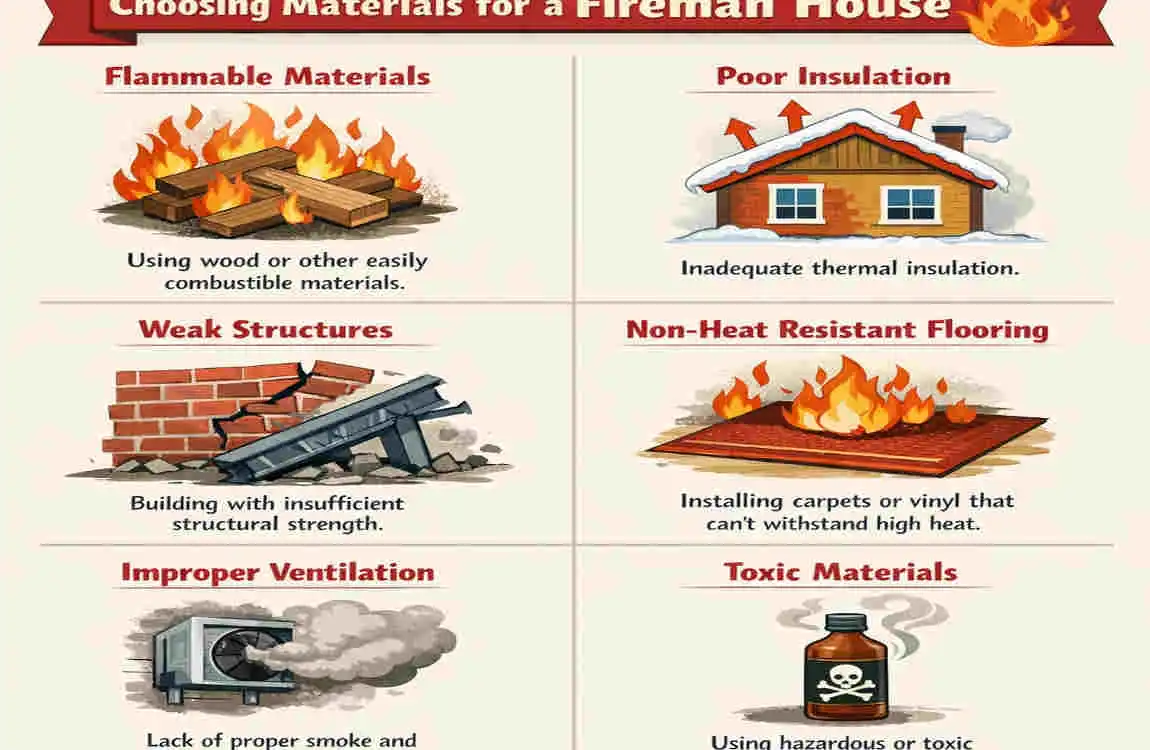
Common Mistakes to Avoid When Choosing Materials
- Using Low-Quality Materials: Compromises safety and durability.
- Ignoring Fire Resistance Ratings: Essential for compliance and safety.
- Overlooking Insulation: Affects energy efficiency and indoor comfort.
- Prioritising Aesthetics Over Functionality: Always balance beauty with practicality.
- Neglecting Expert Advice: Consult professionals to make informed decisions.
Real-Life Examples of Fireman Houses Built with the Best Materials
- Case Study 1: A fireman’s house constructed with concrete and steel, offering unmatched durability and fire resistance.
- Case Study 2: An eco-friendly fireman’s house using engineered wood and recycled materials, achieving sustainability goals.
- Case Study 3: A budget-friendly fireman’s house in a small town, built with prefabricated components for quick and cost-effective construction.
Expert Tips for Building or Renovating a Fireman’s House
- Work with specialised architects and engineers who understand fire-safe construction.
- Invest in proven fire-resistant materials, such as gypsum board and treated wood.
- Schedule regular inspections and maintenance to ensure long-term safety.
FAQs About Fireman Houses
What is the most fire-resistant material for a fireman’s house?
Concrete and steel are among the most fire-resistant materials.
Can eco-friendly materials be used in fireman houses?
Absolutely! Options like engineered wood and recycled steel are both sustainable and safe.
How much does it cost to build a fireman’s house with high-quality materials?
Costs vary by location and materials, but investing in quality pays off in the long term.
Are there specific building codes for fireman houses?
Yes, firefighter houses must comply with local fire safety and building regulations.
How often should materials in a fireman’s house be inspected?
Regular inspections, at least annually, are recommended to ensure safety and durability.