From washing your clothes to keeping your food fresh, electric motors quietly operate behind the scenes, making your life easier and more efficient. Understanding how they work can help you appreciate these marvels of engineering and even guide you in their maintenance.
What Are Electric Motors?
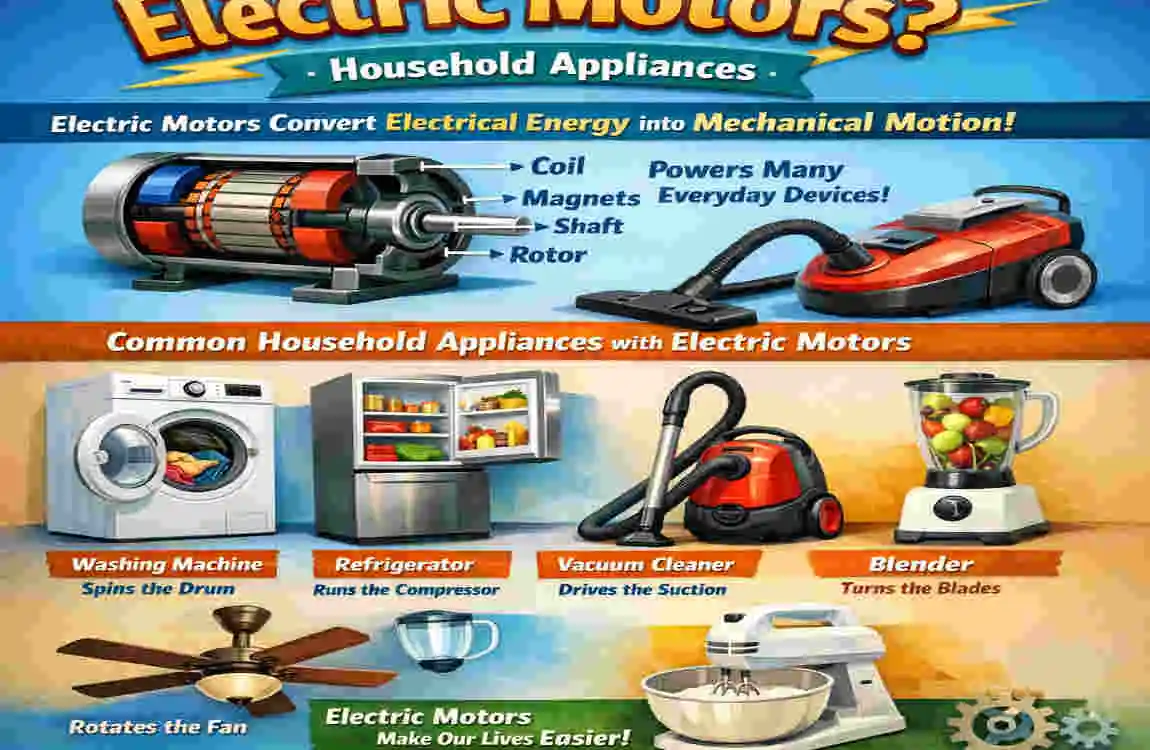
Electric motors convert electrical energy into mechanical energy. This mechanical energy is what powers the moving parts of various appliances. But what makes them work? Let’s break it down.
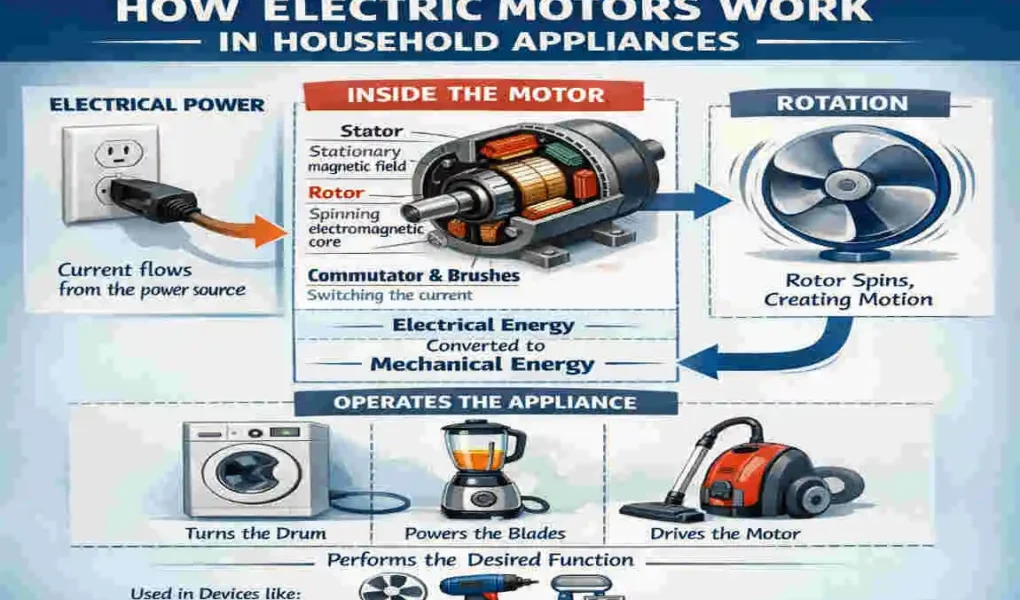
Basic Components of an Electric Motor
Electric motors may seem complex, but their core components are straightforward:
- Rotor: The rotating part of the motor that generates motion.
- Stator: The stationary part that provides the magnetic field.
- Commutator: Found in some motor types; it helps reverse the direction of current.
- Power Source: Typically, electricity, which fuels the motor’s operation.
Types of Electric Motors in Household Appliances
Different appliances require different types of motors. Here are the most common:
- AC Motors: Operate on alternating current; ideal for larger appliances like refrigerators.
- DC Motors: Use direct current; often found in smaller devices like blenders.
- Brushless Motors: Highly efficient and durable; used in modern appliances.
- Synchronous Motors: Known for precise speed control; common in clocks and some fans.
The Science Behind How Electric Motors Work
Electric motors work based on a fascinating principle called electromagnetic induction. This principle explains how electricity and magnetic fields interact to produce motion.
How Do Electric Motors Operate?
Here’s the step-by-step process:
- Electricity Flows In: Electric current enters the motor through wires.
- Magnetic Fields Are Generated: The flow of electricity generates magnetic fields in the stator and rotor.
- Magnetic Interaction Causes Rotation: The interaction between these fields generates a torque that spins the rotor.
- Energy Conversion: The spinning rotor converts electrical energy into mechanical energy.
This mechanical energy drives the moving parts of your appliances, whether it’s spinning the drum of a washing machine or rotating the blades of a fan.
Real-World Connection
Think about your blender. When you turn it on, electricity powers the motor, which spins the blades at high speed. This is the same principle at work in countless other household appliances with electric motors.
Common Household Appliances That Use Electric Motors
Electric motors are everywhere in your home. Let’s explore some popular examples and how they work:
Refrigerators
- Motor Role: Compressors in refrigerators rely on motors to circulate the refrigerant and maintain cooling.
- Impact: Without this motor, your food wouldn’t stay fresh for long.
Washing Machines
- Motor Role: Washing machines use motors to agitate clothes during the wash cycle and spin them dry.
- Impact: Electric motors make laundry faster and more efficient.
Vacuum Cleaners
- Motor Role: Motors power the suction mechanism, pulling dust and debris into the vacuum.
- Impact: Cleaning your home becomes a breeze.
Blenders & Mixers
- Motor Role: High-speed motors rotate sharp blades to chop, blend, or mix ingredients.
- Impact: These motors save you time in the kitchen.
Air Conditioners
- Motor Role: Motors drive both the compressor and the fan, cooling your home.
- Impact: They provide comfort during hot summers.
Dishwashers
- Motor Role: Pumps and spray arms in dishwashers rely on motors to circulate water.
- Impact: They ensure your dishes come out sparkling clean.
Electric Fans
- Motor Role: Motors rotate the fan blades, creating airflow.
- Impact: They keep you cool and comfortable.
Key Takeaway: These examples show how electric motors enhance the functionality of household appliances, making our daily routines more efficient.
Benefits of Using Electric Motors in Household Appliances
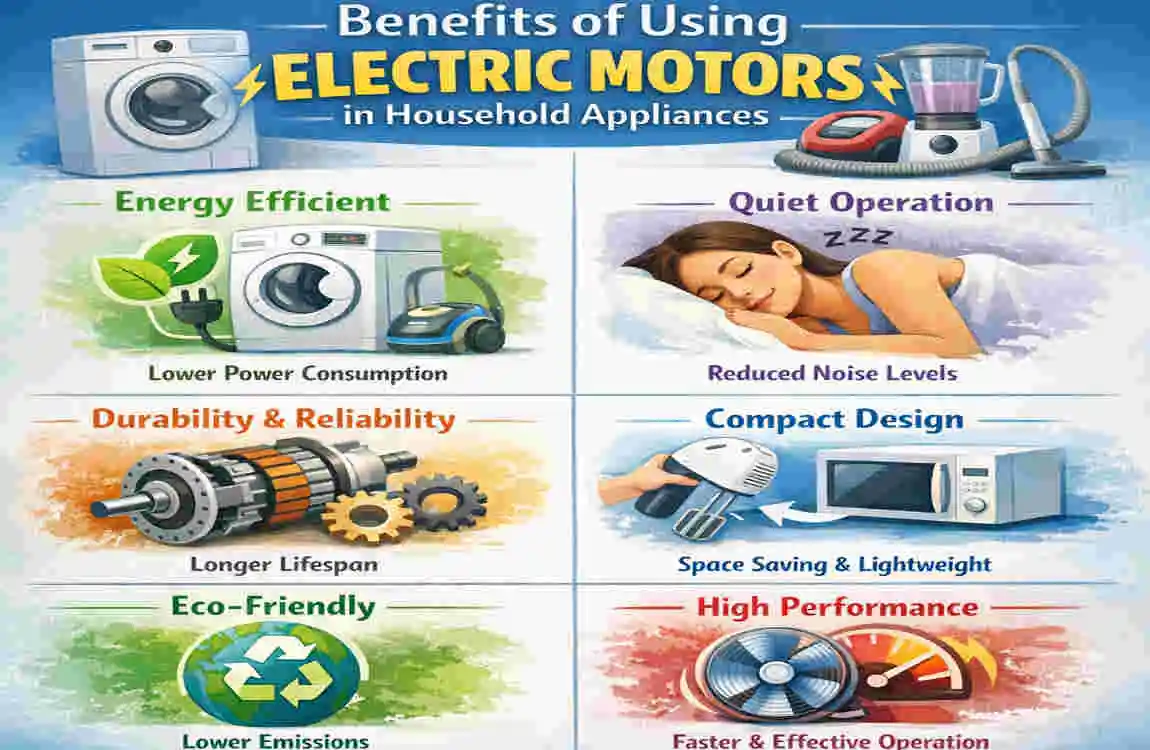
Electric motors offer several advantages that make them indispensable in modern appliances.
Energy Efficiency
Modern electric motors are designed to use electricity efficiently, reducing energy bills.
Durability
With proper care, many electric motors can last for years without significant wear.
Compactness
Electric motors are compact, enabling sleek, space-saving appliance designs.
Quiet Operation
Advanced motors operate quietly, ensuring minimal noise disruption at home.
How These Benefits Matter: These features improve the overall functionality and user experience of household appliances with electric motors.
Maintenance and Care of Electric Motors in Household Appliances
Proper maintenance ensures the longevity and safety of electric motors.
Tips for Maintaining Electric Motors
- Keep Appliances Clean: Dust and debris can damage motors.
- Avoid Overloading: For example, don’t overfill your washing machine or blender.
- Inspect for Wear and Tear: Check for frayed wires or unusual noises.
- Lubricate Moving Parts: This reduces friction and prevents overheating.
Warning Signs of Motor Issues
- Unusual Noises: Grinding or buzzing sounds.
- Reduced Performance: Appliances are not working as efficiently.
- Overheating: Excessive heat can indicate a problem.
If you notice these issues, it’s best to consult a professional technician to avoid further damage.
Advancements in Electric Motors for Modern Appliances
Technological advancements have revolutionised electric motors, making them more efficient and versatile.
Recent Innovations
- Brushless DC Motors: Improved efficiency, longevity, and quietness.
- Smart Motors: Integrated with IoT, enabling smarter appliance features.
- Energy-Saving Motors: Designed to consume less electricity, benefiting both the user and the environment.
Real-World Examples
The latest refrigerators and washing machines often feature energy-saving motors, saving you money while reducing your carbon footprint.
Environmental Impact of Electric Motors in Household Appliances
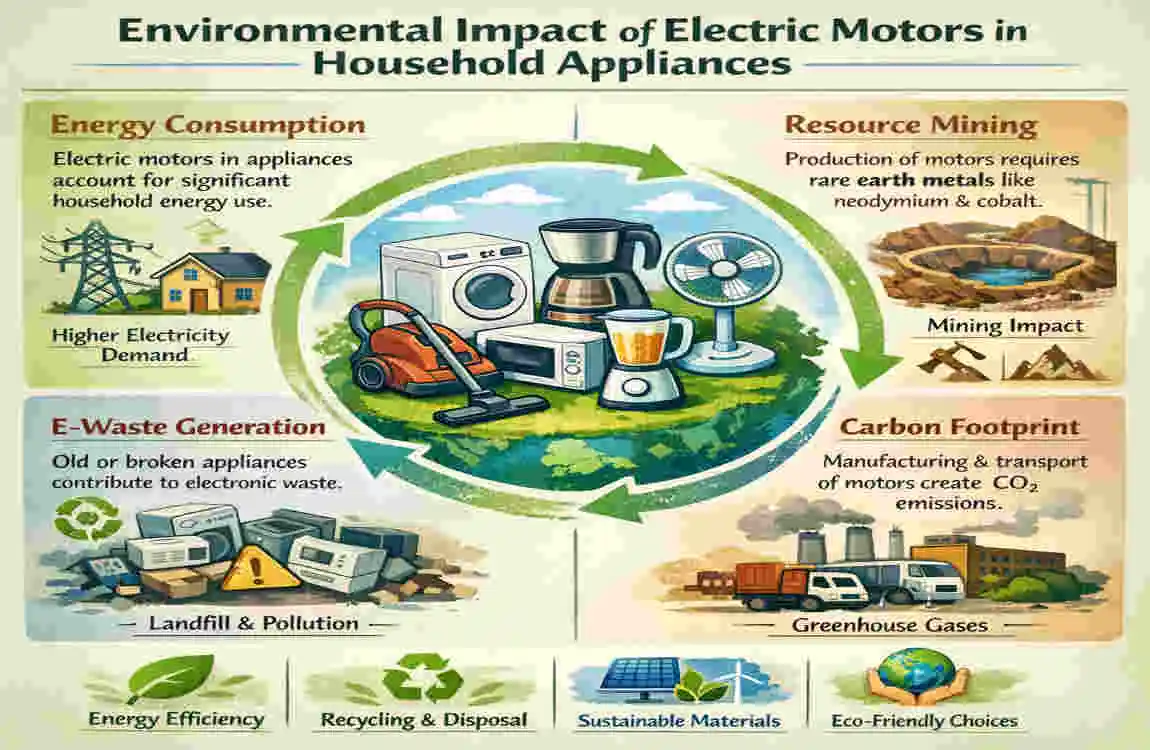
Electric motors play a significant role in promoting sustainability.
Energy Efficiency and Sustainability
Energy-efficient motors reduce electricity consumption, thereby lowering greenhouse gas emissions.
Certifications
Programs like Energy Star encourage the adoption of eco-friendly appliances with efficient motors, helping make the planet greener.
Frequently Asked Questions
How does an electric motor differ from an engine?
Electric motors use electricity, while engines typically rely on fuel combustion.
What are the most common electric motors in household appliances?
AC, DC, and brushless motors are the most common.
Can I repair a motor in my appliance myself?
Minor issues like cleaning can be done at home, but complex repairs require professional help.
Are electric motors environmentally friendly?
Yes, especially modern energy-efficient motors that reduce electricity consumption.
| Appliance | Type of Electric Motor | Primary Function of Motor |
|---|---|---|
| Refrigerator | Compressor Motor (AC Motor) | Compresses refrigerant for cooling |
| Washing Machine | Induction or Universal Motor | Spins and agitates clothes |
| Vacuum Cleaner | Universal Motor | Creates suction and airflow |
| Blender | Universal or DC Motor | Rotates blades for blending/mixing |
| Air Conditioner | Compressor and Fan Motors (AC) | Compresses refrigerant and circulates air |
| Dishwasher | Induction Motor | Pumps and circulates water |
| Electric Fan | Shaded-pole or Induction Motor | Rotates blades to circulate air |