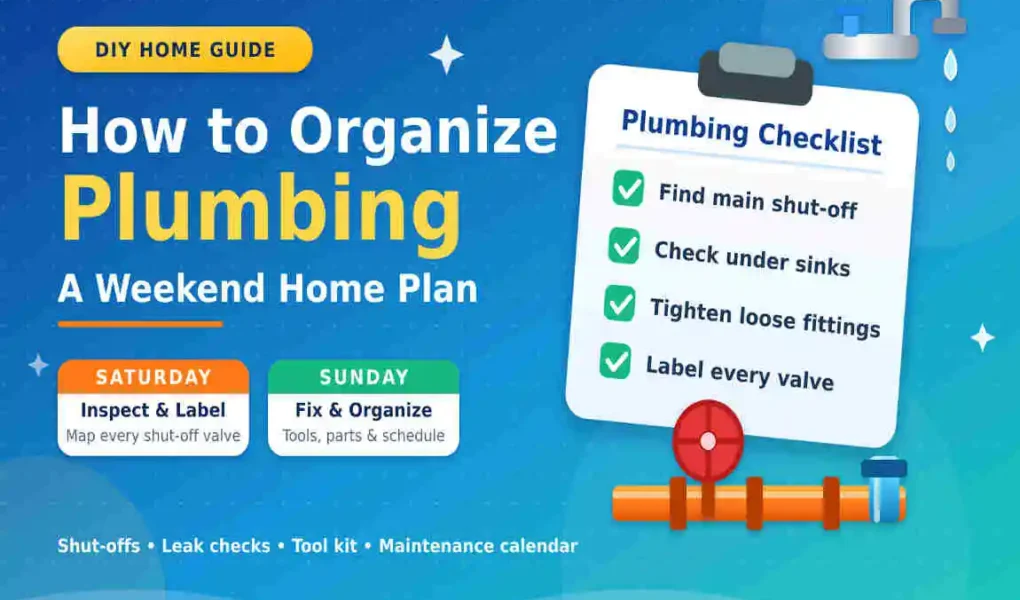
Plumbing is the part of the house we only think about when it fails. A dripping trap, a hose that bursts while you are away, or a frozen pipe on the coldest night of the year all have one thing in common: the person standing in the water did not know where to shut it off. Organizing your plumbing is not about moving pipes. It is about making the system easy to understand, easy to reach and easy to look after.
What does “organizing plumbing” actually mean?
It means three things: knowing your system (where water enters, where it can be stopped, what each plumbing pipe serves), reaching it easily (no clutter blocking valves, traps or access panels), and maintaining it on a schedule. Think of it as a home inventory for water.
Find and tag your main water shutoff
This is the single most useful thing you can do. The main shutoff is usually on the main water line where it enters the house, according to Bob Vila. In colder regions look in a basement, utility room or garage pipe; in warmer regions it may be on an exterior wall or in a box near the street.
- Follow the cold water line from where it enters the house, or start at the water meter.
- Turn the handle once to confirm it closes fully (a lever handle turns a quarter turn; a round wheel turns several times).
- Attach a bright tag so that anyone in the household, or a house sitter, can spot it quickly. Bob Vila recommends a brightly coloured label.
- Hang a suitable wrench or valve key nearby if your valve needs one.
If the valve is stiff, stuck or leaking at the stem, do not force it. Ask a licensed plumber to replace it.
Map every valve and fixture
Once you know the main shutoff, work outward. Walk the house and list each place water is used: kitchen sink, dishwasher, bathrooms, toilets, washing machine, water heater, outdoor hose bibs and any softener or filter. Note whether each has its own shutoff, and where it is.
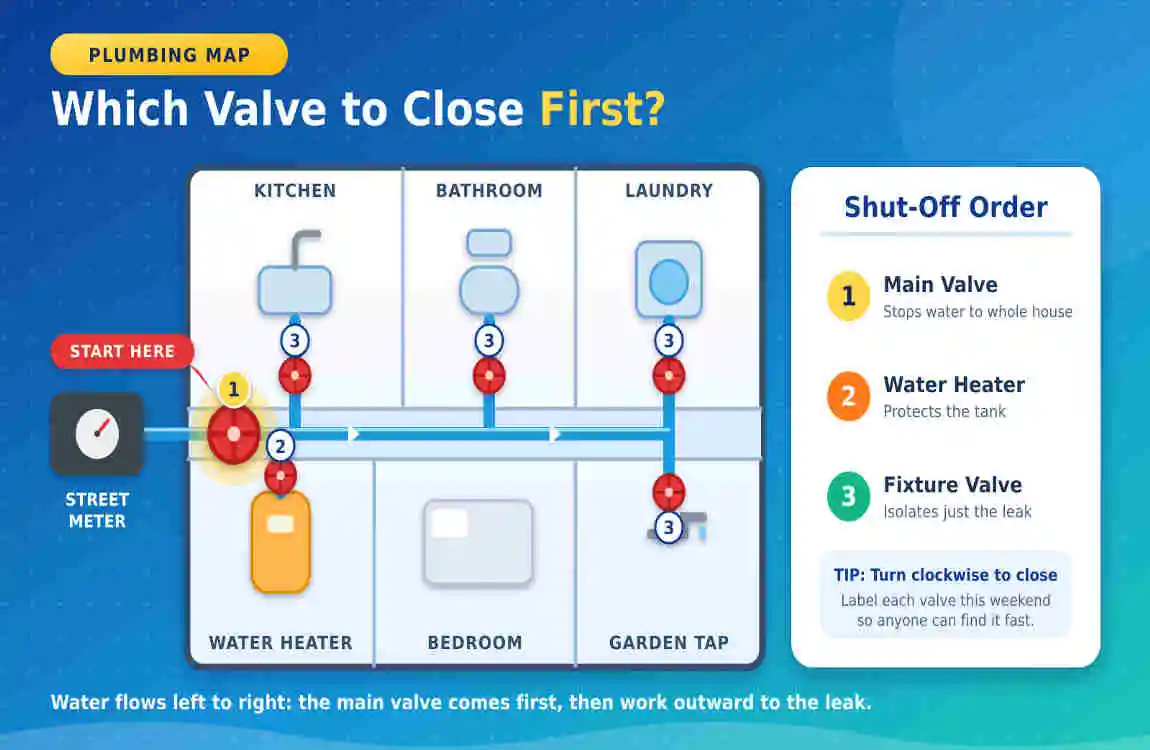
Sketch it on paper or in a notes app. Add a photo of each valve and a short caption such as “Dishwasher stop, under kitchen sink, left.” A map made calmly on a Saturday is far more useful than one remembered in a panic.
Build a plumbing emergency kit
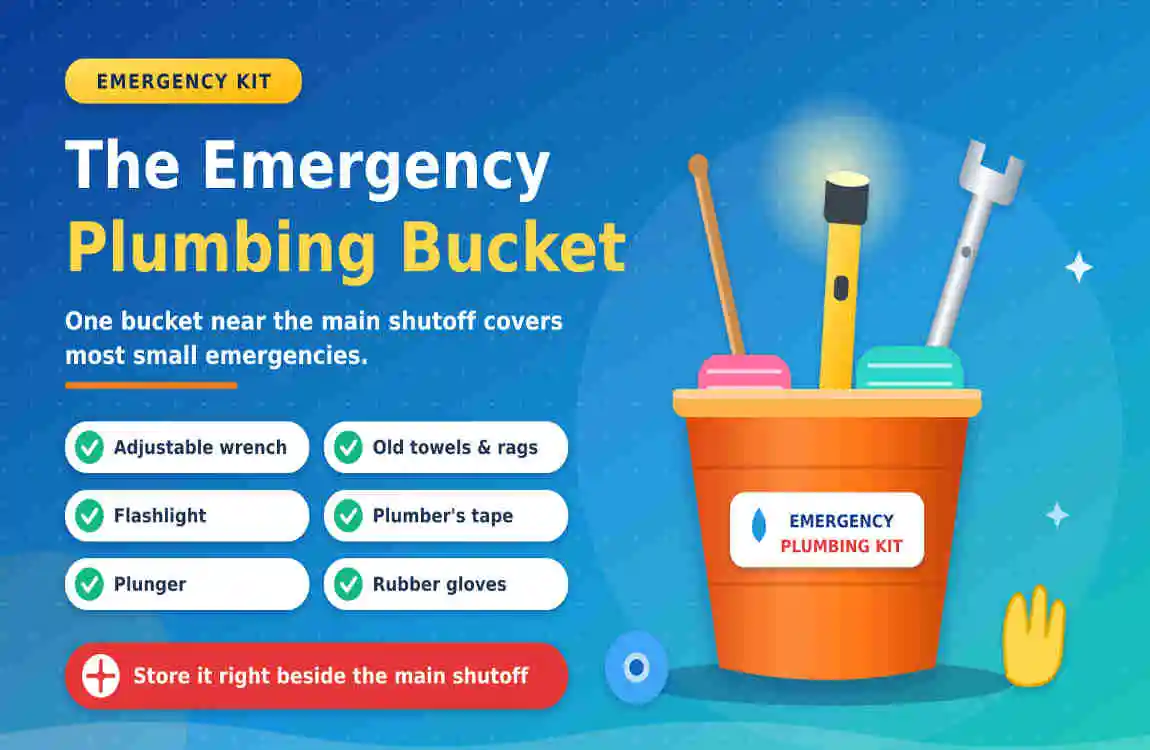
Keep one bucket or box near the main shutoff so nothing has to be hunted for. A practical starter kit includes an adjustable wrench, a plunger and drain snake, PTFE thread tape, spare washers and a braided supply hose, a pipe repair clamp or wrap, towels, gloves, a flashlight and bright shutoff tags. Add a card with your plumber’s phone number and your water utility’s emergency line.
Organize the cabinets under your sinks
Under-sink space is where plumbing and household storage collide. A few rules keep it tidy and safe:
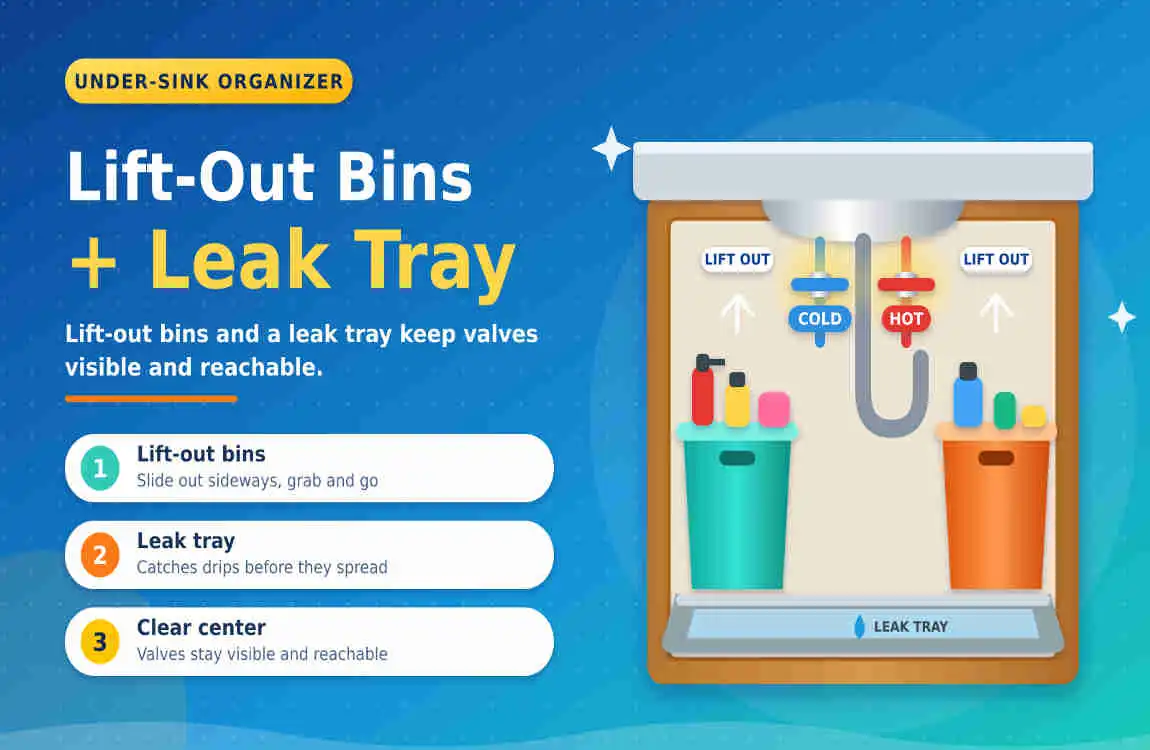
- Keep the valves and trap clear. Never stack items where you cannot reach the shutoff stops.
- Use lift-out bins. One for cleaning supplies, one for plumbing basics, so you can pull everything out in one move.
- Add a leak tray or absorbent mat. A damp mat is an early warning that is much easier to spot than a hidden drip.
- Store chemicals upright and away from supply lines, ideally in a sealed bin.
- Check once a month. Run your hand along the supply lines and the trap; they should be dry.
Give your water heater a routine
Water heating is one of the largest energy costs in many homes. The U.S. Department of Energy notes that it typically accounts for about 18% of home energy use and suggests setting the heater to 120°F, a temperature it describes as safe for most people. The Energy Saver guide also says insulating a tank that feels warm to the touch can save 7% to 16% a year in water heating costs, and insulating hot water pipes can add another 3% to 4%. It recommends draining a quart of water from the tank every three months to remove sediment.
This Old House adds that you should test the temperature and pressure relief (T&P) valve as part of regular upkeep and that each 10°F you lower the setting can save up to about 5% in energy costs.
Gas units, scorched wiring, rust at the base or a relief valve that drips constantly are jobs for a licensed professional.
Run a simple leak check
Small leaks are easy to ignore and expensive in total. The U.S. EPA’s WaterSense program says household leaks waste nearly one trillion gallons of water a year across the country, and the average home loses close to 10,000 gallons annually to leaks. It also notes that around one in ten homes has a leak that wastes 90 gallons a day or more.
- Read your water meter before and after a two-hour period when no water is used. If the reading moves, you have a leak.
- Test toilets by adding a few drops of food colouring to the tank. If colour appears in the bowl without flushing, the flapper needs replacing.
- Inspect faucets, showerheads, hose connections and the base of each toilet for drips or stains.
- Consider a leak detection or flow-monitoring device. EPA’s Water Sense pages describe these devices as a way to spot irregular water use and reduce damage from leaks.
Protect pipes from the cold
The American Red Cross lists the pipes most likely to freeze: outdoor hose bibs, sprinkler and pool lines, and supply pipes in unheated areas such as basements, crawl spaces, attics, garages and kitchen cabinets. Its advice before and during a cold snap includes:
- Drain and store outdoor hoses, and close the indoor valve that feeds outdoor taps.
- Add insulation to attics, basements and crawl spaces, and use pipe sleeves or UL-listed heat tape on exposed pipes.
- Open kitchen and bathroom cabinet doors so warm air reaches the plumbing.
- Let cold water drip from a faucet served by exposed pipes.
- Keep the thermostat at a steady temperature day and night.
If you are going away in winter, make sure someone knows where your main shutoff is and keep the heating on.
Keep a one-page plumbing record
Put everything in one place, printed and digital: a copy of your valve map, the location of the main shutoff, the age and model of your water heater, pipe materials if you know them, the dates of your last flush and inspection, and contact numbers for your plumber and water utility. Tape a copy inside the utility cupboard door. Share the digital version with family members.
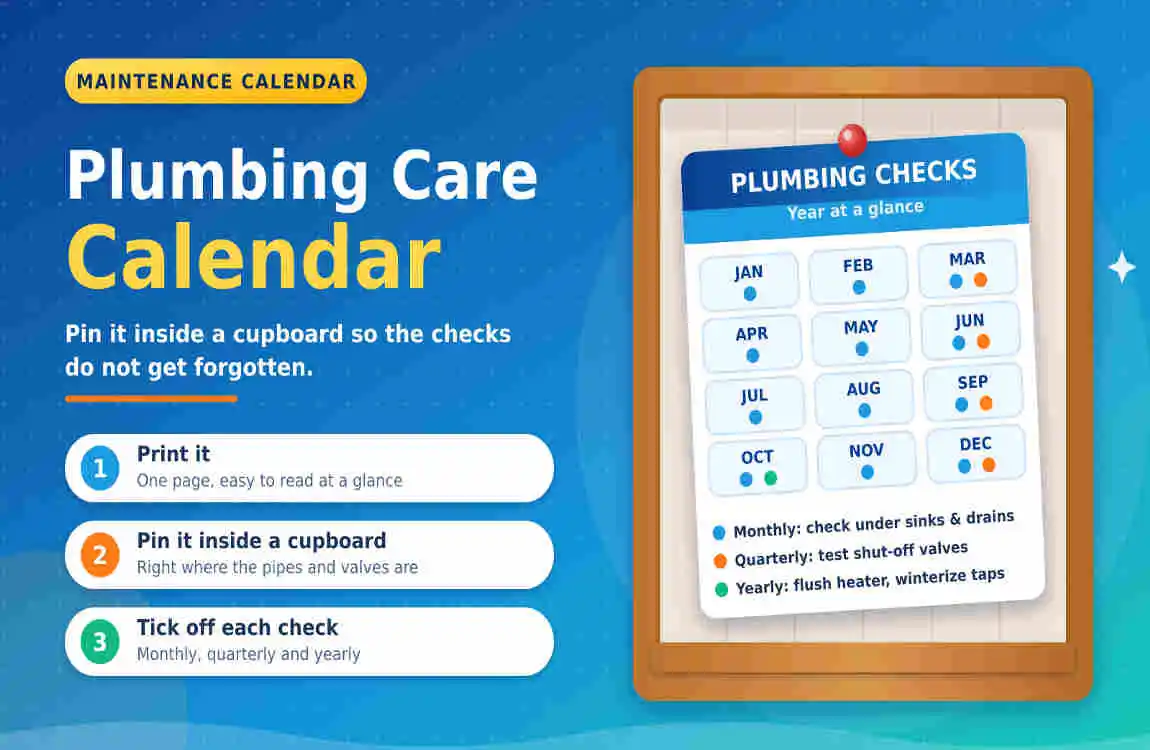
Plumbing maintenance schedule at a glance
| When | What to do | Time needed |
|---|---|---|
| Monthly | Check under sinks for dampness; look at the water meter for unexpected movement | 10 minutes |
| Spring | Leak hunt: toilets, faucets, hose bibs; reconnect outdoor hoses | 30 minutes |
| Summer | Turn each fixture shutoff valve; clean aerators; inspect washing machine hoses | 45 minutes |
| Autumn | Drain outdoor hoses; service the water heater; insulate exposed pipes | 1 hour |
| Winter | Keep heat steady, open cabinet doors in freezing weather, know your shutoff | As needed |
Common plumbing organization mistakes
- Storing boxes in front of the main shutoff or fixture valves.
- Never turning valves, so they seize when you need them.
- Hiding a slow leak with a towel instead of fixing it.
- Leaving outdoor hoses connected through winter.
- Keeping the only copy of the valve map in one person’s head.
When to call a licensed plumber
Organization reduces emergencies, but it does not replace professional skill. Call a plumber for a burst pipe you cannot stop, a main shutoff that will not close, repeated drain backups, low pressure throughout the house, gas-fired water heater issues, or any repair that means cutting into pipe work. Rules on who may do plumbing work differ by location, so check local requirements before starting a larger job.
Frequently asked questions
What does it mean to organize plumbing?
It means knowing and labelling where your water shuts off, keeping valves and pipes accessible, storing basic repair supplies in one place and following a simple maintenance routine so small problems are caught early.
Where is the main water shutoff valve in a house?
Usually on the main water line where it enters the home, often in a basement, utility room or garage. In warm climates it may be outside on an exterior wall or in a box near the street.
How often should I check my plumbing?
A quick monthly look under sinks plus one short check each season is enough for most homes.
What temperature should a water heater be set to?
The U.S. Department of Energy suggests 120°F, which it considers safe for most people and which helps reduce energy use.
Can I store things under my kitchen sink?
Yes, as long as the shutoff valves and trap stay clear, items sit in lift-out bins and a leak tray or mat covers the base.
What should be in a plumbing emergency kit?
An adjustable wrench, plunger, drain snake, thread tape, spare washers and supply hose, a pipe repair clamp, towels, gloves, a flashlight, shutoff tags and your plumber’s phone number.
When should I call a plumber instead of doing it myself?
For a burst pipe you cannot stop, a seized main shutoff, repeated backups, gas water heater problems or any repair that involves cutting pipework.
Final thoughts
A well-organized plumbing system does not look dramatic. It looks like a tagged valve, a dry cabinet, a bucket on a shelf and a calendar on the wall. Spend one weekend on the steps above and you turn a likely emergency into a two-minute inconvenience.
Sources
- U.S. Environmental Protection Agency, WaterSense: Fix a Leak Week
- U.S. Department of Energy: Energy Saver: Tips on Saving Money and Energy in Your Home
- American Red Cross: Preventing & Thawing Frozen Pipes
- Bob Vila: How to Turn Off the Water in Your House
- This Old House: How To Maintain a Water Heater