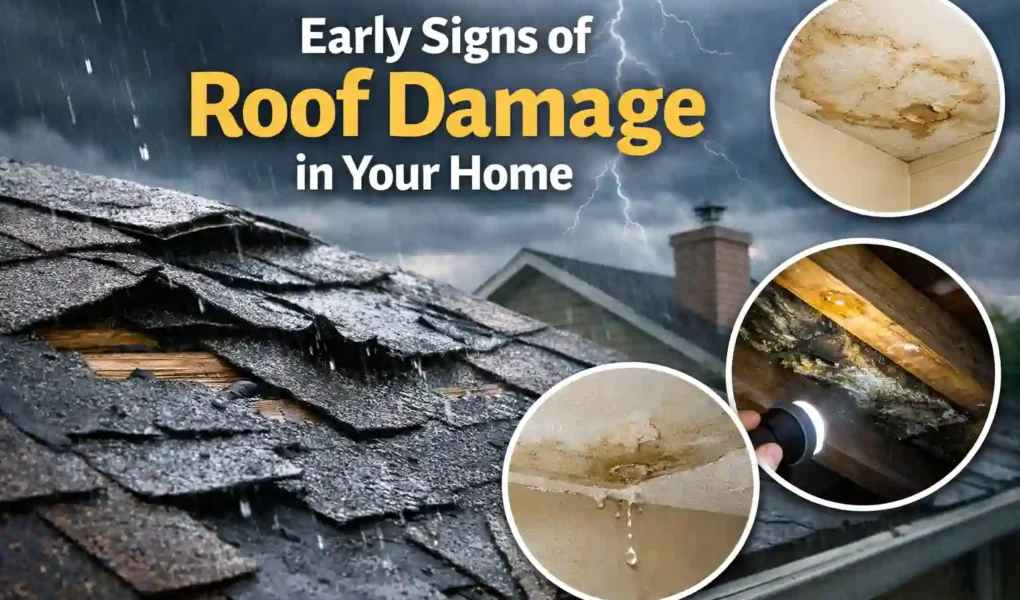
The best way to protect your home is to notice signs of trouble early. Roof damage is costly, but before things get really bad, there are always early warning signs. Picking up on these signs can help you address these issues before they do extensive damage to your home and finances. In this guide, we will discuss common signs of roof damage in the home.
Missing Shingles
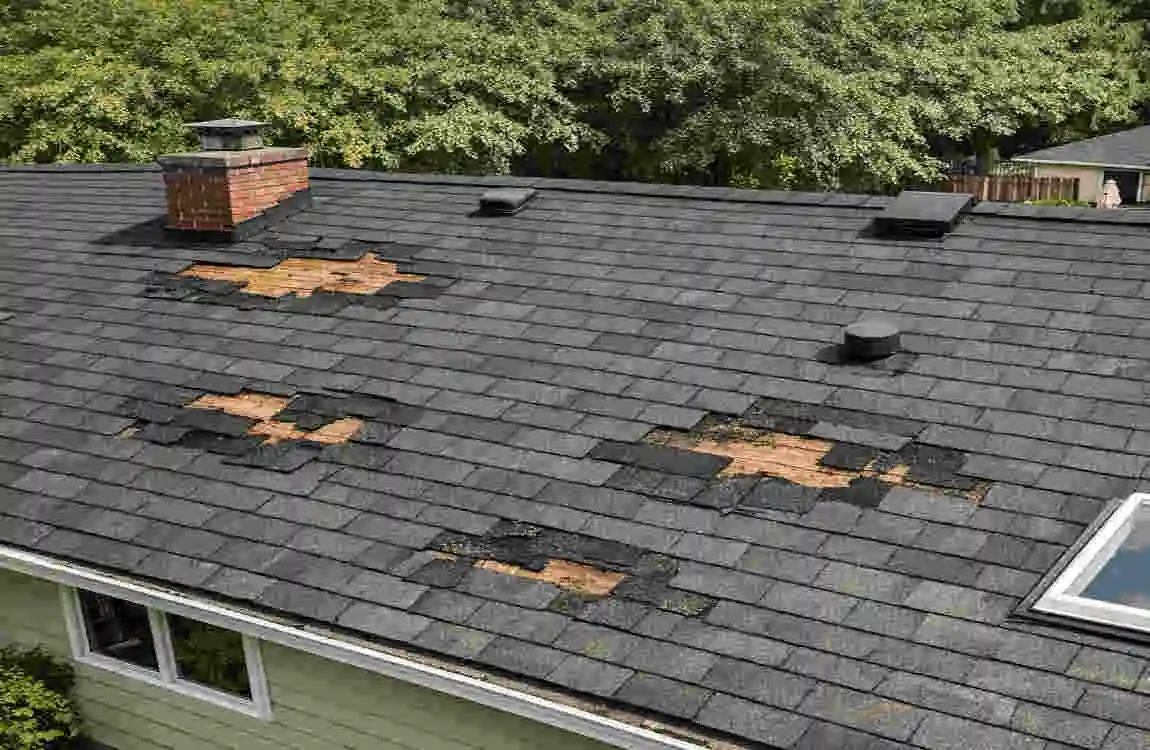
Shingles are a critical part of your roof, and missing pieces can leave it exposed. Missing, curling, or cracked shingles can pose a serious threat to the integrity of your roof. Strong gusts of wind and natural aging are the biggest culprits for missing or damaged shingles. If you notice granules accumulating in your roof gutters, it is a sign of shingle degradation. The protective layer is showing early signs of breakdown.
If these shingles are not replaced immediately, it could lead to water damage as rainwater seeps into your home. Further damage includes wood rot caused by water and other interior leaks. Regular inspections after serious weather events will help you catch any problems.
Water Stains
Water stains on your walls and ceilings are clear signs of roof leakage. Discoloured stains, often brown or yellowish, are the signs to look out for. You will find these marks under affected areas, which show where leaks have occurred during weather events. You may also notice peeling wallpaper or bubbling paint as water seeps into your walls. Mold growth and musty odours further confirm water leaks and should be addressed immediately. These can pose serious health risks, in addition to the property damage, and should be examined promptly. Trace the source of the leakage and fix the problem to stop the leaks and prevent future issues.
Sagging Areas
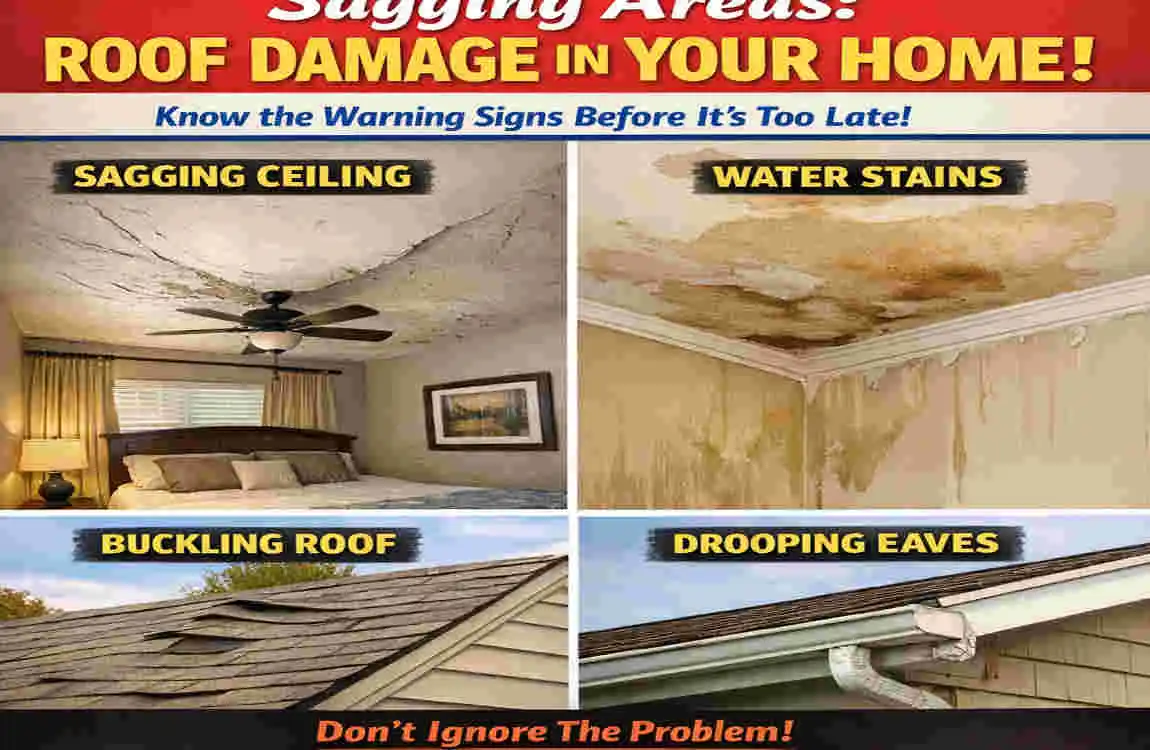
Visible sagging in a roof is a sign of serious structural issues that should be handled by professionals. Hire trusted contractors with experience, such as Rehoboth Beach roofing contractors, for a thorough job. Water saturation softens rafters and trusses, which weaken structural support.
When you notice the sagging roof, observe from multiple angles, especially after serious weather events like snowstorms or rainfall. These can strain your roof’s framework and cause tension. Sagging roofs should not be ignored because there is a serious risk of collapse in extreme cases. Contact a roofing professional to perform an assessment to confirm the extent of the damage.
Granule Loss
Granule shedding is a sign of various roof deficiencies and should be taken seriously. Dark granules in gutters and downspouts indicate that UV-protective coatings have been eroded by extreme weather. The loss of these granules reduces your roof’s ability to deflect heat and accelerates roof wear.
Bare spots appear lighter in colour and are easy to spot during the day. That’s why it is advisable to make your checks during the day. Granules can resemble coarse sand and signal that you may need a replacement soon. Early detection prevents further damage and ensures you can.
Endnote

Roof repairs can be costly, which is why it is important for you to spot problems early. Early detection will help you to save money on repairs and prevent further damage. Incorporate routine checks into your cleaning routine to promote early detection. Act decisively when you notice any issues by using DIY methods or calling a professional.
Early Signs of Roof Damage in Your Home — Guide FAQ
Water stains on ceilings or walls
Brown or yellow spots often mean water is leaking through the roof.
Missing or damaged shingles
Cracked, curling, or missing shingles expose your roof to further damage.
Granules in gutters
If you notice sand-like particles, your shingles may be wearing out.
Roof leaks after rain
Even small drips or damp patches are early warning signs.
Sagging roof areas
A drooping roof section can indicate structural moisture damage.
Mold or mildew growth
Moisture buildup in the attic or ceiling often signals roof issues.
Higher energy bills
Poor roof insulation or damage can reduce temperature control inside the home.
Daylight in the attic
If you can see sunlight through roof boards, there are gaps or holes.