Imagine driving through the lush, green landscapes of Westfield, Indiana. It’s a peaceful area, dotted with beautiful homes and sprawling estates. But among these picturesque properties lies one that carries a heavy, dark shadow. It is a place where the line between a suburban dream and a true-crime nightmare blurs completely. We are talking, of course, about the Herb Baumeister house, known famously as Fox Hollow Farm.
If you are a fan of true crime or paranormal mysteries, you have likely heard the whispers. The story of Fox Hollow Farm isn’t just about a house; it is about the man who lived there, the secrets he buried in the soil, and the lingering questions that remain decades later. Why does this estate still capture our imagination? Perhaps it is because the horror didn’t happen in a dark alley, but behind the doors of a wealthy, successful family man’s home.
The Historical Context of Fox Hollow Farm: A Setting for Secrets
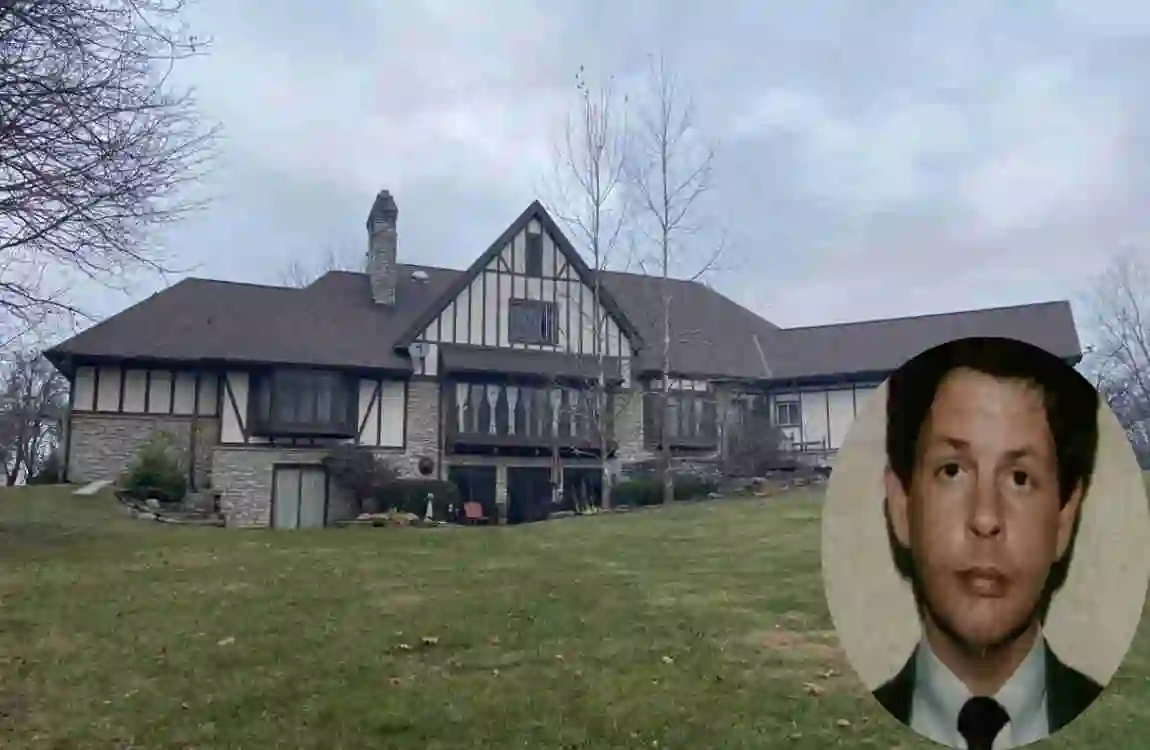
To understand the gravity of what happened, we first need to understand the setting. The Herb Baumeister house isn’t a small, nondescript shack. It is a massive, Tudor-style mansion that exudes wealth and status.
The Estate and Its Surroundings
Located in Hamilton County, Indiana, Fox Hollow Farm sits on approximately 18 acres. When you look at pictures of the property, it is undeniably beautiful. The house itself boasts over 10,000 square feet of living space, complete with an indoor pool, high ceilings, and intricate woodwork. It was designed to impress. It was the kind of house that said, “I have made it.”
Dense woods and walking trails surround the property. In the early 90s, this seclusion was a selling point for privacy. Today, however, we know that this isolation was exactly what facilitated the crimes. The heavily wooded areas provided a natural screen from prying eyes, allowing activities on the grounds to go unnoticed by neighbors or passersby.
The Crimes Attributed to Herb Baumeister
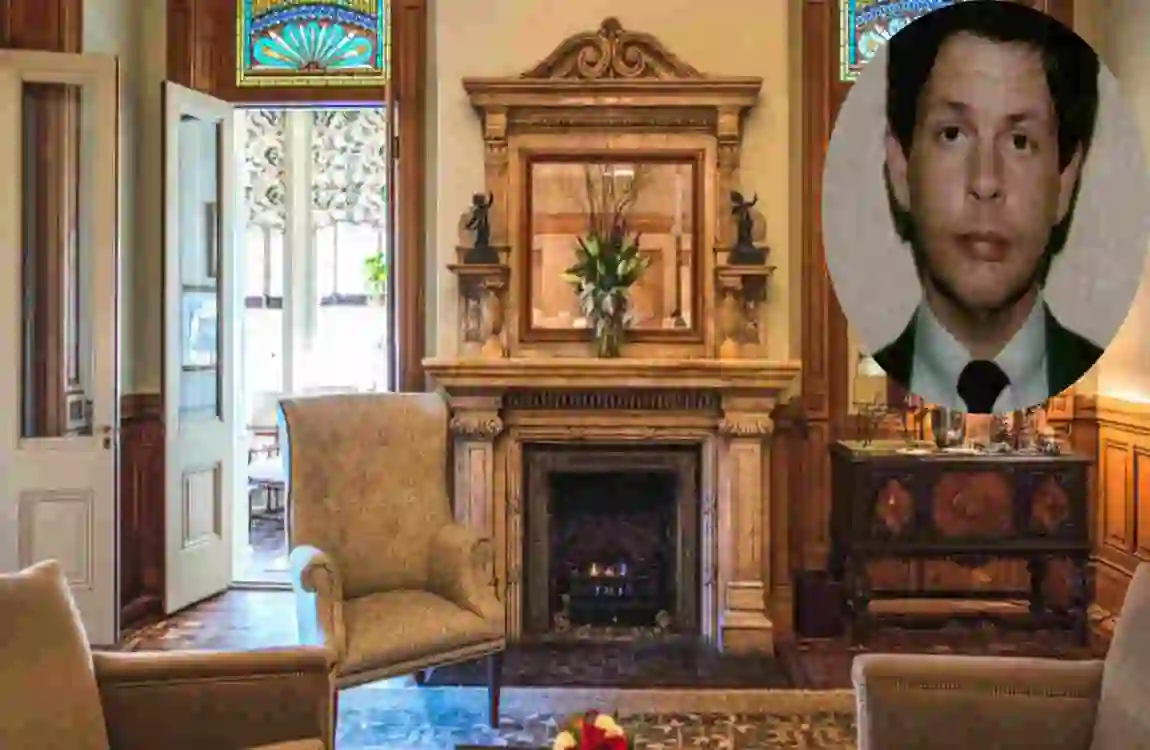
When we talk about the Herb Baumeister house, we aren’t just talking about real estate. We are talking about a graveyard. The crimes committed here are some of the most disturbing in Indiana’s history.
The Victims and The Allegations
The scope of Baumeister’s crimes is staggering. During the investigation, police recovered over 10,000 burnt bone fragments from the grounds of Fox Hollow Farm. These remains belonged to at least 11 different men, though some estimates suggest the number could be higher.
The victims were primarily young men who frequented gay bars in Indianapolis. At the time, Baumeister was living a secret life. While he played the role of the straight, family-oriented businessman during the day, he was known to visit these bars at night, introducing himself as “Brian Smart.”
This alias was his shield. He would charm these men, lure them back to his beautiful estate—likely with the promise of a party or a swim in his indoor pool—and there, the trap would snap shut.
Modus Operandi: The Art of Deception
How did he get away with it for so long? The Herb Baumeister house played a crucial role.
- Isolation: As mentioned, the estate was far enough from the city to feel private.
- The Pool: Many accounts suggest the indoor pool area was a central location for his crimes. It was soundproofed and private.
- Disposal: Baumeister didn’t just kill; he attempted to erase his victims. He burned bodies in the backyard and scattered the remains in the woods. He relied on the vastness of his property to hide the evidence.
This method of disposal is why the bone count was so high and why identification has been so difficult. He wasn’t just hiding bodies; he was destroying them.
The Investigation and the End
The investigation was a slow burn. Police had been tracking the disappearances of men along the I-70 corridor. They had a description of a man and a license plate that eventually led them to Baumeister. However, without hard evidence, they couldn’t just raid the Herb Baumeister house.
Herb refused to let them search the property. It wasn’t until his mental state deteriorated and his business began to fail that his wife, Julie, became increasingly concerned. The pivotal moment came when she filed for divorce and granted the police permission to search the grounds while Herb was out of town.
What they found in the woods behind the luxury house changed everything. But justice, in the traditional sense, was never served. Before he could be arrested, Herb fled to Canada. He wrote a suicide note that mentioned his failing business and marriage, but made absolutely no mention of the murders. He shot himself on the shores of Lake Huron, taking his secrets to the grave.
Because there was no trial, no confession, and no conviction, the case remains technically “unresolved” in the eyes of the court, even though the forensic evidence at the Herb Baumeister house paints an undeniable picture of guilt.
Fox Hollow Farm: Architecture, Grounds, and Forensic Relevance
To truly understand how a serial killer operated under the nose of his family, you have to look at the physical layout of the Herb Baumeister house. The architecture and the grounds were not just a backdrop; they were tools.
The Layout of the Mansion
The house is a sprawling Tudor structure. It is designed with distinct wings. The family living areas were separate from the recreational areas, specifically the indoor pool. This separation is vital. It allowed Herb to conduct his dark business in one part of the house without necessarily alerting his wife or children, who might be sleeping in another wing.
The indoor pool is often the focal point of descriptions. It is an ample, humid space with slate floors. In the narrative of the crimes, this room represents the transition from the safety of the public world to the danger of Baumeister’s private domain.
The Woods: A Forensic Nightmare
Behind the manicured lawns of the Herb Baumeister house lies a stretch of dense woodland. This is where the story turns from architectural to forensic.
When investigators arrived in 1996, they weren’t looking for intact bodies. They were looking for fragments. The estate’s geography complicated the search immensely.
- Terrain: The ground was uneven, covered in foliage and roots.
- Scattering: Animals and weather had moved bone fragments over the years.
- Volume: The sheer number of fragments (thousands) meant that investigators had to sift through tons of dirt by hand.
It was an archaeological dig as much as a crime scene investigation. The backyard, which looked like a lovely spot for a picnic, was actually a burn site. The ash had altered the soil composition and remains.
Visualizing the Scene
I want you to close your eyes for a moment. Picture a grand brick house with timber framing, looking like something out of a fairy tale. Now, picture the woods behind it. They are quiet, filled with the sounds of birds and wind. It looks peaceful.
This contrast is what makes the Herb Baumeister house so unsettling. The forensic relevance lies in this juxtaposition. The house was designed to keep people out (privacy), but it ended up keeping the victims in. The very features that made the real estate valuable—the acreage, the trees, the seclusion—were the features that allowed a predator to operate unchecked for years.
Myth vs. Reality: Paranormal Claims and Pop Culture
Whenever a tragedy of this magnitude occurs, ghost stories follow. The Herb Baumeister house is now almost as famous for its alleged hauntings as it is for the crimes themselves. But where does the truth end and the ghost story begin?
The Haunted Narratives
After the Baumeister family moved out, the house sat empty for a while before being purchased by new owners, most notably Rob Graves and, later, Joe Emon. It was during Emon’s residency that the paranormal claims skyrocketed.
Residents and visitors have reported a wide array of unexplainable phenomena:
- Apparitions: Seeing figures of men walking in the woods or standing near the pool.
- Sounds: Knocking on doors, footsteps in empty hallways, and disembodied voices.
- Physical sensations: Feeling touched or pushed, particularly near the pool area.
- The “Red Eyes”: Some stories claim that people have seen a dark figure with red eyes, often interpreted as the spirit of Herb Baumeister himself, unable to leave the place of his crimes.
Media Portrayals: Fact or Fiction?
The Herb Baumeister house has been featured in numerous documentaries and paranormal reality shows, including Ghost Adventures and The Haunting of Fox Hollow Farm.
While these shows are entertaining, it is essential to view them with a critical eye.
- Embellishments: TV shows often add sound effects, dramatic music, and staged reenactments to heighten the fear factor.
- The “Evidence”: EVPs (Electronic Voice Phenomena) and blurry photos are often presented as proof, but they are subjective.
- The Narrative: These shows need a story arc. They often frame the house as “evil,” giving the building itself a personality.
However, even stripping away the TV drama, the testimonies of the people who lived there after Herb are compelling. They aren’t trying to sell a movie; they are describing their daily lives in a house where terrible things happened.
Why We Love the “Haunted” Angle
Why does the public latch onto the paranormal side of the Herb Baumeister house? It connects to a human desire for justice. If Herb escaped the law by committing suicide, the idea that he is trapped as a ghost, or that his victims are still crying out, gives us a sense that the story isn’t over. It suggests that the truth is still trying to be heard.
Distinguishing Fact from Folklore
Here is a quick breakdown to help you separate the reality from the rumors:
FeatureHistorical FactParanormal / Folklore
The Pool Used for recreation; likely site of some attacks. A portal for spirits; water turns red; constant cold spots.
The Woods Site, where 10,000+ bone fragments were found. Shadow figures chase hikers; screams are heard at night.
Herb’s Death: Committed suicide in Canada, not at the house. His spirit haunts the house because he “loved it too much.”
The Victims 11+ identified men; remains scattered. Their spirits wander the halls looking for a way out.
It is crucial to remember that while the ghost stories are fascinating, real people lost their lives here. Their families are still mourning. When we talk about the hauntings, we must tread carefully to respect the very real tragedy underneath the lore.
The Local Perspective: Community Impact and Legacy
For the rest of the world, the Herb Baumeister house is a story on a screen. But for the people of Westfield and Hamilton County, Indiana, it is a local scar.
The Shadow Over Westfield
In the mid-90s, Westfield was a growing community. It was safe, family-friendly, and quiet. The revelation that a serial killer was living in one of the most prominent estates in the area shook the community to its core.
Neighbors were stunned. People who had attended parties at Fox Hollow Farm or done business with Herb at Sav-A-Lot questioned their own judgment. “He seemed so normal,” was the common refrain. This shattered the local sense of security. It taught the community that danger doesn’t always look like a monster; sometimes it seems like a successful neighbor.
Economic and Social Ripples
The case brought a media circus to the area. News vans parked along the roads, and helicopters flew overhead. For a while, the Herb Baumeister house became a grim tourist attraction. People would drive by slowly, hoping to catch a glimpse of the “murder mansion.”
This kind of attention can damage a community’s reputation. However, Westfield has continued to grow and thrive, essentially moving past the stigma. The estate itself, however, remains a point of curiosity. It challenges the local real estate market—how do you sell a house with such a history? Surprisingly, the house has found buyers, proving that for some, the architecture and land value outweigh the history.
Lessons Learned
The legacy of Fox Hollow Farm offers several hard lessons:
- The Mask of Sanity: It reminds us that appearances can be deceiving.
- The Importance of Persistence: The police work, though delayed, eventually brought the truth to light.
- Respect for Privacy vs. Safety: It raises questions about how much we really know about what happens on large, secluded private properties.
The community has had to find a balance between acknowledging the history and not letting it define their town. They honor the victims by supporting the ongoing identification efforts, rather than glorifying the killer.
Then, Now, and What’s Next: Current Status and Research Gaps

So, where does the Herb Baumeister house stand today? Is it still there? Is it still a crime scene?
The House Today
Yes, the house is still standing. It is currently a private residence. It is not a museum, and it is not open to the public. The current owners have, at times, been open about the history, but they also deserve privacy.
The property has undergone renovations. Life continues there. This is perhaps the most surreal aspect of the story—that a place of such death can return to being a home.
Ongoing Forensic Work
This is the most critical part of the “What’s Next” section. The case is not closed. In recent years, Hamilton County Coroner Jeff Jellison renewed efforts to identify the thousands of bone fragments stored as evidence. Thanks to advancements in DNA technology and forensic genealogy, new victims are still being identified today, decades later.
Just recently, authorities have been able to name victims who were previously just “unknowns.” This work is vital. It brings closure to families who have waited over 20 years for answers. It transforms the narrative of the Herb Baumeister house from a ghost story back into a pursuit of justice.
How to Learn More Responsibly
If you want to dig deeper, don’t just watch the ghost-hunting shows. Look for:
- Official Coroner Reports: Follow the updates from the Hamilton County Coroner’s office regarding new identifications.
- Actual Crime Books: Read well-researched books that focus on the victims and the investigation, rather than just the sensationalism.
- Documentaries with Integrity: Look for programs that interview the detectives and family members, providing a balanced view.
Unanswered Questions
There are still gaps in the research.
- Exactly how many victims were there? The bone fragmentation makes an exact count impossible.
- Did Herb have help? Most evidence points to him acting alone, but theories persist.
- Were there other disposal sites?
These questions ensure that the Herb Baumeister house will remain a subject of research and discussion for years to come.
FAQ for Frequently Asked Questions.
Here is the short breakdown:
- What is it? A list of common questions and answers regarding a specific topic, product, or company.
- Why use it? To save time for both the customer and the support team by addressing repetitive queries instantly.
- Where does it go? Usually on a dedicated page on a website, at the bottom of product descriptions, or within a help center.
Where Does Herb Baumeister Currently Live?
Herb Baumeister is deceased.
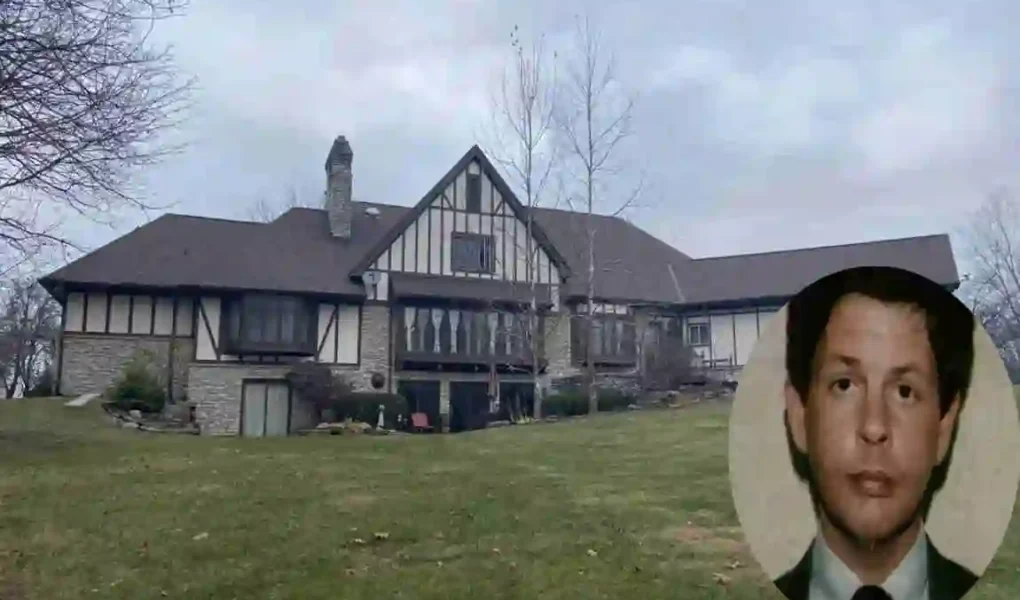
Herb Baumeister house photo