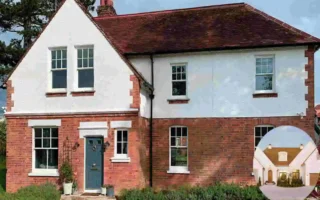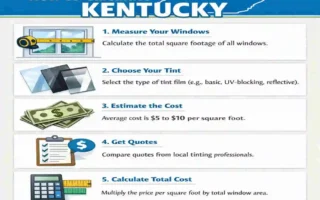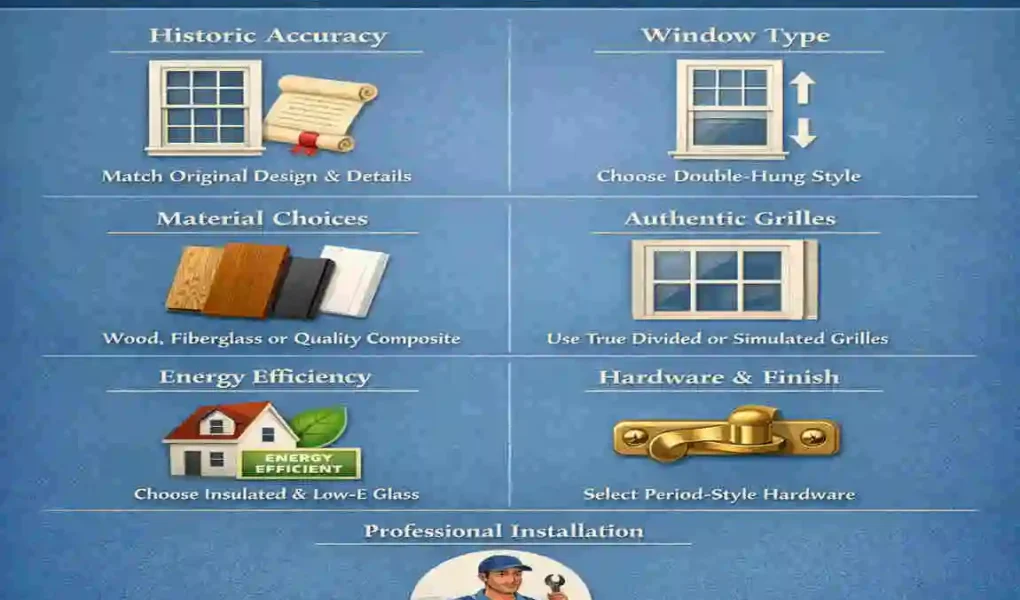
Philadelphia is a city steeped in history, with its streets lined by architectural treasures that tell the story of America’s past. Among these treasures are the Federal-style homes, particularly prominent in neighbourhoods like Society Hill and Old city. These homes, with their symmetrical facades and elegant details, are a testament to the craftsmanship of the late 18th and early 19th centuries. However, maintaining these historic homes, especially their windows, requires a delicate balance between preserving their charm and incorporating modern energy efficiency.
What Are Federal-Style Windows?
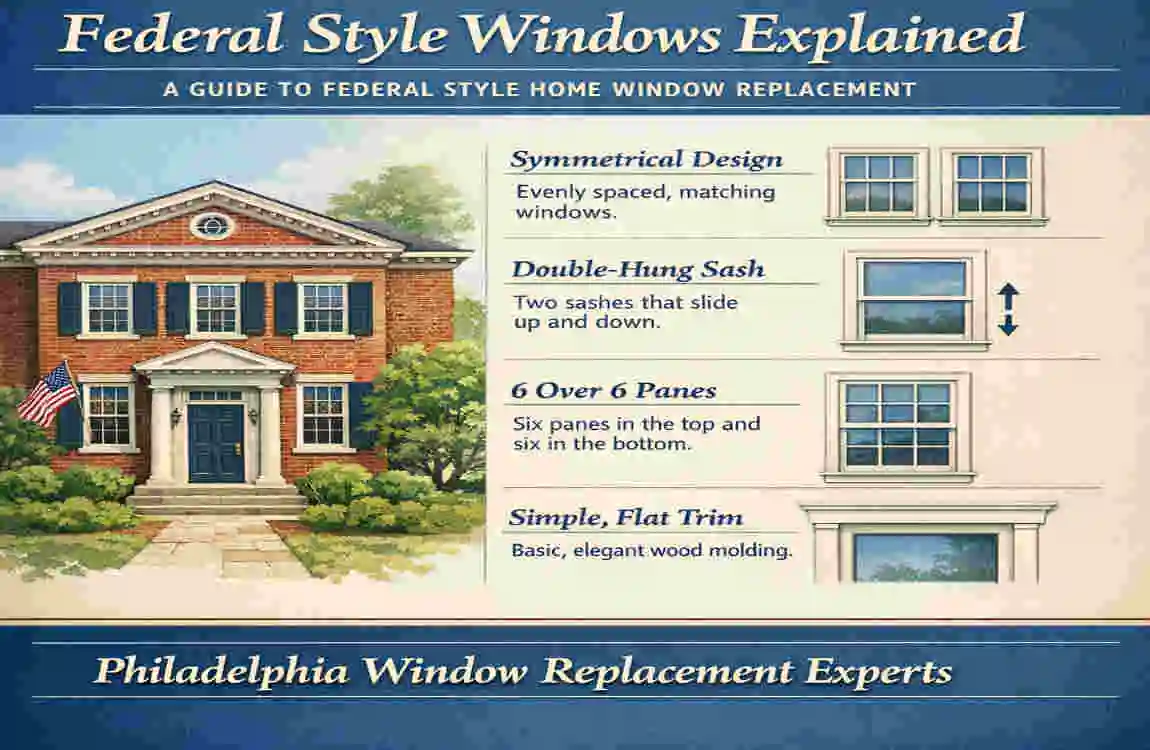
Federal-style architecture emerged in the United States between 1780 and 1830, following the Revolutionary War. Inspired by Roman classicism, this style is characterised by its symmetry, simplicity, and refined elegance. Windows play a crucial role in defining the Federal aesthetic.
Key Features of Federal-Style Windows
- Double-Hung Sash Windows: These windows typically feature six panes over six panes (6-over-6 grids), creating a balanced and symmetrical look.
- Fanlights and Side Lights: Semi-circular or elliptical fanlights above doors and tall, narrow sidelights are common in Federal homes.
- Proportions and Placement: Windows are evenly spaced and proportionate to the facade, contributing to the overall symmetry of the design.
In Philadelphia, Federal-style windows are a hallmark of historic rowhomes, particularly in areas like Society Hill. Preserving these windows is essential to maintaining the architectural integrity of these homes.
Navigating Philadelphia’s Historic Window Regulations
Philadelphia takes its historic preservation seriously, and for good reason. The city’s rich architectural heritage is a source of pride and a major draw for residents and visitors alike. If you own a Federal-style home in a historic district, you’ll need to adhere to specific guidelines when replacing windows.
Philadelphia Historical Commission (PHC) Guidelines
The PHC oversees alterations to properties in designated historic districts, such as Old city and Germantown. Here’s what you need to know:
- Approval Process: Any changes to windows must be approved by the PHC. This includes submitting detailed plans and photographs for review.
- Material Preferences: The PHC often requires the use of wood or wood-clad materials to replicate the original appearance.
- True-Divided Lites vs Simulated Grids: True-divided lites (individual panes of glass) are preferred, but simulated grids may be acceptable if they closely mimic the original design.
Steps to Obtain Approval
- Conduct a site assessment to document the existing windows.
- Prepare a detailed submission, including drawings and material samples.
- Work with a contractor experienced in historic preservation to ensure compliance.
Matching the Original Design: A Priority for Federal Homes
When replacing windows in a Federal-style home, authenticity is key. The goal is to replicate the original design as closely as possible while incorporating modern functionality.
Key Elements to Replicate
- Proportions: The size and placement of the windows should match the originals.
- Muntin Patterns: The grid pattern (e.g., 6-over-6) is a defining feature of Federal windows.
- Jamb Details: The framing and trim should reflect the period’s craftsmanship.
Double-Hung vs Single-Hung Windows
While double-hung windows are traditional, single-hung options may be considered for cost savings. However, avoid vinyl windows unless they are clad with wood or fibreglass to maintain the historic look.
Comparison Table: Original vs Replacement Features
Feature Original Federal Windows Modern Replacement Options
Operation Double-hung sash, aluminium-clad wood double-hung
Grids True-divided lites Between-glass grids
Materials: Wood, fibreglass, or wood-clad
Shapes: Rectangular, fan/oval, Custom fanlights
Balancing History with Energy Efficiency
Preserving the historic charm of your Federal-style home doesn’t mean sacrificing energy efficiency. Modern window technologies can help reduce energy costs while maintaining your home’s aesthetic integrity.
Energy-Efficient Features
- Double or Triple-Pane Glass: These options provide better insulation than single-pane glass.
- Low-E Coatings: Reflect heat while allowing natural light to pass through.
- Argon Gas Fill: Improves thermal performance by reducing heat transfer.
Philadelphia’s Climate Considerations
With its cold winters and hot summers, Philadelphia’s climate demands windows that withstand extreme temperatures and high winds. Look for windows with ENERGY STAR ratings and wind resistance up to 146 mph.
Tax Incentives
Homeowners may qualify for federal tax credits of up to $1,500 for installing energy-efficient windows that meet NFRC standards.
Choosing the Right Materials
The choice of materials is critical when replacing windows in a Federal-style home. Each material has its pros and cons, and the right choice will depend on your priorities.
Material Options
- Wood: Offers unmatched authenticity but requires regular maintenance.
- Clad Wood: Combines the beauty of wood with the durability of aluminium or fibreglass cladding.
- Fibreglass: A low-maintenance option that mimics the look of wood.
- Vinyl: Affordable but less suitable for visible areas in historic homes.
Material Comparison Table
MaterialDurabilityCostHistoric Fit
Wood Medium High Excellent
Clad Wood High Medium-High Very Good
Fibreglass High Medium Good (post-1975)
Best Practices for Installation
Proper installation is just as important as choosing the right windows. A poorly installed window can compromise both aesthetics and performance.
Tips for Successful Installation
- Careful Removal: Preserve the original trim and surrounding structure during removal.
- Structural Checks: Ensure the window frame is sound before installation.
- Sealing: Proper sealing prevents drafts and water infiltration.
Hiring the Right Contractor
Look for contractors with experience in historic preservation and PHC compliance. Ask about warranties, custom manufacturing capabilities, and references from previous projects.
Cost Breakdown
Replacing windows in a Federal-style home is an investment. Still, it pays off in both aesthetic and practical terms.
Average Costs in Philadelphia
- Per Window: $800–$1,500, depending on size and materials.
- Custom Features: Add 20–30% for custom grids or shapes.
Return on Investment
Homeowners can expect to recoup 70–80% of the cost through energy savings and increased property value.
Top Contractors in Philadelphia
When it comes to Federal-style window replacement, expertise matters. Consider working with local specialists who understand the unique challenges of historic homes.
Recommended Contractors
- Thompson Creek: Known for its custom manufacturing and 50-year warranties.
- Local Specialists: Seek out contractors with a proven track record in historic districts.
Maintenance Tips Post-Replacement
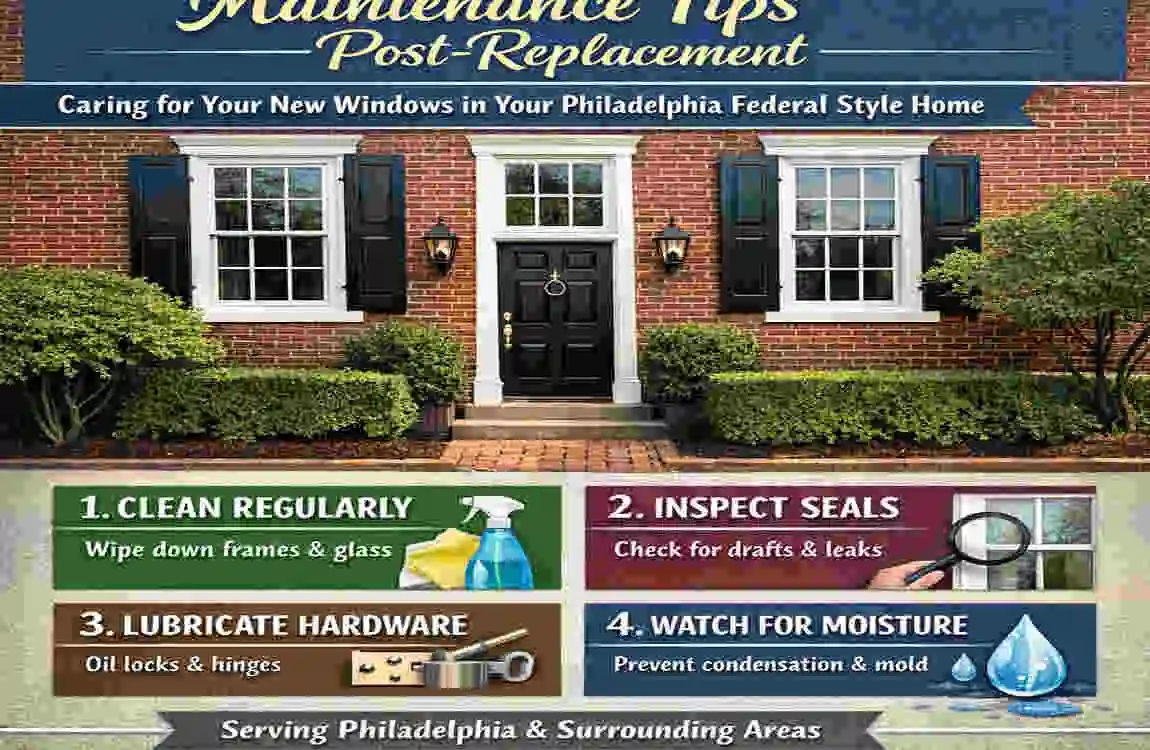
Once your new windows are installed, proper maintenance will ensure they last for decades.
Maintenance Checklist
- Cleaning: Use gentle cleaners to avoid damaging the finish.
- Weatherstripping: Check regularly for wear and replace as needed.
- Inspection: Look for signs of moisture or drafts and address them promptly.
Federal Style Home Window Replacement Philadelphia – FAQ
What type of windows suit Federal-style homes?
Federal-style homes typically use tall, narrow, double-hung windows with symmetrical alignment. Replacement windows should match the original pane design, muntins, and proportions to maintain historic character.
Can I replace windows in a historic Philadelphia home?
Yes, but in historic districts, replacements must closely match the original design, materials, and profile. Approval from local preservation authorities may be required.
What materials are best for Federal-style window replacement?
- Wood or wood-clad windows → best for authenticity
- Fiberglass → durable with a traditional look
- Vinyl → budget-friendly but less historically accurate
How much does window replacement cost in Philadelphia?
Average cost ranges from $2,495 to $8,197, depending on size, materials, and complexity of historic homes.
Do I need a permit to replace windows?
In Philadelphia, no permit is needed if:
- The window size and location stay the same
- No structural changes are made
Should I restore or replace original windows?
- Restore if windows are structurally sound (preserves value)
- Replace if they are damaged, drafty, or inefficient
| Aspect | Details |
|---|---|
| Style Features | Double-hung sash, 6-over-6 or 9-over-9 grids, thin muntins, fanlights |
| Regulations | Philadelphia Historical Commission approval needed in districts like Society Hill |
| Materials | Wood or clad-wood preferred; avoid vinyl on exteriors for authenticity |
| Cost per Window | $800–$1,500 (custom historic replicas add 20–30%) |
| Energy Upgrades | Low-E glass, argon fill; ENERGY STAR for PA climate |
| Top Contractors | Thompson Creek, Pella; seek PHC-experienced firms |