Beverly Hills has long been one of America’s most recognized luxury neighborhoods. It is known for glamour, privacy, and homes that often reflect the tastes of Hollywood’s biggest names.
During the mid-20th century, Hollywood’s growth significantly changed residential design. Stars, directors, and producers wanted homes that felt modern, private, and comfortable, but still impressive. That is where the mid-century celebrity house in Beverly Hills became so important.
The Mid-Century Modern Movement in Beverly Hills
What Made Mid-Century Architecture Different?
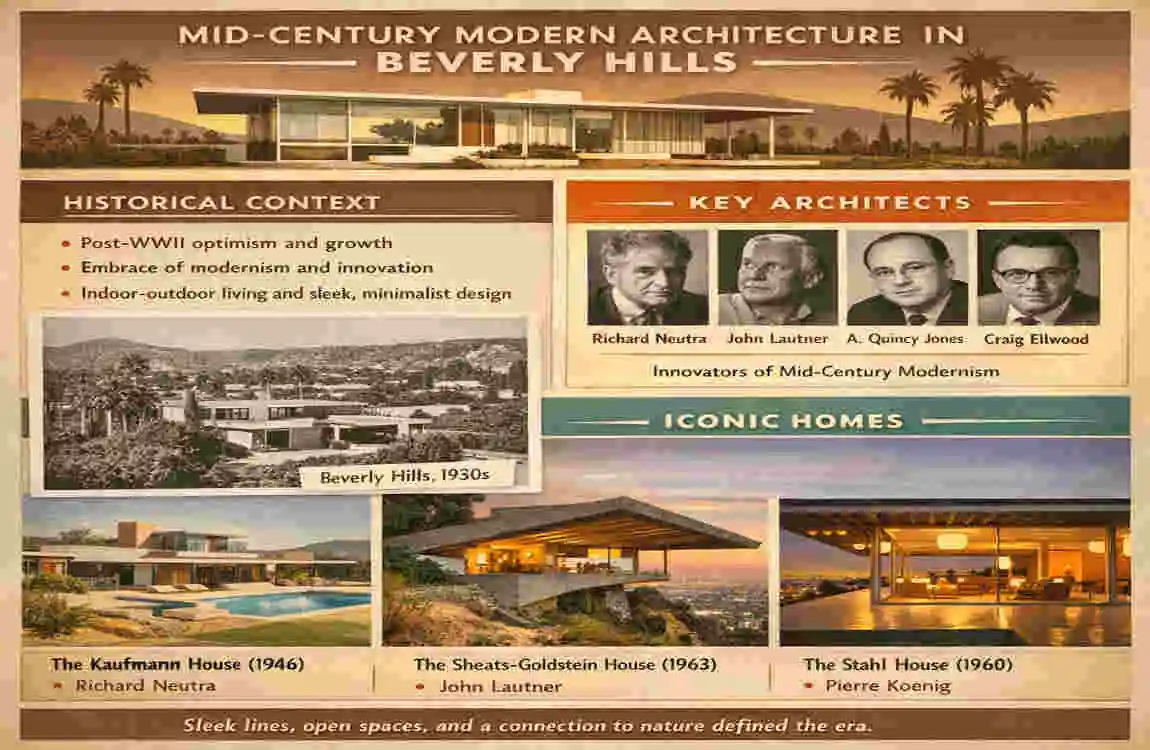
Mid-century modern homes moved away from heavy decoration and formal layouts. Instead, they focused on simplicity, function, and light.
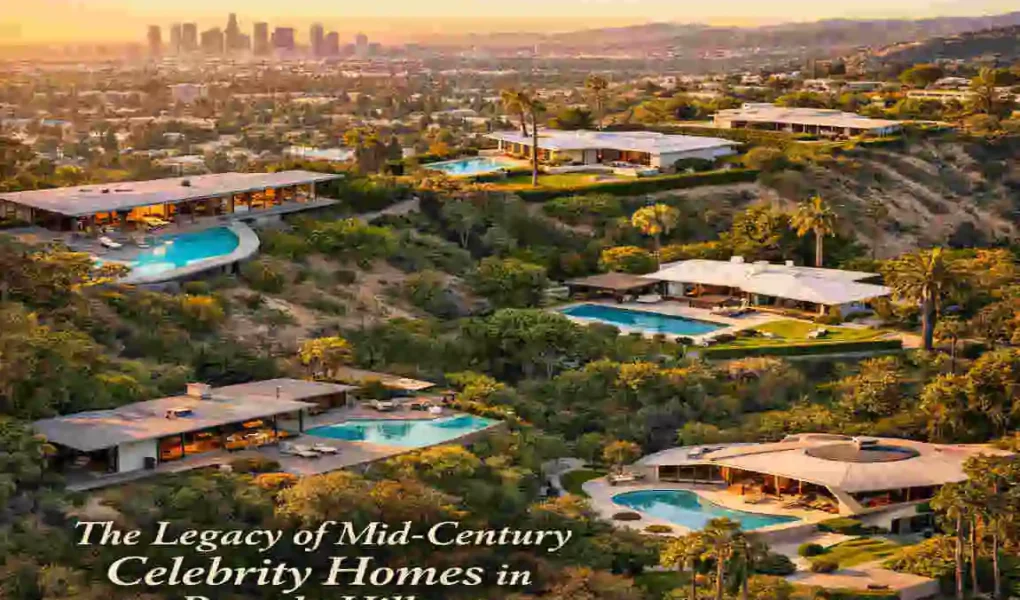
These houses often used open floor plans, geometric shapes, and large glass walls. Rooms flowed into one another, which made the home feel larger and more relaxed. This was a big shift from older homes with separate, closed-off spaces.
Why Beverly Hills Became an Ideal Setting
Beverly Hills gave architects the perfect setting for this style. The climate supported outdoor living, and hillside lots offered wide views and strong natural light.
Many properties also gave celebrities the privacy they needed. At the same time, the large lots made it possible to design homes with pools, terraces, and garden spaces that felt like part of the house.
Hollywood’s Influence on Residential Design
Hollywood changed what people wanted from a home. Actors, musicians, and producers needed spaces to entertain, relax, and escape the public eye.
Their homes encouraged architects to experiment. As these houses appeared in magazines and public discussions, they helped make modern residential design feel desirable and fashionable.
Celebrity Homes That Helped Define Beverly Hills Architecture
Frank Sinatra and the Modern Hollywood Lifestyle
Frank Sinatra represented a kind of polished modern glamour that fit perfectly with mid-century design. Homes associated with this era often reflected entertainment, privacy, and elegance without feeling overly formal.
Expansive living areas, poolside gathering spaces, and carefully planned grounds matched the lifestyle of a celebrity host. The home became part of the image, not just a backdrop.
Other Hollywood Icons and Mid-Century Residences
Sinatra was not alone. Many other Hollywood figures embraced modern homes because they felt fresh, stylish, and personal.
These houses often expressed the owner’s identity through design choices, layout, and setting. A celebrity home in Beverly Hills was not only a status symbol. It was also a statement about taste and modern living.
From Private Residence to Architectural Landmark
Some homes became famous because of the people who lived in them. Others became important because of their design quality, architecture, or place in local history.
Once a home gained recognition, its value went beyond square footage or location. Its story, style, and preservation history became part of its appeal.
Architectural Features of a Mid-Century Celebrity House in Beverly Hills
Open-Plan Interiors
Open layouts became one of the most defining traits of mid-century homes. Living rooms, dining areas, and entertaining spaces often connected smoothly.
This worked well for celebrity life. Guests could move easily through the house, and the space felt social and flexible. Compared with older homes, the layout felt lighter and more modern.
Floor-to-Ceiling Glass and Natural Light
Large windows and glass walls brought sunlight deep into the home. They also connected indoor rooms with gardens, pools, and scenic views.
This created a feeling of openness that became central to Beverly Hills mid-century homes. At the same time, architects had to balance visibility with privacy, a balance that was especially important for celebrity homeowners.
Indoor-Outdoor Living
Southern California weather made indoor-outdoor living a natural fit. Patios, terraces, courtyards, and pools extended the living space beyond the walls of the house.
This design idea still feels modern today. It made homes more relaxed and more connected to the landscape, which helped define Beverly Hills architecture in this era.
Natural Materials and Structural Simplicity
Mid-century homes often used wood, stone, brick, steel, concrete, and glass. These materials were usually left visible rather than covered.
That honest use of materials created a refined but easygoing feeling. The house looked elegant, yet it still felt livable.
Privacy and Site-Specific Design
Privacy mattered a great deal in celebrity homes. Architects used walls, landscaping, courtyards, and smart window placement to protect residents from outside view.
They also designed homes to fit hillsides and sloped lots. This made each house feel connected to its setting while still protecting the people inside.
Architectural Features at a Glance
Feature Why It Mattered
Open floor plans Supported entertaining and made homes feel larger
Glass walls Brought in daylight and views
Indoor-outdoor design Matched the Southern California climate
Natural materials Added warmth and simplicity
Privacy planning Protected celebrity residents and improved comfort
How Celebrity Lifestyles Changed Beverly Hills Home Design
Homes Designed for Entertainment
Celebrity homes needed to work as social spaces. Large living rooms, dining areas, and outdoor entertaining zones became common.
These homes were made for gatherings, not just quiet family life. That need helped shape the modern luxury home into a place that could serve both private living and public-facing hospitality.
Luxury Without Traditional Ornamentation
Mid-century luxury looked different from older mansion styles. It was less about decorative excess and more about space, craftsmanship, and design quality.
A home could still feel expensive without heavy columns, formal detailing, or ornate finishes. Clean architecture itself became a sign of status.
Pools, Gardens, and Outdoor Spaces
The swimming pool became a major feature of celebrity homes in Southern California. It was both practical and symbolic.
Gardens and landscaped outdoor areas also became part of the architecture. They were not treated as extras. They were designed as part of the whole experience of the home.
Architecture as Personal Branding
For many celebrities, the home helped shape public image. A modern house suggested confidence, style, and sophistication.
This is one reason celebrity houses in Beverly Hills attracted so much attention. The architecture became part of the celebrity story.
The Architects Behind Beverly Hills’ Mid-Century Transformation
The Role of Innovative Architects
Architects working in Beverly Hills had to think differently. Their clients wanted homes that felt original, private, and modern.
That encouraged experimentation with structure, materials, and natural light. These homes later became important examples of celebrity architecture Los Angeles is known for.
Richard Neutra and California Modernism
Richard Neutra had a major influence on Southern California design. His work often focused on light, landscape, and clean planning.
He helped shape the idea that a house should work with its environment, not fight against it. That principle became central to modern architecture in California.
Charles and Ray Eames and the Broader Design Culture
Charles and Ray Eames helped define the wider mid-century design world. Their work connected furniture, interiors, and architecture into a single, cohesive style.
Because of that, mid-century design became more than a house style. It became a complete way of living and seeing space.
Why Architect-Designed Celebrity Homes Matter Today
Architect-designed homes matter because they carry authorship. People value the vision behind the design, not just the building itself.
That is why many mid-century modern celebrity homes remain admired today. They are seen as collectible pieces of design history.
Beverly Hills Real Estate Value and the Legacy of Mid-Century Homes
Why Architectural Heritage Can Increase Property Appeal
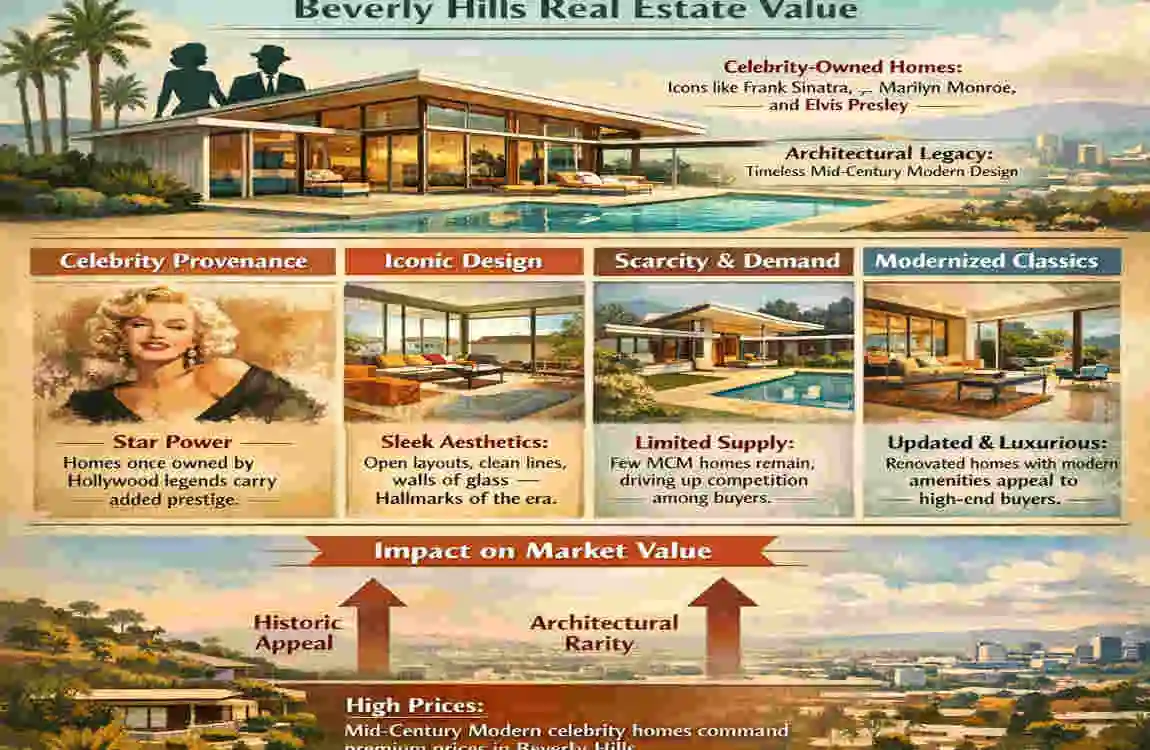
A distinctive home can stand out in a crowded market. Scarcity, history, and design quality often create stronger appeal.
For buyers interested in Beverly Hills architecture, a mid-century property offers something different from a standard luxury house. It offers identity, story, and style.
Preservation Versus Modernization
Updating a historic home can be difficult. Kitchens, bathrooms, systems, and security often need updating, but the original design should remain intact.
The best renovations respect the home’s proportions, materials, and window lines. If too much changes, the house can lose the character that made it special.
The Growing Market for Architectural Homes
Many buyers now look for homes with real design history. They want originality, not just size.
That interest has helped keep Hollywood mid-century homes in demand. Celebrity history can add appeal, but the architecture itself is usually what gives the home lasting value.
How Mid-Century Celebrity Houses Influenced Modern Luxury Homes
The Continued Popularity of Open Floor Plans
Open living remains popular because it feels flexible and social. Modern luxury homes still use connected kitchens, dining areas, and lounges.
This is one of the clearest ways in which mid-century planning has shaped today’s homes. The idea of easy flow is now a standard part of high-end design.
Glass Walls and Strong Indoor-Outdoor Connections
Today’s luxury homes still rely on glass, views, and daylight. The style has evolved, but the idea remains the same.
Homeowners still want terraces, patios, and outdoor rooms that feel like natural extensions of the interior.
Minimalist Luxury
Modern luxury often looks simple on the surface. Clean forms, quiet materials, and thoughtful details create a refined result.
That approach comes directly from mid-century values. It shows that elegance does not need to be loud.
Smart Technology Meets Classic Architecture
Today, homeowners want comfort, security, and convenience. The challenge is adding technology without disturbing the original design.
When done well, technology stays almost invisible. That protects the home’s appearance while improving daily life.
The Cultural Legacy of the Mid-Century Celebrity House Beverly Hills
From Hollywood Status Symbol to Design Inspiration
The mid-century celebrity house Beverly Hills became a symbol of modern glamour. It shaped how people imagined stylish living in California.
Magazines, photography, film culture, and real-estate media helped spread that image. As a result, the design became widely admired far beyond Beverly Hills.
Beverly Hills as an Architectural Destination
Beverly Hills is now known not only for luxury, but also for architecture. Its homes are part of the city’s identity.
This matters because design and location now work together. People are drawn to the area for its blend of history, style, and Hollywood connection.
Why Mid-Century Design Still Feels Contemporary
Mid-century design still feels current because it focuses on timeless things: light, simplicity, function, and a connection to nature.
Those ideas never go out of style. That is why these homes continue to inspire both designers and homeowners.
What Today’s Homeowners Can Learn From Beverly Hills’ Mid-Century Celebrity Homes
Here are a few simple lessons from these homes:
- Work with the landscape instead of forcing the house against it.
- Use natural light as a key design feature.
- Keep floor plans functional so rooms feel easy to use.
- Choose durable materials that age well.
- Create indoor-outdoor flow for a more open way of living.
- Protect privacy without losing views.
- Preserve original details when restoring a historic home.
Frequently Asked Questions
What is a mid-century celebrity house in Beverly Hills?
It is a mid-20th-century home that reflects modern design and was owned by or associated with a celebrity. These homes often feature open spaces, glass walls, and a strong indoor-outdoor connection.
Why are mid-century homes popular in Beverly Hills?
They fit the climate, support privacy, and match the area’s Hollywood history. Their clean design and architectural character also make them especially appealing.
What architectural features define mid-century celebrity houses?
Open layouts, large windows, natural materials, pools, courtyards, and indoor-outdoor living are some of the most common features.
Who were some influential architects associated with mid-century Los Angeles homes?
Richard Neutra is one of the best-known names, and Charles and Ray Eames also shaped the broader design culture around modern California living.
Are mid-century celebrity homes valuable today?
They can be, especially when they are well-preserved, well-located, and historically or architecturally significant. Original design and provenance often add appeal.
Can a historic mid-century home be modernized?
Yes, but carefully. Homeowners can update systems and comfort features while keeping the home’s original character intact.
Why is Beverly Hills important to mid-century architectural history?
Beverly Hills brought together Hollywood clients, skilled architects, and a lifestyle that supported modern design. That made it a key place in the rise of California modernism.