Winning big construction contracts can change a contractor’s business fast. It can bring in more money, stronger client trust, and better long-term growth. But the construction industry is competitive, and many contractors compete for the same projects.
That is why it is important to understand how to secure construction contracts in a smart, practical way. You need more than skill on the job site. You also need good marketing, strong relationships, a clear bidding process, and a solid reputation.
Understanding Construction Contracts and Their Importance

What Is a Construction Contract?
A construction contract is a formal agreement between a contractor and a client. The client may be a homeowner, a business owner, a developer, or a government agency.
This contract explains the scope of work, budget, timeline, payment terms, and responsibilities for both sides. In simple words, it sets the rules for the project before work begins.
A clear contract protects everyone involved. It reduces confusion, helps avoid disputes, and keeps the project moving in the right direction.
Why Large Construction Contracts Matter
Large contracts matter because they can provide your business with greater stability. One big project can often bring in more income than several small ones.
They also help you build a stronger name in the market. When clients see that you can handle bigger work, they are more likely to trust you with future jobs.
Big contracts can also help your company expand. They may lead to better equipment, more workers, and new business opportunities.
Build a Strong Foundation Before Searching for Contracts
Register Your Construction Business Properly
Before you pursue larger projects, make sure your business is set up correctly. This means having the proper licenses, permits, and contractor registrations.
Clients want to work with businesses that follow the rules. Legal compliance shows that you are serious, professional, and ready for bigger work.
Create a Professional Company Profile
Your company profile should tell people who you are and what you do. Keep it simple, clean, and easy to read.
Include details like:
- Company history
- Services offered
- Past projects
- Certifications
- Team experience
- Safety records
A strong profile makes your business look trustworthy. It also helps clients understand why they should choose you.
Develop a Strong Portfolio
A portfolio shows proof of your work. This is one of the best tools you can use when learning how to get construction contracts.
Add photos of finished projects, short descriptions, and client feedback. If possible, show before-and-after results. That gives potential clients a clear picture of your skill and quality.
How to Get Construction Contracts Through Networking
Build Relationships With Industry Professionals
Networking is one of the easiest ways to find new opportunities. Many construction jobs are shared through trusted business relationships.
Focus on building contacts with:
- Real estate developers
- Architects
- Engineers
- Property managers
- Builders
- Suppliers
These people often know about upcoming projects before they become public. If they trust you, they may recommend your company.
Attend Construction Events and Trade Shows
Industry events can open doors. They give you a chance to meet decision-makers, learn about new projects, and introduce your services.
Even one useful connection can lead to a future contract. So, when you attend these events, be ready with your business card, company profile, and a clear message about what you do.
Join Local Construction Associations
Local construction groups can help you build credibility. They also give you access to people who already work in the same industry.
These groups can be useful because they often share job leads, business advice, and partnership opportunities.
Use Online Marketing to Find Construction Contracts
Create a Professional Construction Website
A website helps your business look more established. Many clients search online before they call a contractor, so your website should make a good first impression.
Include these key pages:
- About page
- Services page
- Project gallery
- Contact information
- Customer reviews
Keep the design simple and professional. A clean website can help people trust your business faster.
Optimize Your Website for Search Engines
Search engine optimization, or SEO, helps people find your business when they search online. This is important if you want more leads.
You can use keywords such as:
- How to get construction contracts
- Commercial contractors near me
- Construction companies in my area
SEO helps your website show up when people search for services like yours. That means more visibility and more potential clients.
Use Social Media Marketing
Social media is another useful tool. It lets you show your work, share updates, and stay visible to clients.
Good platforms include:
- YouTube
Post content like project photos, team updates, short videos, and success stories. People like to see real work, not just promises.
Learn How to Find Construction Contract Opportunities
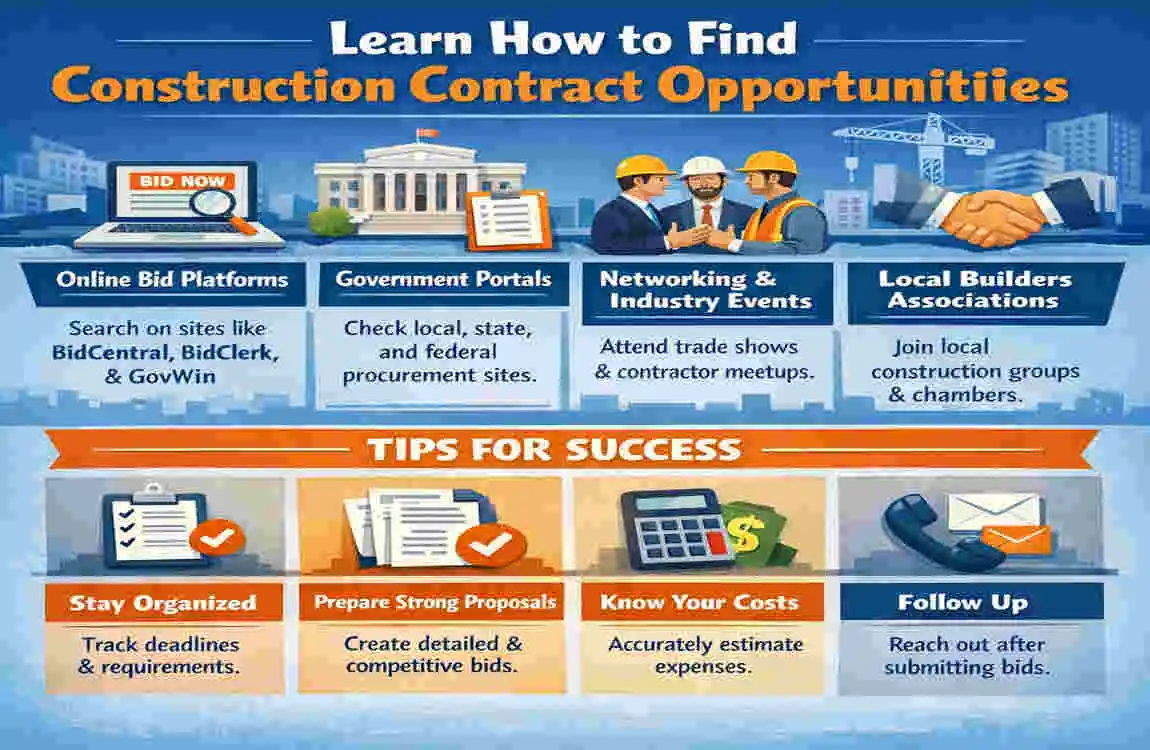
Search Government Construction Contracts
Government projects can offer strong and steady work. These may include schools, roads, public buildings, and other local facilities.
These contracts often have clear rules and bidding steps. They may take more effort to win, but they can be very valuable for your business.
Use Construction Bid Websites
Many contractors use bid websites to find available projects. These platforms often list commercial jobs, private developments, and subcontracting opportunities.
Check them often and move quickly when a project matches your skills. Fast action can give you an advantage.
Partner With Larger Contractors
If your company is still growing, subcontracting can be a smart path. Larger contractors often need reliable partners for part of a project.
This can help you gain experience, build trust, and work on larger projects without carrying the full load alone.
Master the Construction Bidding Process
Understand Project Requirements
Before you submit a bid, study the project carefully. Read the drawings, check the specifications, and review the timeline.
Also consider material needs, labor demands, and potential risks. The more you understand the job, the better your bid will be.
Prepare a Competitive Bid Proposal
A strong proposal should show that you understand the project and can complete it well.
Your bid should include:
- Project understanding
- Cost breakdown
- Work timeline
- Plan of action
- Safety approach
- Company experience
Make your proposal clear and professional. A simple, well-organized bid often works better than a fancy one.
Avoid Common Bidding Mistakes
Many contractors lose jobs because of small mistakes. Some of the most common ones are underpricing, missing details, and late submissions.
Take your time and check everything before sending your bid. A careful bid can make a big difference.
Build Trust to Win Bigger Construction Contracts
Maintain Excellent Communication
Clients want contractors who answer calls, reply to emails, and explain things clearly. Good communication creates confidence.
If you keep clients updated, they are more likely to trust you with larger work. This is one of the easiest ways to stand out.
Focus on Quality and Safety
Good results matter. If your work is strong, on time, and safe, clients will remember you.
Use quality materials, follow safety rules, and train your team properly. Strong project delivery often leads to repeat business.
Collect Reviews and Testimonials
Happy clients can help your business grow. Ask for reviews after a project is finished.
Testimonials build trust and show new clients that others have had a good experience with you. This can make it easier to win future contracts.
Use Strategic Partnerships to Secure More Projects
Work With Architects and Designers
Architects and designers often know which contractors are dependable. If they trust your work, they may recommend you to clients.
This is why building professional relationships matters so much.
Develop Supplier Relationships
Good supplier relationships can help you get better prices, faster delivery, and smoother project work.
When materials arrive on time, you can finish jobs on schedule. That makes your company look reliable.
Create Joint Ventures
Sometimes two contractors can work together on a larger job. A joint venture lets you share skills, equipment, and experience.
This can help you take on projects that might be too large to handle alone.
How Technology Helps Contractors Win Contracts
Use Construction Management Software
Software can help you organize project details, track progress, and improve communication. It also helps you stay on top of deadlines.
Use Digital Estimating Tools
Digital estimating tools can make bids faster and more accurate. They reduce mistakes and help you price jobs more confidently.
Maintain an Online Reputation
A strong online presence matters. Keep your business profile up to date, respond to reviews, and show that your company is active and professional.
Common Challenges Contractors Face When Getting Contracts
High Competition
Many contractors compete for the same jobs. To stand out, focus on quality, communication, and a clear service offer.
Limited Business Reputation
If your company is new, start with smaller jobs and build from there. Every completed project helps you earn trust.
Difficulty Finding Qualified Leads
Finding good leads takes time. Keep marketing, networking, and tracking opportunities so you do not miss new projects.
Proven Tips to Get Bigger Construction Contracts Faster
Specialize in a Construction Niche
It often helps to focus on one area, such as:
- Commercial buildings
- Residential construction
- Renovations
- Infrastructure projects
Specialists often get more attention than general contractors because clients see them as experts.
Improve Your Company’s Professional Image
A professional look matters. Use clean branding, organized documents, and a polished website.
Follow Up With Potential Clients
Do not stop after sending one bid. Follow up politely. A simple message can remind the client that you are serious and ready to work.
Mistakes to Avoid When Trying to Win Construction Contracts

Here are some common mistakes contractors should avoid:
- Only depending on referrals
- Ignoring online marketing
- Submitting poor proposals
- Failing to research clients
- Offering unrealistic prices
Avoiding these mistakes can save time and improve your chances of success.
Frequently Asked Questions
How do contractors get construction contracts?
Contractors get construction contracts through networking, online marketing, referrals, bidding platforms, partnerships, and government project opportunities.
What is the best way to find construction contracts?
The best methods include building industry relationships, joining contractor networks, searching bid opportunities, and maintaining a strong online presence.
How can a small contractor win bigger projects?
Small contractors can win larger projects by building a professional portfolio, partnering with larger companies, improving their marketing, and submitting competitive bids.
Do contractors need a website to get contracts?
A professional website helps contractors attract clients, showcase previous work, and build trust with potential customers.
How important is networking in getting construction contracts?
Networking is extremely important because many construction opportunities come through industry relationships and referrals.
How can contractors improve their chances of winning bids?
Contractors can improve their chances by understanding project requirements, preparing accurate estimates, submitting detailed proposals, and showing experience.
| Strategy | Description |
|---|---|
| Build a Strong Reputation | Contractors win larger projects by maintaining quality work, meeting deadlines, and earning positive client reviews. |
| Create a Professional Portfolio | Showcase completed projects, certifications, experience, and successful case studies to attract major clients. |
| Register for Bids | Join government, commercial, and private bidding platforms to find large construction opportunities. |
| Develop Industry Connections | Networking with developers, architects, suppliers, and project managers helps contractors discover new contracts. |
| Maintain Proper Licensing | Required licenses, insurance, and safety certifications increase trust and eligibility for bigger projects. |
| Submit Competitive Bids | Accurate cost estimates, realistic timelines, and clear proposals improve chances of winning contracts. |
| Build Financial Strength | Large projects often require strong cash flow, credit history, and financial planning. |