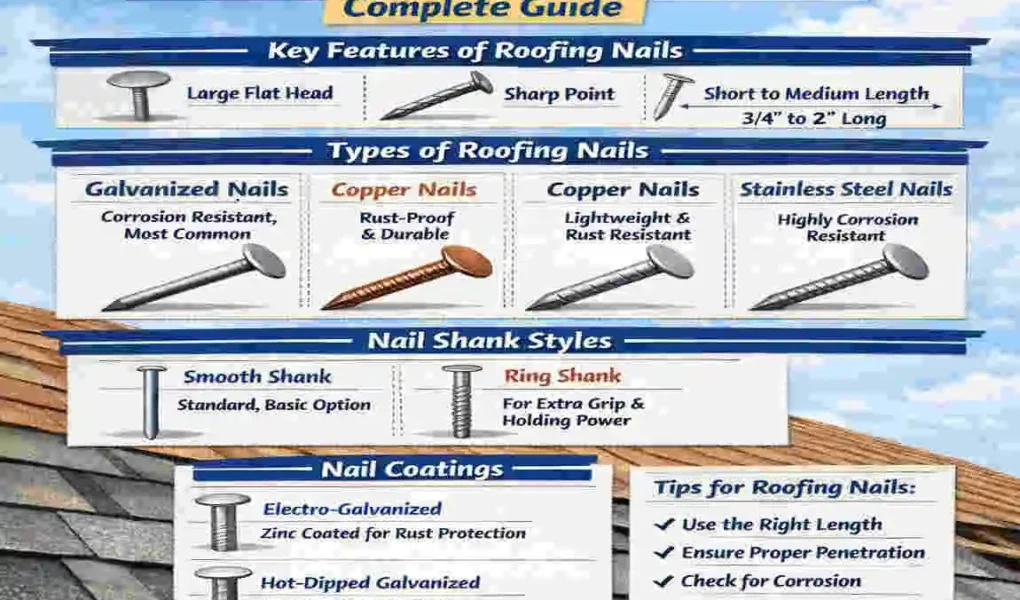
Choosing the right roofing nails may seem like a small detail, but it matters a lot. The wrong nail can loosen shingles, let water in, or shorten your roof’s lifespan.
If you are asking what type of nails are typically used for roofing, the most common answer is galvanized steel roofing nails. They are strong, resist rust, and work well for most homes. But the best nail also depends on your roofing material, your climate, and local building rules.
What Type of Nails Are Typically Used for Roofing?
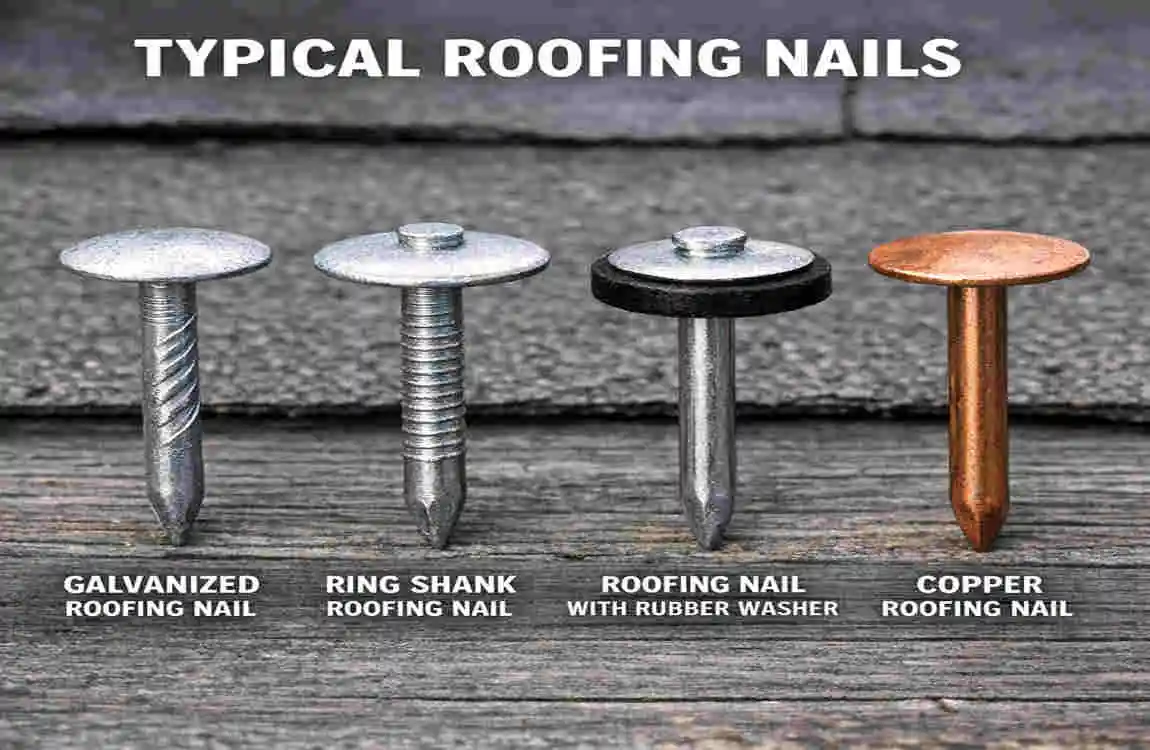
Standard roofing nails explained.
Roofing nails are made for one job: holding roofing materials in place. They usually have a wide head, a short shank, and a strong point so they can grip roofing layers securely.
For most homes, roofing crews use nails made for asphalt shingles. These nails are designed to hold shingles down without tearing them or slipping out too easily.
Why roofing nails are different from regular nails
Regular nails are not built for roof work. Roofing nails are different because they are made to handle:
- Wind
- Rain
- Heat
- Movement in the roof surface
They also have a wider head, which helps keep roofing material from pulling loose.
Common applications for roofing nails
Roofing nails are used for more than just shingles. You may also see them used for:
- Underlayment
- Roof felt
- Flashing
- Wood shingles
- Some metal roofing parts
Parts of a Roofing Nail
Nail head
The head is the flat top part of the nail. A roofing nail has a wide head so it holds the material down firmly.
This is important because a small head could pull through the shingle or fail to hold it in place.
Nail shank
The shank is the long body of the nail. It gives the nail its strength and holding power.
Some shanks are smooth, while others have rings or threads to improve grip.
Nail point
The point is the sharp end that goes into the roof. It helps the nail go through roofing layers and into the wood beneath.
Why each part is important
Each part works together. The head holds the shingle, the shank adds strength, and the point helps the nail enter the roof properly. If one part is wrong, the roof may not stay secure.
Different Types of Roofing Nails
Smooth shank roofing nails
These are the most common type. They are easy to drive in and work well for standard asphalt shingle roofs.
They are affordable and widely used, but they may not hold as tightly in very windy areas.
Ring shank roofing nails.
Ring shank nails have grooves or rings on the shaft. These rings help the nail grip the wood better.
They are a smart choice in high-wind areas because they are harder to pull out.
Screw shank roofing nails.
These nails have spiral threads, almost like a screw. They give very strong holding power.
They are often used for wood roofing or special projects where extra grip matters.
Coil roofing nails
Coil roofing nails come in rolls and are often used with a nail gun. They help workers install roofs faster.
They are common on bigger jobs because they save time.
Plastic cap roofing nails
These nails come with a plastic cap that helps hold roof underlayment or felt in place.
They are useful when extra surface coverage is needed.
Metal cap roofing nails
These have a metal cap instead of a plastic one. They are also used as underlayment and can provide added durability.
Roofing Nail Materials
Galvanized steel nails
These are the most common roofing nails. The zinc coating helps protect them from rust.
They are a strong, affordable choice for most residential roofs.
Stainless steel nails
Stainless steel nails resist corrosion very well. They are a great option for coastal areas or very wet climates.
They cost more, but they last longer in harsh conditions.
Aluminum roofing nails
Aluminum nails are lightweight and resist rust, but they are not always strong enough for every roofing job.
They are used in certain roofing systems, but not as often as steel.
Copper roofing nails
Copper nails are expensive and mainly used for special roofing projects, especially with copper or historic roofs.
They offer good durability and a nice finish.
Roofing Nail Sizes
Most common roofing nail lengths
The most common roofing nail length for asphalt shingles is usually 1 to 1¼ inches.
For thicker materials or special roofing systems, longer nails may be needed.
Nail diameter explained
Roofing nails also vary in thickness. A thicker nail usually provides stronger holding power.
The right diameter depends on the roof material and the level of grip needed.
Choosing the right nail size
The nail should be long enough to go through the roofing material and reach the roof deck underneath.
If the nail is too short, it may not hold. If it is too long, it may stick through or cause other issues.
Building code recommendations
Local building codes often tell you what size nail to use and how many nails each shingle needs. Always follow those rules because they help keep the roof safe and approved.
Roofing Nails for Different Roofing Materials
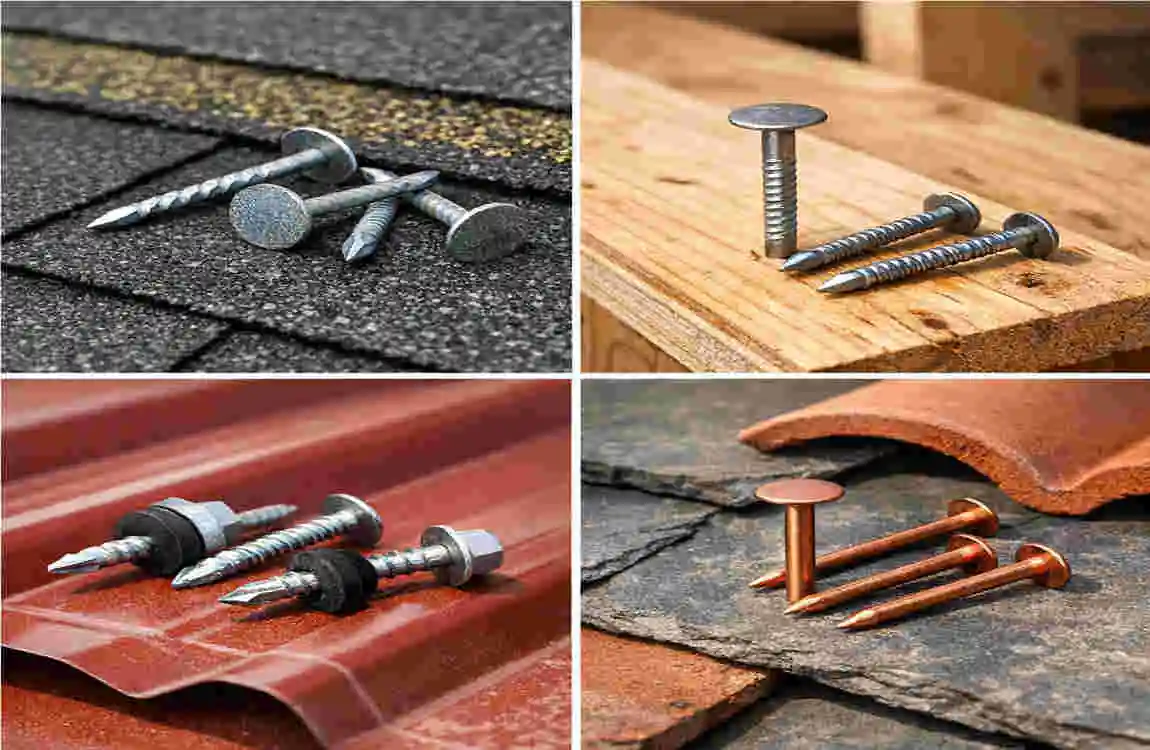
Asphalt shingles
Asphalt shingles usually use galvanized roofing nails with a wide head. These are the most common roofing nails in homes.
Metal roofing
Some metal roofing systems use screws instead of nails, but certain parts may still need special fasteners.
Wood shingles
Wood shingles often need stronger nails, sometimes ring shank or stainless steel, depending on the climate.
Slate roofing
Slate roofs usually need specialized fasteners because slate is heavy and delicate.
Tile roofing
Tile roofs often use clips, screws, or special nails depending on the system. The fastening method must match the tile type.
Hand Nailing vs. Nail Gun
Advantages of hand nailing
Hand nailing gives the installer more control. It can be useful for small repairs or detailed work.
Benefits of pneumatic nail guns
A nail gun speeds up the job and helps roofing crews work faster on larger projects.
Which method is best?
For most full-roof installations, nail guns are commonly used because they save time. But the main goal is not speed alone. The nails must be placed correctly every time.
Common Roofing Nail Installation Mistakes
Overdriven nails
This happens when a nail is pushed in too far. It can damage the shingle and weaken the hold.
Underdriven nails
If the nail is not driven in far enough, it may stick up and leave the shingle loose.
Crooked nails
A crooked nail can miss the roof deck or fail to hold properly.
Incorrect nail placement
Nails must go in the right spot. If they are placed too high or too low, the shingle may not perform well.
Using the wrong nail length
A nail that is too short or too long can create serious roofing problems.
How Many Nails Are Needed Per Shingle?
Standard installation
Most shingle manufacturers recommend four nails per shingle under normal conditions.
High-wind areas
In windy regions, six nails per shingle may be required for extra hold.
Manufacturer recommendations
Always follow the shingle manufacturer’s instructions. If you do not, the warranty or roof performance could be affected.
Roofing Nail Requirements by Climate
Coastal areas
Salt air can cause rust faster. In these places, stainless steel nails are often the best choice.
Snowy regions
Cold weather and ice can stress the roof. Strong nails with good grip are important here.
High-humidity climates
Moist air can speed up corrosion. Rust-resistant nails are a smart choice.
Hurricane-prone locations
In storm-prone areas, ring shank nails are often used because they hold better in strong winds.
Tips for Choosing the Best Roofing Nails
Here are some simple tips to help you choose well:
- Match the nail to the roofing material
- Choose corrosion-resistant nails
- Follow local building codes
- Think about your climate
- Buy quality fasteners, not the cheapest ones
Roofing Nail Comparison Table
Roofing Nail TypeBest ForCorrosion ResistanceTypical Length
Smooth Shank Standard asphalt shingles Good 1–1¼ inch
Ring Shank High-wind areas Excellent 1¼–1½ inch
Screw Shank Wood roofing Excellent 1½–2 inches
Galvanized Steel Most residential roofs High Various
Stainless Steel Coastal regions Excellent Various
Aluminum Lightweight roofing Moderate Various
Maintenance Tips for Long-Lasting Roofing Nails
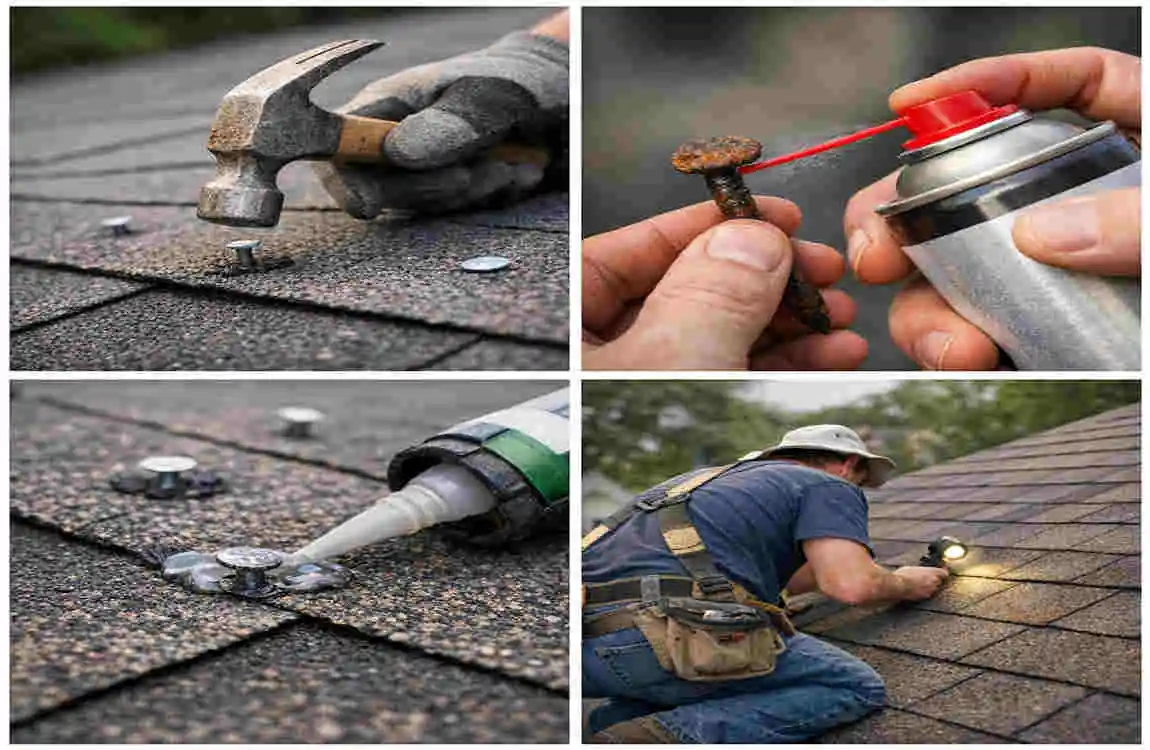
Regular roof inspections
Check your roof from time to time to spot loose nails, lifted shingles, or rust early.
Check for rust
Rust can weaken nails and lead to roof problems. If you see it, have the area inspected.
Replace damaged nails
A damaged nail should be replaced promptly to prevent it from affecting nearby roofing materials.
Prevent moisture damage
Keep gutters clear and attic moisture under control. Less moisture means less chance of nail corrosion.
Frequently Asked Questions
What type of nails are typically used for roofing?
Galvanized steel roofing nails are the most commonly used because they resist rust and hold roofing materials well.
What size roofing nails should I use?
Most asphalt shingle roofs use 1 to 1¼-inch roofing nails, but the right size depends on the roofing material and code rules.
Are galvanized roofing nails better than regular nails?
Yes. Galvanized roofing nails are designed for roofing and offer much better corrosion resistance than regular nails.
Can I use screws instead of roofing nails?
Sometimes, yes, especially with some metal roofing systems. But asphalt shingles usually require roofing nails.
How many nails should each shingle have?
Most roofs use four nails per shingle, while high-wind areas may need six.
| Topic | Details |
|---|---|
| Common Roofing Nail Type | Galvanized steel nails are the most commonly used because they resist rust and corrosion. |
| Best Material | Hot-dipped galvanized steel, stainless steel (coastal areas), and aluminum (for aluminum roofing). |
| Typical Nail Length | 1¼ to 2 inches, depending on roofing material and roof deck thickness. |
| Standard Nail Gauge | Usually 11 or 12 gauge for strength and durability. |
| Head Size | Minimum 3/8-inch diameter head to securely hold roofing shingles. |
| Shank Type | Smooth shank is common, while ring shank offers extra holding power in high-wind regions. |
| Most Common Use | Asphalt shingles, underlayment, roof felt, and roofing membranes. |
| Corrosion Resistance | Galvanized and stainless steel nails prevent rust and extend roof lifespan. |