A pinwheel house is one of those designs that makes you stop and look twice. Instead of a plain rectangle, the building turns around a central point, with wings, walls or volumes that spin outward like the blades of a garden pinwheel. The result feels dynamic, and it solves real problems too: privacy, light, views and indoor-outdoor living.
What Is a Pinwheel House?
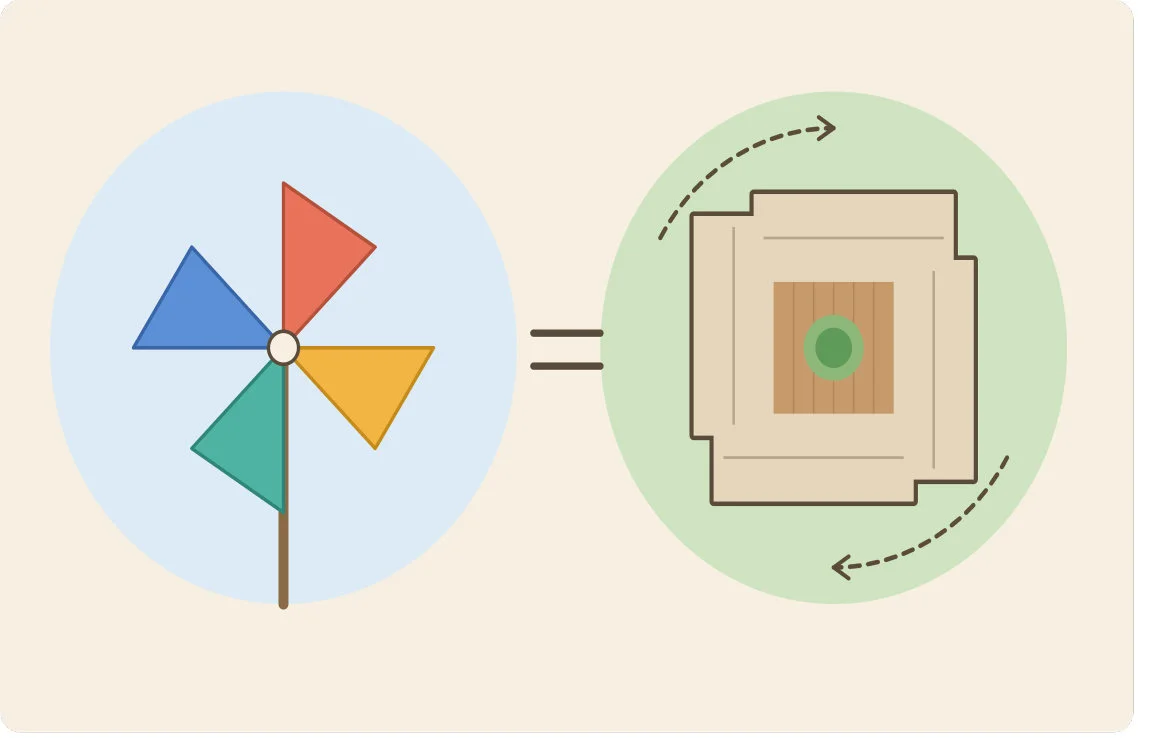
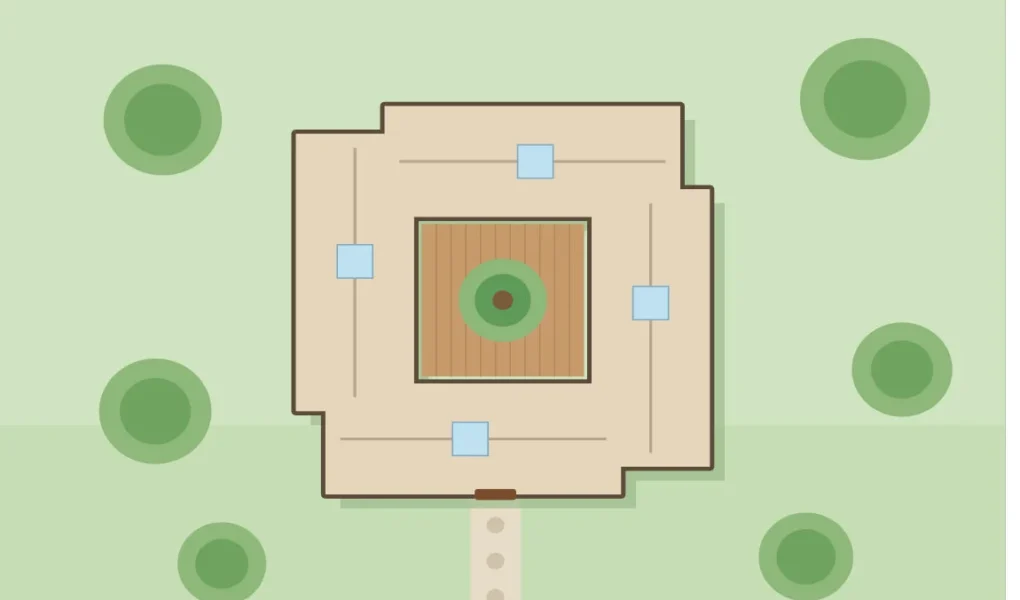
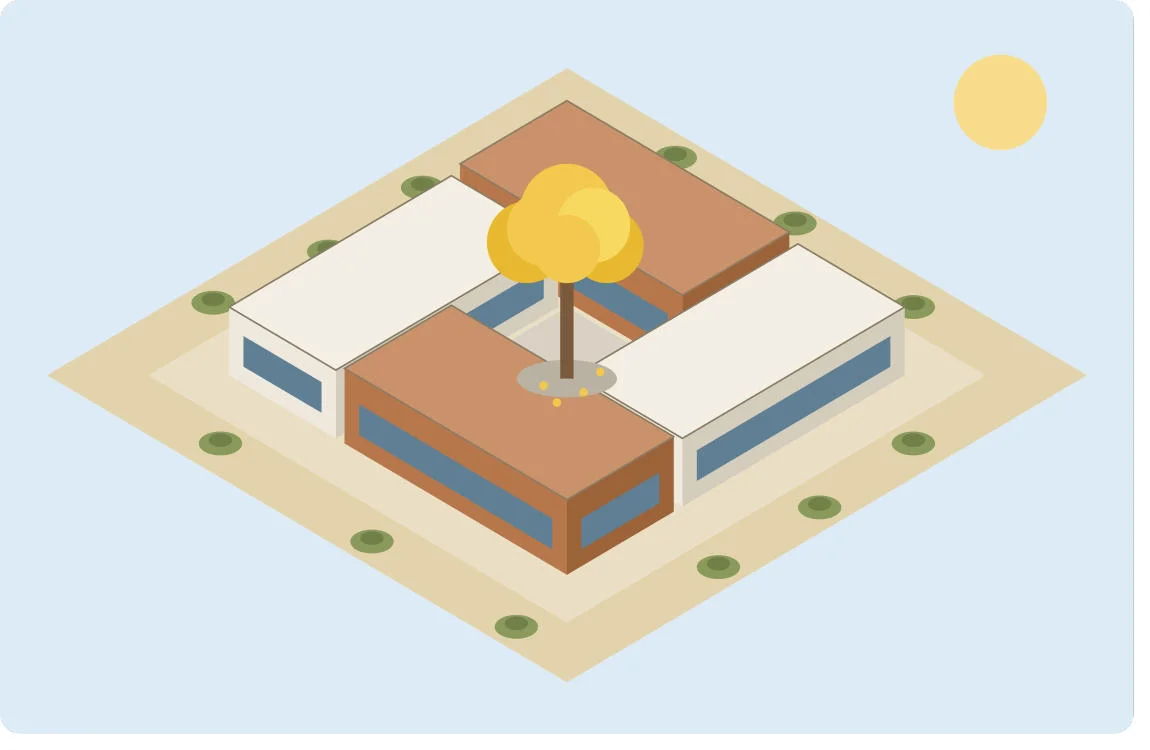
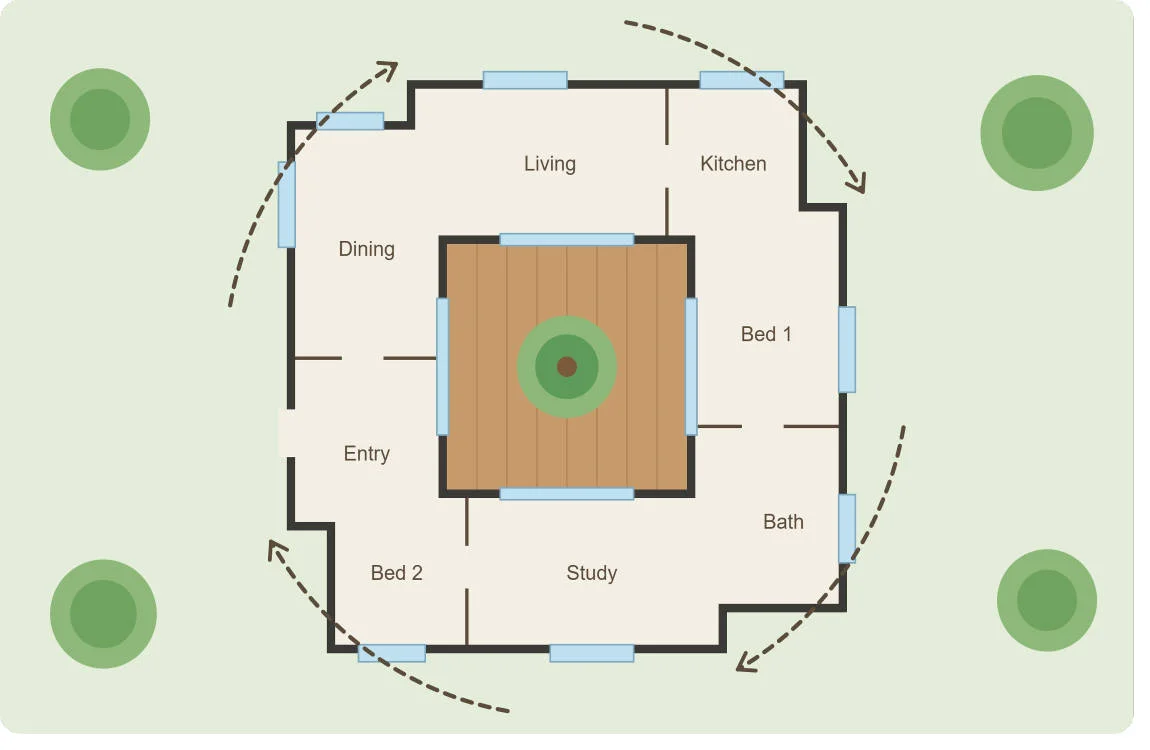
A pinwheel house is defined by its plan. Rooms or building volumes are arranged around a central core, such as a courtyard, staircase or skylight, and each one is rotated slightly so the whole footprint looks like it is turning.
The idea shows up in very different forms around the world:
- Italy: One compact holiday home on Lake Maggiore uses a pentagon home plan. Perpendicular fins on each façade opening give the pavilion its pinwheel shape.
- New Zealand: A beach house on Great Barrier Island uses four walls that extend into the garden, creating four outdoor courtyard spaces, partly covered by bedrooms cantilevered above.
- Brazil: A house near Brasília arranges four single-storey box-like volumes around a central courtyard that acts as a distribution hub.
The geometry differs, but the principle is the same: a strong centre with spaces rotating around it.
Why Choose a Pinwheel House Design?
Better privacy without losing light
Because each wing faces a slightly different direction, rooms look onto gardens or views instead of onto each other. In the Brazilian example, the layout gives you a sheltered courtyard at the heart of the home while the outer rooms open to the landscape.
Efficient circulation
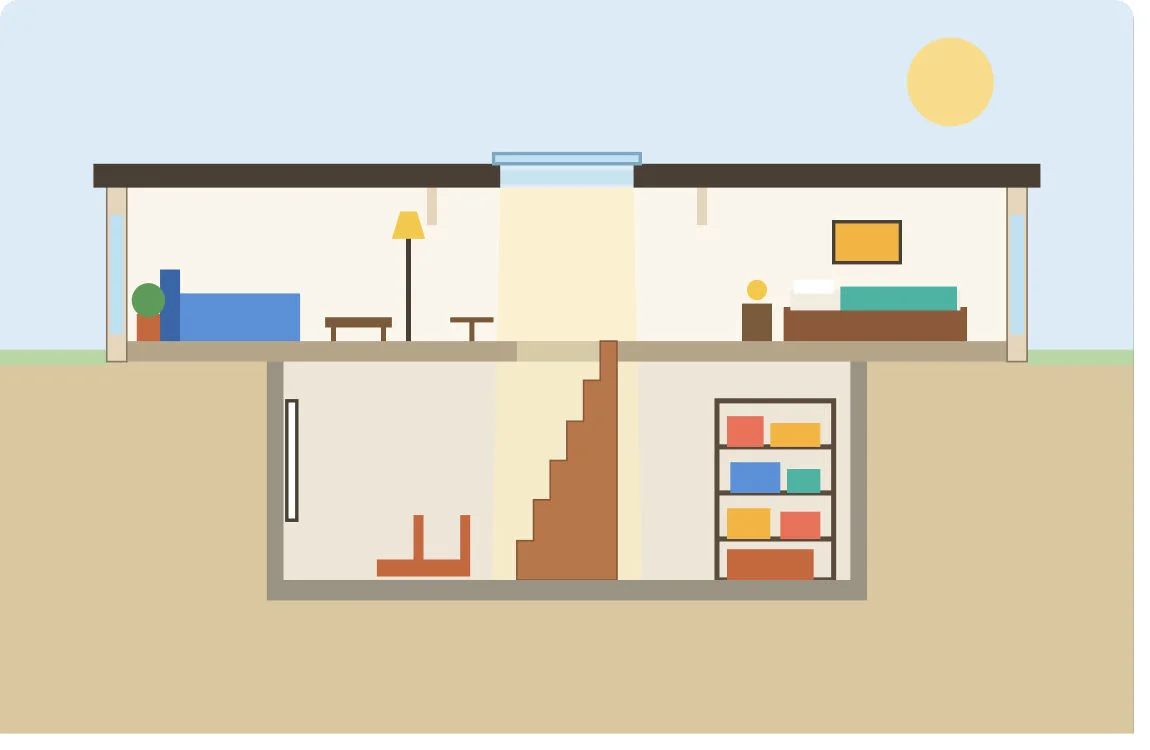
Arranging rooms around a core can cut out hallways. In the Italian pavilion, the plan centres on a circular skylight and a staircase, which gives a space-efficient solution with no corridors. Less wasted floor area means more usable living space for the same footprint.
Views from every room
A rotated plan lets you aim windows at different parts of your plot. If your site has a lake on one side and woodland on another, each wing can claim its own outlook Homestyle NZ.
Natural outdoor rooms
The “gaps” between wings become sheltered courtyards, decks or gardens. That is a big draw in warm climates, where outdoor living extends your usable space for most of the year.
How to Build a Pinwheel House: Step by Step
Start with your site, not the shape
A pinwheel house works best when the plan responds to the land. Check the sun path, prevailing wind, views, slope and neighbouring buildings first. The Italian design happened because the building setbacks and the sloping plot left only a narrow buildable area, and the pentagon was the result.
Check your planning limits early
Rules on site coverage, height and boundaries shape a pinwheel plan more than most layouts, because the wings need room to spread. On the Great Barrier Island project, a permitted site coverage of only 15% meant two levels were necessary. Speak to your local planning authority before you fall in love with a footprint.
Choose your core
Decide what sits at the centre. Common options:
- A courtyard for light, planting and a private outdoor room
- A staircase with skylight for compact, multi-level homes
- A shared living space with bedrooms or work zones spinning off it
Separate day and night zones
Pinwheel plans make zoning easy. Put living, dining and kitchen in one wing, and bedrooms or study space in the others. Some designs use height to do this too, with taller volumes for daytime use and lower ones for sleeping. Domus .
Pick materials that unify the design
Because the plan is complex, a restrained palette keeps it calm. The New Zealand home uses the same American white ash for ceiling, walls and floor, treated differently so each appears distinct. A single cladding like cedar, white panels or concrete can do the same job outside.
Build smart and efficient
Pinwheel houses have more external wall than a simple box, so insulation and airtightness matter. The Lake Maggiore home used a prefabricated, highly insulated wood structure to keep maintenance costs and utility bills low, with a heat pump powering radiant floor heating. Prefabrication also helped on a remote site, and the house was built and furnished in only six months.
Bring in an architect who understands geometry
Rotated plans create awkward roof junctions, drainage lines and structural transfers. An experienced architect or designer will resolve these before construction, which saves money on site.
Pinwheel House Design Ideas to Steal
- Add projecting fins or louvres. They shade glass from glare and give the façade its signature rhythm.
- Round the corners. Softened edges make a geometric building feel gentler in a natural setting.
- Plant a feature tree in the courtyard. One native tree can become the visual anchor of the whole home design.
- Use sliding doors on every courtyard side. They blur the line between inside and out.
- Keep the palette simple. Two or three materials is plenty Architecture+.
Pros and Cons of a Pinwheel House
Pros: strong privacy, views in several directions, less corridor space, built-in outdoor rooms, striking appearance.
Cons: larger external surface area (more insulation and cladding), more complex roofing, a bigger footprint on flat plots, and potentially higher design fees.
For most owners, the character and livability outweigh these trade-offs, provided the budget allows for careful detailing.
Final Thoughts
A pinwheel house isn’t a shortcut to a trendy look. It’s a layout that earns its shape by delivering light, privacy and a close connection to the landscape. Start with your site, choose a strong centre, keep materials simple and work with a designer who can handle the geometry. Done well, you end up with a home that feels both dynamic and calm.
FAQ
What is a pinwheel house?
A home whose plan rotates around a central point, with wings or volumes arranged like pinwheel blades.
Is a pinwheel house expensive to build?
It can cost more per square metre than a simple rectangle because of the extra walls and more complex roofing. Prefabrication and a restrained material palette help control costs.
Does a pinwheel layout suit small plots?
Yes, if designed well. The Italian example shows a compact one-storey version, though planning limits on coverage and setbacks need checking first.