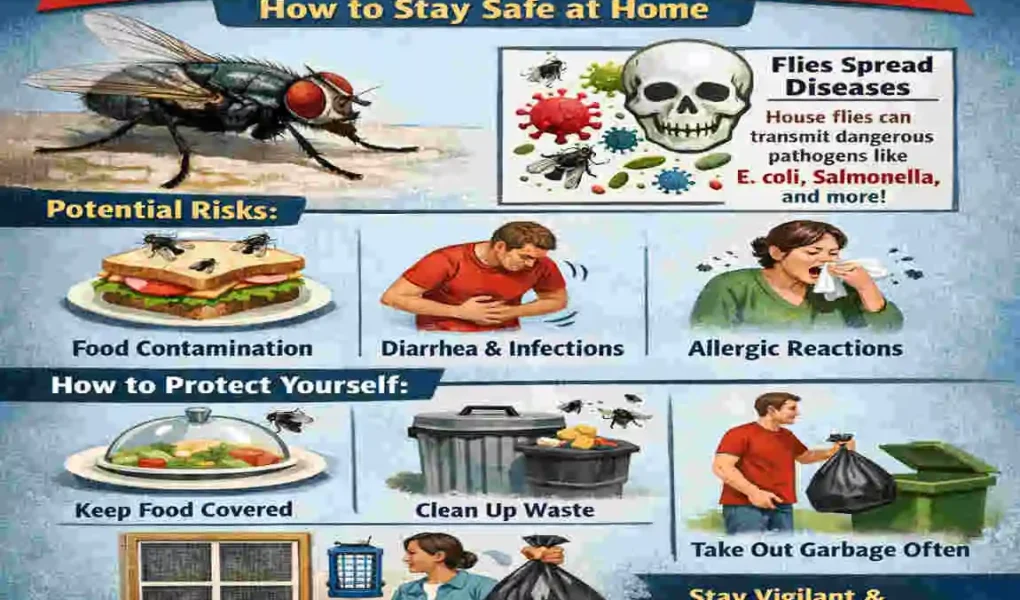
House flies are annoying, and many people worry about what they might do beyond buzzing around the kitchen. The short answer to whether house flies can kill you is rarely, not directly. House flies do not usually bite or poison people, but they can carry harmful germs from garbage, animal waste, and dirty surfaces to your food and home.
What Are House Flies?
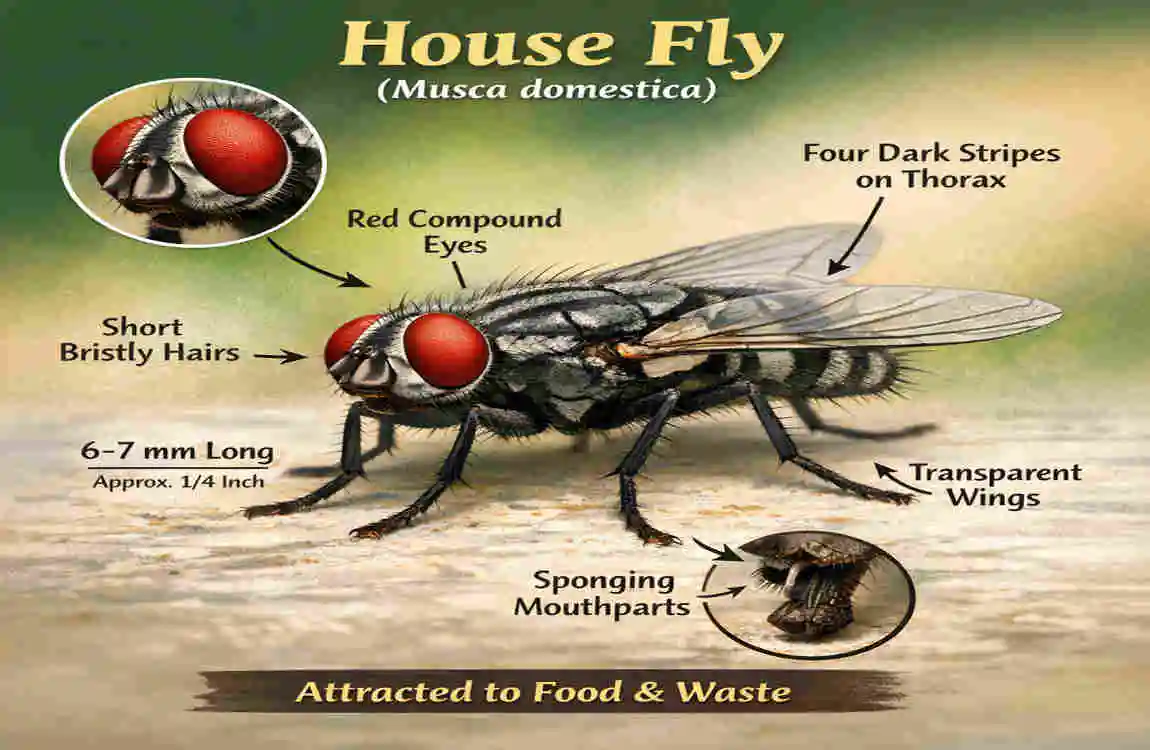
House flies are small flying insects that often show up around clean homes, kitchens, trash bins, and animal areas. They are common, fast-moving, and very good at finding food.
Common Characteristics
House flies usually have gray bodies, dark stripes, and red eyes. They do not live very long, but during that time they can cause a lot of trouble.
They feed on liquids and soft foods. Since they cannot chew solid food well, they often end up on your counters, dishes, or plates.
Why House Flies Enter Homes
House flies come inside in search of food, warmth, moisture, and a place to rest.
They are often drawn to:
- Leftover food
- Open garbage
- Pet waste
- Standing water
- Warm indoor spaces
If your clean homes has easy access to food or open entry points, flies will find them quickly.
Can House Flies Kill You?
The Short Answer
House flies rarely kill people directly. They are not venomous, and they do not usually attack humans. The real problem is that they can carry bacteria, viruses, and parasites on their bodies and legs.
So, while a fly itself is not likely to kill you, it can spread germs that may lead to serious illness if they get into food or wounds.
How House Flies Spread Germs
House flies move from dirty places to clean ones very quickly. They land on trash, feces, rotting food, and drains, then fly to your kitchen or dining table.
This is how they spread bacteria:
- They land on a dirty surface.
- Germs stick to their legs and body.
- They land on food, counters, or utensils.
- The germs spread to the new surface.
This is why food contamination by flies is a real concern, especially in kitchens.
Diseases House Flies Can Spread
House flies are linked to several illnesses. They do not always cause disease, but the risk increases when they land on food or surfaces that people touch often.
Food Poisoning
House flies can spread germs like Salmonella and E. coli. These germs can cause stomach pain, vomiting, diarrhea, and fever.
Food poisoning can be mild, but in some cases it becomes serious, especially for young children or older adults.
Typhoid Fever
Typhoid fever can spread through contaminated food or water. If flies carry germs from dirty areas to what you eat, they can help spread this illness.
This is one of the reasons why fly control matters in homes and food areas.
Cholera
Cholera is another illness linked to contamination. It spreads through unsafe food and water, and flies can move germs from dirty places to clean ones.
Dysentery
Dysentery often causes severe diarrhea, stomach pain, and weakness. Flies can help spread the germs that cause it by landing on contaminated waste and then on food.
Other Bacterial Infections
House flies may also spread other germs that can lead to infection. The more flies you have, the higher the risk of house fly diseases spreading around your home.
Who Is Most at Risk?
Not everyone reacts the same way to germs spread by flies. Some people are more likely to get sick or to have more severe symptoms.
Children
Children can get sick more easily because their immune systems are still developing. They also tend to touch more surfaces and put their hands near their mouths more often.
Older Adults
Older adults may have weaker immune systems or other health problems that make infections harder to fight.
Pregnant Women
Pregnant women should be careful, as some infections can place extra stress on the body. Clean food handling is especially important.
People With Weak Immune Systems
People with long-term illness, recent surgery, or weakened immunity may be more vulnerable to germs transmitted by flies.
Signs That Flies May Have contaminated Food
If a fly lands on food, you may wonder whether it is still safe. A single quick landing may not always be a big problem, but contaminated food should be treated carefully.
Visible Fly Activity
If flies keep landing on the same food, that is a warning sign. Perishable food should not be left out uncovered for long.
Bad Smell or Spoilage
If food smells off, looks strange, or has been sitting out too long, it is safer to throw it away. Flies are often drawn to food that is starting to spoil.
Unsafe Food Storage
Food left open on counters, tables, or in uncovered containers can easily attract flies. This increases the chance of contamination.
How to Prevent House Flies in Your Home
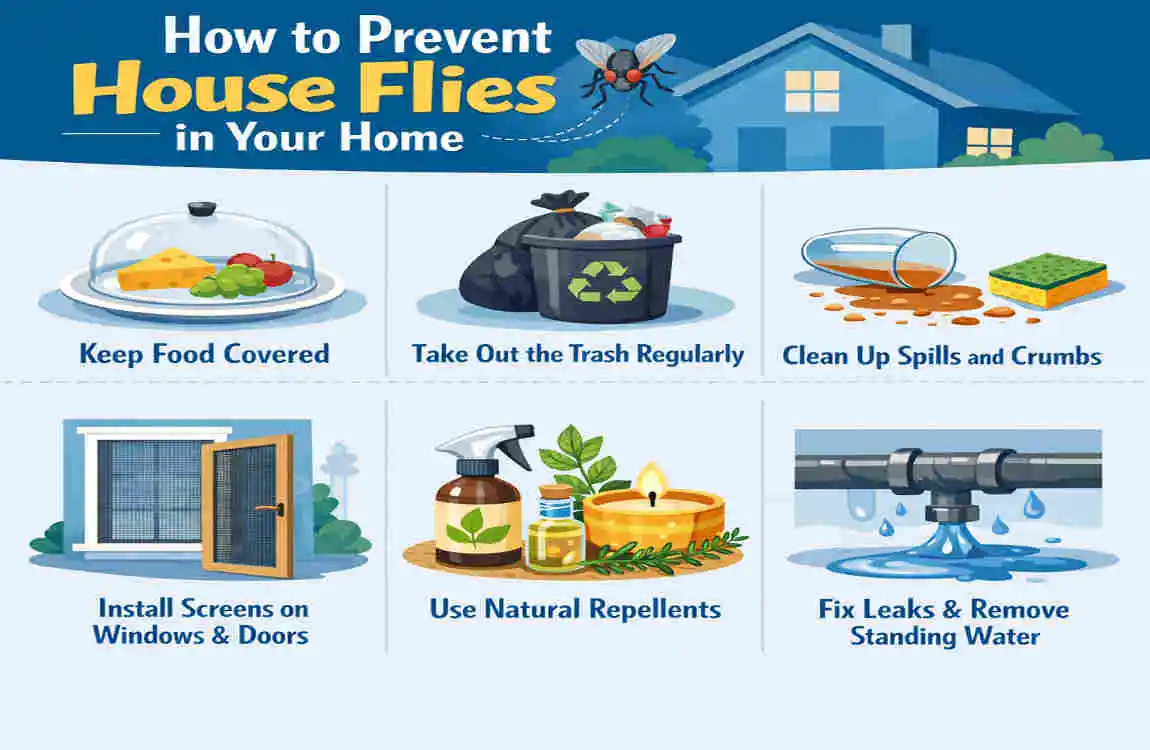
The best way to deal with flies is to stop them from entering and breeding in the first place. Good cleaning habits make a big difference.
Keep Your Kitchen Clean
Wipe counters, sweep floors, and clean up spills quickly. Even tiny crumbs can attract flies.
Cover Food Properly
Store food in sealed containers and keep plates covered when not in use. This is one of the easiest clean homes fly control tips.
Empty Trash Regularly
Garbage bins should be emptied often, especially if they contain food scraps. Use a lid that closes tightly.
Seal Doors and Windows
Check for gaps, torn screens, and open cracks. Flies can enter very small spaces.
Fix Water Leaks
Flies are attracted to moisture. Fix leaky pipes, dripping taps, and wet areas around sinks or drains.
Clean Pet Areas
Pet food, litter areas, and waste can attract flies fast. Clean these spaces regularly to reduce the problem.
Natural Ways to Keep House Flies Away
If you want to get rid of house flies naturally, there are a few simple options to try.
Essential Oils
Some people use light scents like peppermint, eucalyptus, or lavender. These can help make areas less attractive to flies.
Herbs That Repel Flies
Herbs like basil, mint, and rosemary are often used near windows or kitchen areas. They can help discourage flies from staying around.
DIY Fly Traps
Simple traps can catch flies and lower their numbers. These work best when used along with cleaning and trash control.
Proper Ventilation
Airflow helps keep indoor spaces fresh and less inviting to flies. Open windows when safe, or use fans to keep air moving.
Best Fly Control Methods
Sometimes natural steps are not enough, especially during a house fly infestation. In those cases, stronger control methods can help.
Method Best Use
Sticky fly traps Catch flies in small areas
Electric fly zappers Kill flies indoors
Insect screens Stop flies from entering
Professional pest control Handle large infestations
These methods work best when combined with good cleaning and food safety habits.
When Should You Be Concerned?
A few flies now and then are annoying, but a large number of flies can become a health issue.
Large Fly Infestations
If flies keep appearing even after you clean, there may be a breeding source nearby. This can happen in trash, drains, pet waste, or hidden food spills.
Repeated Food Contamination
If flies keep landing on food or on surfaces where you prepare meals, the risk of contamination increases. That is when you should act quickly.
Signs of Illness After Eating Contaminated Food
If someone develops vomiting, diarrhea, fever, or stomach pain after eating food exposed to flies, medical care may be needed. Do not ignore symptoms that get worse.
Myths vs Facts About House Flies
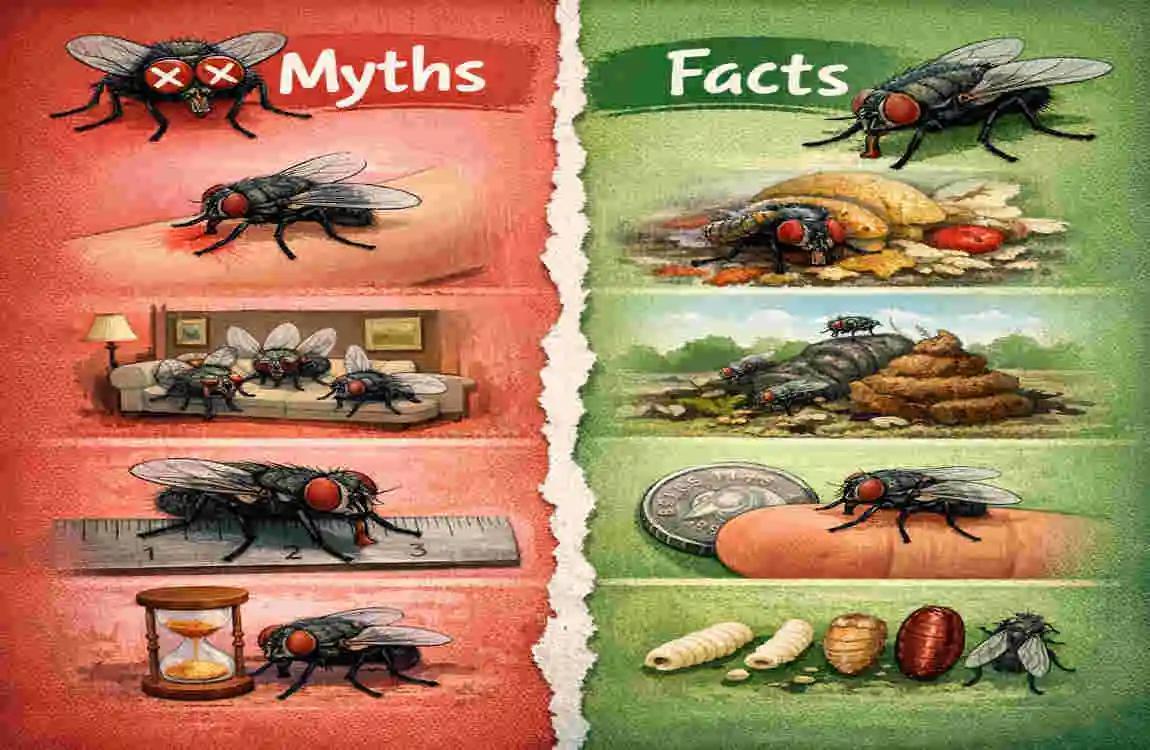
MythFact
House flies bite people. Most house flies do not bite.
One fly can instantly kill you. Flies rarely cause death directly.
Clean homes never get flies. Even clean homes can attract flies.
Flies only carry dirt. They can carry harmful germs and bacteria.
Frequently Asked Questions
Can house flies kill you?
House flies rarely kill people directly, but they can spread harmful bacteria that may cause serious illnesses.
What diseases do house flies carry?
They may spread Salmonella, E. coli, cholera, typhoid fever, dysentery, and other foodborne germs.
Is it safe to eat food after a fly lands on it?
If a fly lands briefly, the risk may be low, but it is safer to avoid food that has been exposed for a long time, especially perishable items.
How do I keep house flies away naturally?
Use herbs, essential oils, fly traps, good ventilation, and clean food storage to help keep flies away.
Can a fly infestation make you sick?
Yes. A large number of flies can increase the chance of food contamination and disease spread.
| Topic | Information |
|---|---|
| Main Question | Can house flies kill you? Directly, no. House flies do not bite or inject venom, but they can spread harmful germs. |
| Scientific Name | Musca domestica |
| How They Spread Germs | They pick up bacteria, viruses, and parasites from garbage, animal waste, and decaying matter, then transfer them to food and surfaces. |
| Potential Health Risks | Food poisoning, diarrhea, stomach infections, and other illnesses caused by contaminated food. |
| Who Is Most at Risk? | Young children, older adults, pregnant women, and people with weakened immune systems. |
| Can They Kill Humans? | Very rarely. House flies themselves do not kill people, but diseases they spread can become serious if left untreated. |
| Signs of Fly Contamination | Flies frequently landing on food, visible fly spots, or poor sanitation around the home. |