Close your eyes for a second and imagine the most famous guitar intro in the world. You are probably hearing the bright, driving, energetic opening notes of “Johnny B. Goode.” It is a sound that changed the world forever. But have you ever wondered exactly where that electrifying sound came from? Music does not just appear out of thin air. It is born in real places, shaped by real people, and heavily influenced by the four walls where an artist grows up. Today, we are taking a deep dive into the Chuck Berry house, the ultimate cradle of rock ‘n’ roll legend.
When we talk about the history of modern music, people often mention massive recording studios in New York, sunny beaches in California, and famous house clubs in London. However, the true hidden origin story of rock ‘n’ roll leads us straight to the heart of the Midwest. St. Louis, Missouri, is a city with music woven into its very soul. It is here that a young man named Charles Edward Anderson Berry first picked up a guitar and decided to change the rhythm of the world.
Chuck Berry’s Early Life and the St. Louis Roots
To truly understand why the Chuck Berry house is so incredibly important, we first have to understand the young boy who lived there. Chuck Berry was born in 1926 into a large, loving, and highly creative family. His mother was a schoolteacher who played the piano, and his father was a contractor and a deacon at the local Baptist church. From his earliest days, Chuck was surrounded by the rhythmic sounds of poetry, gospel music, and hard work.
During the 1930s and 1940s, the Berry family moved into a modest brick luxury home in a St. Louis neighborhood known as The Ville. Back then, The Ville was not just a place to sleep; it was a thriving, bustling, and culturally rich community. Because of strict segregation laws at the time, Black Americans in St. Louis were largely confined to certain areas. However, instead of letting this defeat them, the residents of The Ville built an incredibly self-sufficient and vibrant neighborhood. It was overflowing with Black-owned businesses, brilliant schools, and, most importantly for our story, phenomenal music.
Young Chuck Berry soaked up all of these local influences like a sponge. When he walked down the streets, he heard the soulful wails of blues musicians playing on the corners. When he went to church on Sundays, he felt the powerful, uplifting boom of gospel choirs. And when he was at home, he listened to the big band jazz and country tunes playing on the family radio.
It was in this specific cultural melting pot that Chuck began his earliest guitar experiments. He did not have fancy equipment or formal training. He just had an undeniable passion, a curious mind, and a burning desire to blend all the different sounds he heard into something totally brand new. The Chuck Berry house provided the safe, encouraging environment he needed to start mixing the upbeat tempo of country music with the soulful swagger of the blues.
Discovering the Chuck Berry House: Location and Exterior
So, where exactly is this magical piece of musical history? If you want to find the physical Chuck Berry childhood home, head to the heart of St. Louis, Missouri.
Where is the Chuck Berry House Located?
The exact historical address is 2520 Goode Avenue. Today, you might see the street name listed differently on modern maps because the city renamed it Annie Malone Drive to honor another prominent historical figure. But in the history books of rock ‘n’ roll, 2520 Goode Ave is the sacred coordinate.
When you travel to this spot, you find yourself right in the middle of the historic Ville district. Today, the area is proudly recognized on the National Register of Historic Places. Walking through this neighborhood feels like turning the pages of a history book. You can almost hear the echoes of the past ringing out from the brick facades.
Taking in the Exterior Details
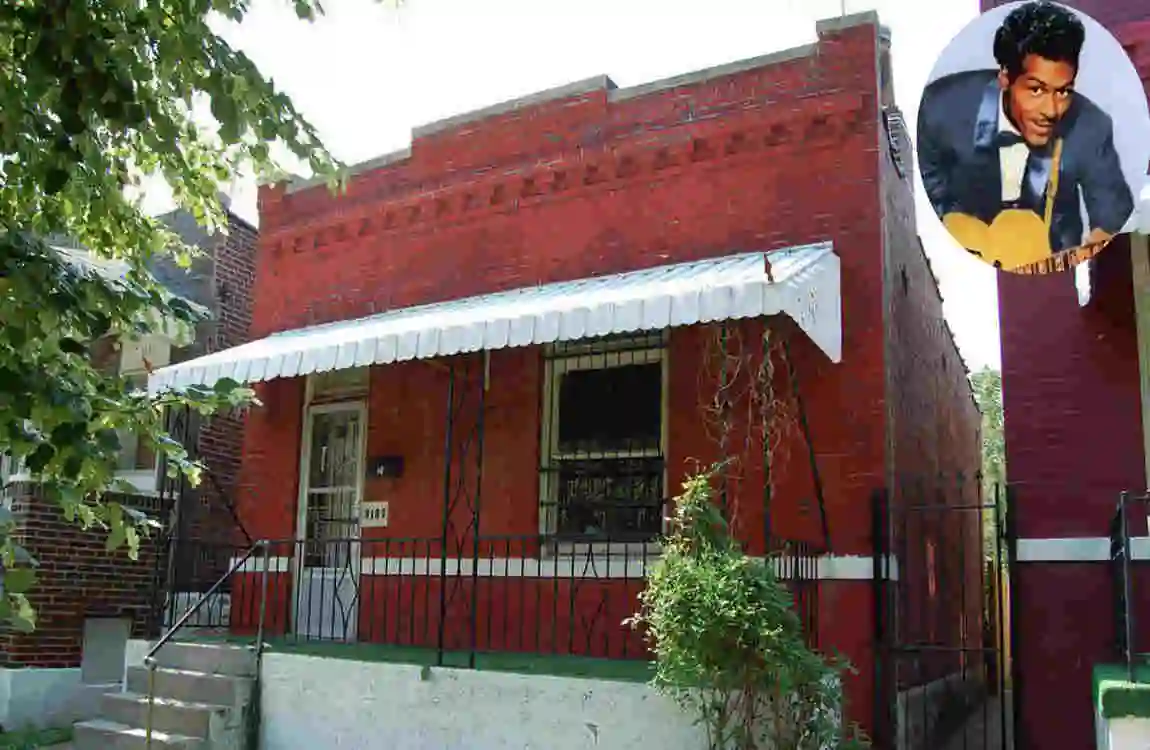
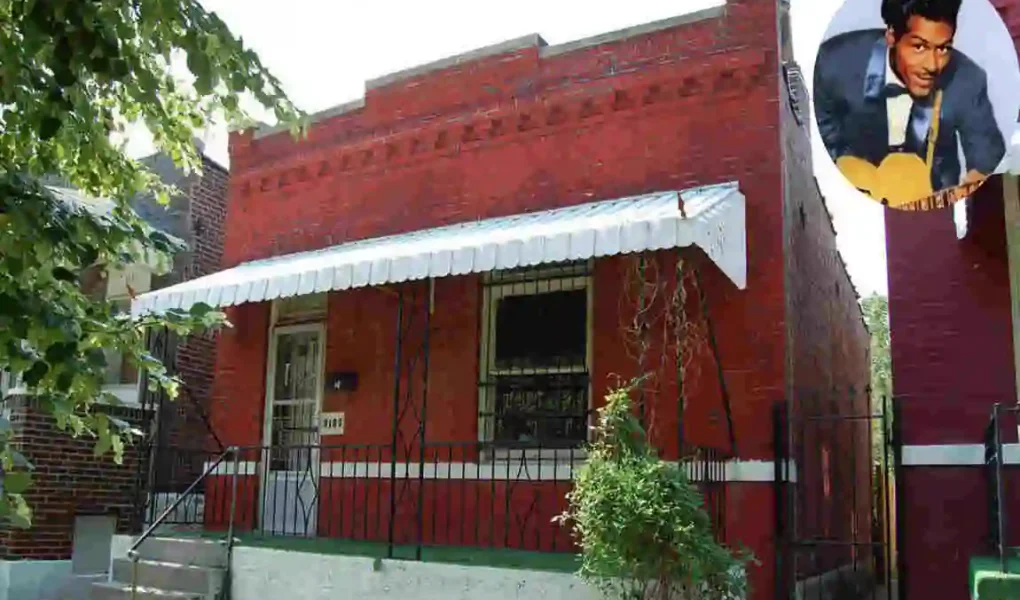
When you finally stand in front of the Chuck Berry house, you might actually be surprised by how normal it looks. It is not a sprawling mansion, nor does it look like the flashy home of a global superstar. Instead, it is a beautifully modest, two-story brick building.
The home perfectly preserves the classic 1940s architectural style common in St. Louis. It features solid red bricks, neat, symmetrical windows, and a welcoming front porch. St. Louis is famous for its high-quality brickwork, and this sturdy little house is a prime example.
It is incredibly powerful to stand on the sidewalk and look up at those windows. This is the very porch where a young Chuck might have sat on warm summer evenings, watching the neighborhood go by while strumming his first chords. The simple, everyday look of the Chuck Berry house exterior is a great reminder that extraordinary genius can come from the most ordinary-looking places. You do not need a castle to change the world; you need a spark of inspiration.
Inside the Chuck Berry House: A Room-by-Room Tour
Now, let’s use our imaginations to step through the front door. We are going to take a virtual walk inside the Chuck Berry house and explore the rooms where some of the greatest riffs in history were born. Imagine the smell of home-cooked meals, the sound of siblings laughing, and the faint, tinny sound of a guitar being tuned in the background.
The Living Room: Where Family Gatherings Turned into Jam Sessions
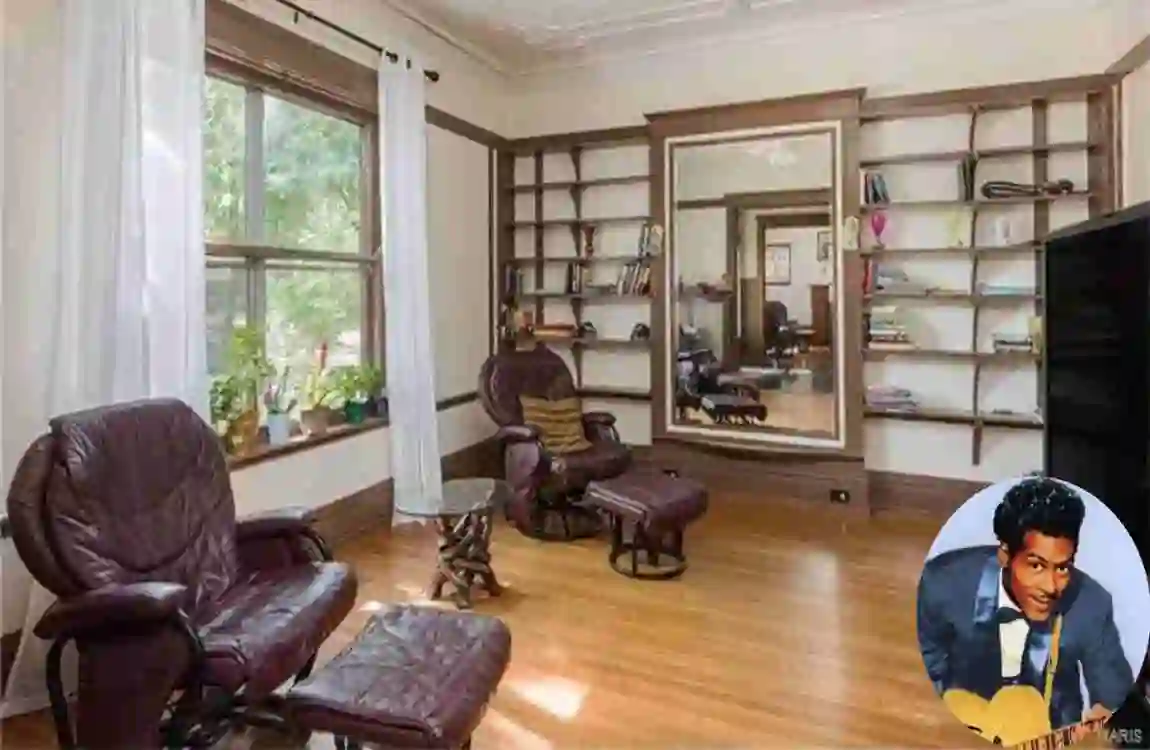
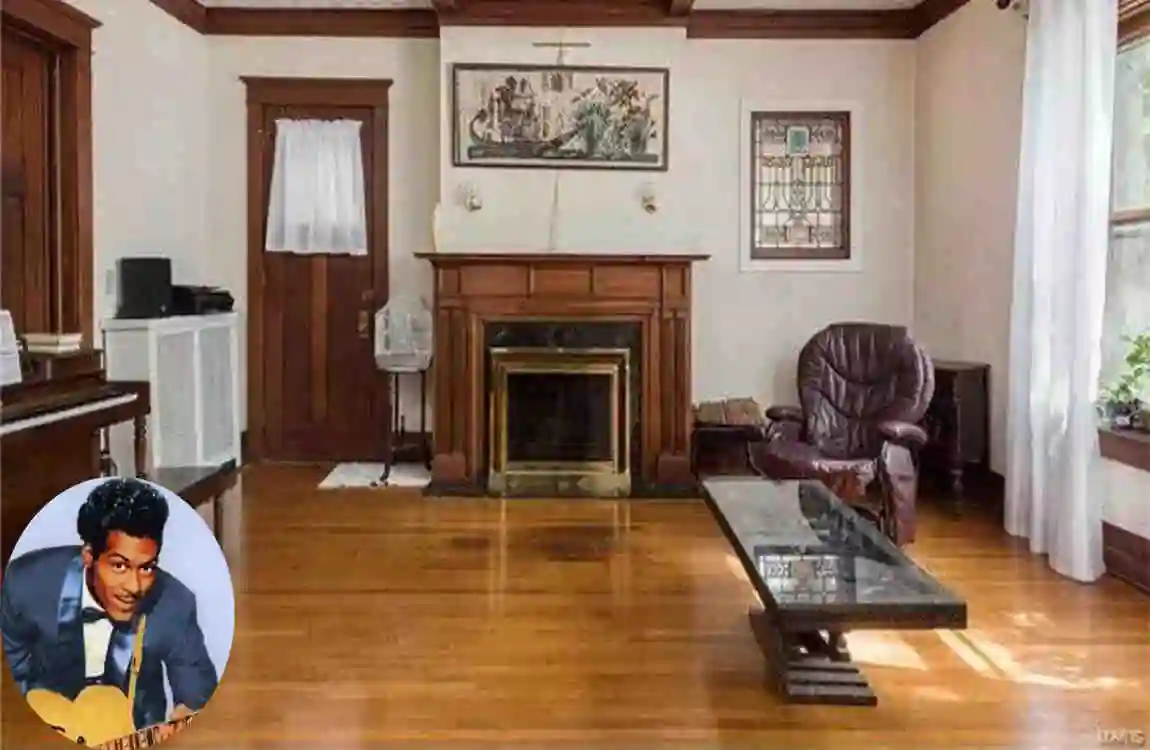
In the 1930s and 40s, the living room was the absolute center of family life. There were no smartphones, no endless television channels, and no internet. Entertainment was something you created yourself. In the Berry household, the living room was a place of music and joy.
Chuck’s mother, Martha, would often play the piano right here in this room. The family would gather around, singing gospel hymns and popular songs of the day. For a young Chuck Berry, this was his very first stage. This room taught him about harmony, about performing for a crowd (even if that crowd was just his brothers and sisters), and about the sheer joy that music could bring to a room full of people.
When you picture the living room of the Chuck Berry house, think of it as the ultimate training ground. It was here that he learned how to catch an audience’s attention and hold it—a skill that would later make him one of the most mesmerizing live performers in the world.
The Bedroom: The Secret Laboratory for Guitar Riffs
If the living room was the stage, the bedroom was the secret laboratory. Every teenager needs a space of their own, a quiet place to retreat from the world and figure out who they are. For Chuck, his bedroom was where he truly bonded with his instrument.
Imagine the scene: it is late at night in St. Louis. The summer air is thick and warm, floating through an open window. The rest of the house is sleeping, but Chuck is wide awake, sitting on the edge of his bed with a guitar in his hands. He is quietly picking at the strings, trying to figure out how to make his guitar sound like the horn section in a jazz band, or the piano in a boogie-woogie tune.
This bedroom is where the magic happened. It is where he practiced relentlessly, building up the calluses on his fingers. It is where he wrote down his clever, poetic lyrics in notebooks. The stories of hidden jams in this room are legendary. This is the exact spot where raw talent met hard work.
The Kitchen and Backyard: Everyday Life Fueling Creativity
We cannot ignore the kitchen and the backyard. In a bustling household, the kitchen is the engine room. It is full of its own rhythms: the clattering of pots and pans, the chopping of vegetables, the rhythmic bubbling of a stew on the stove. Chuck Berry was known for his sharp, observant lyrics that perfectly captured everyday American life. Where better to observe the rhythm of life than in the family kitchen?
Just outside the back door was the yard. In a tight-knit community like The Ville, backyards were social spaces. Neighbors would lean over fences to chat, kids would play games, and occasionally, informal neighborhood gatherings would take place. Chuck likely took his guitar outside on nice days, treating his neighbors to impromptu jam sessions and testing out his new sounds on a friendly local crowd.
The Basement and Attic: The Raw Improv Spaces
Finally, we have the rougher spaces of the house: the basement and the attic. These spaces are often unfinished, a little dusty, and tucked away from the main flow of the house. For a young musician wanting to make some serious noise, these areas are perfect.
The basement, with its concrete walls, would have provided an incredible, natural echo. When Chuck started experimenting with early amplifiers to make his guitar louder, the basement would have been the best place to turn up the volume without getting into too much trouble. These hidden, slightly gritty spaces in the Chuck Berry house are directly linked to his early songwriting and his rough, energetic, rock ‘n’ roll attitude.
The Chuck Berry House Rooms at a Glance
To make it easy to remember how each room shaped his legacy, here is a quick breakdown of the house’s layout and its historical impact:
Room in the HouseKey Historical MomentModern Visitor Appeal
The Living Room Family sing-alongs and piano lessons with his mother. The perfect rock pilgrimage photo op representing family roots.
The Bedroom Late-night practicing, the exact spot where famous guitar riffs were conceptualized—a space to imagine the quiet dedication behind the global superstar.
The Kitchen , observing the daily rhythms of life that inspired his storytelling lyrics. A reminder of the humble, everyday beginnings of a musical genius.
The Basement/Attic Loud, rebellious practice sessions and early amplifier experiments. The gritty, raw origin point of the rebellious rock ‘n’ roll spirit.
Musical Milestones Born in the Chuck Berry House
Now that we have explored the rooms, let’s talk about the actual music that was born inside these walls. The Chuck Berry house is not just an old building; it is an incubator for some of the most important musical milestones of the 20th century.
The Early Echoes of Proto-Maybellene
Before he released his first massive smash hit, “Maybellene,” in 1955, Chuck Berry had to invent the sound. He did not just walk into a recording studio one day and magically know what to play. The upbeat, driving tempo, the clever wordplay, and the distinctive guitar solos were all workshopped right here in this house.
He blended the storytelling of country music (often called “hillbilly music” back then) with the deep, emotional groove of rhythm and blues. This was highly unusual at the time. Music was very segregated; there were “Black stations” and “White stations.” Chuck Berry’s genius was realizing that a great beat and a great story appeal to absolutely everyone. The blueprints for this world-changing crossover sound were drawn up in his St. Louis bedroom.
Crafting the Iconic Duck Walk and Showmanship
Chuck Berry is almost as famous for his stage presence as he is for his guitar playing. If you have ever seen a video of him performing, you have seen the famous “duck walk.” He would crouch down low, keeping his back straight, and hop across the stage on one leg while playing a blazing guitar solo. It was wild, energetic, and completely captivating.
Where do you think he practiced that? You guessed it. The foundations of his showmanship were built in his childhood home. Whether he was entertaining his siblings in the living room or goofing off in the backyard, Chuck learned early on that music is a visual art as well as an Audio one. He knew he had to put on a show. The tight spaces of the Chuck Berry house forced him to be creative with his movements, eventually leading to his signature stage antics.
Late-Night Practices and Neighbor Anecdotes
History is kept alive by the stories people tell. Over the years, historians and journalists have spoken to people who lived in The Ville during Chuck’s younger years. Many older neighbors recalled hearing a teenage Chuck Berry practicing late into the night.
They remembered the repetitive sounds of a young man trying to master a specific chord progression, playing the same notes over and over again until they were absolutely perfect. While it might have been slightly annoying for a neighbor trying to sleep in 1943, those late-night practice sessions are now recognized as the birth cries of rock ‘n’ roll. These local anecdotes prove that the Chuck Berry childhood house was a place of relentless hard work and dedication.
Preservation Efforts and Visiting the Chuck Berry House Today
Reading about the history is wonderful, but you might be asking yourself: “Can I actually go and see the Chuck Berry house today?” The answer is yes, but it comes with an interesting modern story of preservation and community effort.
The Struggle and Triumph of Historic Preservation
Keeping an old house standing is not easy, especially in a changing urban landscape. Over the decades, the house passed through private ownership. For a time, as The Ville faced economic hardships and population changes, the house fell into disrepair. It was a heartbreaking thought for music fans: the birthplace of rock ‘n’ roll was in danger of simply crumbling away.
However, the city of St. Louis and passionate music historians knew they could not let that happen. The house was officially listed on the National Register of Historic Places, providing it with a layer of protection. In recent years, there have been massive efforts by local historical societies and community groups to restore the Chuck Berry house to its former glory. The goal is to make sure it looks exactly as it did when young Chuck lived there, preserving it for future generations to admire.
How to Experience the House Today
As of right now, the Chuck Berry house is generally not open for daily, walk-in public tours like a traditional museum. Because it sits in a residential neighborhood, visitors are asked to be incredibly respectful of the people who currently live on the street.
However, you can absolutely drive by, take photos from the sidewalk, and soak in the historical atmosphere. Occasionally, during special St. Louis music festivals or historical anniversary events, tours or other events are held at the property. Since Chuck Berry’s passing in 2017, his family has also been highly involved in keeping his legacy alive, occasionally organizing special commemorative events.
Making a Complete Rock ‘n’ Roll Trip
If you are planning to travel to St. Louis to see the house, you should make a whole trip out of it! Here is a list of other amazing things you can do in the city to complete your Chuck Berry experience:
- Visit the Missouri History Museum: They frequently feature exhibits on the local music scene and often have incredible artifacts related to Chuck Berry’s life and career.
- Walk the Delmar Loop: This vibrant entertainment district features the St. Louis Walk of Fame. You can find Chuck Berry’s brass star shining brightly on the sidewalk, and even visit a fantastic statue dedicated to him nearby.
- Explore Blueberry Hill: A famous restaurant and live music club on the Delmar Loop, where Chuck Berry famously played over 200 intimate concerts late into his career. It is packed wall-to-wall with rare rock memorabilia.
The Lasting Legacy of the Chuck Berry House in Rock History
As we near the end of our journey, it is vital to zoom out and look at the big picture. Why does one small brick house in Missouri matter so much to the whole world?
Inspiring the British Invasion and Beyond
The music that started in the Chuck Berry house crossed oceans. In the late 1950s and early 1960s, teenagers in England were obsessively listening to imported Chuck Berry records. Two of those teenagers were named John Lennon and Paul McCartney. Another two were named Mick Jagger and Keith Richards.
Both The Beatles and The Rolling Stones have openly and repeatedly stated that without Chuck Berry, their bands would not exist. They covered his songs, studied his guitar techniques, and tried to copy his confident vocal style. When you trace the musical family tree of almost any modern rock, pop, or hip-hop artist, the roots go straight back to St. Louis. The riffs composed in that small bedroom literally shaped the soundtrack of the 20th century.
A Symbol of Black Creativity and Triumph
Beyond just the music, the Chuck Berry house stands as a powerful cultural symbol. Chuck Berry grew up in a deeply segregated America. The odds were heavily stacked against a young Black man from the Midwest becoming a globally recognized superstar and a wealthy businessman.
Yet, using his incredible intellect, his storytelling abilities, and his unmatched musical talent, he broke down massive racial barriers. He played to integrated audiences, bringing Black and White teenagers together through the undeniable power of a good beat. The luxury house in The Ville represents the resilience, brilliance, and triumph of Black creativity in the face of incredible societal obstacles.
The Future of the Landmark
What does the future hold for the Chuck Berry house? Many advocates dream of turning it into a fully interactive, world-class museum, similar to the Motown Museum in Detroit. There are talks of incorporating Virtual Reality (VR) tours, where visitors could put on a headset and actually “see” Chuck practicing in his bedroom in 1945. Whether it becomes a UNESCO World Heritage site or remains a quiet, respected street corner, its legacy is absolutely permanently secured.
Frequently Asked Questions (FAQs)
How do I find the Chuck Berry house in St. Louis? Locating the house is quite simple with a GPS. You want to enter the address 2520 Goode Ave, St. Louis, MO (note that the street is sometimes recognized as Annie Malone Drive on newer maps). It is located in the historic Ville neighborhood, just a short 20-minute drive northwest of downtown St. Louis and the famous Gateway Arch.
Is the Chuck Berry house open to the public for daily tours? Currently, the house is not open for regular, walk-in daily tours. It is a preserved historical site situated in a quiet residential neighborhood. However, visitors are more than welcome to respectfully drive by, walk on the public sidewalk, and take photos of the beautiful historic exterior.
Are there plans to turn the house into a museum? Yes, there has been a lot of discussion and ongoing effort by local historical societies and music fans to potentially develop the property into a formal museum or an interactive educational center in the future. However, no official opening dates for a full-scale museum are currently set.
What specific rock legends were influenced by the music made in this home? The list is nearly endless! The sounds Chuck Berry crafted in his St. Louis home directly and heavily influenced iconic artists such as The Beatles, The Rolling Stones, Elvis Presley, Bruce Springsteen, and Jimi Hendrix. John Lennon famously once said, “If you tried to give rock and roll another name, you might call it ‘Chuck Berry’.”
Why is the Ville neighborhood important to Chuck Berry’s history? The Ville was a thriving, self-sufficient, and culturally rich Black middle-class neighborhood during an era of strict segregation. The area was bursting with incredible blues, jazz, and gospel music, providing a deeply inspiring environment that shaped young Chuck Berry’s musical ear and future career.
Can I see Chuck Berry’s guitar in St. Louis? While you cannot go inside the house to see his original instruments, you can visit other St. Louis attractions! The Missouri History Museum frequently displays his artifacts, and you can visit the Blueberry Hill restaurant on the Delmar Loop, which is packed with amazing Chuck Berry memorabilia and photographs from his many performances there.
Where Does Chuck Berry Currently Live?
Chuck Berry passed away on March 18, 2017, at age 90, so he does not currently live anywhere.
Chuck Berry House photo