
Putting up a garden sauna usually belongs to that kind of home improvement that significantly brings, and keeps a feeling of satisfaction but only when the foundation of the whole process gets handled right before anything is built. Most of the time, the homeowners who get disappointed with their installation are the ones who simply decided too fast: “I want one” to “let’s order it, ” without dedicating enough time to the in-between practical decisions.
The good thing is that none of the factors are really difficult. They just have to be carefully considered in the right sequence, and with a little planning ahead, most of the usual mistakes can be completely avoided.
Planning Permission: What the Rules Actually Say
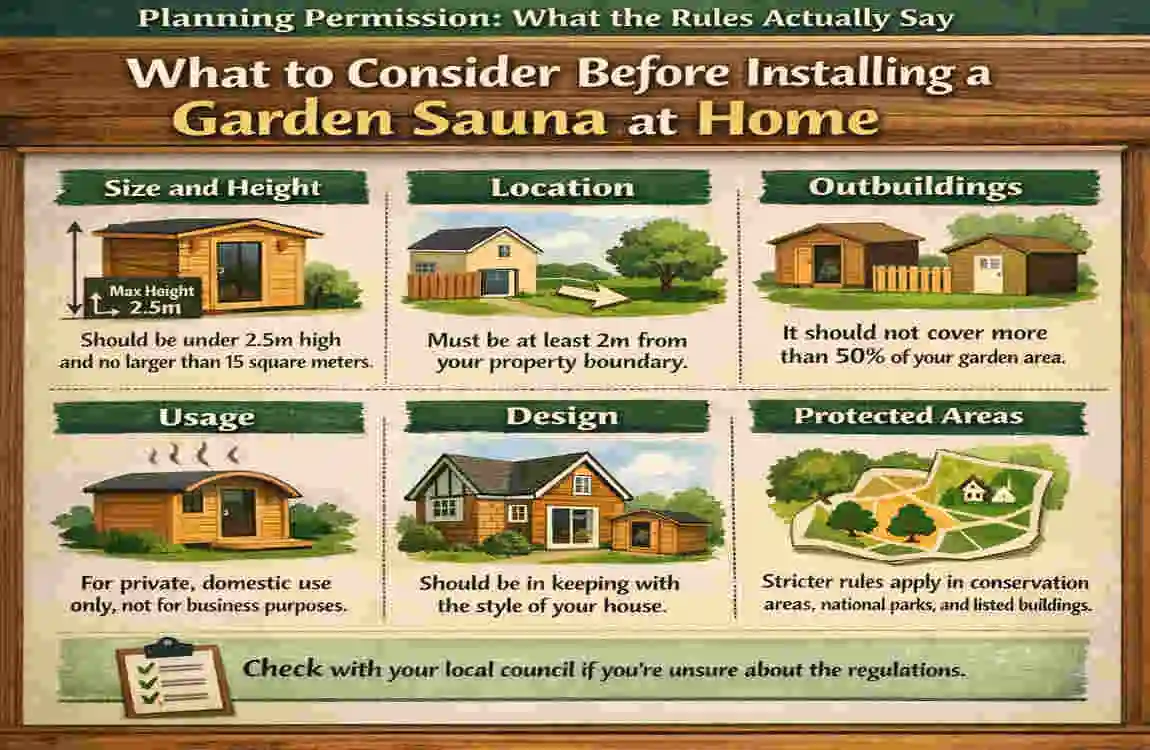
The very first thing most people are concerned about is whether or not they require planning permission, and to be truthful, the answer is: probably not, but still, you have to verify your particular case instead of just assuming. In England, garden saunas are generally covered by permitted development rights if they meet a series of conditions that must be the case for the structure to be intended for use ancillary to the home, it cannot be taller than four metres for a dual-pitched roof or three metres for any other type of roof, and the total outbuildings on the plot should not cover more than 50% of the land surrounding the original house.
On some occasions, these permitted development rights do not apply or are more limited. For instance, if your house is located in a conservation area, a national park, or an Area of Outstanding Natural Beauty, different regulations will apply and most probably you will have to submit a formal application before you carry out the construction. Listed buildings are totally different and any external changes or additions will require listed building consent. The planning systems of Scotland and Wales are separate from each other and they differ from England’s in many significant ways.
Choosing the Right Location in Your Garden
Location is probably the single most critical factor that indirectly affects your sauna use since it determines how often you will use it. So, the choice of location deserves your full attention. Your first spontaneous reaction would probably be just to put the sauna where there is some free space. But, free space and ideal space don’t always match. Where the garden permits, south or west-facing positions are better.
This preference is not because the sauna itself needs sunlight. In fact, the sauna does not need the sun at all. The main reason is that the outdoor experience you get around the sauna is greatly enhanced by the sunlight. It’s a completely different feeling to come out of a hot sauna and into warm afternoon light rather than to a cold, even gloomy north-facing corner. Cooling down is an integral part of sauna experience and the surroundings where you cool down play a part in it.
The Base, Electrics, and Infrastructure

In fact, the sauna itself is just one aspect of the overall installation. Supporting infrastructure such as the base on which the sauna sits, the electric power supply to it, and the drainage around it are the things that deserve proper attention and are usually where people tend to cut corners when the budget gets tight. First of all, a stable and level base is an absolute must.
Many a time, timber cabins that stand on uneven or inadequately prepared ground end up moving as the ground beneath them changes with the seasons. Such moving leads to the opening of joints, the sticking of doors, and the slow loss of structural strength. A concrete slab, correctly installed timber bearers on compacted hardcore, or a decked platform built to the right specification will all serve well – the main thing is that it should be done correctly from the very beginning and not be a makeshift.
Timber Quality and Supplier Decisions
The timber a sauna is constructed from nearly decides the entire situation of its performance over time and how it looks after 5 or 10 years of installation. That is one thing where cheap leads to regrets quite quickly. Cheap timber, not properly kiln-dried, will warp, crack, and discolour much faster than quality Nordic spruce, thermo-treated wood, or cedar.
Thermo-treated timber is a type of wood that you should definitely know about. The thermally modified process makes wood highly resistant to moisture, insect attack, and decay, which is great for durability. Besides, it makes the cabin indoor air quality better. Another thing it does is that it colours the wood in a deeper, more elegant shade that many people like. Besides, it is a very weather-resistant shade, so it doesn’t need much maintenance.
Choosing a supplier with a clear track record of quality and after-sales support is as important as the specification of the product itself. Edenhut is a good example of a supplier that combines quality timber construction with genuine expertise in outdoor sauna installations suited to UK conditions the kind of company where you can get real answers to practical questions before you commit, rather than discovering issues after delivery.
Ongoing Maintenance and Running Costs
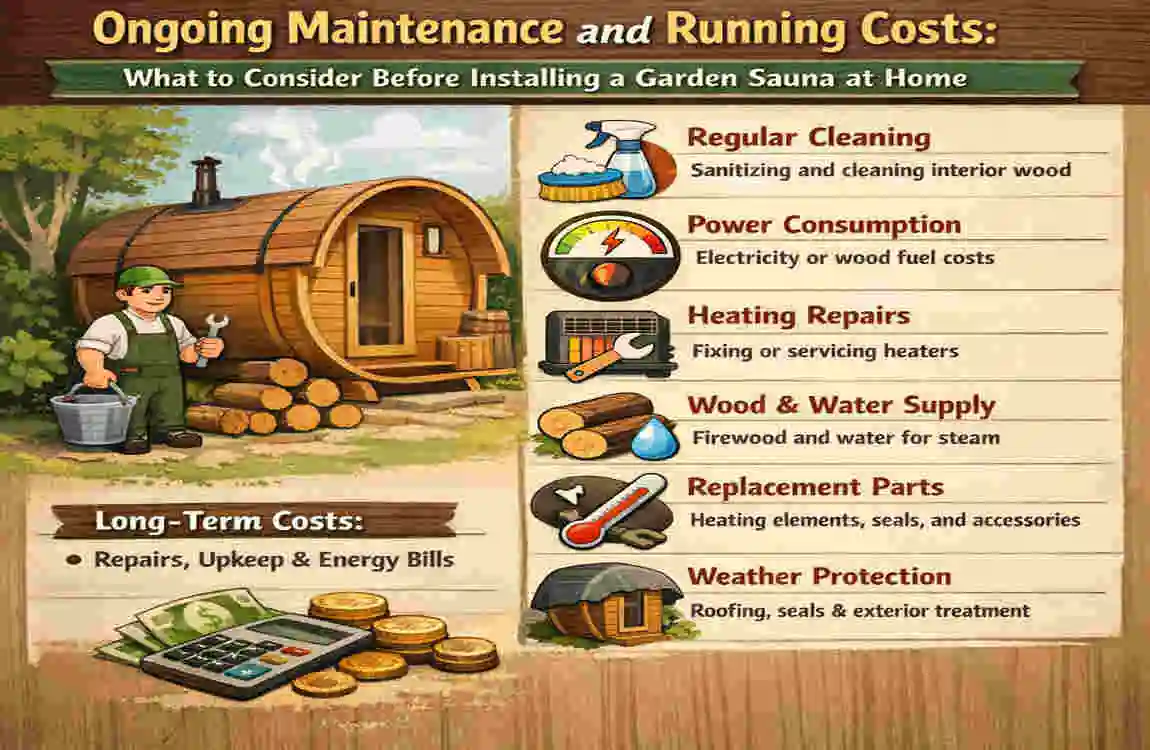
A garden sauna is definitely not a “set and forget” installation, and being honest about the maintenance required is an important part of making the right decision. However, the upkeep of a good quality wooden sauna is in fact quite low if you know what it entails and keep up with it. You will have to treat the outside wood from time to time, usually by applying a suitable oil or outdoor wood treatment once a year.
This treatment protects the wood from UV rays and moisture. How often you need to do this will depend on the particular wood, the finish put on at the factory and how much the cabin is exposed to the weather. The dealer should provide you with complete instructions on this during the handover.
What to Consider Before Installing a Garden Sauna at Home – FAQ
Q: Do I have enough space for a garden sauna?
You need a level outdoor area with enough clearance for the sauna structure plus ventilation space. It’s also important to consider access paths for installation and maintenance.
Q: What type of sauna should I choose?
Common options include wood-burning, electric, and infrared saunas. Your choice depends on energy availability, maintenance preference, heating speed, and overall experience you want.
Q: Do I need planning permission?
In many cases, small garden saunas may fall under permitted development, but rules vary depending on location, size, and placement. It’s always best to check local building regulations before installation.
Q: How much will installation and running costs be?
Costs vary based on size, materials, and heating system. Electric saunas have ongoing energy costs, while wood-burning options require fuel and more maintenance.
Q: What maintenance does a garden sauna require?
Regular cleaning, checking ventilation, inspecting heating systems, and protecting the exterior from weather damage are essential to keep the sauna safe and long-lasting.
Q: Is a garden sauna safe for family use?
Yes, when properly installed and maintained. Safety features like temperature controls, ventilation, and proper insulation are important, especially if children or elderly users will use it.