Building a new home is exciting. You get to choose the layout, the finishes, and all the details that make it feel like yours. But there is one part many homeowners overlook at first: electrical wiring.
It is easy to focus on flooring, paint, cabinets, and furniture. Yet the wiring behind the walls is what powers your lights, outlets, appliances, and smart home features. If you do not plan for it early, the cost of electrical wiring in a new house can quickly catch you by surprise.
Understanding Electrical Wiring Costs
Why Electrical Wiring Is Crucial in New Homes
Electrical wiring is not just about turning on lights. It is the system that keeps your home running safely and smoothly.
A good wiring setup supports:
- Lighting
- Kitchen appliances
- Heating and cooling systems
- Outlets for daily use
- Smart home devices
- Security systems
- Home office equipment
If the wiring is done poorly, you may face power issues, safety risks, or expensive repairs later. That is why it makes sense to understand the cost of wiring a new house before construction begins.
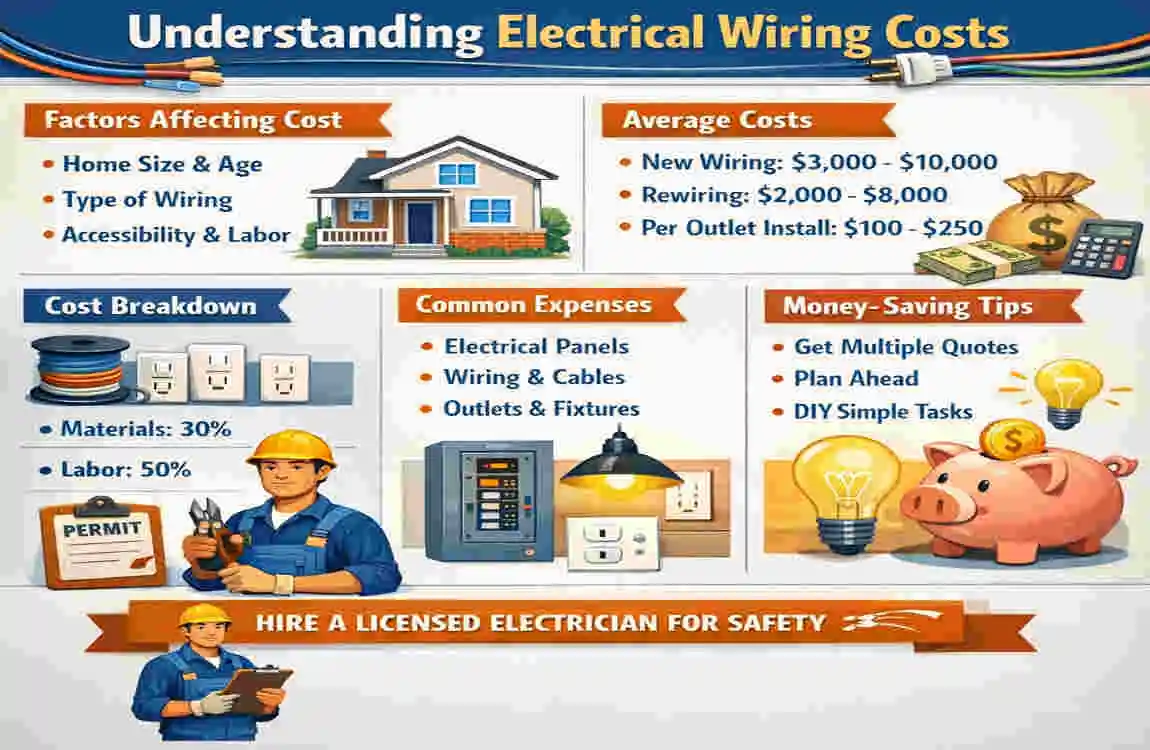
Factors That Influence Electrical Wiring Costs
Several things affect the final price.
Home size and layout
A larger house usually needs more wire, more outlets, and more labor. A simple layout costs less than a home with multiple floors, many rooms, or a complex design.
Wiring materials
Copper wiring is common because it is reliable and long-lasting. Aluminum may cost less, but it is not always the best choice for every part of the system.
Labor rates
Electricians charge different rates depending on location, experience, and demand. In some areas, labor accounts for a large share of total costs.
Design complexity
If you want extra lighting, built-in speakers, home automation, or special appliance circuits, the price goes up.
Local codes and permits
Your area may require permits, inspections, or specific wiring standards. These rules protect you, but they also add to the budget.
Average Electrical Wiring Cost for a New House
Here are rough estimates to help you start planning:
Home Size Estimated Wiring Cost
1,000–1,500 sq ft $3,500–$8,000
1,500–2,500 sq ft $8,000–$15,000
2,500+ sq ft $15,000–$30,000+
These are only averages. The actual electrical wiring cost for a new house depends on your plans, local prices, and the features you want.
Breaking Down the Costs
Cost of Materials
The cost of materials plays a significant role in determining the overall electrical wiring cost for a new house.
Common materials include:
- Electrical wire
- Outlets
- Switches
- Breaker panel
- Circuit breakers
- Junction boxes
- Conduit
- Light fixture boxes
Basic materials may seem affordable at first, but the total cost rises as the number of rooms and circuits increases. Better-quality materials usually last longer and perform more reliably. That can save money over time.
A simple rule: do not buy the cheapest parts to save a little now. In many cases, quality materials are worth it.
Labor Costs
Labor is often the largest part of the bill.
Electricians may charge:
- Hourly rates
- Per-project flat rates
- Per-square-foot pricing
The price depends on the electrician’s experience and the complexity of the job. A highly skilled electrician may charge more, but that can also mean better work and fewer problems later.
To avoid overspending, ask for clear estimates. Make sure the electrician explains what is included. Some quotes cover labor only, while others include materials, permits, and inspections.
Additional Costs to Consider
Many homeowners forget the smaller costs. These can still affect the final number.
Permit and inspection fees
Most new homes need permits before electrical work begins. Inspections may also be required after the work is done.
Specialized installations
If you want an EV charging station, solar panel connection, or advanced smart home system, expect extra costs.
Unexpected expenses
Sometimes crews find issues during construction. They may need to adjust the plan, replace damaged materials, or redo part of the work. This is why a contingency fund matters.
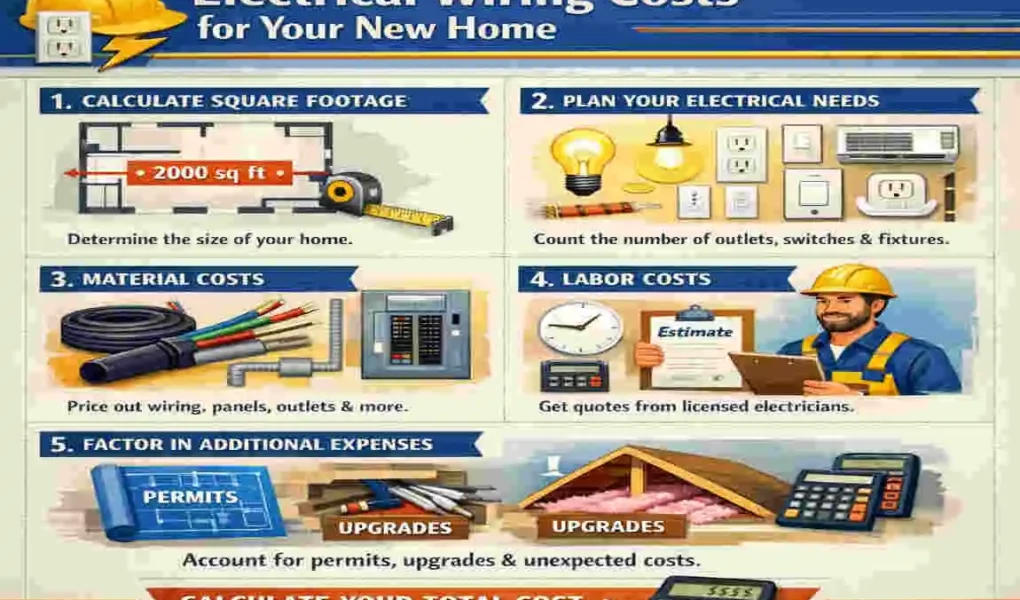
Step-by-Step Guide to Estimating Electrical Wiring Costs
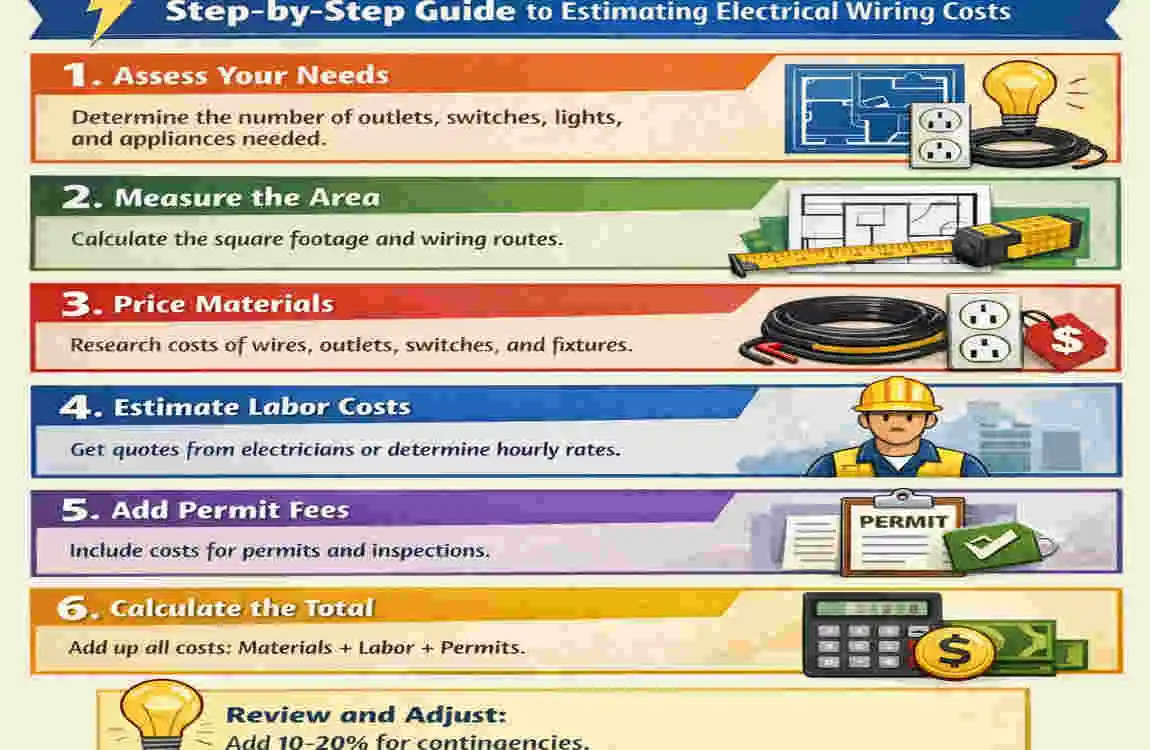
Assess Your Home’s Requirements
Start with your home plan.
Ask yourself:
- How many outlets do I need?
- How many switches will each room require?
- How many lights do I want?
- Do I need special wiring for appliances?
- Will I use a home office, media room, or workshop?
The more detailed your plan, the more accurate your estimate will be. A home with a large kitchen and several work areas will likely cost more than a simpler layout.
Research Local Costs
Next, look at local pricing.
Check:
- Electrician labor rates in your area
- Material prices from local suppliers
- Permit fees from your city or county
Prices can vary a lot from one place to another. What costs $8,000 in one region may cost far more in another.
Create a Budget
Once you have basic numbers, build a realistic budget.
A simple budget can include:
- Materials
- Labor
- Permits
- Inspections
- Contingency fund
A good contingency fund is usually 10% to 15% of the total estimate. This gives you a cushion for surprises.
Get Multiple Quotes
Do not settle for the first estimate.
Ask at least three electricians for quotes. Then compare them carefully.
Look at:
- Total price
- What is included
- Estimated timeline
- Experience and credentials
- Warranty or service terms
Ask direct questions. For example:
- Is this quote for labor only or labor and materials?
- Are permits included?
- What changes could increase the price?
- How do you handle unexpected issues?
This helps you avoid hidden costs later.
Review and Adjust
After gathering estimates, compare them with your budget.
If the numbers are too high, look for areas to adjust:
- Reduce extra outlets in low-use areas
- Simplify lighting plans
- Postpone nonessential upgrades
- Choose standard materials instead of Premium options
The goal is to balance cost, safety, and long-term use.
Tips to Save Money on Electrical Wiring Costs
Plan Ahead
Planning is the easiest way to save money.
When you know exactly where outlets, switches, and fixtures will go, the electrician can work more efficiently. That reduces mistakes and last-minute changes.
Changing the design during construction can get expensive fast. Try to make decisions early.
Choose Affordable Yet Quality Materials
You do not need the most expensive materials, but you should avoid poor-quality parts.
Look for products that are:
- Safe
- Durable
- Code compliant
- Fairly priced
Buying standard items in advance can also help you stay within budget.
DIY vs. Professional Help
Some small tasks may be fine for homeowners, such as:
- Installing outlet covers
- Helping with simple prep work
- Running low-risk conduit in approved situations
But complex electrical work should be left to licensed professionals. Wiring mistakes can create fire hazards, lead to code violations, and result in expensive repairs. When in doubt, hire an expert.
Timing Matters
If possible, schedule your electrical work when contractors are less busy. During peak construction seasons, rates may be higher and schedules tighter.
Booking early can help you avoid rush fees and delays.
Common Mistakes to Avoid When Estimating Wiring Costs
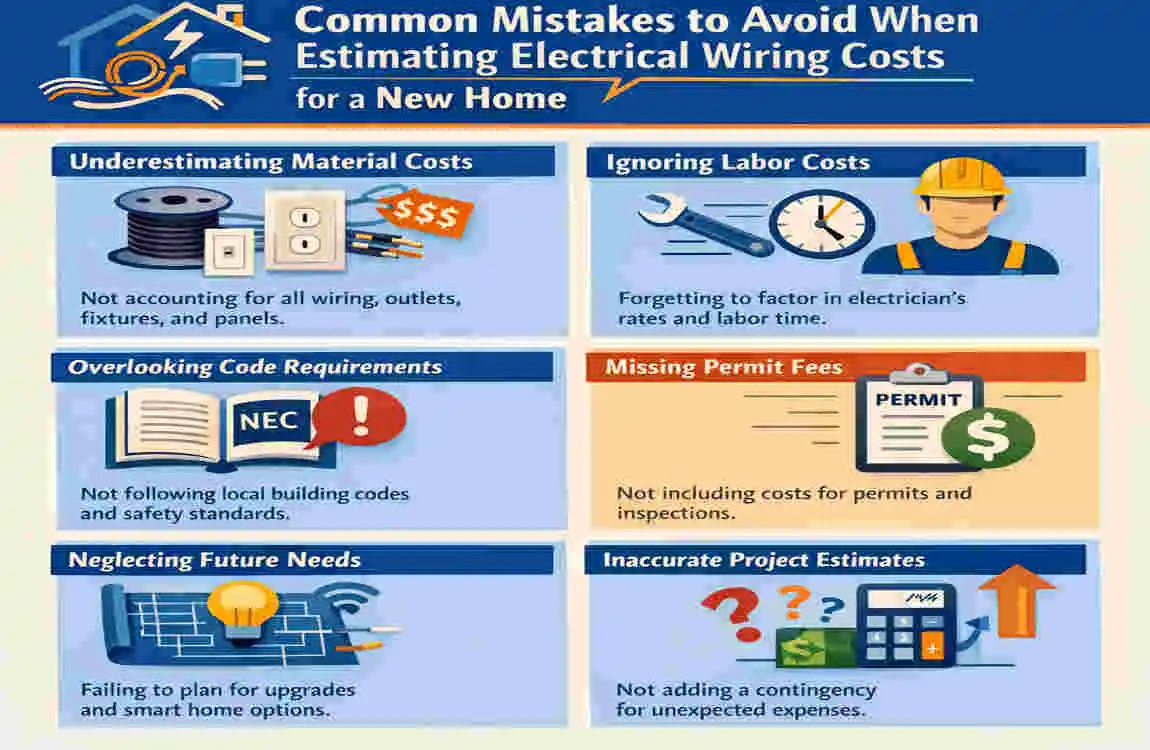
Underestimating Outlets and Switches
Many homeowners plan for too few outlets. Later, they realize they need more for lamps, chargers, appliances, and devices.
It is usually better to plan for a little extra.
Ignoring Permit and Inspection Fees
These costs may seem small, but they can still affect your total budget. Always include them from the start.
Choosing the Cheapest Contractor
A low price may look attractive, but it can come at the cost of poor artistry or missing details. Always check credentials, reviews, and references.
Forgetting Future Upgrades
Think ahead. You may want smart home features, a home office, or EV charging later. Planning for those now is often cheaper than adding them later.
Overlooking Hidden Costs
Some projects need demolition, repairs, or rewiring. These extra charges can appear quickly if the original plan changes.
FAQs About Electrical Wiring Costs for New Homes
How much does it cost to wire a new house per square foot?
A rough range is $3 to $7 per square foot, but this depends on your location, home design, and material choices. Homes with more complex electrical needs may cost more.
What factors influence the cost of electrical wiring?
The biggest factors are:
- Home size
- Number of outlets and fixtures
- Labor rates
- Material quality
- Permit fees
- Special features like smart systems or EV chargers
Can I reduce costs by doing some wiring work myself?
You may be able to handle very simple tasks. Still, a licensed electrician should do most wiring work, and code compliance matters too much to take risks.
How long does the wiring process typically take?
For a new home, wiring can take several days to a few weeks, depending on the size of the house and the complexity of the plan. Bigger homes or custom features usually take longer.
Do I need permits for electrical wiring in a new house?
In most cases, yes. New electrical work usually requires permits and inspections to meet local building codes. Your contractor should help with this process.
| Step | Description | Key Considerations |
|---|---|---|
| Assess Home Needs | Calculate number of outlets, switches, lighting fixtures | Home size, rooms, special electrical needs |
| Research Local Pricing | Check material and electrician labor costs in your area | Local rates, quality of materials |
| Budget Allocation | Allocate funds for materials, labor, permits, contingencies | Set realistic budget and contingency fund |
| Obtain Multiple Quotes | Get estimates from several licensed electricians | Compare prices, verify credentials |
| Review and Adjust | Cross-check estimates with budget and adjust as needed | Prioritize essential wiring, plan for upgrades |