Here is the honest answer right away: No, a single house fly usually will not kill you overnight. House flies do not bite like mosquitoes, and they do not inject venom. But they can carry dangerous bacteria, which can contaminate food, surfaces, wounds, and even your eyes. In rare situations, especially for infants, older adults, or people with weak immune systems, a serious infection can become life-threatening very fast.
That is what makes house flies more than just a household nuisance. They are often called mechanical disease carriers, which is a simple way of saying they pick up germs in dirty places and move them to cleaner places, like your kitchen counter, your fruit bowl, your baby’s bottle, or your dinner plate.
The Biology of House Flies: Why They’re Germ Carriers

House flies may look simple, but they are built in a way that makes them excellent germ spreaders. Once you understand how they live, feed, and move, it becomes much easier to see why they are linked to contaminated food and human illness.
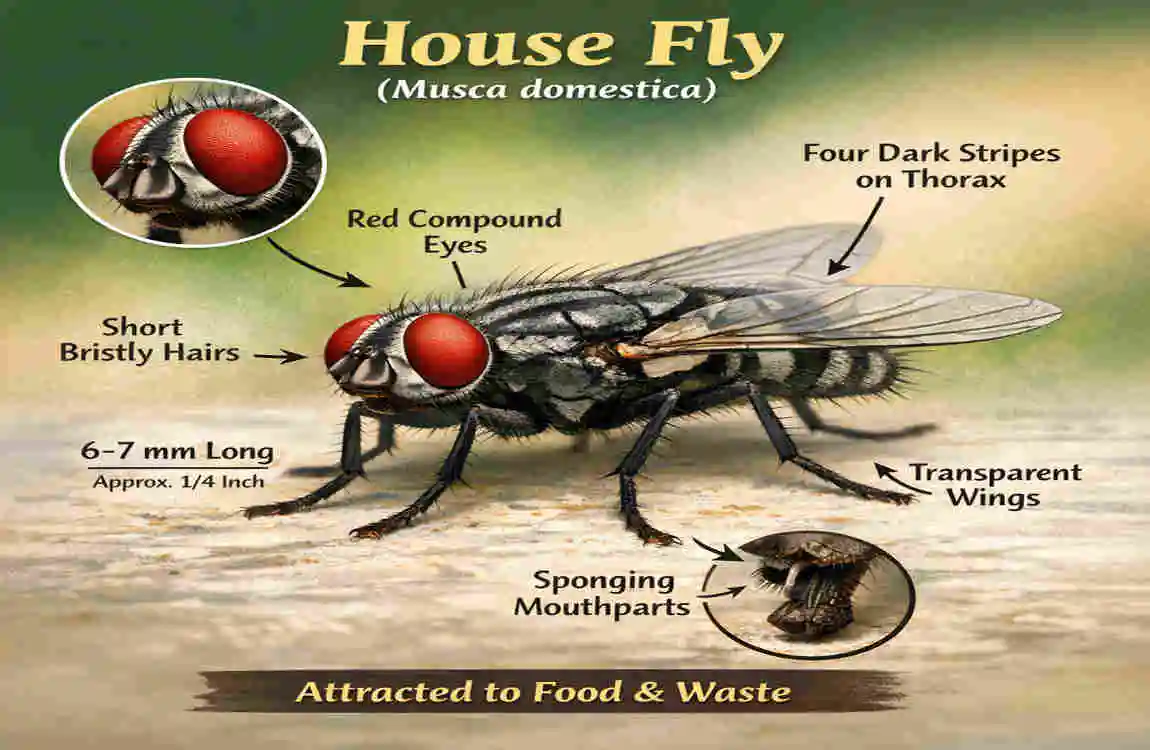
House Fly Anatomy: Built for Bacterial Chaos
A house fly goes through a fast life cycle. It begins as an egg, becomes a larva, then a pupa, and finally an adult. In warm conditions, this process can happen in about 7 to 10 days. That means fly populations can grow quickly, especially in places with exposed garbage, food scraps, or animal waste.
Now think about where house flies spend their time.
They are attracted to rotting food, trash bins, feces, drains, dead animals, and decaying organic matter. These places are full of bacteria. When flies land there, their bodies pick up germs almost like tiny moving brushes.
Their legs and feet are a big part of the problem. House flies have sticky pads and fine hairs that help them cling to surfaces. Those same body parts also help them collect and transfer dirt, bacteria, and other microorganisms. Some studies have found that a single fly can carry millions of bacteria on its body and in its gut.
Their mouth is another problem.
House flies do not chew food the way humans do. They feed on liquids. When they land on solid food, they often release digestive fluids to help dissolve it before sucking it up. That means they may regurgitate on your food before eating. And yes, that is as disgusting as it sounds.
They also defecate often. So when a fly lands on your food, it may not just be walking around on it. It may also leave behind vomit, feces, and bacteria.
This is one reason why the question can house flies kill you is not as silly as it sounds. The fly may be tiny, but its behavior creates a perfect system for spreading germs.
How House Flies Pick Up Deadly Bacteria
House flies do not need a lab to collect harmful microbes. Nature gives them one.
They breed and feed in some of the dirtiest environments around. Garbage piles, manure, open dumpsters, animal pens, dirty drains, sewage areas, and rotting leftovers all act like bacterial hotspots. A fly can land in one of these places, pick up contamination on its body, and then fly into a kitchen or dining area just moments later.
That speed matters.
A house fly can move from filth to food in seconds. It does not “clean itself” in any meaningful way before landing on your sandwich, salad, baby food, or uncovered leftovers. So when you see a fly in the house, you are not just seeing an insect. You may be seeing a germ taxi.
Common bacteria associated with house flies include:
- E. coli – can cause severe stomach illness and, in some cases, kidney damage
- Salmonella – linked to food poisoning, fever, diarrhea, and dangerous dehydration
- Shigella – causes dysentery, which can lead to bloody diarrhea and serious complications
- Campylobacter – a common cause of bacterial diarrhea
- Staphylococcus aureus – can cause skin infections and, in some cases, severe systemic illness
- Vibrio cholerae – the bacterium behind cholera
- Enterococcus and other antibiotic-resistant bacteria – especially concerning in healthcare and waste-heavy environments
House flies may also carry viruses, parasites, and fungal organisms. However, bacteria are often the main concern in everyday household settings.
So, when people ask can a house fly kill you overnight, the answer remains usually no. But if that fly carries dangerous bacteria and contaminates food later eaten, the resulting infection can be serious, especially if the person is already medically fragile.
That is how a common pest becomes a real health issue.
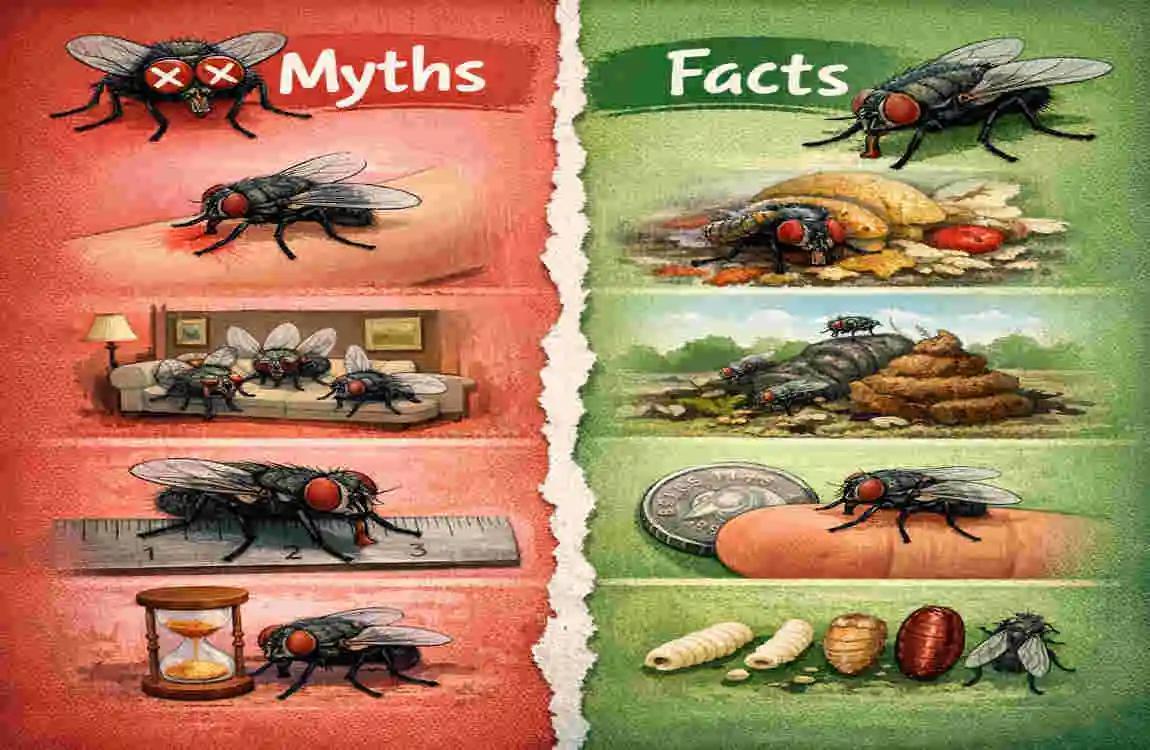
Can House Flies Kill You? Debunking the Overnight Myth
This is the heart of the question, so let’s deal with it directly and clearly.
The Truth: No Instant Death, But Real Risks Build Fast
If you want the short version, here it is: house flies do not kill people the way venomous animals do. They do not sting you with poison. They do not attack you in your sleep. They do not inject a deadly chemical that causes sudden death overnight.
So, if you are asking, “Can house flies kill you overnight?” the answer for most healthy adults is no.
But that does not mean the risk is fake.
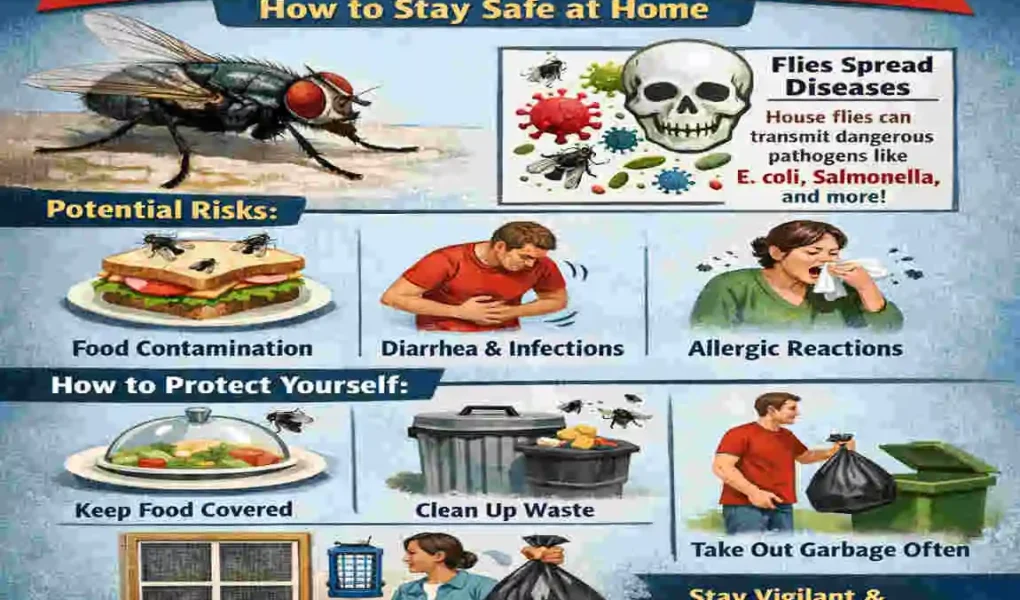
The real problem is infection. If a fly transfers harmful bacteria to food, drink, a wound, or a sensitive surface, such as the eye, the germs may multiply inside the body. In some people, that can lead to severe illness within hours or days.
That risk becomes much more serious for:
- Infants and small children
- Older adults
- Pregnant women
- People with weakened immune systems
- People already sick or recovering from surgery
- Those with poor access to clean water or medical care
Foodborne illness is already common. Public health estimates often say that 1 in 6 Americans gets sick from contaminated food each year. House flies are not responsible for all of those cases, of course, but they are one of the many ways germs can move from waste to food.
Shocking Case Studies: Flies Linked to Fatal Outbreaks
Throughout history, flies have been connected to disease outbreaks, especially in places with poor sanitation, crowded living conditions, and weak food safety controls. Long before modern refrigeration and sealed garbage containers, flies played a larger role in spreading illness because they moved freely between waste and human food supplies.
Even today, outbreaks linked to contaminated environments often involve flies in the chain of transmission.
For example, agricultural settings, food production sites, animal facilities, and open markets can all become places where fly populations explode. If sanitation slips, flies may help move bacteria across surfaces, feed areas, and products. In several public health investigations, fly control has been considered an important part of preventing outbreaks of Salmonella and other foodborne pathogens.
Historically, flies were also suspected contributors in the spread of cholera and typhoid fever, especially before modern hygiene systems became widespread. In environments where human waste, food storage, and water contamination overlap, flies can help carry bacteria from one place to another.
Imagine an older adult with a weak immune system or a person recovering from major surgery. If contaminated food or a fly-exposed wound introduces aggressive bacteria into the body, that person could develop rapid dehydration, bloodstream infection, or sepsis. In medical emergencies like those, a condition can worsen dramatically within a short time.
The fly is not acting alone. The bacteria are the real killers. But the fly may have been the one that delivered them.
Here are five of the most dangerous bacteria associated with flies:
- Salmonella – can cause severe food poisoning and dangerous dehydration
- Shigella – causes dysentery and can spread fast in poor hygiene conditions
- E. coli – some strains can lead to kidney failure, especially in children
- Vibrio cholerae – causes cholera, which can kill through rapid fluid loss
- Staphylococcus aureus – some strains can cause serious systemic infections
So, can house flies kill you? Not in the dramatic movie-scene way people imagine. But if flies contaminate food or vulnerable tissues with harmful bacteria, they can become part of a chain of events that leads to hospitalization or, in rare cases, death.
That is why the threat should not be mocked or ignored.
Top Deadly Diseases Transmitted by House Flies
House flies are not always the main source of these diseases, but they can help spread the bacteria that cause them. That makes them important in homes, restaurants, farms, hospitals, markets, and other places where food or waste is exposed.
Dysentery (Shigella)
Dysentery is a severe intestinal illness often caused by Shigella bacteria. It can lead to bloody diarrhea, stomach cramps, fever, nausea, and dehydration. In mild cases, people recover with rest and fluids. In severe cases, especially in children, it can become dangerous quickly.
Flies can spread Shigella by landing on feces or contaminated surfaces and then moving onto food or utensils. If someone eats that contaminated food, the bacteria can enter the digestive system and trigger infection.
The greatest danger comes from dehydration and the rapid spread of illness in crowded places with poor sanitation. That is why dysentery has historically caused serious outbreaks in refugee camps, schools, and low-resource settings.
Typhoid Fever (Salmonella Typhi)
Salmonella Typhi, a specific strain of Salmonella, causes typhoid fever. It is more than ordinary food poisoning. It can cause high fever, weakness, headache, stomach pain, constipation or diarrhea, and sometimes internal complications.
House flies can contribute to typhoid transmission by contacting infected waste and contaminating food or water. This is especially risky in places where toilets, drains, and food preparation areas are not properly separated.
Without treatment, typhoid can become life-threatening. It has been responsible for large numbers of deaths globally, especially in areas where clean water and sanitation remain limited. Modern medicine has reduced the risk, but it remains a major concern in many parts of the world.
Cholera
Vibrio cholerae causes cholera, one of the fastest-moving diarrheal diseases known. The symptoms can begin suddenly with profuse watery diarrhea, vomiting, muscle cramps, and severe dehydration. In extreme cases, a person can go into shock in a very short time if fluids are not replaced.
Flies do not create cholera, but they can help spread the bacteria by moving it from feces or contaminated material onto food. In places with poor sanitation, the role of flies can become more important because food is often exposed and waste management is weak.
Cholera is one of the few illnesses that makes the question can house flies kill you overnight feel less absurd. Not because the fly is poisonous, but because cholera can cause life-threatening dehydration very quickly if left untreated.
E. coli Infections
Not all E. coli bacteria are dangerous, but some strains can cause severe disease. Symptoms often include diarrhea, stomach pain, vomiting, and fever. Certain strains can lead to a serious complication called hemolytic uremic syndrome, or HUS, which can damage the kidneys.
Children are especially vulnerable. In a child, what starts as a stomach infection can turn into a medical emergency if dehydration or kidney complications develop.
House flies may carry E. coli from manure, sewage, and waste-contaminated surfaces to food preparation areas. This is why farms, outdoor eating areas, and poorly cleaned kitchens need strong fly control.
For most adults, an E. coli infection is miserable but manageable. For young children or medically fragile people, it can be much more serious.
Tuberculosis and Anthrax
These are rarer and more shocking examples, but they deserve a mention.
Flies have been studied as possible mechanical carriers of bacteria linked to illnesses such as tuberculosis and anthrax, especially in contaminated or animal-heavy environments. That does not mean every house fly is spreading these diseases. It means flies can sometimes carry dangerous organisms on their bodies or transmit them through contaminated contact.
Anthrax, for example, has a strong connection to infected animals and animal products. In settings where carcasses or contaminated animal waste are present, flies can help spread germs.
Tuberculosis is mainly spread through the air, not by flies. Still, contaminated material in high-risk environments has led researchers to explore how insects may play a minor supporting role in bacterial movement.
These examples show something important: flies are not limited to “just stomach bugs.” Under the wrong conditions, they can carry far more dangerous microorganisms than most people realize.
Quick Comparison Table: Diseases House Flies May Help Spread
Disease Main Bacteria Common Symptoms How Flies Help Spread It Basic Prevention
Dysentery Shigella Bloody diarrhea, cramps, fever Move bacteria from feces to food Handwashing, food covers, waste control
Typhoid Fever Salmonella Typhi High fever, weakness, stomach pain Contaminate food and water after contact with waste Safe water, sanitation, fly barriers
Cholera Vibrio cholerae Severe watery diarrhea, dehydration Carry bacteria from contaminated waste to exposed food Clean water, covered food, quick cleanup
E. coli Infection Pathogenic E. coli strains Diarrhea, vomiting, kidney risk in severe cases Transfer germs from manure or waste to food surfaces Surface cleaning, proper food storage
Anthrax / Rare Serious Exposure Bacillus anthracis Skin sores, breathing issues, severe illness Mechanical transfer in contaminated animal settings Animal hygiene, pest control, proper disposal
The Science Behind Fly Bacteria: How They Infect You
Once a fly picks up bacteria, what happens next? This part matters because it explains how a tiny insect can create a much bigger health problem.
Bacterial Survival on Flies
House flies are often described as flying Petri dishes, and that image is useful. Bacteria do not just sit on a fly for one second and disappear. Many microorganisms can survive on the fly’s body and inside its gut long enough to be transferred elsewhere.
Researchers have found that flies can carry live bacteria on their legs, wings, mouthparts, and digestive tract. Some microbes survive for many hours or even longer, depending on the species, the environment, and the moisture level.
That means a fly that lands on animal waste in the morning can still be carrying germs when it lands on your kitchen counter a short time later.
And remember, flies do more than touch surfaces.
They often regurgitate digestive fluid while feeding, and they defecate frequently. Both actions can deposit bacteria directly onto food or onto nearby surfaces. So contamination can happen in several ways at once:
- Physical contact through legs and body hairs
- Transfer through regurgitated liquid
- Transfer through droppings
That is what makes house flies such effective mechanical carriers. They do not need to bite you. They only need to land where they should not.
Infection Pathways: From Fly to Fatality
Most fly-related infections happen through ingestion. In simple terms, you eat or drink something contaminated by a fly. This is the most common route, which explains why kitchens, picnic tables, food stalls, and uncovered leftovers are high-risk areas.
But ingestion is not the only route.
Flies can also create problems when they land on open wounds, cracked skin, eyes, or medical equipment. In those cases, bacteria may directly enter sensitive tissue. A mild contamination might only irritate. A serious one could lead to a skin or eye infection or a deeper systemic illness if the bacteria spread.
This is especially concerning in hospitals, nursing homes, farms, and homes where people have bandages, surgical wounds, or weak immune systems.
There is also growing concern about flies carrying antibiotic-resistant bacteria, including organisms sometimes associated with healthcare settings. If a fly transports one of these hard-to-treat microbes, the resulting infection may be harder to manage.
Prevention: Stop House Flies Before They Strike

The good news is that you do not need to panic every time you see a fly. You need to take them seriously enough to reduce the risk.
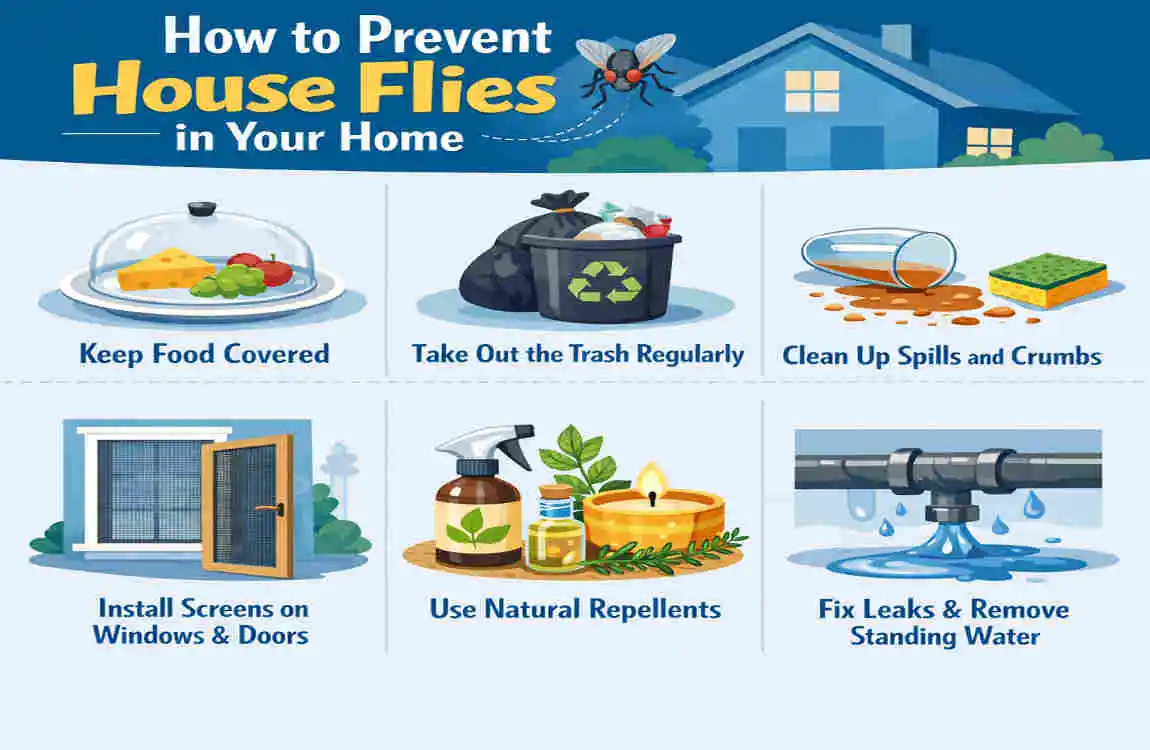
Preventing flies is mostly about cleanliness, barriers, and consistency. Small daily habits can make a huge difference.
Daily Habits to Kill Fly Risks
If you want to lower the chance of fly-transmitted diseases in your home, start with simple habits. You do not need a complicated system. You need a clean environment that gives flies fewer places to breed, feed, and rest.
Here is a practical 7-step checklist you can use:
- Cover food quickly
- Do not leave cooked food, fruit, meat, or snacks exposed on counters or tables.
- Take out trash often
- Flies love garbage, especially food waste. Use bins with tight lids and empty them regularly.
- Clean spills right away
- Juice, sauce, crumbs, and sticky leftovers attract flies fast.
- Wash dishes promptly
- Dirty plates and pans give flies moisture and food in one place.
- Use window and door screens
- A simple screen can stop many flies before they ever enter your home.
- Clean pet areas and litter zones
- Animal waste is a major fly magnet, so clean it often.
- Disinfect food prep surfaces
- Even if you do not see flies, wipe down counters, cutting boards, and sinks regularly.
These steps matter most in warm weather, but they help year-round. If you run a business, especially a restaurant, grocery area, daycare, clinic, or farm, these habits become even more important.
You should also pay attention to outdoor sources. Compost piles, standing organic waste, dirty drains, and neglected bins near doors can all increase indoor fly problems.
Best Fly Killers and Traps for Your Home
Sometimes prevention alone is not enough. If flies are already inside, you may need to remove them quickly.
There are two main approaches: natural traps and stronger control methods.
Natural options include vinegar traps, sugar-based traps, and keeping certain strong-smelling plant oils near problem areas. These may reduce fly activity, especially when the infestation is small.
For larger problems, people often use sticky traps, fly swatters, electric zappers, or approved insect sprays. These can work well, but they should be used carefully, especially around children, pets, and food.
Here is a quick comparison:
MethodHow It WorksProsCons
Vinegar or sugar trap Attracts flies into a container Cheap, simple, low chemical use Limited power for heavy infestations
Sticky trap Captures flies on adhesive surface Easy to use, good for monitoring Visible and unattractive indoors
Electric zapper Attracts and kills flying insects Fast and effective in some spaces Not ideal near food prep areas
Insect spray Kills flies on contact or by residue Strong immediate effect Must use safely and follow label directions
The best solution depends on the size of the problem. One or two flies may only need cleanup and a trap. A recurring swarm usually means the breeding source has not been removed.
Long-Term Fly Control for Businesses and Homes
If flies keep coming back, it is time to think bigger.
Chronic fly problems often point to a hidden issue such as a drain problem, unsealed garbage area, rotting organic matter, pet waste buildup, or a nearby outdoor breeding site. In these cases, professional pest control can help identify the source faster than guesswork.
For businesses, regular inspections and hygiene audits are worth the effort. A single overlooked area behind a dumpster or under a sink can sustain a whole population.
The goal is not just to kill flies you can see. The goal is to remove the conditions that allow more flies to appear tomorrow.
FAQs: Answering “Can House Flies Kill You?”
Can house flies kill you overnight?
Usually no. A house fly does not kill instantly. But it can spread bacteria that may cause severe illness, especially in vulnerable people. In rare cases, a rapidly spreading infection can become life-threatening.
What diseases do house flies carry?
House flies may help spread bacteria linked to Salmonella, Shigella, E. coli, cholera, and typhoid fever, among others.
How do house flies contaminate food?
They contaminate food by landing on it with dirty feet and body hairs, and by leaving behind regurgitated digestive fluid and droppings.
Are fruit flies as dangerous as house flies?
Fruit flies are usually less associated with serious disease spread than house flies. However, they still contaminate food and signal poor sanitation.
Can a house fly make you sick from landing on food once?
It can, but the risk depends on what the fly was carrying, how long it stayed, and who eats the food. The danger is real, though not guaranteed.
Who faces the biggest risk from fly bacteria?
Infants, older adults, pregnant women, and people with weak immune systems face the highest risk of serious complications.