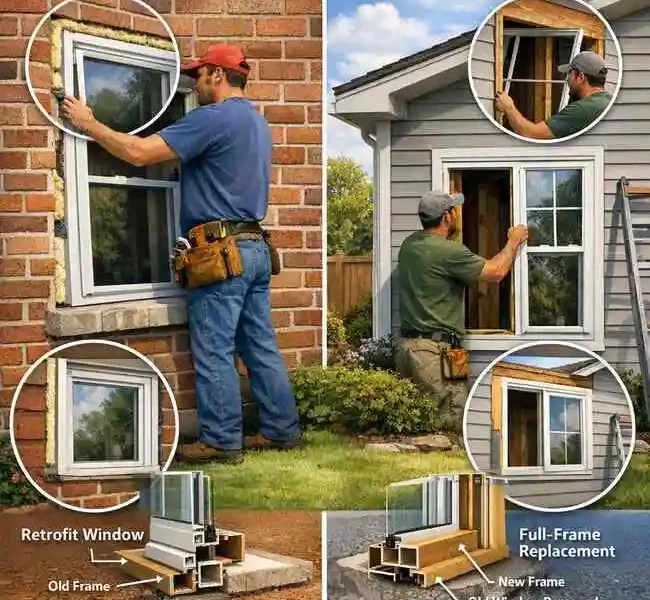
Retrofit windows are a good option when the existing frame is solid, square, and free from moisture damage. If the old frame is in bad shape or the house needs a bigger upgrade, full-frame replacement is usually the better choice.
This is the clear answer most homeowners want. Instead of a vague ‘it depends,’ people need a practical way to decide which option fits their home. Often, window shopping starts because something feels wrong: a room is colder, glass fogs up, trim looks worn, or windows rattle in the wind.
At that point, the decision is not just about getting new windows. It is about determining whether the problem lies with the sash and glass or with the frame and opening. That’s when you can decide between window retrofit vs replacement and analyze whether you need to spend an additional 15-20% per window and hire a professional crew, or just go to the big box store and DIY the project for a retrofit.
This difference is important because windows play a significant role in how a home performs over the long term. Heat gain and loss through windows make up about 25% to 30% of a home’s heating and cooling energy use. This can lead to higher energy bills and lower home value.
What retrofit windows actually are, and why they appeal to so many homeowners
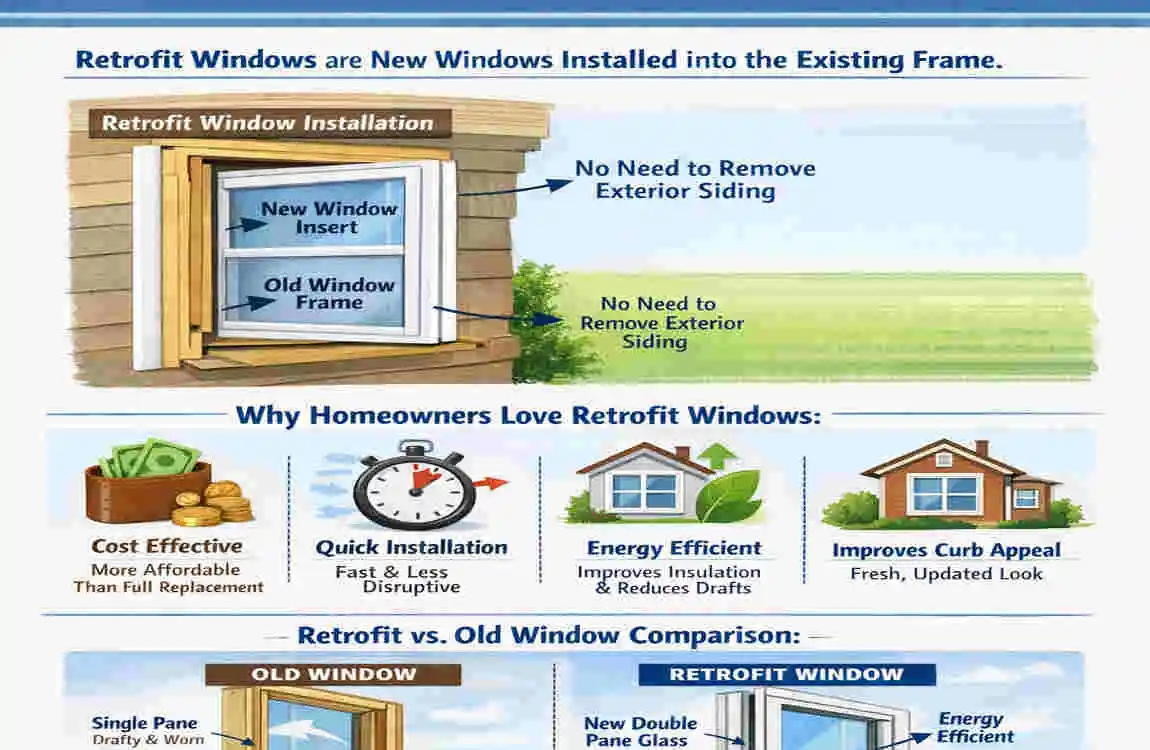
A retrofit window, also known as an insert window, is installed into the existing frame rather than removing the entire window. The old frame stays, and the new window fits inside it. This makes retrofit appealing because there is less demolition, less mess, less disruption, and usually a lower upfront cost.
For plenty of homes, this route is a smart move. When the original frame is solid, a retrofit boosts comfort and looks without turning your house into a construction zone. Homeowners get better windows without tearing up walls or trim, and designers can preserve those special interior or exterior touches.
A retrofit approach is often appealing because it usually offers:
- quick installation, like 15-20 minutes for a professional crew
- intact interior finishes
- a more budget-friendly starting point
- a cleaner option for homes with adequately performing existing frames (no rot, leaks, etc.)
There is an important catch: retrofit only works well if the frame that stays is truly in good condition. Sometimes, old windows look fine until someone checks more closely. A frame can seem okay from a distance, but still hide air leaks, moisture problems, or movement that can affect the new window.
This is why retrofit can be a smart upgrade or just a shortcut, depending on the condition of the old frame.
What full-frame replacement means, and why it is often the more complete fix
Full-frame replacement removes the entire existing window unit down to the rough opening. That includes the old frame, sash, and related components. A completely new window assembly is then installed, sealed, insulated, and finished in the opening.
This method costs more because it needs more labour, materials, and planning. However, it lets installers check the condition of the area behind the old window. This is why full-frame window replacement is known for being thorough. It does not just improve what you see; it also uncovers hidden problems in the house.
This matters when there are signs of trouble, such as drafts around the perimeter, soft or damaged wood, previous poor installation, water staining, or visible movement in the frame. It also matters when a renovation involves changing the size, shape, or style of the opening.
A full-frame approach offers the chance to correct air-sealing details and insulation gaps, not just to upgrade the glass package.
Many homeowners choose this option after dealing with a common problem. They replace the windows and spend money, but the room still feels uncomfortable. The temperature continues to change, and cold spots remain. The window looks new, but comfort does not improve. This often means the real issue was in the old frame, not just the window itself.
Retrofit windows or Full frame replacement – Costs and Value
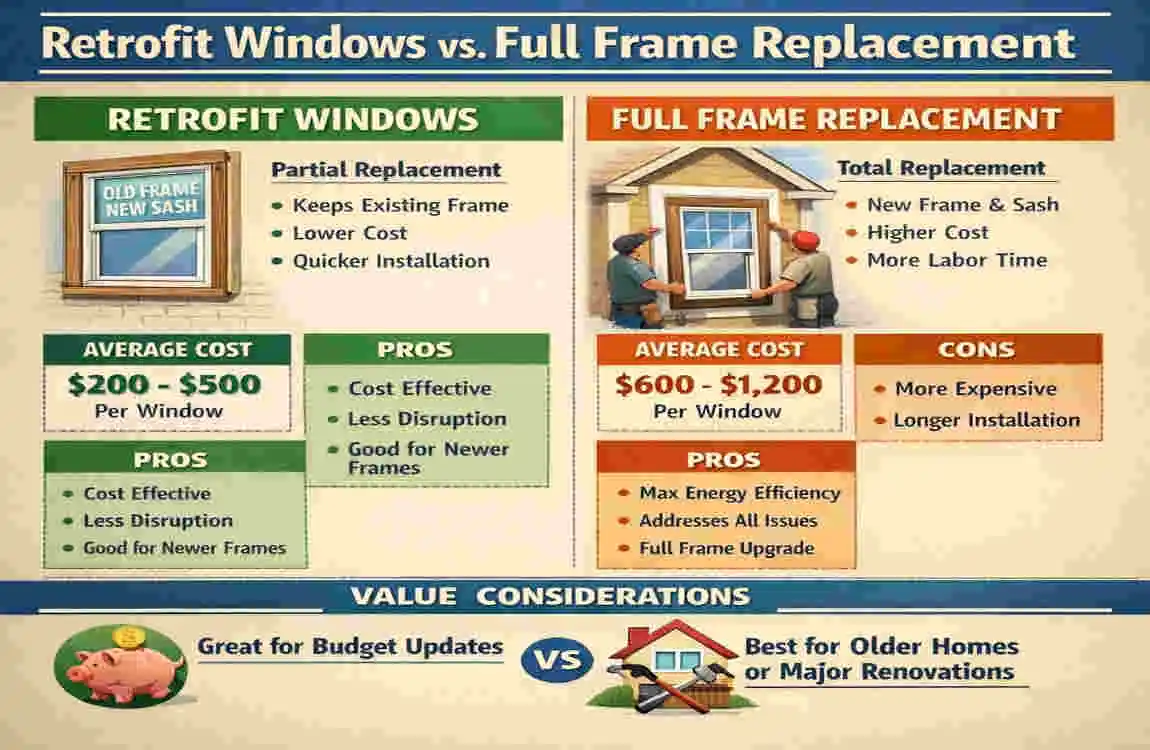
Retrofit usually wins on upfront cost. For a typical retrofit window, homeowners might expect to pay between $400 and $900 per window, depending on size, type, and region. Full-frame replacement generally ranges from $600 to $1,300 per window. In percentage terms, full-frame can cost 15% to 30% more per window compared to retrofit. That does not mean one is always a better value than the other. It means value depends on whether the chosen method actually fixes the real issue.
These numbers show why window decisions often take time during renovation planning. Good windows can improve comfort, reduce drafts, and help the home perform better all year. However, the installation method is almost as important as the window itself. Installing a quality window in a bad frame is like buying good boots but ignoring a hole in the floor. The effort is there, but the problem remains.
- Retrofit makes better financial sense when the existing frame is truly worth keeping and the goal is a cleaner, less invasive upgrade.
- Full-frame is better, financially wise, when your old frame is damaged, and keeping it would limit the new unit’s performance.
- The lowest quote may not be the cheapest option if it leaves behind air leaks, moisture issues, or structural movement that still need attention later.
- Value is not only utility savings. It also includes comfort, resale appeal, reduced maintenance headaches, and the odds of not having to revisit the same project again in a few years.
For homeowners weighing the two options, the best question is not “Which one costs less?” It is “Which one solves the actual condition of this opening?” That shift in thinking usually leads to a better decision.
Wrapping Up
Retrofitting windows absolutely makes sense in the right situation. If the existing frame is in excellent condition, retrofit can be efficient, tidy, and cost-effective. If the frame is compromised or the renovation calls for a more comprehensive upgrade, full-frame replacement is usually the better long-term move.
That is the practical answer. It is not complicated or hidden in technical language. The right choice depends on what is staying, what is failing, and what the homeowner wants the renovation to achieve in the long run, not just right away.
If you are comparing quotes or planning a renovation, the next best step is to have the existing frame carefully inspected before choosing an installation method. Taking this step can save money and prevent future regrets.
Do Retrofit Windows Make Sense for Your Home? Retrofit vs. Full-Frame Replacement Guide – FAQ
Q: What are retrofit windows?
Retrofit windows, also known as insert replacement windows, are installed within an existing window frame. This method replaces the old window while keeping the original frame intact.
Q: What is a full-frame window replacement?
A full-frame replacement involves removing the entire existing window, including the frame, trim, and sometimes surrounding materials, before installing a completely new window system.
Q: When do retrofit windows make sense?
Retrofit windows are a good option when the existing frame is in excellent condition, free from rot, water damage, or structural issues. They are often faster and less expensive to install.
Q: What are the advantages of full-frame replacement?
Full-frame replacement allows contractors to inspect and repair hidden damage, improve insulation, and install a completely new window system that may offer better long-term performance.
Q: Which option is more cost-effective?
Retrofit windows typically cost less because they require less labor and fewer materials. However, full-frame replacement may provide greater value if the existing frame needs repairs or upgrades.
Q: How do I choose between retrofit and full-frame replacement?
The best choice depends on the condition of your current window frames, your budget, energy-efficiency goals, and the scope of your renovation project. A professional inspection can help determine which option is most suitable for your home.