
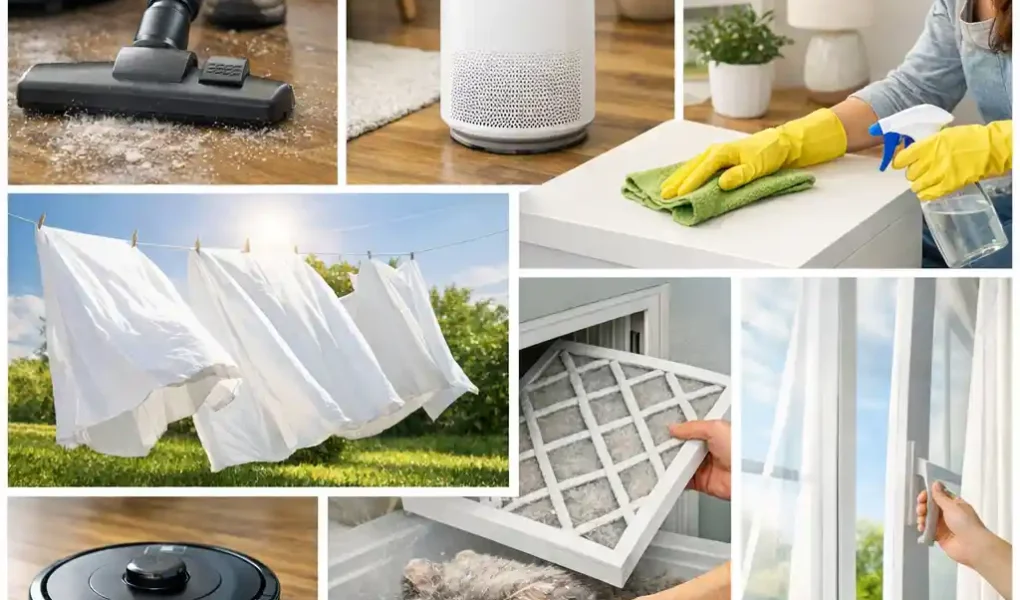
Household dust is rarely just one thing. It’s a shifting mix of fibers, soil, pollen, pet dander, and the microscopic remains of dust mites, all settling together across every surface in a home. Regular cleaning, including running a vacuum over carpets and upholstery, can meaningfully cut down on how much dust piles up, but it won’t eliminate it entirely. There’s also a real difference between a home that looks clean and one where the indoor air is actually well managed. This article covers where dust comes from, how to spot the places it collects, and how to build a cleaning routine that handles both the dust you can see and the finer particles that affect air quality.
What Household Dust Contains and Why It Matters
A surprising amount of the dust in a typical home arrives from outside. Soil and pollen hitch a ride in on shoes, clothing, and pets, then settle onto floors and furniture. Indoors, fibers shed continuously from carpets, bedding, upholstered furniture, and clothing. Pets and people contribute skin flakes and dander too, while dust mites—microscopic organisms that feed on shed skin—leave behind body fragments and waste that are a well-documented trigger for allergy and asthma symptoms in sensitive individuals.
Not all of this material behaves the same way. Larger particles settle fairly quickly onto surfaces, while finer ones can stay suspended in the air or get kicked back up when disturbed during cleaning. That’s why visible dust on a shelf doesn’t tell the whole story about indoor air quality. Health relevance varies quite a bit too: some people barely notice household dust, while others with allergies or respiratory conditions are considerably more sensitive to the exact same exposure.
Identify the Places Where Dust Accumulates
Dust tends to collect in predictable but often-overlooked spots. A quick room-by-room inspection before settling on a routine can reveal where the bulk of the problem actually lives, particularly in bedrooms and other heavily used rooms.
Dust hotspot checklist:
– Baseboards and window moldings
– Blinds and window ledges
– Ceiling-fan blades
– Upholstered furniture and cushions
– Under beds and other low-clearance areas
– Electronics and open shelving
– Rugs, carpets, and fabric furnishings
Clutter makes all of this worse, since every extra surface is just another place for particles to settle undisturbed.
Build an Effective Cleaning Routine
Cleaning from high surfaces down to low ones is one of the simplest ways to make a routine more effective. Start with shelves, light fixtures, and furniture tops, then finish with the floors—this way, dislodged particles get captured instead of resettling onto surfaces you’ve already cleaned.
Damp cleaning matters just as much. A damp microfiber cloth traps dust rather than scattering it into the air, which is exactly what a dry cloth tends to do. Damp mopping works the same way on hard floors. And consistent, moderate cleaning of high-traffic, high-accumulation surfaces generally beats the occasional marathon cleaning session.
Carpets and upholstery deserve special attention, since soft furnishings hold onto dust, pollen, and dander far longer than hard surfaces do. Routine floor and upholstery cleaning helps, though people with significant sensitivities may want to hand this task off to someone else, since the process can temporarily stir up settled particles.
Picture a bedroom with wall-to-wall carpeting, fabric curtains, and visibly dusty high shelves. Working top-down—clearing the shelves and curtains first, then vacuuming the carpet last—keeps dust from resettling onto surfaces you’ve already wiped clean, which saves you from redoing the work.
Manage Dust-Mite Conditions
Dust mites favor bedding, carpets, upholstered furniture, and stuffed toys. Relative humidity plays a central role in how well they thrive; public-health guidance generally recommends keeping indoor humidity in a moderate range, since excess moisture gives mites exactly what they need to multiply. Ventilation, air conditioning, or a dehumidifier can help manage this, depending on climate and season.
Washing sheets and other bedding regularly—following fabric-care instructions for water temperature—is a widely recommended practice. Allergen-resistant mattress and pillow encasements may also help people with known sensitivities. Cutting back on unnecessary fabric clutter and choosing washable materials where practical can further limit where mites take hold. These measures reduce exposure, but they won’t guarantee the complete removal of dust mites or allergens.
Clean More Safely When Allergies or Asthma Are a Concern
Vacuuming and dusting can temporarily send particle levels into the air higher than usual. People with allergies or asthma may benefit from stepping out of the room during more vigorous cleaning, handing the task to another household member, or wearing a suitable protective mask for dusty work. Ventilation can help, but only when outdoor air quality and weather make it a reasonable option. No single piece of equipment eliminates all risk, and reducing exposure during cleaning is a more realistic goal than preventing it entirely. Anyone with persistent or severe symptoms should consult a qualified healthcare professional rather than relying solely on cleaning adjustments.
Common Mistakes That Make Dust Control Less Effective
A handful of habits tend to undermine otherwise reasonable routines:
- Cleaning floors before wiping down elevated surfaces, instead of the other way around
- Using a dry cloth that merely relocates dust rather than capturing it
- Ignoring upholstery, bedding, and the areas beneath furniture
- Letting indoor humidity stay consistently high
- Treating one deep clean as a substitute for ongoing maintenance
Create a Sustainable Weekly Plan
Rather than sticking to a rigid schedule, it helps to think in terms of frequency bands: frequent wiping of visible dust and spills, weekly attention to floors, bedding, and major hotspots, and periodic deep cleaning of blinds, vents, and under-furniture spaces. A small apartment with no pets may need far less frequent deep cleaning than a larger family home with carpeting and animals. The right routine is simply the one a household can actually keep up with.
Key takeaway: Dust control works best as a combination of source reduction, regular cleaning, humidity management, and safer cleaning practices—not any single method on its own.
Frequently Asked Questions
Does cleaning eliminate dust mites? No single cleaning session removes them entirely, but regular washing and vacuuming reduce their numbers and the allergens they leave behind.
Why does dust return so quickly? Because its sources—outdoor soil, fibers, skin cells—are constantly being generated and introduced into the home.
Should people with allergies leave the room while cleaning? It can help, particularly during vacuuming or dusting, since these activities temporarily raise airborne particle levels.
How often should bedding be washed? Weekly washing in hot water, where fabric care allows, is commonly recommended by public-health guidance.
A More Manageable Approach to Household Dust
Identifying where dust collects, cutting back on clutter and excess moisture, cleaning with methods that capture rather than scatter particles, and limiting exposure during dusty tasks—together, these form a realistic strategy. Perfection isn’t the goal. Pick the three dustiest spots in your home and build them into your next cleaning session.