Damp is one of those home problems that many people ignore at first. A small patch on the wall, a little musty smell, or some peeling paint may not look serious. But damp often gets worse if you do not deal with it early.
If you want to know how to get rid of damp in a house, the first step is to understand what is causing it. Damp can damage walls, floors, furniture, and even your health if mould starts to grow. That is why it is important to act quickly.
What Is Damp in a House?
Definition of Damp
Damp means unwanted moisture building up inside your home. It can happen in walls, ceilings, floors, or hidden corners where water gets trapped.
Sometimes the moisture comes from a leak. Sometimes it comes from condensation or poor airflow. No matter the cause, damp makes your home feel unhealthy and uncomfortable.
Why Damp Is a Serious Problem
Damp is more than a surface issue. It can slowly damage plaster, wallpaper, wood, and paint.
It can also lead to mould growth, which may affect breathing and trigger allergies. Over time, damp can reduce your home’s value and lead to expensive repairs.
Common Types of Damp
Rising Damp
Rising damp occurs when moisture from the ground rises through walls. It usually affects lower parts of the building first.
You may notice wet patches, salt marks, or damaged skirting boards.
Penetrating Damp
This type occurs when water enters through walls, roofs, windows, or cracks. It often gets worse during heavy rain.
It usually appears as damp spots that spread from one area to another.
Condensation Damp
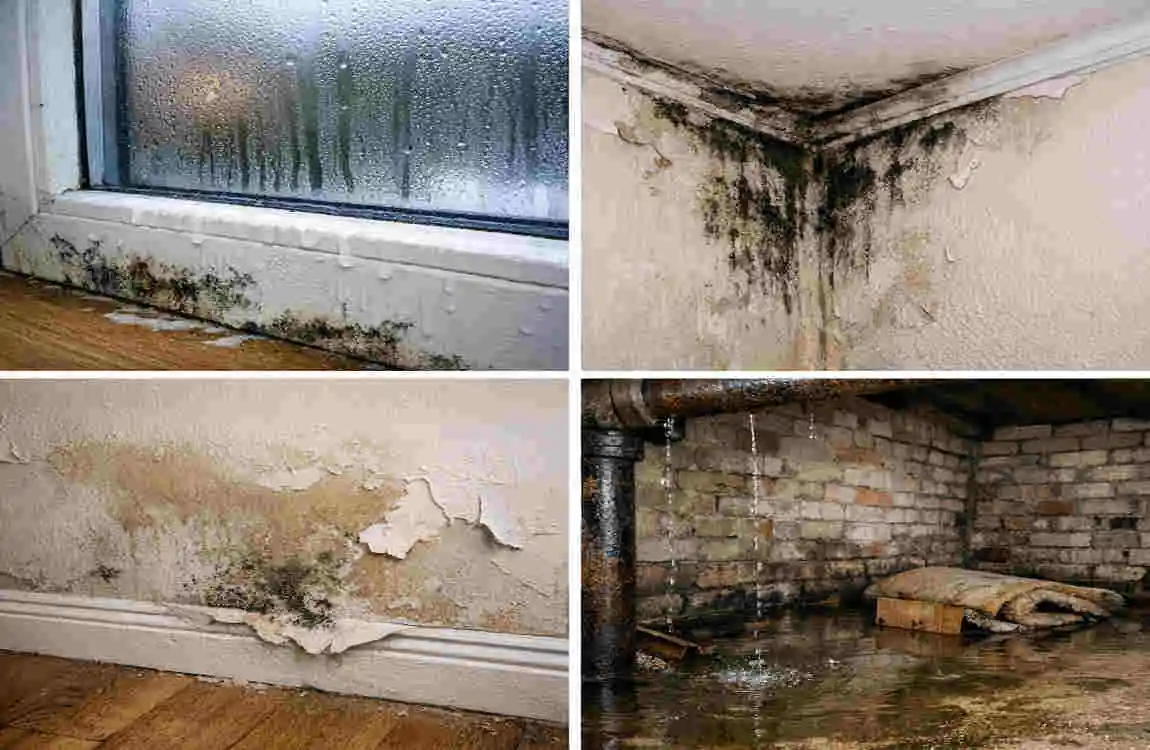
Condensation damp is very common in homes. It happens when warm, moist air touches cold surfaces like windows or walls.
You often see water droplets, mould, or dark patches in bathrooms, kitchens, and bedrooms.
Basement Damp
Basements are more likely to collect moisture because they are below ground level. Water can enter through walls or floors if waterproofing is weak.
This type of damp can be harder to deal with if left too long.
Signs Your House Has Damp
Damp Patches
One of the clearest signs is a patch of wet-looking or discoloured wall. It may feel cold or soft to the touch.
Peeling Wallpaper or Paint
When moisture gets behind wallpaper or paint, it begins to lift or bubble. This is a common warning sign.
Musty Smell
A damp smell is often strong and earthy. If a room always smells stale, there may be hidden moisture.
Mold Growth
Black, green, or white mould spots usually indicate excessive moisture in the area.
Cold or Wet Walls
If a wall feels colder than the others or stays wet for a long time, damp may be present.
Rotting Wood
Wood that is soft, swollen, or crumbly may have been affected by moisture for some time.
What Causes Damp in a House?
Roof Leaks
A damaged roof can let rainwater in. Even a small leak can lead to a big damp problem over time.
Broken Gutters
If gutters are blocked or broken, rainwater may overflow and run down the walls.
Leaking Pipes
Hidden pipe leaks inside walls or under floors can create damp without being noticed right away.
Poor Ventilation
Without enough airflow, moisture stays trapped inside the home and collects on surfaces.
High Indoor Humidity
Cooking, showering, and drying clothes indoors all add moisture to the air.
Cracked Walls
Cracks in the outer walls can let rainwater seep inside.
Faulty Damp-Proof Course
A damp-proof course is meant to stop moisture from rising through walls. If it fails, rising damp may appear.
How to Get Rid of Damp in House: Step-by-Step
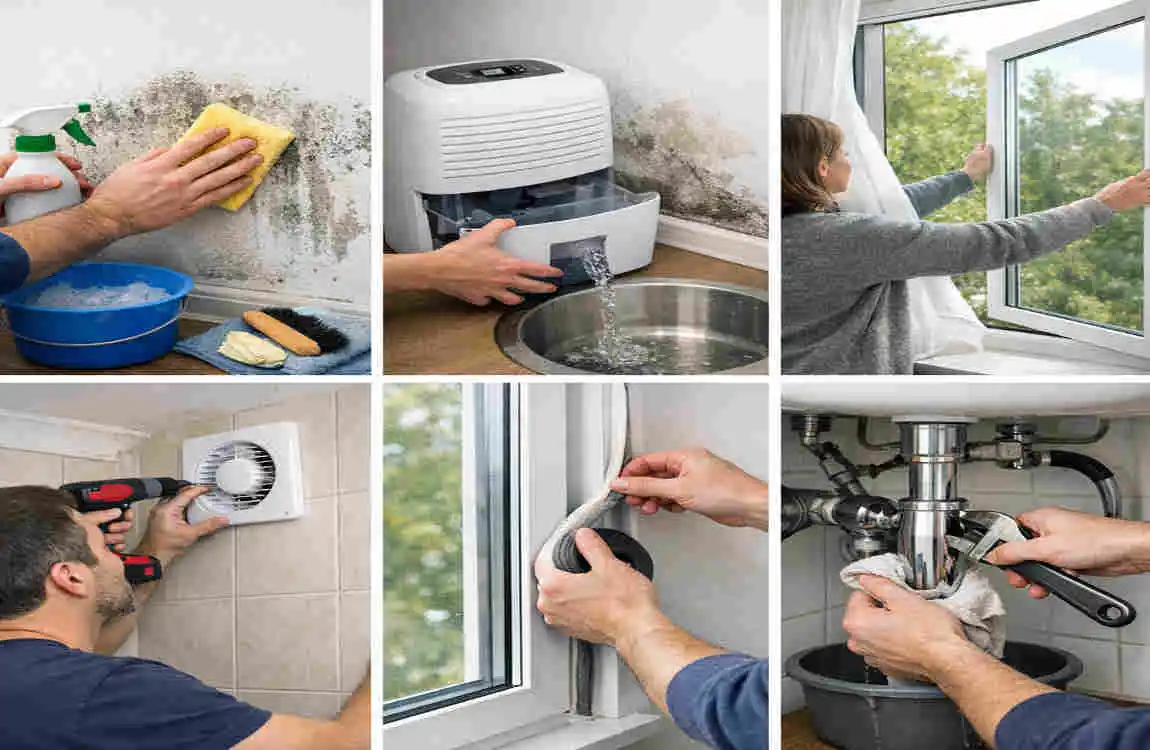
Find the Source of Moisture
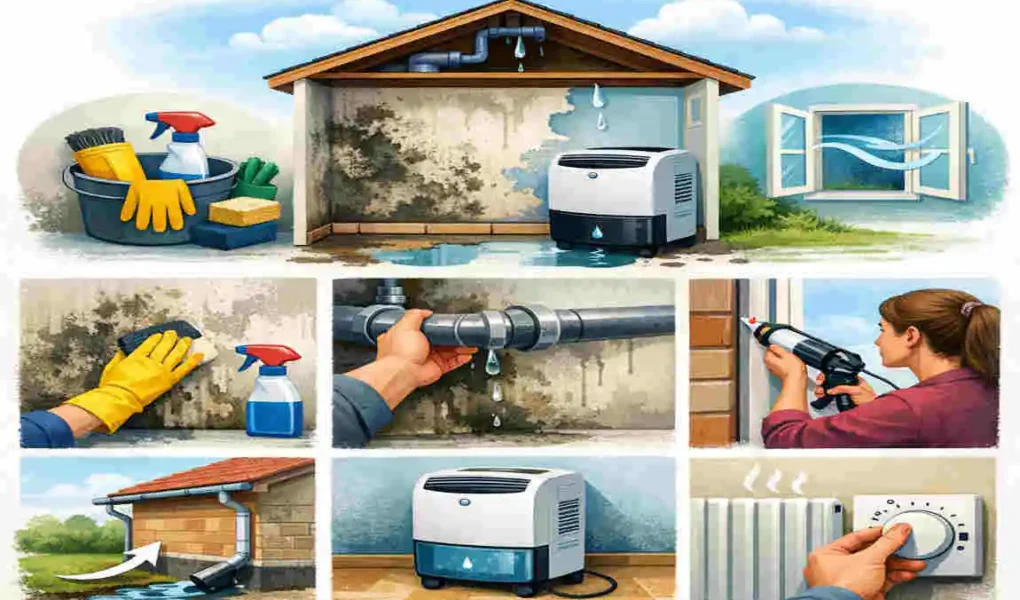
Before you treat anything, find out where the moisture is coming from. This is the most important step.
Look at the roof, pipes, walls, windows, and vents. If you only clean home the surface and ignore the cause, the damp will return.
Repair Leaks
Fix broken pipes, roof damage, and leaking gutters as soon as possible. Even a small drip can create long-term damage.
If the leak is hard to find, you may need expert help.
Improve Ventilation
Good airflow helps moisture escape. Open windows when possible and use extractor fans in kitchens and bathrooms.
This simple step can make a big difference.
Use a Dehumidifier
A dehumidifier removes excess moisture from the air. This helps dry the room and reduce condensation.
It does not fix the original cause, but it is very useful while you repair the problem.
Remove Mould Safely
If mould has already appeared, clean it carefully. Use gloves, a mask, and proper cleaning products.
Do not dry-brush mould because this can spread spores into the air.
Dry Out Walls and Floors
Once the source is fixed, give the area time to dry. Fans, open windows, and a dehumidifier can help speed this up.
Repair Damaged Surfaces
After the area is dry, repair damaged plaster, wallpaper, paint, or wood. Never paint over damp surfaces too early.
Monitor Moisture Levels
Keep checking the area for a few weeks. Watch for new patches, smells, or mould.
Regular checks help you catch problems early.
Best Ways to Prevent Damp from Returning
Open Windows Regularly
Fresh air helps keep moisture levels down. Even a short daily airing can help.
Install Extractor Fans
Fans in bathrooms and kitchens are very helpful because these rooms create a lot of steam.
Maintain Gutters
Clean gutters often so water can flow away properly.
Repair Roof Damage Quickly
Do not wait if you notice missing tiles or leaks. Small roof problems can grow fast.
Seal Cracks
Cracks in walls, windows, and outside surfaces should be sealed before they let in water.
Keep Indoor Humidity Below 60%
Try to control moisture in the home. A hygrometer can help you track humidity levels.
Natural Remedies for Minor Damp
For small damp problems, a few simple methods may help reduce moisture.
- Baking soda can help absorb smell and moisture in small areas.
- White vinegar can help clean light mould on surfaces.
- Charcoal moisture absorbers can pull dampness from the air.
- Rock salt is sometimes used as a natural moisture absorber.
- Proper airflow is one of the best natural fixes.
These options are useful for minor cases, but they do not replace proper repair work.
When Should You Call a Professional?
Some damp problems are too serious to handle alone. Call a professional if you notice:
- Severe rising damp
- Structural water damage
- Persistent mold
- Waterproofing needs
- Foundation moisture issues
If the problem keeps coming back, it usually means the source has not been properly fixed.
Cost of Fixing Damp
Damp Problem Estimated Cost (US)Difficulty
Minor mould removal $100–$300 Easy
Leak repair $150–$800 Moderate
Dehumidifier $150–$400 Easy
Damp-proof course repair $1,000–$3,500 Professional
Basement waterproofing $2,000–$8,000 Professional
The sooner you fix damp, the less you usually spend. Waiting often makes the repair more expensive.
Mistakes to Avoid
Painting Over Damp Walls
This only hides the problem for a short time. The damp will come back.
Ignoring Small Leaks
Even a tiny leak can create a big issue if you leave it alone.
Blocking Air Vents
Blocked vents stop fresh air from moving through the house.
Drying Clothes Indoors Without Ventilation
This adds a lot of moisture to the air.
Delaying Repairs
The longer you wait, the more damage damp can cause.
Using Bleach on Every Mould Problem
Bleach is not always the best fix. It may clean the surface, but it does not solve the cause.
Benefits of a Damp-Free Home

A dry home feels better and works better.
- Better indoor air quality
- Healthier living environment
- Lower repair costs
- Increased property value
- Improved energy efficiency
- Longer-lasting walls and flooring
When your home stays dry, it becomes easier to maintain and more comfortable to live in.
Frequently Asked Questions
How do you permanently get rid of damp in a house?
Fix the moisture source, improve ventilation, repair leaks, dry the area, and stop water from coming back in.
Can damp go away on its own?
No. It usually gets worse unless the cause is repaired.
Is damp harmful to health?
Yes. Damp can lead to mould growth, which may trigger allergies and breathing problems.
Does a dehumidifier remove damp?
It helps reduce moisture, but it does not fix leaks or other causes of damp.
How long does it take for damp walls to dry?
It can take anywhere from several days to several weeks, depending on how severe the damp is.
| Topic | Details |
|---|---|
| Guide Title | How to Get Rid of Damp in House: Easy Step-by-Step Guide |
| Purpose | Remove damp, prevent mold growth, and protect your home’s structure and indoor air quality. |
| Common Causes | Poor ventilation, leaking pipes, roof damage, rising damp, condensation, blocked gutters, and faulty waterproofing. |
| Signs of Damp | Musty smell, mold spots, peeling paint, damp patches, stained walls, bubbling wallpaper, and cold walls. |
| Find the Source | Inspect walls, ceilings, plumbing, windows, roof, and foundation to identify where moisture is coming from. |
| Fix Leaks | Repair leaking roofs, pipes, gutters, windows, or cracks to stop water entering the home. |
| Improve Ventilation | Open windows regularly, use extractor fans, and keep air circulating to reduce condensation. |
| Reduce Indoor Moisture | Dry clothes outdoors when possible, cover cooking pots, and avoid excessive indoor humidity. |