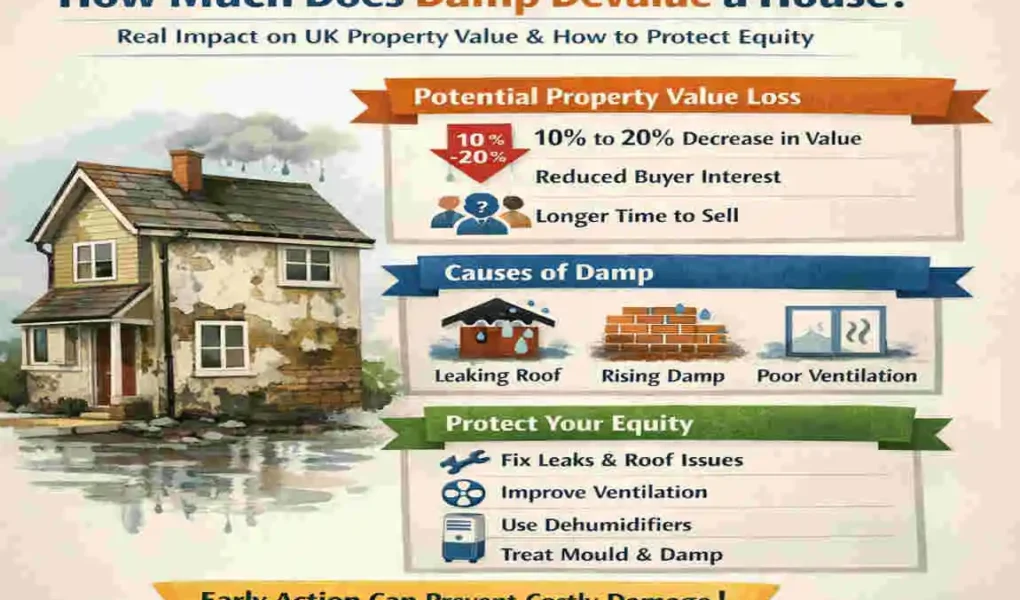
If you are asking how much does damp devalue a house, you are not alone. Damp is one of the most common property problems in the UK, and it can cause real worry for homeowners, buyers, landlords, and investors.
The issue is not just about ugly stains or a musty smell. Damp can affect structural condition, buyer confidence, mortgage valuations, and final sale price. Even a small patch of damp can make buyers pause. A bigger problem can lead to reduced offers, repair demands, or delays during conveyancing.
| Damp severity | Typical value impact (UK) | Common buyer/surveyor reaction | Quick actions to protect equity |
|---|---|---|---|
| Minor condensation / small mould patches | ~5–10% reduction | Lowers buyer confidence; may trigger a simple damp/ventilation clause in survey | Improve ventilation, treat mould, keep receipts for works |
| Moderate damp (rising/penetrating damp in limited areas) | ~10–15% reduction | Buyers negotiate price reduction or request remedial works; may need professional damp survey | Commission damp survey, fix sources (tanking, DPC, repairs), document repairs |
| Severe damp / structural/timber decay | ~15–20% or more; in some reports up to 30–50% in extreme cases | Lenders may refuse mortgage until fixed; substantial price cuts or sale aborted | Urgent specialist remediation, structural repairs, independent damp report to show remedial scope and costs |
| Unsellable / mortgage-unacceptable condition | Effectively 100% loss until fixed (no lending) | Property may not be mortgageable; only cash buyers or major discount will purchase | Complete certified repairs; get surveyor sign-off and receipts to restore marketability |
What Is Damp in a House? Types of Damp Problems Explained
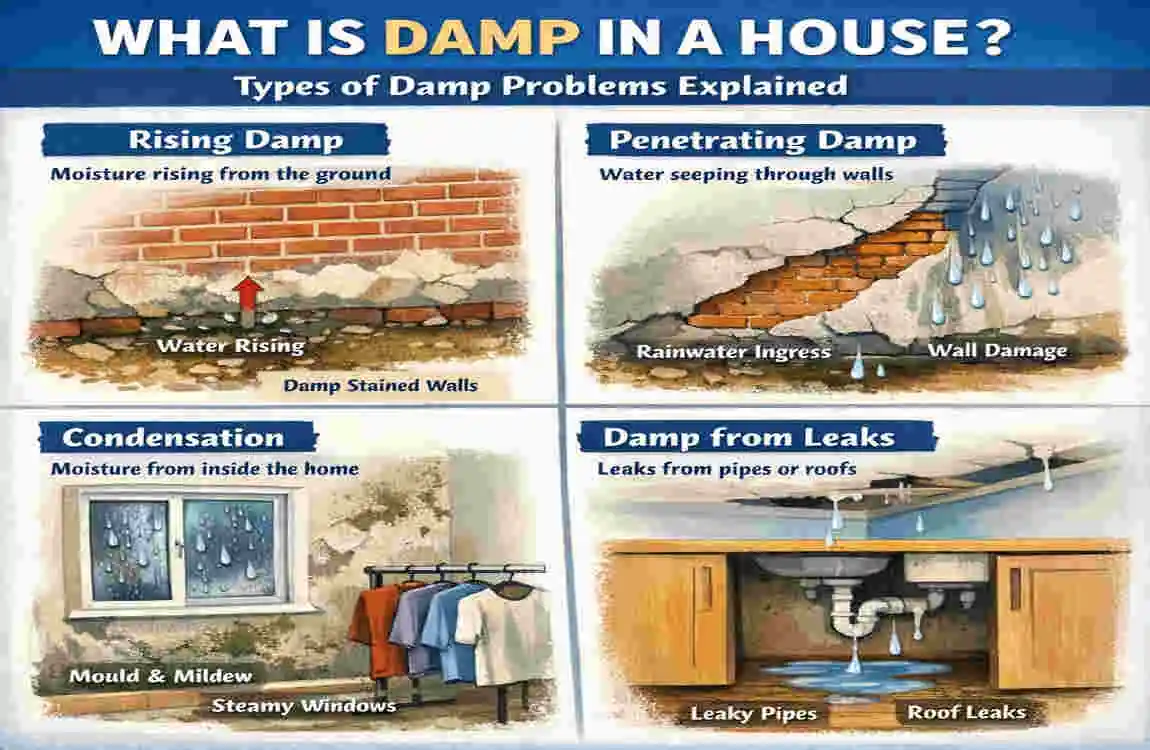
Damp can show up in different ways, and each type has a different effect on value. Some are easier to fix, while others can point to deeper problems.
Rising Damp
Rising damp occurs when moisture rises from the ground into walls. It is often linked to a failed or missing damp-proof course. You may notice wet patches near the bottom of walls, damaged plaster, or white salt marks.
Penetrating Damp
This type occurs when water enters through roofs, cracked walls, broken gutters, or damaged brickwork. It is common in older homes, especially where outside maintenance has been delayed.
Condensation Damp
Condensation is caused by poor ventilation and high humidity. It often appears in kitchens, bathrooms, and loft spaces. It may look less serious at first, but it can still lead to mould and surface damage.
Basement Damp
Basement damp happens when water enters lower ground areas. This can be a major issue in older UK properties, especially if waterproofing is weak.
Wet Rot & Related Moisture Damage
Wet rot affects timber and can spread if ignored. It often brings mould, soft wood, and unpleasant smells. This kind of damage concerns buyers because it can signal long-term moisture issues.
How Much Does Damp Devalue a House in the UK?
Exactly How Much Does Damp Devalue a House?
There is no single number, because the impact depends on the severity of the problem. But in general, damp can reduce value in these rough ranges:
Damp Severity Typical Value Reduction What It Usually Means
Cosmetic damp 2%–5% Staining, small patches, limited repair needs
Moderate damp 5%–10% Recurring moisture, visible damage, buyer concern
Severe damp / structural damage 10%–20%+ Timber rot, major repairs, surveyor warnings
A small issue may only reduce value slightly. A serious damp problem, however, can lead to a much bigger drop because buyers usually want room to cover the repairs and the risk.
Why Buyers Reduce Offers on Damp-Affected Properties
Buyers often lower their offer for three simple reasons:
- Repair uncertainty
- They do not always know how bad the problem is.
- Hidden costs
- Damp can lead to plaster work, redecoration, timber repairs, and mould treatment.
- Health concerns
- Many buyers worry about mould, smells, and indoor air quality.
Regional Property Market Differences
The effect of damp is not the same everywhere. In London, buyers may still proceed if the issue appears manageable, given strong demand. In Northern England, Wales, and Scotland, damp in older properties may lead to sharper negotiation because buyers expect a lower starting price.
Older Victorian terraces and period homes are also more likely to show damp issues. Modern homes may still suffer from condensation, but buyers usually worry less if the problem is clearly minor and fixable.
Why Damp Can Reduce House Prices So Significantly
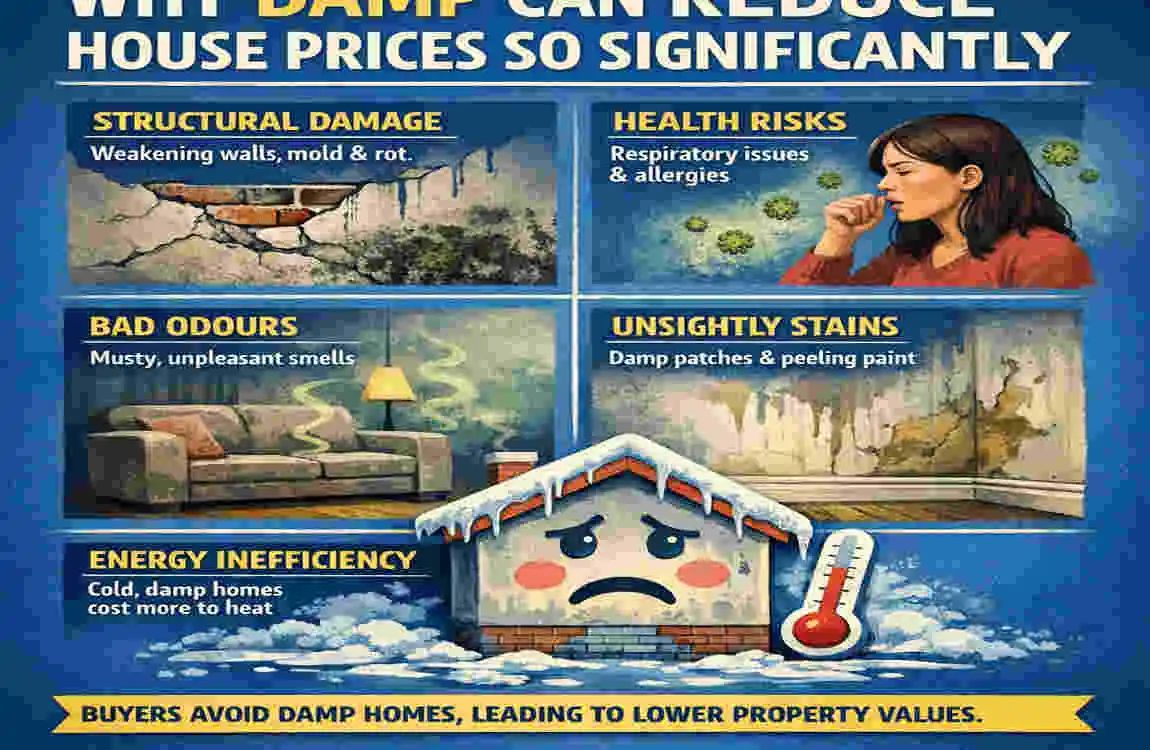
Key Reasons Damp Lowers Property Value
Damp affects value because it creates doubt. Once buyers suspect moisture damage, they often think about what they cannot see.
Structural Risk
Damp can weaken plaster, walls, skirting boards, timber, and even structural elements. If buyers think the issue is spreading, they will usually cut their offer.
Mortgage Survey Red Flags
Surveyors are trained to spot signs of damp. If a RICS survey highlights damp, the lender may respond with caution. That can reduce the valuation or create extra requirements before approval.
Buyer Psychology
Damp makes many people think the home has been poorly maintained. That hurts trust, and trust matters a lot in property sales.
Health & Safety Concerns
Mould spores, damp smells, and poor air quality can worry families with children, older adults, or anyone with breathing issues. Even if the damage looks small, the health concern can still affect value.
Factors That Determine How Much Damp Devalues a House
Every Damp Problem Has a Different Financial Impact
Not every damp problem affects price in the same way. The final impact depends on several things.
Severity of Damage
A small stain is one thing. Deep wall saturation is another. The deeper the damage, the bigger the likely price cut.
Location of Damp
Damp in a bedroom wall may be more worrying than a small issue in a utility room. Damp in a basement, loft, or external wall can also suggest broader building problems.
Property Age
Older UK homes often pose a higher risk of damp due to age, materials, and original construction. Newer homes are usually judged more strictly if damp appears, because buyers expect fewer problems.
Cost of Repairs
Most buyers will look at the likely repair bill and subtract it from their offer, often with extra room for risk and inconvenience.
Surveyor Reports
A professional report can strongly affect the price. If the surveyor uses cautious language, buyers usually take that seriously.
Visible Mould or Odours
A musty smell or black mould can create a very bad first impression. In many cases, this is what turns a manageable issue into a bigger price concern.
Signs of Damp That Scare Buyers & Surveyors
Some damp signs are obvious, and some are hidden. Both matter.
Common warning signs include:
- Peeling wallpaper
- Bubbling paint
- Black mould spots
- Musty smells
- Cold damp walls
- Salt deposits
- Crumbling plaster
- Rotting skirting boards
- Condensation on windows
- Stained ceilings
Hidden Damp Issues
Some damp problems stay out of sight. They may be hiding:
- Under flooring
- Behind wardrobes
- In roof cavities
- Around pipe leaks
These hidden issues are especially worrying because buyers fear the repair cost may be higher than expected.
How Damp Affects Mortgage Approval & Property Surveys
Can Damp Stop You Selling a House?
Yes, in some cases, it can slow or weaken the sale. A surveyor may recommend further inspection, and the lender may reduce the valuation or ask for repairs.
How Mortgage Lenders React
Lenders do not like uncertainty. If damp looks serious, they may:
- Reduce the loan amount
- Ask for repairs before completion
- Offer more cautious terms
Impact on Conveyancing
Damp can also delay the legal process. Buyers may renegotiate, request reports, or pull out entirely if they feel the risk is too high.
Cost of Fixing Damp in a UK House
Damp Repair Costs Homeowners Should Expect
The repair bill depends on the cause of the problem.
Rising Damp Treatments
This may include repairing or replacing the damp-proof course and replastering affected walls.
Penetrating Damp Fixes
These often involve roof repairs, repointing brickwork, fixing gutters, or sealing cracks.
Condensation Solutions
Common fixes include extractor fans, dehumidifiers, trickle vents, and better ventilation.
Basement Waterproofing
Basement problems may need a tanking system or other waterproofing work.
Associated Repairs
Damp often leads to extra costs such as:
- Replastering
- Timber replacement
- Redecoration
- Mould cleaning and remediation
The important thing to remember is this: the longer you wait, the more expensive the repair can become.
Can You Sell a House With Damp?
Selling a Damp-Affected Property in the UK
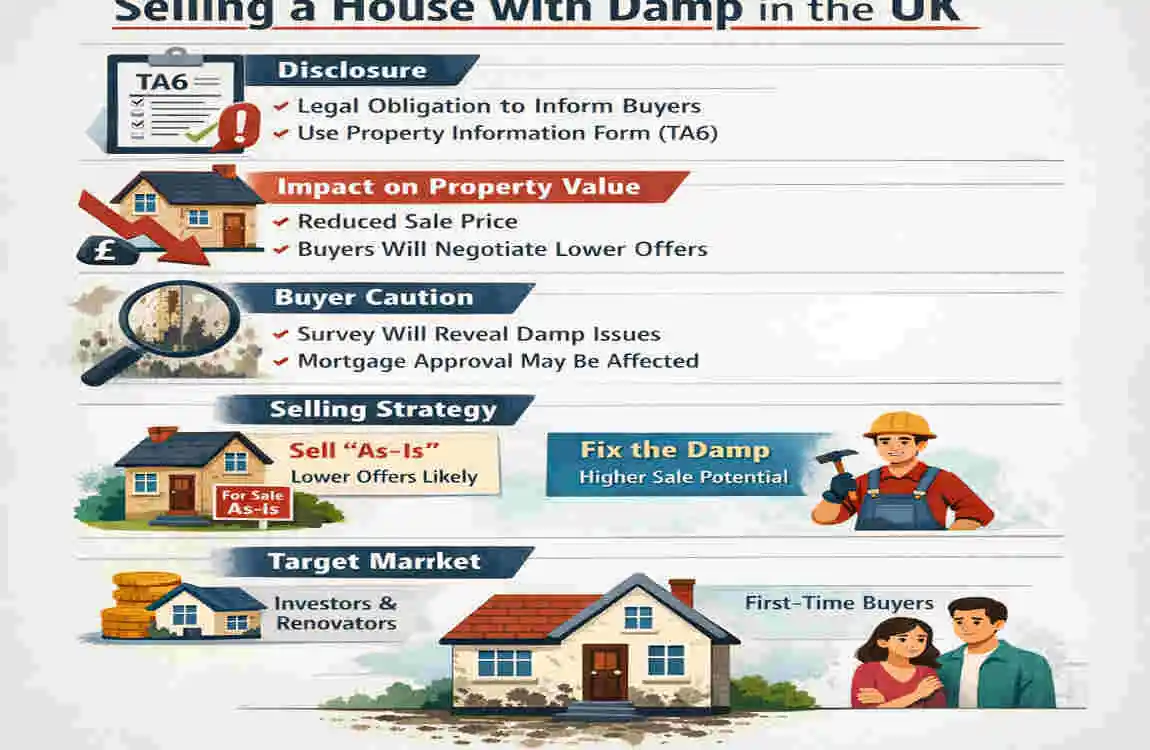
Yes, you can sell a house with damp. But you should be honest about it. Being transparent helps avoid disputes later.
You have two main options:
- Sell as-is
- Fix the problem before sale
Should You Fix Damp Before Selling?
Pros:
- Better valuation
- Wider buyer interest
- Faster sale
Cons:
- Upfront cost
- Time delays
- Possible disruption
If the damp is minor, fixing it first often makes sense. If the issue is deep or expensive, you may choose to price the property accordingly.
How to Protect Your Home Equity From Damp Damage
Prevention Is Cheaper Than Property Devaluation
If you want to protect value, prevention is the smart move.
Improve Ventilation
Open up airflow where possible and use extractor fans in bathrooms and kitchens.
Maintain Gutters & Roofs
Blocked gutters and broken roof tiles often let water in. Regular checks can prevent bigger damage.
Check Damp-Proof Course
Older homes should be checked carefully, especially if damp appears near ground level.
Insulate Properly
Good insulation helps reduce condensation and keeps walls warmer.
Monitor Plumbing Leaks
Even a slow leak can create hidden moisture damage over time.
Schedule Regular Surveys
A regular inspection can catch problems early, before they affect the house’s value.
Finishing details can also help protect high-traffic areas of the home – wall kick protection around the base of walls can reduce scuffs, dents, and everyday wear while keeping rooms looking well maintained.
Is Buying a House With Damp Ever Worth It?
Opportunity or Risk?
Sometimes, yes. A damp property can be a good deal if the issue is small and the price reflects the repair cost.
When Damp Is Manageable
- Surface condensation
- Small isolated leaks
- Minor staining with clear cause
When to Walk Away
- Structural timber rot
- Large mould outbreaks
- Foundation moisture damage
If the repair is too big, the savings may not be worth the stress.
Expert Tips to Minimise Value Loss Before Selling
How Sellers Can Reduce Damp-Related Price Cuts
If you are selling, a few simple steps can make a real difference:
- Get an independent damp survey
- Keep repair invoices and guarantees
- Remove mould and musty odours
- Repaint affected areas
- Improve ventilation
- Show clear evidence of repairs home
These steps help buyers feel more confident and can reduce the size of their offer reduction.
Frequently Asked Questions
Can damp reduce house value by 20%?
Yes, severe damp can do that or more if it causes structural damage, mould, or major repair concerns.
Is damp a deal breaker for buyers?
Not always. Minor damp is often manageable, but serious damp can scare buyers away.
Does rising damp affect mortgage approval?
It can. If a surveyor identifies clear signs of rising damp, the lender may request further checks or repairs.
Can I sell a house with untreated damp?
Yes, but you must be realistic about price and buyer concerns.
Is damp common in older UK homes?
Yes. Older homes are more likely to develop damp because of age, materials, and ventilation issues.
How expensive is damp treatment in the UK?
It varies widely. Small repairs may cost a few hundred pounds, while major work can cost several thousand.
Can surveyors detect hidden damp?
Yes, often they can. They may spot signs during inspection and recommend specialist testing.
Does mould always mean structural damp?
No. Sometimes mould is caused solely by condensation, but it should still be taken seriously.