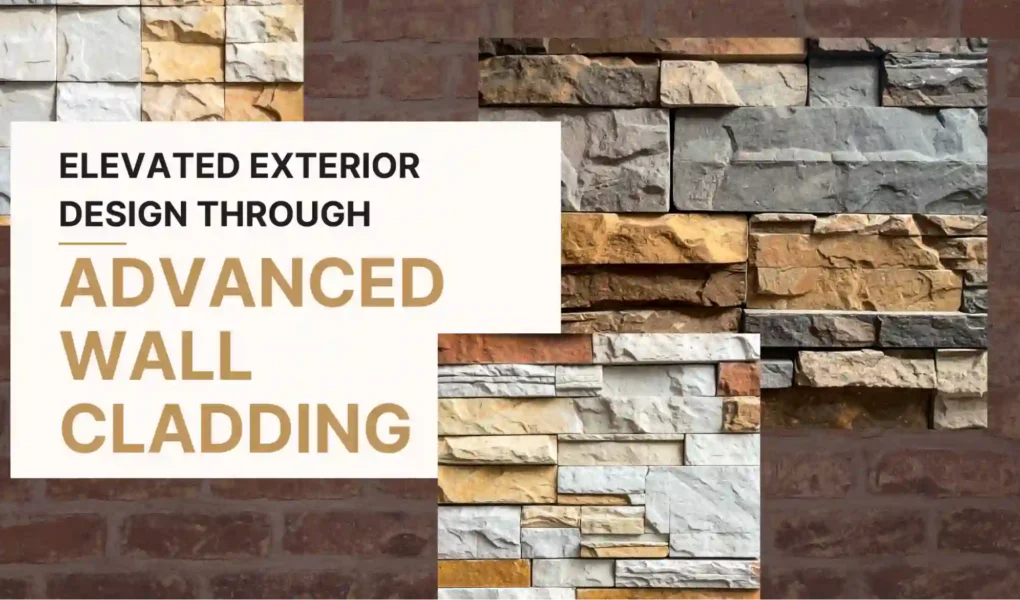
Most renovation budgets go straight into kitchens, bathrooms, and loft conversions. The exterior, meanwhile, often gets a quick repaint or a pressure wash and is left at that.
But that default is shifting. More homeowners are treating the façade as a long-term material decision, not just a cosmetic refresh, and exterior wall cladding tiles are increasingly the finish they’re choosing. Done well, they protect the building envelope while also upgrading how the home reads from the street.
Below are five clear advantages, plus a practical checklist to help you specify the right tile for an exterior.
1. Serious weather protection built into the material itself

Exterior wall cladding tiles designed specifically for façades are made to handle that pressure. Higher-quality options typically come with low water absorption, which matters when temperatures drop, retained moisture inside porous materials expands during freezing and can lead to cracking, spalling, or debonding over time.
What to look for is performance data, not marketing language: water absorption figures, freeze–thaw resistance, UV stability, and thermal cycling information. Those measurable properties are what separate tiles engineered for façade exposure from products that merely look “outdoor-ready” on paper.
If damp has been an ongoing issue in your home (musty smells, peeling finishes, recurring mold), it’s worth addressing the broader moisture context alongside any façade upgrade; this guide on effective methods to get rid of damp in house is a helpful baseline for homeowners planning exterior work.
2. Low maintenance over the long term
One of the most appealing benefits is what you don’t have to do after installation.
Painted render can fade, stain, or peel. Timber cladding requires ongoing treatment to resist moisture and decay. Even fibre cement often needs periodic attention to keep it looking sharp.
Quality exterior tiles, by contrast, are typically low-intervention once fitted. They’re less prone to staining, don’t usually need sealing (depending on tile type), and can often be kept clean with a hose-down or a soft brush. If your priority is a façade that looks composed for years without annual upkeep, this is a meaningful advantage.
If you are already planning updates to the outside of your property, it is worth reading through the site’s exterior home improvement guidance before finalising your material shortlist. Understanding how different exterior finishes perform across multiple dimensions, not just aesthetics, can shift the calculus considerably.
3. A design range that goes far beyond “brick slip”
Exterior cladding tiles have moved well past the narrow brick-effect category that used to dominate the market. Today, you’ll find:
- textured stone looks
- smooth large-format styles
- artisan finishes with tonal variation
- modular systems that create depth and shadow play
This range benefits two kinds of projects. On period homes, the right tile can complement traditional architecture without the cost and complexity of working with reclaimed masonry. On modern extensions and newer builds, cladding tiles can add surface character and material depth that flat render rarely achieves.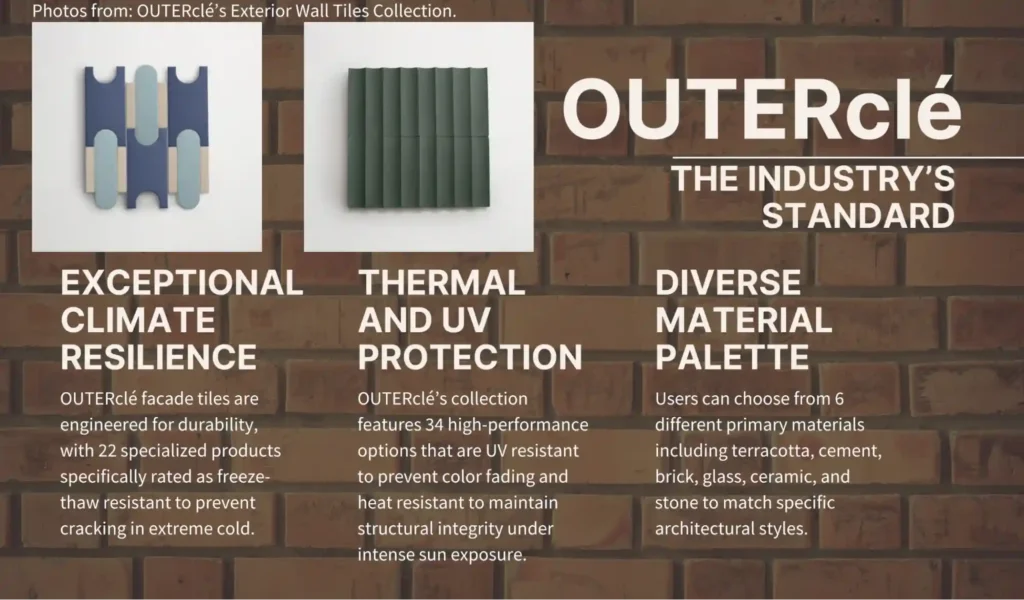 The exterior wall cladding tiles by OUTERclé reflect this wider shift toward material specificity. The facade collection includes options with distinct texture, variation, and surface character: finishes that age naturally and develop patina rather than simply degrading.
For design-forward homeowners, the difference between a tile specified with intention and a generic cladding board is visible from the street.
The visual range also extends to colour, format, and laying pattern. Tiles can be installed in straight coursework, offset bonds, or feature arrangements that introduce rhythm and shadow play across the facade surface. These are not decisions that need to be settled at first glance; good samples and a considered layout plan make the process considerably more manageable.
4. Kerb appeal that reads as “well-finished” (and often helps value perception)
First impressions are fast, and the façade carries most of that visual weight. A dated exterior can undermine an otherwise well-renovated interior. A considered façade tends to lift the perceived quality of the entire property.
Cladding tiles can change how the home is read because they bring surface depth and material realism that paint and standard boards often don’t. That “finished” look signals care in the building’s fabric, exactly the kind of cue that buyers and valuers tend to respond to.
Kerb appeal also compounds when paired with other exterior upgrades (lighting, landscaping, entry details). Facade work rarely succeeds as a standalone gesture; it works best as part of a joined-up exterior plan.
Kerb appeal improvements are also among the more straightforward ways to add perceived value before a sale, and a durable, well-presented facade often requires less remedial work before the property goes to market.
5. Durability that justifies the specification decision

Tiles can cost more upfront than paint, render refreshes, or some composite claddings. The more useful comparison, though, is total cost over time.
Finishes that need repainting every few years, or timber that requires repeated treatment and eventual replacement, accumulate ongoing costs. Exterior tiles—when correctly specified and installed—can remain serviceable for decades with minimal intervention.
The caveat matters: durability depends on the system, not just the tile. Substrate prep, adhesive choice, movement joints, and detailing all determine how long the façade performs.
Choosing the right tile for your exterior: a practical checklist
Not every tile sold for “outdoor use” is suitable for external wall cladding. Use these checkpoints to narrow your shortlist:
- Confirm it’s rated for vertical exterior application (not only outdoor flooring/paving)
- Check water absorption (lower is safer, especially for freeze–thaw conditions)
- Ask for the recommended adhesive system and whether guidance is provided for your substrate
- brick
- render
- timber frame / board systems
- Plan the sequencing if the facade is part of a wider renovation
Tiles and bedding systems can be damaged by later exterior works and other trades. - Check planning requirements early
Changes to a front elevation, or work on listed buildings / in conservation areas; may need consent.
Exterior cladding tiles aren’t the easiest material to dismiss once you understand what they actually do. If your façade has been on the list for a while, this is one category that can deliver both performance and a visible architectural upgrade, without committing you to constant upkeep.
5 Advantages of Using Exterior Wall Cladding Tiles in Home Exteriors – FAQ
What are exterior wall cladding tiles?
They are protective and decorative tiles installed on building exteriors to improve appearance and durability.
What is the first advantage of cladding tiles?
They enhance the visual appeal of your home by giving it a modern, stylish, or natural stone-like finish.
Do cladding tiles protect walls?
Yes. They provide a strong protective layer against rain, heat, wind, and UV damage.
Are cladding tiles durable?
Yes. Most exterior cladding tiles are highly durable and designed to last for many years with minimal wear.
Can cladding improve insulation?
Yes. They can help improve thermal and sound insulation, making homes more energy-efficient.
Are they easy to maintain?
Yes. Exterior cladding tiles require very little maintenance, usually just occasional cleaning.
Do cladding tiles increase property value?
Yes. A well-finished exterior can improve curb appeal and potentially increase home value.
Are there different design options?
Yes. They come in various styles such as stone, brick, wood-look, and modern textured finishes.
What is the main benefit of exterior wall cladding tiles?
The main benefit is combining beauty, protection, and long-term durability for home exteriors.