Exterior wood rot is a common problem that happens when wood stays wet for too long. Over time, moisture breaks down the wood, making it soft, weak, and damaged.
This is not something you want to ignore. Small rot can quickly turn into a bigger repair, especially if water keeps getting in. If you fix it early, you can save money and protect your home from more damage.
What Causes Exterior Wood Rot?
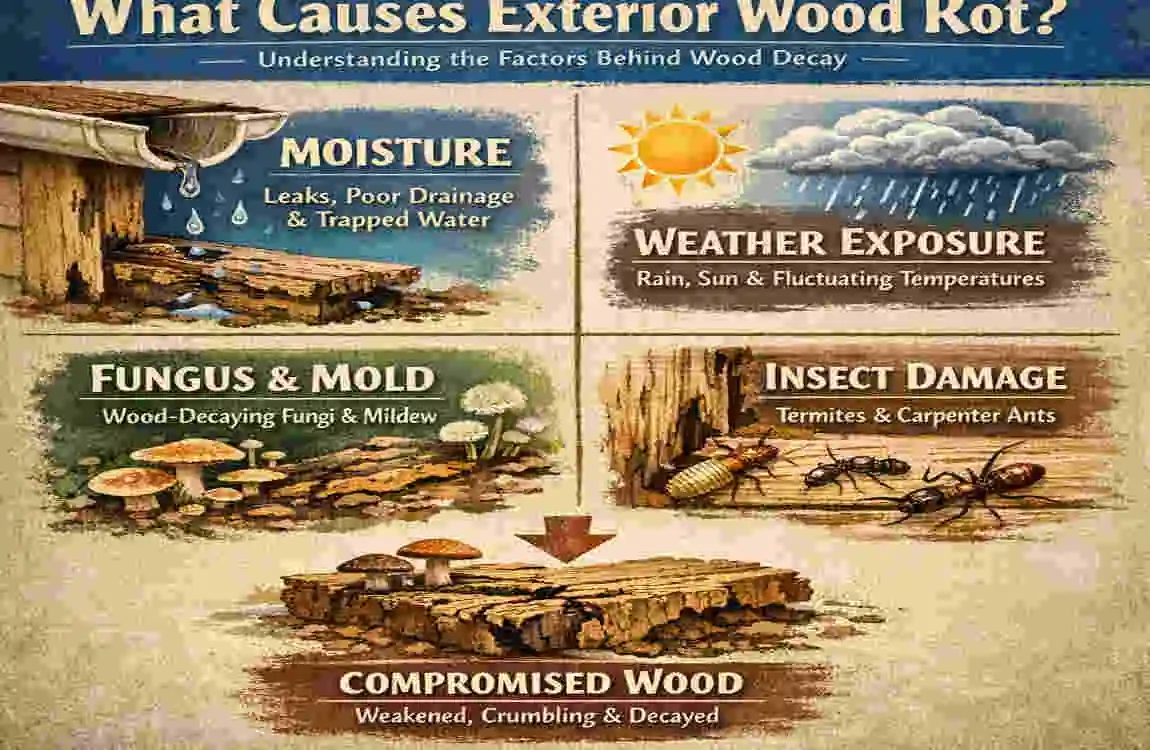
Water Damage and Moisture
Wood rot starts with water. When rain, snow, or damp air continues to reach the wood, the material begins to weaken. Wet wood is the perfect place for rot to grow.
Poor Paint or Sealant
Paint and sealant help protect wood from the weather. If they are old, cracked, or missing, water can easily get in. That is why damaged paint often leads to rot.
Leaking Gutters and Roofs
If gutters overflow or a roof leaks, water may repeatedly drip onto exterior wood. This slow damage can affect trim, siding, window frames, and other areas.
Ground Contact and Poor Drainage
Wood that touches the ground or sits near standing water is at higher risk. Poor drainage keeps the area damp, which speeds up rot.
Signs You Need to Replace Rotted Exterior Wood
Soft or Spongy Wood
If wood feels soft when you press it, that is a strong warning sign. Healthy wood should feel solid.
Peeling Paint
If paint keeps bubbling or peeling, moisture may already be trapped beneath it. This often means the wood below is damaged.
Cracks and Splits
Small cracks are common, but deep splits can let water enter. If the damage is wide or deep, replacement may be needed.
Mold or Fungus Growth
Dark spots, mold, or fungus often show that the wood has stayed wet for too long. This usually means the problem is more serious than it looks.
Insect Damage
Rotten wood can also attract insects. If you see tiny holes, sawdust, or pest activity, the wood may be weak and unsafe.
Tools and Materials You’ll Need
ToolPurpose
Pry Bar Remove damaged wood
Hammer Pull nails
Circular Saw Cut replacement boards
Measuring Tape Accurate measurements
Exterior Wood Replacement material
Exterior Screws/Nails Secure new wood
Wood Filler Fill small gaps
Exterior Caulk Seal joints
Primer & Paint Weather protection
Safety Glasses & Gloves Personal safety
How to Replace Rotted Wood on Exterior of House
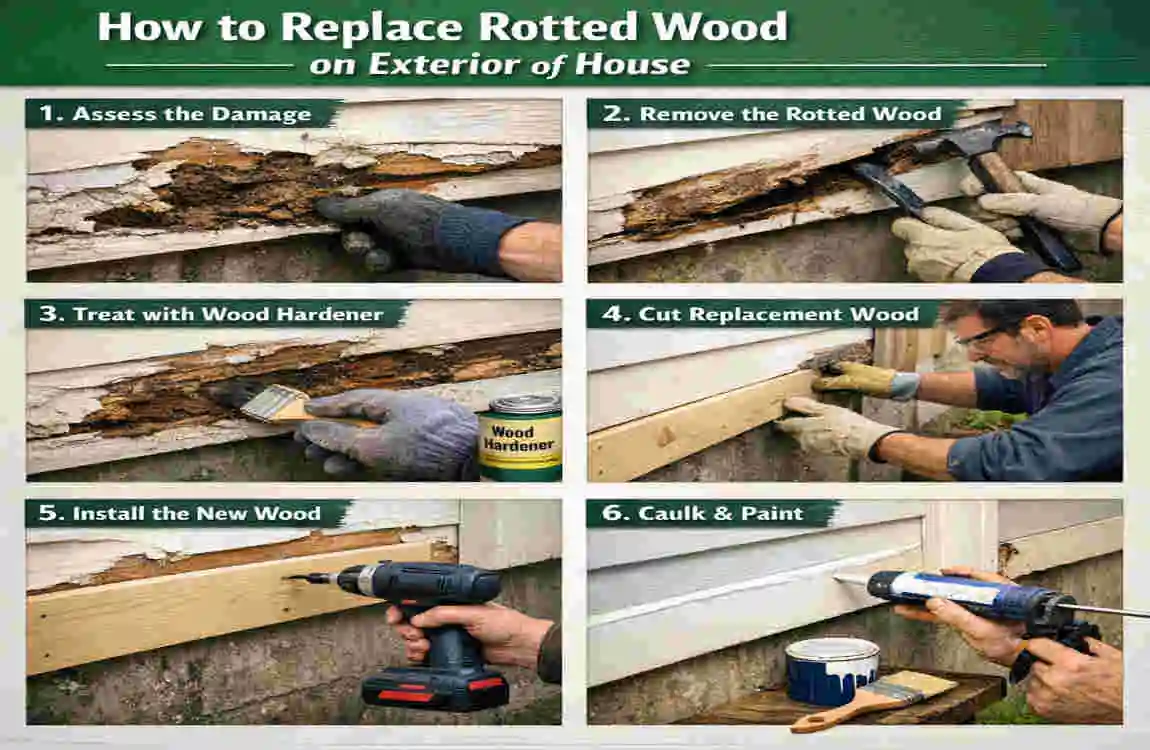
Inspect the Damage
Start by checking all visible areas of rot. Look closely at the damaged piece and the surrounding wood. Rot often spreads farther than it first appears, so do not stop at the surface.
Remove the Damaged Wood
Use a pry bar, hammer, or saw to remove the rotted section. Work slowly so you do not damage the good wood nearby. After that, clear away nails, dust, and loose pieces.
Check the Structure
Look underneath the bad wood. If the framing or support material is also soft or damaged, that part may need repair. Replacing only the surface wood will not fix more serious damage.
Measure and Cut New Wood
Measure the old piece carefully. Then cut the new board to match. For exterior use, choose rot-resistant lumber so the repair lasts longer.
Install the Replacement Piece
Fit the new wood into place and fasten it with exterior screws or nails. Make sure it sits tightly and lines up well with the surrounding area.
Seal All Joints
Apply exterior caulk to the seams and edges. This helps block water from getting back in. A good seal makes a big difference in long-term protection.
Prime and Paint
Before painting, apply primer to any bare wood. Then finish with two coats of exterior paint. This adds protection and helps the repair blend in with the rest of the house.
Can You Repair Instead of Replace?
When Wood Epoxy Works
If the damage is small and the wood is still mostly solid, wood epoxy or filler may work. This is useful for minor rot in trim or small surface spots.
When Full Replacement Is Necessary
If the wood is soft, crumbling, or structurally weak, replacement is the better choice. Do not try to patch badly damaged wood.
Pros and Cons of Both Methods
- Repair is faster and cheaper for small problems.
- Replacement lasts longer when the damage is serious.
- Epoxy works well for minor spots, but it is not a fix for major rot.
Best Wood for Exterior Repairs
For outdoor repairs, choose materials that can handle weather better.
- Cedar: Naturally resists decay
- Redwood: Strong and weather-resistant
- Pressure-treated lumber: Good for damp areas
- PVC trim: A wood alternative that resists rot
Common Mistakes to Avoid
Some mistakes can cause repairs to fail faster. Watch out for these:
- Painting before wood dries
- Ignoring hidden rot
- Using indoor wood outdoors
- Skipping primer
- Forgetting to seal joints
These errors can let moisture back in and cause the same problem again.
How Much Does Exterior Wood Rot Repair Cost?
Repair Type Estimated Cost
DIY Minor Repair $30–$150
Medium Repair $150–$500
Professional Repair $300–$2,000+
Complete Trim Replacement Varies by size
The cost depends on the extent of the damage and whether you do the work yourself. Small repairs are usually affordable, while bigger jobs can cost much more.
How to Prevent Exterior Wood Rot
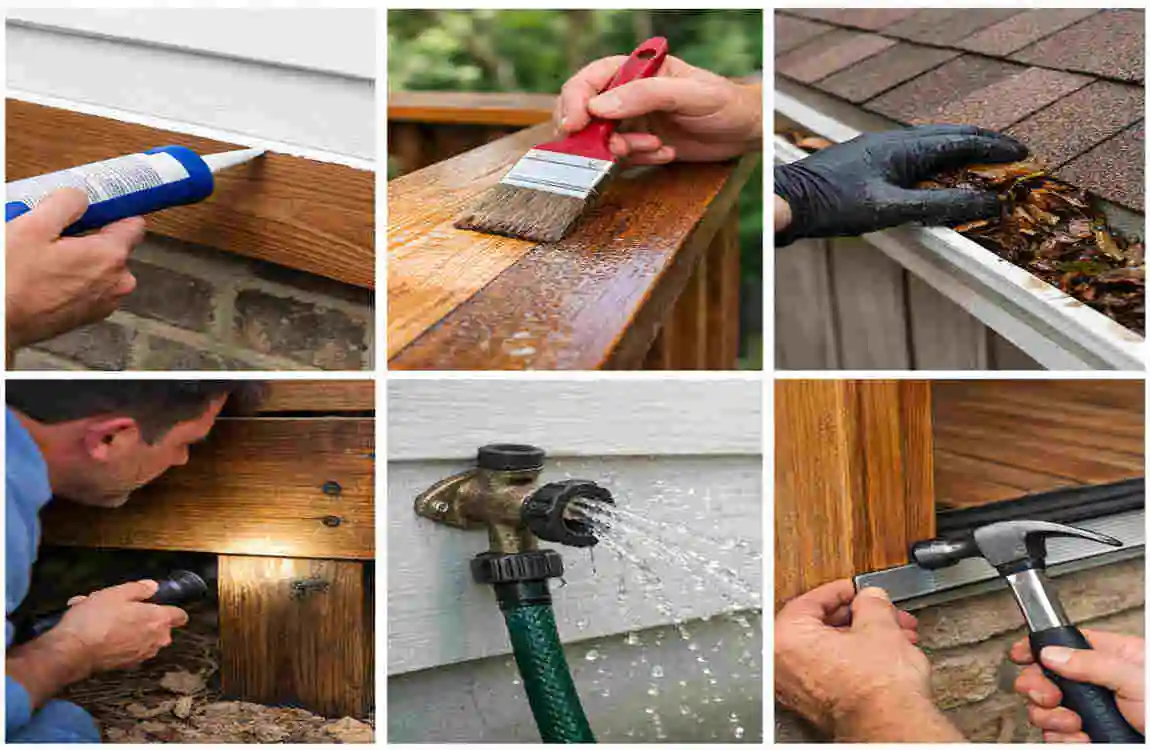
Paint Regularly
Fresh paint helps keep moisture out. Check painted areas often and touch up any peeling spots.
Keep Gutters Clean
Clogged gutters can cause water to run down the side of your house. Clean them often so rainwater flows away properly.
Improve Drainage
Make sure water moves away from the house foundation. Good drainage helps keep wood dry.
Seal Cracks Promptly
If you see a crack or gap, seal it quickly. Small openings can let in enough water to start rot.
Inspect Your Home Every Year
Walk around your home at least once a year. Look closely at trim, siding, windows, doors, and roof edges.
Frequently Asked Questions
How do I know if exterior wood needs replacing?
If the wood feels soft, crumbly, cracked, or weak, it usually needs to be replaced.
Can I repair rotten wood without replacing it?
Yes, small areas of rot can often be repaired with wood hardener and epoxy filler.
What is the best wood for exterior repairs?
Cedar, redwood, and pressure-treated lumber are common choices for outdoor use.
How long does it take to replace rotted exterior wood?
Small repairs may take a few hours, while bigger repairs can take one to two days.
How can I prevent wood rot from returning?
Keep wood painted, sealed, dry, and well-maintained.
Is replacing exterior wood a DIY project?
Yes, for small trim or siding repairs. But for large or structural damage, a professional is the safer choice.
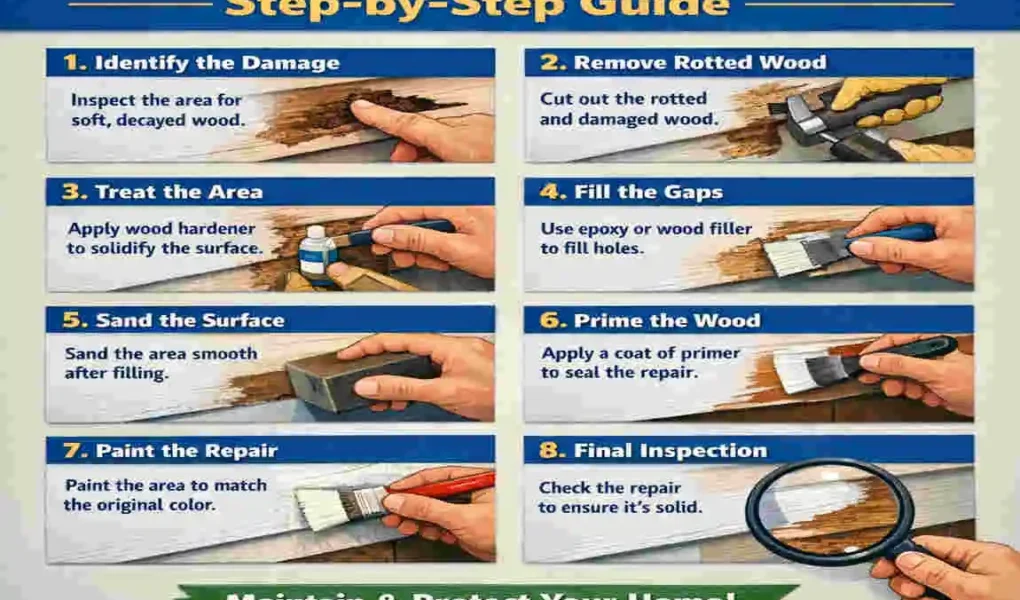
| Step | What to Do | Helpful Tip |
|---|---|---|
| Inspect the Damage | Check siding, trim, window frames, and decks for soft or crumbling wood. | Use a screwdriver to test for hidden rot. |
| Remove Rotten Wood | Cut or scrape away all decayed wood until you reach solid material. | Remove every damaged section to prevent further decay. |
| Clean the Area | Brush away dust, debris, and loose fibers. | Let the surface dry completely before repairs. |
| Apply Wood Hardener | Treat weakened wood with a wood hardener. | This strengthens the remaining wood. |
| Fill the Gaps | Use an exterior wood filler or epoxy to rebuild the damaged area. | Apply in layers for deep repairs. |