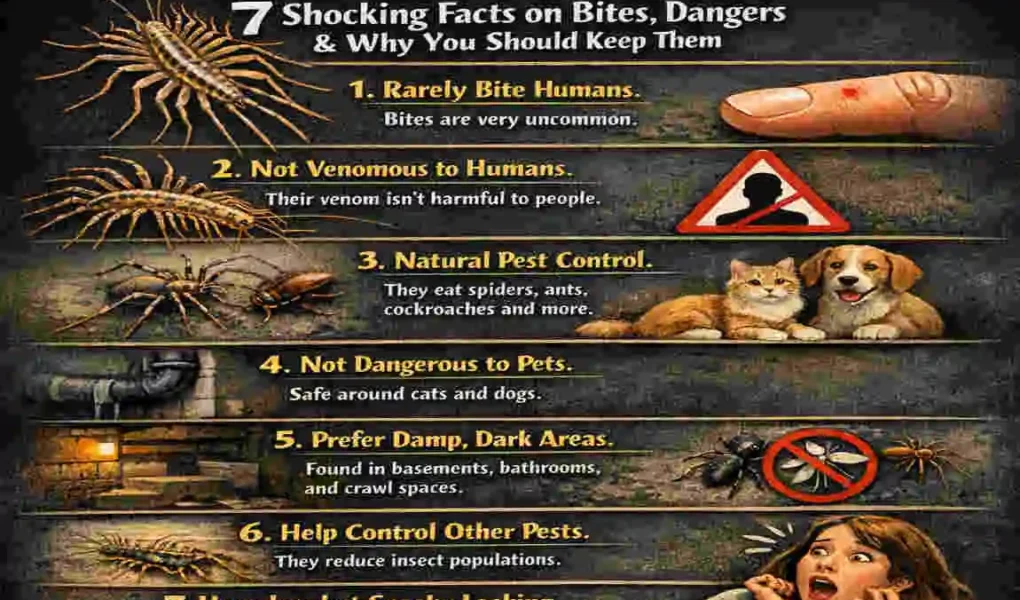
If you have ever spotted a house centipede racing across a wall, you probably did not stop to admire it. Most people feel alarmed the moment they see one. With its long legs, fast movement, and sudden appearance, it can look far more dangerous than it really is.
| Question | Answer |
|---|---|
| Are house centipedes bad? | Usually no—they’re generally harmless to people and homes . |
| Do they bite? | They can bite, but it’s rare and usually only if provoked or trapped . |
| Are the bites dangerous? | Most bites cause only mild pain, redness, or swelling, and are not considered dangerous . |
| Why are they in your house? | They often show up where other pests are present, since they eat insects like cockroaches and termites . |
| Should you keep them? | Some people tolerate them because they help control other pests, but many prefer to remove them because they look alarming . |
What Are House Centipedes?
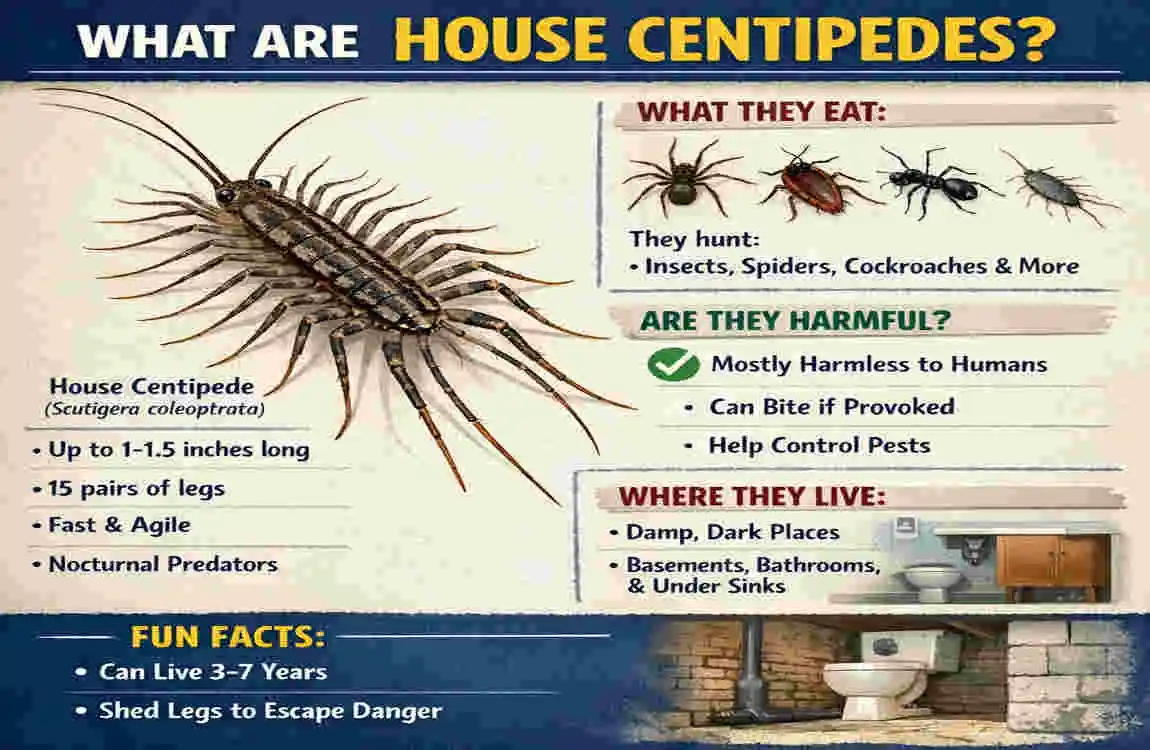
House centipedes are long, thin insects with many legs and very quick movements. They usually have a yellowish or brownish body with dark stripes and extremely long legs, making them look much larger than they are.
Physical Characteristics
House centipedes have a segmented body, which means their body is split into visible sections. They are fast, agile, and built for chasing prey rather than bothering people.
Their speed is one reason they scare homeowners so much. They often dart out suddenly, then disappear just as fast.
Where House Centipedes Live
You will usually find house centipedes in places with moisture and darkness, such as:
- Basements
- Bathrooms
- Crawl spaces
- Laundry rooms
- Utility areas
Why They Enter Homes
House centipedes come inside for three main reasons:
- Moisture
- Food
- Shelter
If your home has damp areas or small insects to eat, a centipede may decide to stay.
Are House Centipedes Bad? The Short Answer
So, are house centipedes bad? Not really.
They are generally more helpful than harmful. They do not chew wood, damage fabric, or invade food the way many other pests do. Instead, they hunt insects that most people do not want in the house.
That said, seeing one can still be a sign that something else is going on, such as moisture buildup or another pest problem.
House Centipedes Are Natural Pest Hunters
One of the biggest benefits of house centipedes is that they eat other pests.
What They Eat
House centipedes feed on many common indoor insects, including:
- Cockroaches
- Ants
- Silverfish
- Spiders
- Bed bugs
- Termite larvae
How They Hunt
They are fast hunters. They use their speed to chase prey, and they inject venom into small insects to stop them. This sounds scary, but it is mostly a problem for the insects they catch, not for people.
Why This Benefits Homeowners
Because they eat other pests, house centipedes can help lower insect numbers in your home. That means fewer bugs, and in some cases, less need for chemical sprays.
House Centipede Bites Are Rare
Many people wonder about a house centipede bite. The truth is that centipedes can bite, but it is very uncommon.
Can House Centipedes Bite Humans?
Technically, yes. They have mouthparts that can bite if they are trapped or handled roughly. But they usually avoid people.
What a Bite Feels Like
If a bite happens, it is usually mild. Most people may notice:
- A little pain
- Small redness
- Minor swelling
Who May React More Strongly?
Some people with sensitive skin or allergies may react more than others. But serious reactions are not common.
Myth vs. Reality
Myth: House centipedes attack people on purpose.
Reality: They try to get away from humans as quickly as possible.
They Are Not Considered Dangerous Pests
When people ask whether centipedes are harmful to humans, the answer is usually no.
Why They Don’t Damage Property
House centipedes do not:
- Eat wood
- Tear up fabric
- Damage walls
- Destroy stored items
That makes them very different from pests like termites or rodents.
Unlike Other Household Pests
Compared with termites, cockroaches, and mice, house centipedes are low on the danger list. They are unsettling, yes, but they are not known for causing major home damage.
Low Health Risks
They also do not usually spread disease the way some other pests can. In most homes, they are more of a nuisance than a threat.
Seeing Them May Signal Another Pest Problem
If you keep seeing house centipedes in your home, it may mean they found food there.
Why House Centipedes Stay Where Food Exists
Centipedes stay where they can hunt. If they are around often, other insects may be hiding nearby.
Common Hidden Pests They Feed On
They often eat:
- Silverfish
- Ants
- Roaches
- Small spiders
- Other tiny insects
What Their Presence Reveals
A lot of centipedes can point to:
- Moisture problems
- Poor ventilation
- Hidden pest activity
Action Tip
If you keep seeing them, check for leaks, damp corners, and signs of other insects.
House Centipedes Help Reduce Indoor Insect Populations
This is where house centipedes start looking less scary and more useful.
They act like a small, natural pest control system. Instead of waiting for sprays or traps, they quietly hunt insects on their own.
A Natural Alternative to Chemical Treatments
Many homeowners use strong chemicals to handle pest problems. House centipedes can reduce the need for some of that by helping keep insect numbers down.
Their Role in Household Ecosystems
Even inside a home, pests and predators create a tiny indoor balance. House centipedes are part of that balance.
Long-Term Pest Management Benefits
If your home has a few centipedes, they may be helping more than hurting. Some pest professionals even view them as useful predators rather than serious pests.
Their Appearance Is Scarier Than Their Actual Threat
Let’s be honest: most fear comes from how house centipedes look.
Why People Fear House Centipedes
They have:
- Many legs
- Fast movement
- Sudden appearances
- A creepy, spider-like shape
That combination can make anyone jump.
Psychological Impact of Creepy Crawlies
People naturally react strongly to insects that move quickly or have unusual body shapes. It is a normal response, even when the insect itself is not dangerous.
Separating Appearance from Reality
House centipedes may look dramatic, but they are not aggressive. They are more interested in escaping than in fighting.
You Can Prevent Them Without Harmful Chemicals
If you do not want house centipedes around, you can reduce them without using harsh sprays.
Reduce Moisture
This is one of the best ways to keep them away.
- Fix leaks
- Use dehumidifiers
- Improve air flow
- Dry damp areas
Eliminate Their Food Source
If centipedes are eating other insects, reducing those insects will help too.
- Clean regularly
- Store food properly
- Treat pest problems early
Seal Entry Points
Close off the small spaces they use to get inside.
- Cracks in walls
- Gaps near windows
- Openings around pipes
- Foundation gaps
Declutter Damp Areas
Centipedes love quiet, messy spaces.
- Basements
- Storage rooms
- Utility areas
Keeping these areas neat and dry can make a big difference.
Pros and Cons of House Centipedes
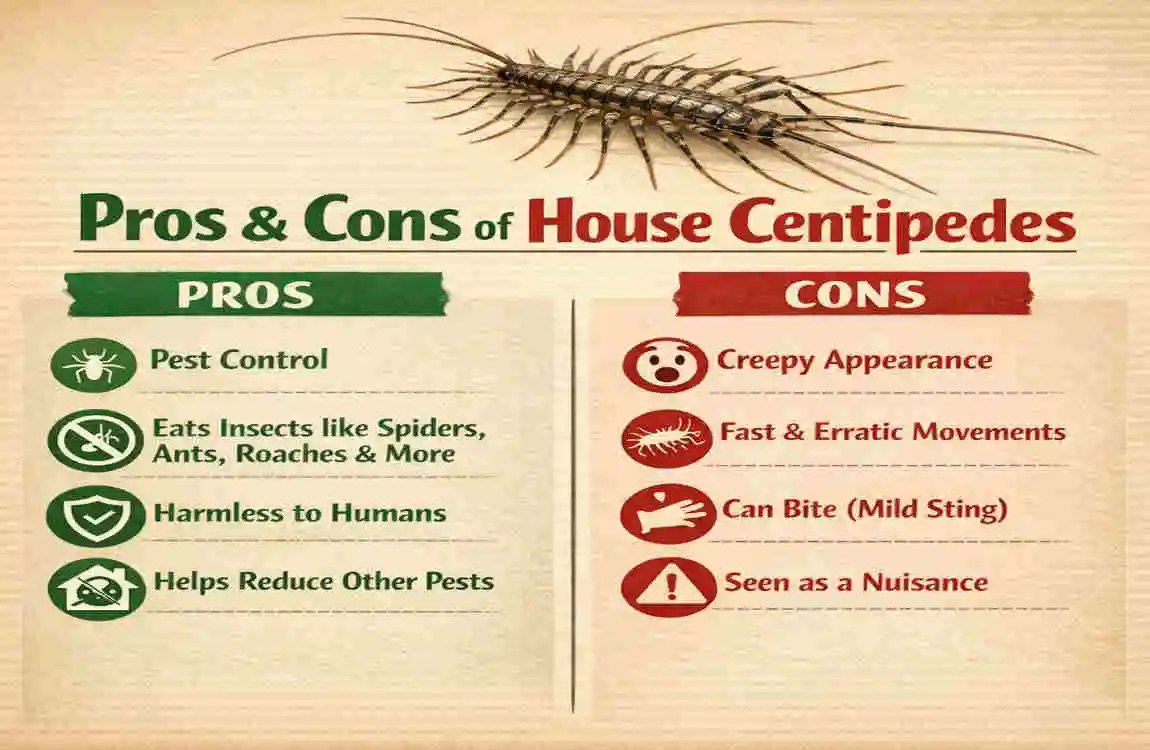
Pros Cons
Eat harmful pests. Unpleasant appearance
Rarely bite humans. Can scare homeowners
No property damage may signal moisture issues
Help reduce insect numbers. Not welcome in living spaces
Should You Kill House Centipedes?
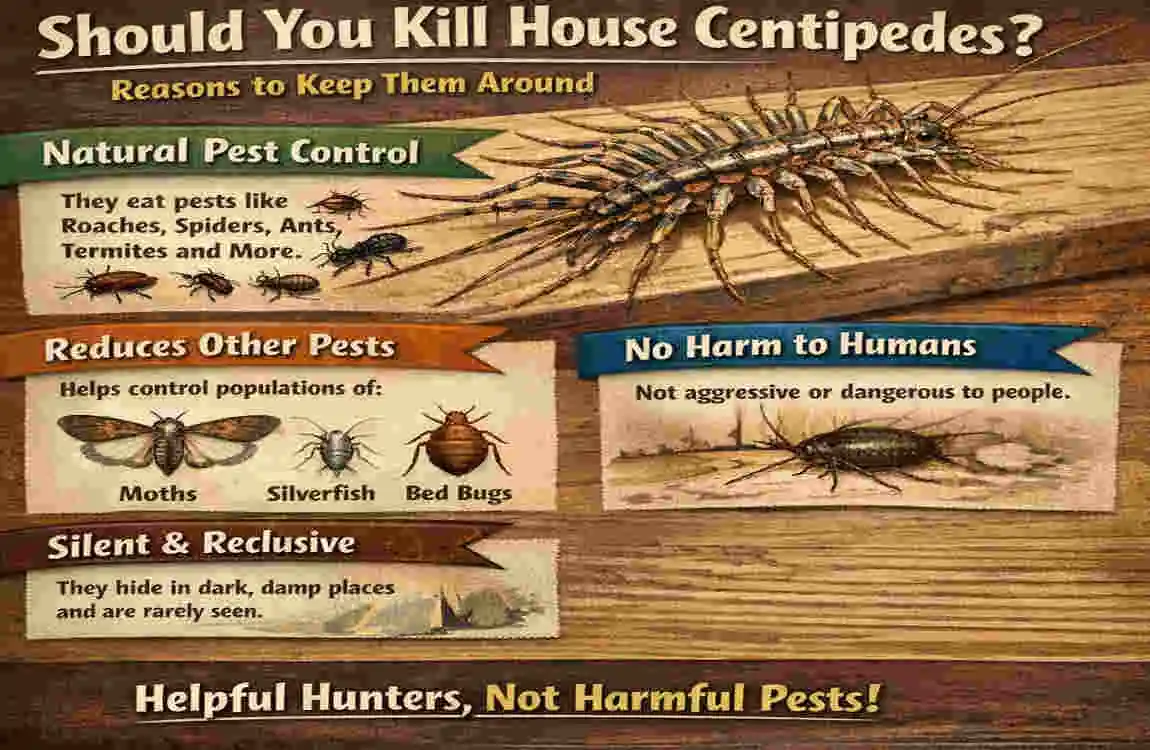
This depends on your comfort level.
Reasons Some Homeowners Leave Them Alone
Some people keep them because they help control other bugs. If you only see one occasionally, it may be best to leave it alone.
When Removal Makes Sense
You may want to remove them if:
- You see them often
- They appear in living areas
- You are uncomfortable with them
Humane Removal Methods
If you do not want to kill them, try:
- Catch-and-release
- Drying out damp spaces
- Sealing entry points
- Reducing other pest activity
Frequently Asked Questions
Are house centipedes bad for humans?
No, not usually. They are generally harmless to people and often help by eating other insects.
Are house centipedes poisonous?
No. House centipedes are not poisonous. They do have venom they use on prey, but they are not a poison threat to humans.
Can house centipedes bite?
Yes, but it is rare. Most bites are mild and cause only minor irritation.
Why do I suddenly have house centipedes in my house?
Usually because of moisture, food sources, or shelter. If they suddenly showed up, there may be other pests or damp conditions nearby.
Do house centipedes carry diseases?
They are not known as major disease carriers in homes.
Should I kill house centipedes when I see them?
That is up to you. If you want fewer insects in your home, leaving them alone can help. If you dislike them or see too many of them, remove them humanely.
How can I naturally prevent house centipedes?
Keep your home dry, clean, and sealed. Reduce other pests, fix leaks, and declutter damp spaces.
Are house centipedes a sign of a dirty house?
Not always. They are more often a sign of moisture or hidden insect activity than dirt.