Building a home is an exciting yet intricate process that requires careful planning and execution. Have you ever wondered how long it takes to finish a house after the framing is complete? Understanding the timeline is crucial for homeowners who want to move into their dream home without unnecessary delays.
What is Home Framing?
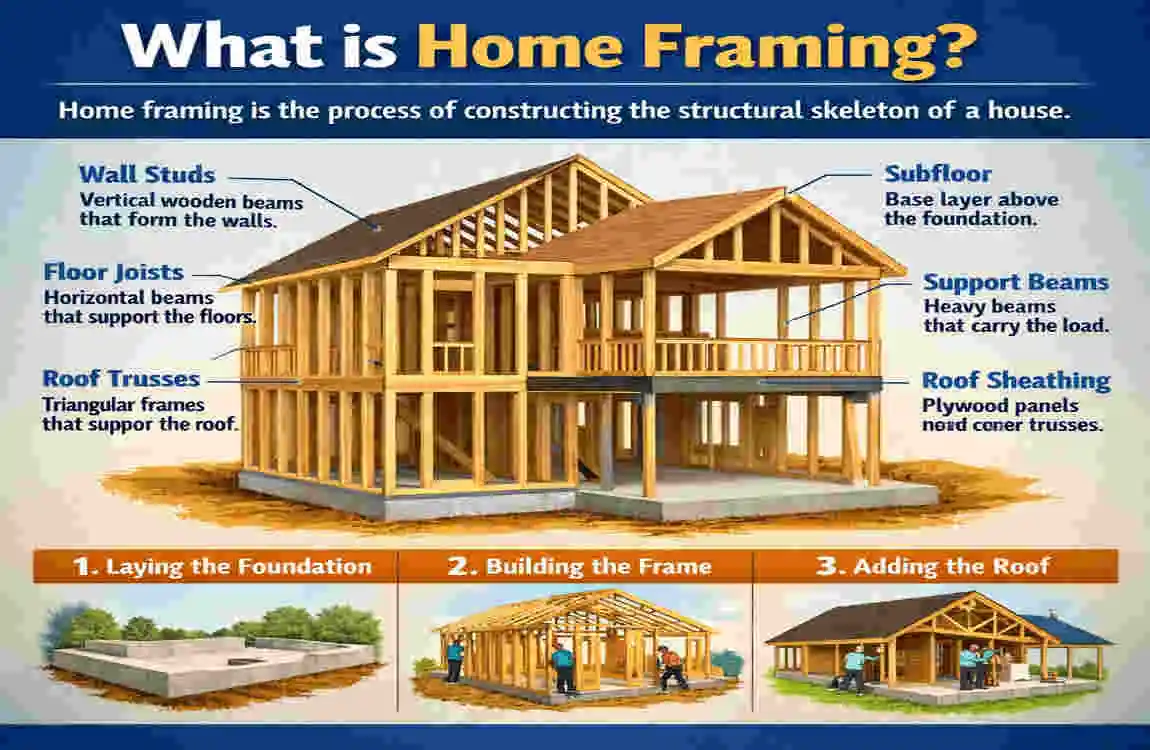
Definition and Purpose
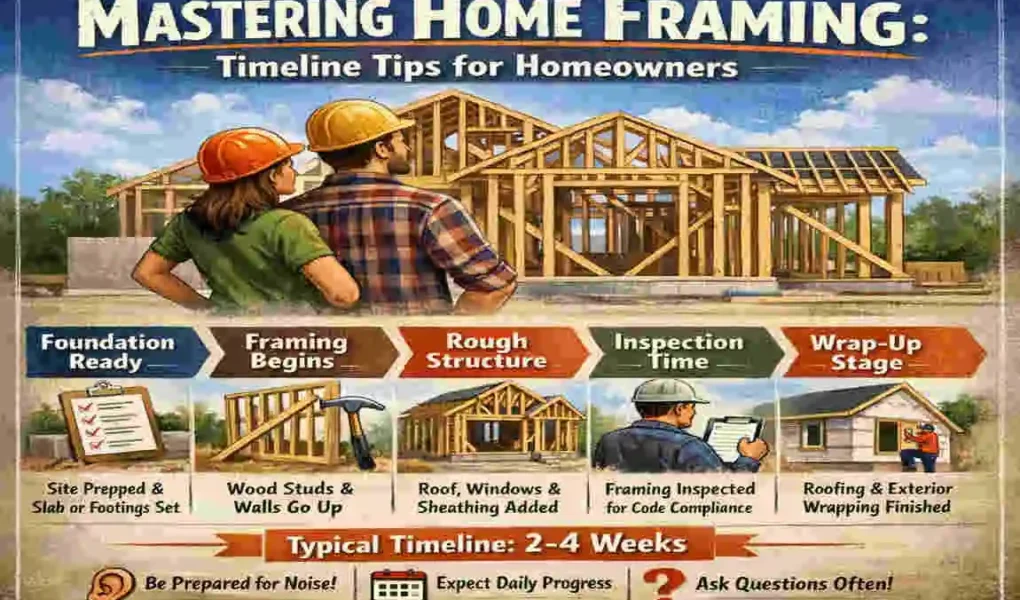
Home framing is essentially the skeletal structure of your house. It provides the framework that supports the walls, roof, and floors, ensuring the building’s home stability and strength. Think of it as the bones of a human body—without proper framing, the structure wouldn’t stand strong.
Types of Framing
There are several types of framing, each with its own advantages:
- Wood Framing: The most common type, used due to its availability, affordability, and ease of construction.
- Steel Framing: Known for its durability and pest resistance, steel framing is often used in modern or commercial buildings.
- Modular Framing: Pre-constructed sections that are assembled on-site, saving time and reducing waste.
Why Framing is Critical
Good framing ensures the safety and longevity of your home. Poorly executed framing can lead to structural issues, higher maintenance costs, and even safety hazards. This stage also lays the foundation for other critical elements, such as plumbing, electrical systems, and insulation.
The Home Building Process: Where Framing Fits
Overview of the Home Construction Phases
Building a home involves several key stages, and framing is one of the most significant milestones. Here’s a quick look at the process:
- Site Preparation: Clearing the land and preparing the foundation.
- Foundation Pouring: Installing the base that supports the structure.
- Framing: Constructing the skeleton of the house.
- Installing Utilities, Roofing, and Drywall: Adding essential systems and enclosing the structure.
- Finishing Touches: Painting, flooring, cabinetry, and final inspections.
Framing as a Milestone
Once the framing is complete, the house begins to take shape, marking a major turning point in the build. It’s the first moment when you can walk through the structure and visualise it as a home rather than a construction site.
How Long Does Framing Take?
On average, framing a standard house can take anywhere from 1 to 3 weeks, depending on the size and complexity of the design. Larger or custom homes may take longer due to intricate details and additional structural requirements.
After Framing: How Long to Finish a House?
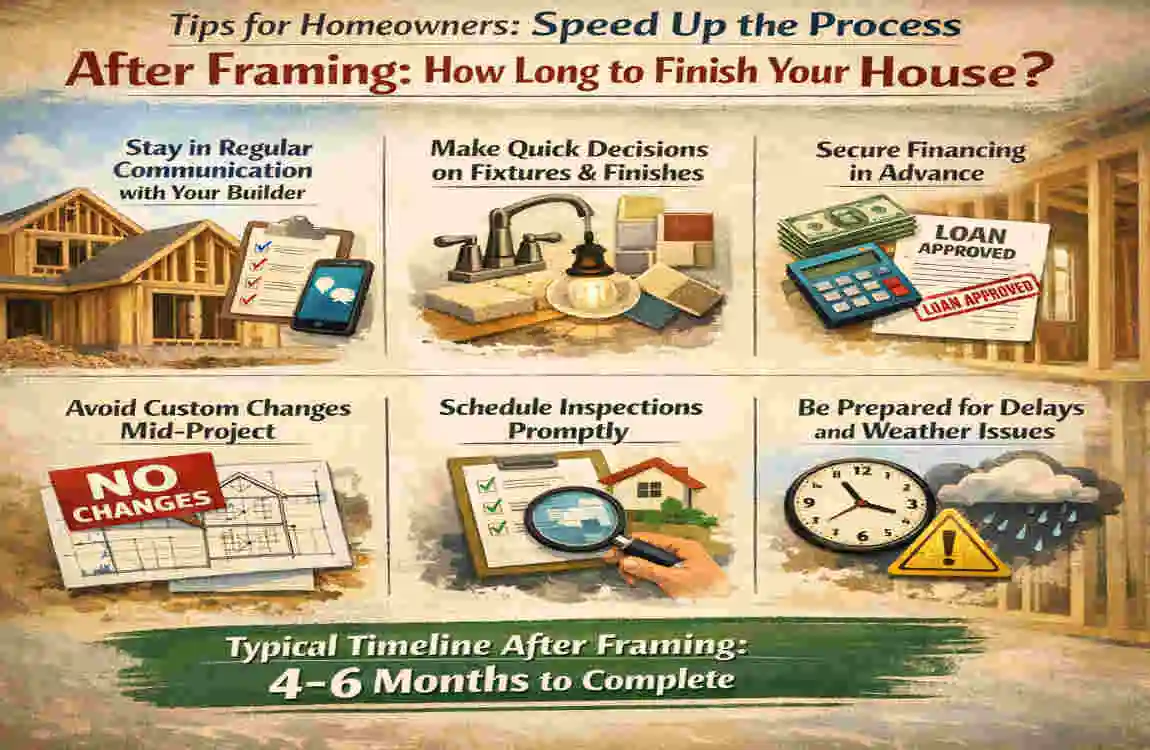
Factors Impacting the Timeline After Framing
The time it takes to finish a house after framing depends on several factors:
- House Size and Design Complexity: Larger homes or custom designs with unique features take more time to complete.
- Weather Conditions and Construction Delays: Rain, snow, or extreme heat can significantly slow progress.
- Availability of Materials and Labour: Supply chain issues or labour shortages can lead to unexpected delays.
General Timeline
Here’s a breakdown of the average timeline for each step after framing:
Phase Average Duration
Rough-ins (plumbing, electrical, HVAC) 2-4 weeks
Insulation and Drywall 1-2 weeks
Interior Finishes (flooring, cabinetry, painting) 4-8 weeks
Final Inspections and Walkthrough 1-2 weeks
In total, it typically takes 8-16 weeks after framing to finish a house, but this can vary based on the factors mentioned above.
Variability in Timelines
- Custom vs Pre-Designed Homes: Custom homes often take longer due to unique requirements, while pre-designed homes follow a set plan, speeding up the process.
- Regional Differences: Construction practices and weather conditions vary across regions, affecting timelines.
Tips for Homeowners to Speed Up the Process
Planning Ahead
One of the best ways to avoid delays is to have a detailed timeline and budget in place before construction begins. This ensures everyone involved stays on track.
Effective Communication with Contractors
Clear and regular communication with your contractors is key. Be proactive in addressing concerns, asking for updates, and ensuring everyone is aligned with the project goals.
Choosing the Right Materials
Opt for materials that are readily available in your area. Special orders or imported items can lead to significant delays.
Weather-Proof Your Timeline
If you’re building in an area prone to extreme weather, plan your construction schedule around those conditions to avoid interruptions.
Common Challenges After Framing
Inspection Delays
Local building codes often require inspections at various stages. Delays in scheduling or passing inspections can slow down the process.
Supply Chain Issues
Global supply chain disruptions can affect the availability of materials, causing unexpected delays.
Labor Shortages
A shortage of skilled labour can affect timelines, especially during busy construction seasons.
Budget Overruns
If costs exceed the initial budget, it can cause delays as homeowners and contractors reassess plans.
Benefits of Understanding the Timeline
Better Planning
Knowing “after framing how long to finish house“ helps you plan for move-in dates, budgeting, and other life events.
Reduced Stress
When you know what to expect, the process feels less overwhelming, giving you peace of mind.
Improved Collaboration
Being informed allows you to work more effectively with contractors, ensuring the project stays on track.
Real-World Examples: Timelines from Actual Builds
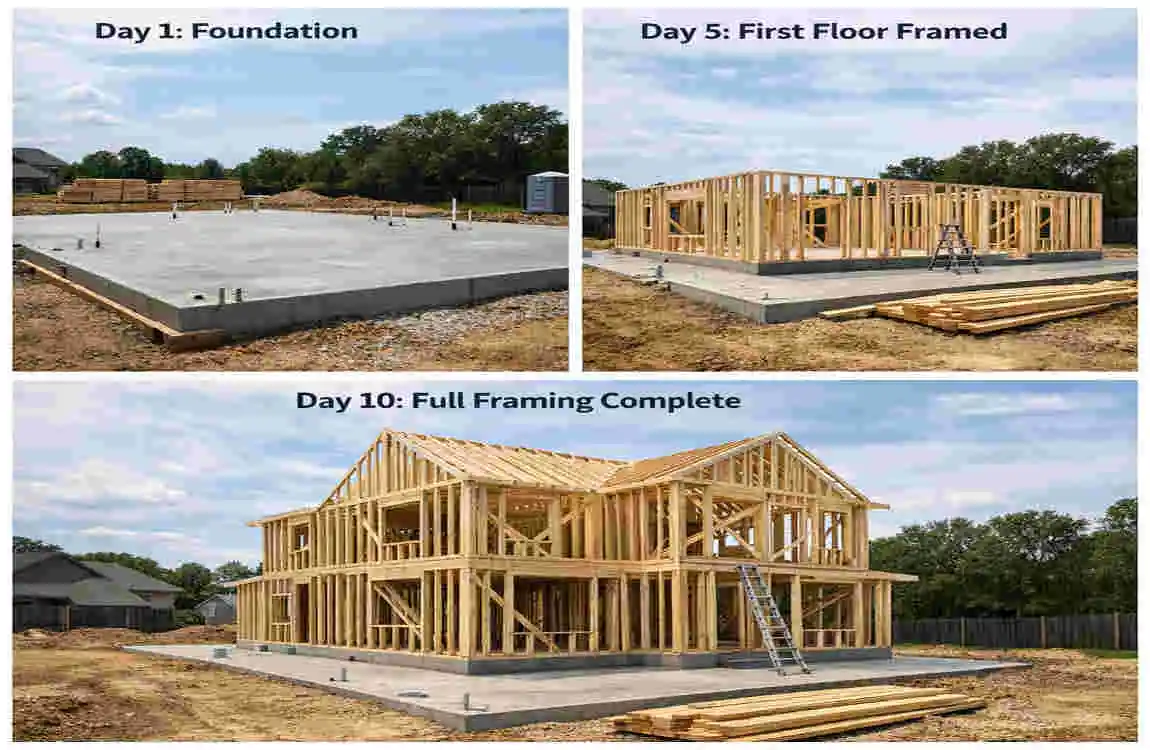
A Standard 3-Bedroom House
- Timeline: 12 weeks after framing.
- Challenges: Minor weather delays, but stayed on track due to good planning.
A Custom-Designed Luxury Home
- Timeline: 20 weeks after framing.
- Challenges: Unique design features required special materials, causing delays.
Frequently Asked Questions
How long does it take to finish a house after framing?
Typically, it takes 8-16 weeks, depending on the size and complexity of the home.
What factors can delay the process?
Weather, labour shortages, material availability, and inspection delays are common factors.
Can homeowners do anything to speed up the timeline?
Yes! Effective planning, clear communication, and the use of readily available materials can help.
Are timelines different for custom homes vs pre-built designs?
Yes. Custom homes generally take longer due to unique features and requirements.
| Phase | Typical Duration | Key Activities | Homeowner Tips |
|---|---|---|---|
| Framing | 1-3 weeks | Building the structural skeleton of the house | Confirm materials & crew availability upfront |
| Rough-Ins (Plumbing, Electrical, HVAC) | 2-4 weeks | Installing essential utilities | Schedule inspections early to avoid delays |
| Insulation & Drywall | 1-2 weeks | Sealing and wall finishing | Choose insulation types suitable for your climate |
| Interior Finishes | 4-8 weeks | Flooring, cabinetry, painting, fixtures | Stay in regular contact with contractors |
| Final Inspections & Walkthrough | 1-2 weeks | Ensuring compliance and quality check | Prepare documentation and address issues promptly |