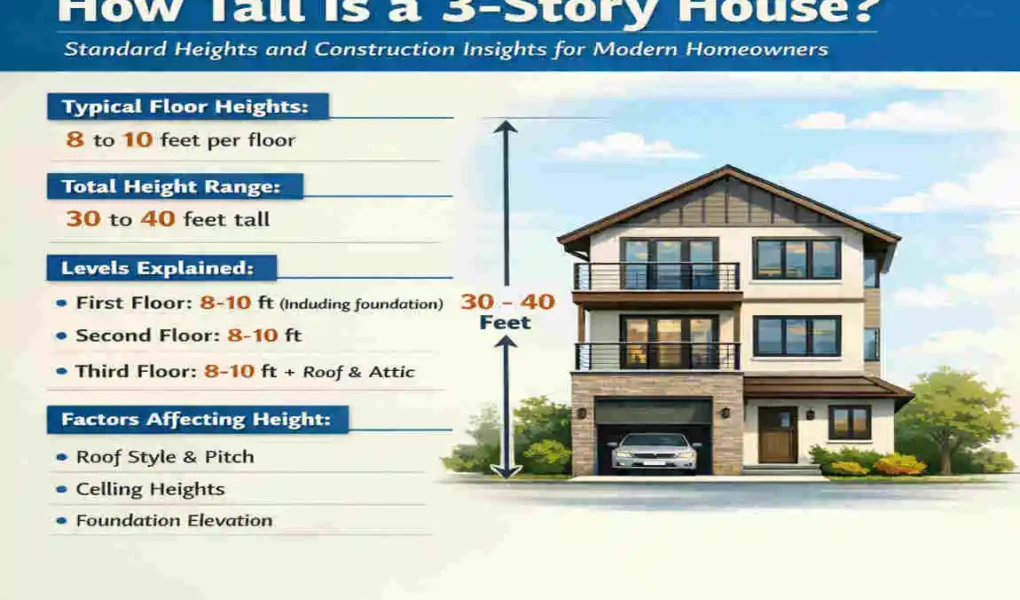
If you are planning a new home, buying property, or comparing design options, one of the first questions you may ask is how tall a 3-story house is in real life. The answer is not one fixed number. It depends on ceiling height, floor thickness, roof design, foundation type, and local building codes.
| House type | Typical height |
|---|---|
| 3-story house | 9–10 m |
| 3-story house with taller ceilings | 10–12 m |
| 3-story house with a steeper roof | 11–13 m |
A 3-story house usually stands somewhere between 28 and 40 feet tall, but some homes can be shorter or taller depending on how they are built. That is why it helps to understand the basics before you estimate cost, space, or zoning needs.
What Is Considered a 3-Story House?
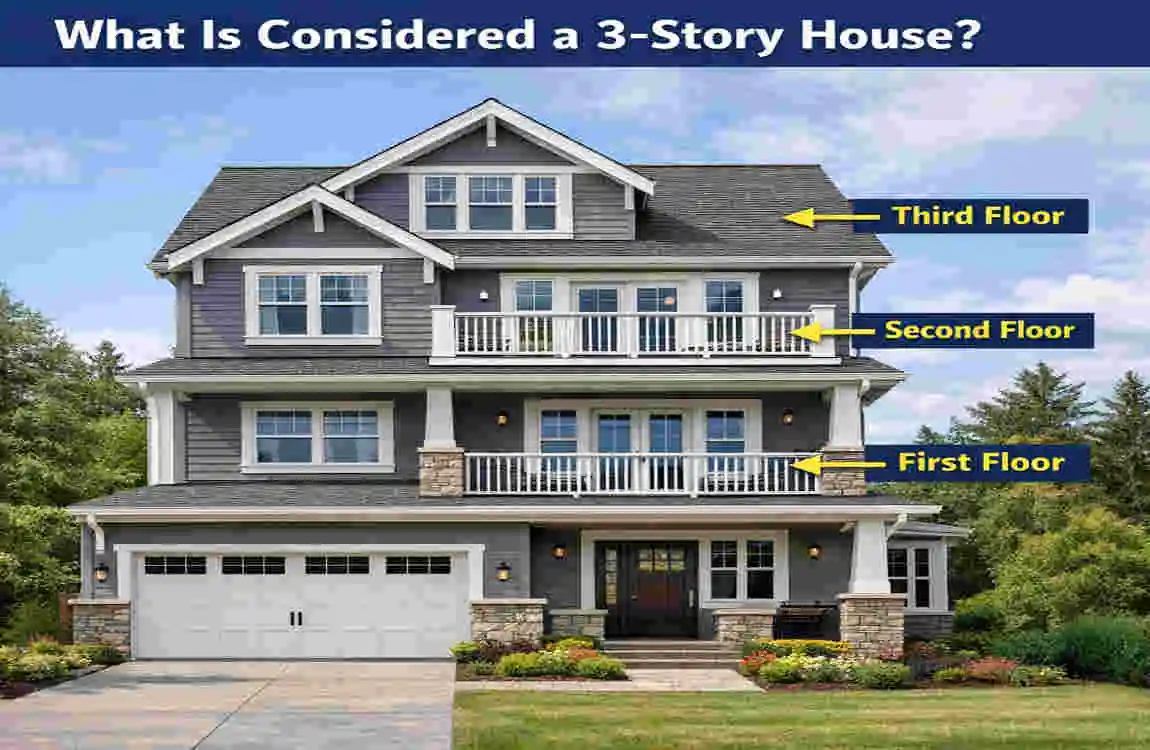
A 3-story house is a home with three above-ground levels that are used as living space. The word story refers to a usable floor, not just any space within the structure.
Definition of a Story in Residential Construction
A floor and a story are close in meaning, but they are not always the same. A finished level with normal ceiling height counts as a story. Attics, storage lofts, or mechanical spaces may not count unless they are built for regular living use.
Split-level homes can confuse people because the floors are offset. In that case, the house may feel taller or shorter depending on how the levels are arranged.
Does Basement Count as a Story?
Usually, a basement does not count as a story if it is mostly below ground. However, a walkout basement or a basement with large exposed walls may be counted in some local codes.
That is why what counts as a 3-story house can vary by location. It is always smart to check local rules before you assume the final height or story count.
Standard Residential Classification
Three-story homes are common in:
- Detached houses on smaller lots
- Townhouses in cities
- Narrow urban homes with vertical layouts
This type of home is popular because it saves land while still giving the family enough room.
How Tall Is a 3-Story House on Average?
The average height of a 3-story house usually falls in this range:
House Type Approximate Height
Compact modern home 28–32 feet
Traditional family house 30–36 feet
Luxury 3-story home 35–45 feet
Flat roof urban home 27–33 feet
Sloped roof design 32–40+ feet
This table gives you a realistic idea of the standard height of a 3-story house. Still, the final number changes based on design choices.
Average Ceiling Height Per Floor
Most homes use one of these ceiling heights:
- 8 feet for standard homes
- 9 feet for a more open feel
- 10 feet or more for luxury spaces
When every floor is taller, the entire home becomes taller too. A house with 10-foot ceilings on three floors will naturally rise higher than a house with 8-foot ceilings.
Thickness Between Floors
Between each story, there is more than just space. Builders must include:
- Floor joists
- Slabs or framing
- Insulation
- HVAC routing
- Electrical and plumbing space
This hidden structure can add about 10 to 16 inches per floor, sometimes more. That may not sound like much, but it adds up across three levels.
Roof Height Adds More Elevation
The roof can significantly change the final height.
- Flat roofs add very little height
- Pitched roofs add more
- Gable roofs can raise the center height significantly
- Mansard roofs create a more dramatic upper profile
So if you are asking how tall a 3-story house is, the roof style is a major part of the answer.
Basic Formula to Estimate House Height
You can use a simple formula:
(Ceiling Height + Floor Thickness) × Number of Floors + Roof Height
For example:
- 9-foot ceiling
- 1-foot floor assembly
- 3 floors
- 5-foot roof
Total = about 35 feet
This is only an estimate, but it gives you a useful starting point.
Why Real Measurements Differ
Even two houses with the same number of stories can look different in height because of:
- Architectural style
- Foundation depth
- Roof angle
- Structural framing
- Local code rules
That is why one 3-story home may look compact while another feels much taller.
Factors That Affect 3-Story House Construction Height
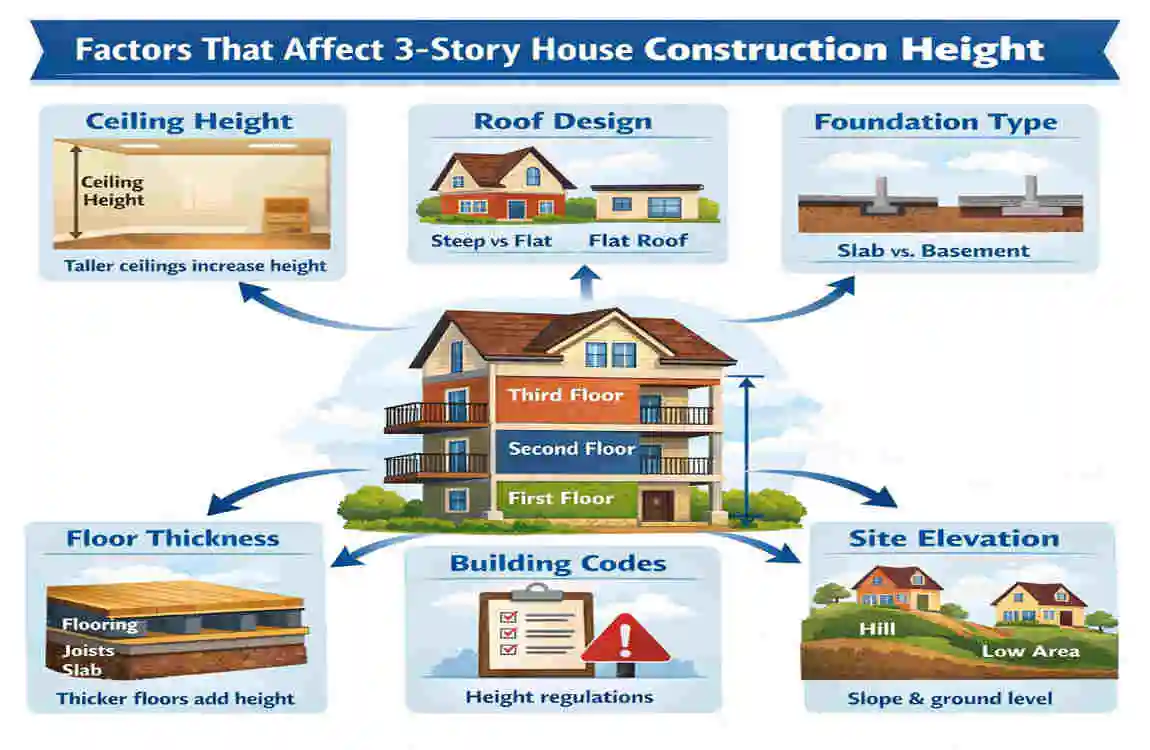
Several choices shape the final size of the home.
Ceiling Height Preferences
A home with 8-foot ceilings will be shorter than one with 9-foot or 10-foot ceilings. Many modern homes use taller ceilings to create a brighter, more open feeling.
Roof Design
Roof style changes can increase the total height more than many people expect. A flat roof keeps the structure lower, while a steep roof can add several feet in height.
Foundation Type
The house’s foundation matters too.
- Slab-on-grade keeps the home lower
- Crawlspaces add some height
- Basements can raise or lower the visible profile depending on exposure
Building Materials
The material used for construction also affects thickness and load support.
- Wood framing is common and flexible
- Steel framing is strong and often used in modern designs
- Concrete construction can create thicker structural sections
Mechanical Space
A house also needs room for:
- HVAC systems
- Plumbing lines
- Electrical wiring
These systems need hidden space, which can slightly increase the height between floors.
Height Comparison: 2-Story vs 3-Story vs 4-Story House
House Stories Average Height
1-story 10–18 feet
2-story 18–25 feet
3-story 28–40 feet
4-story 40–55 feet
A 3-story house is a middle ground. It is taller than a standard family home, but it is still much more practical than a full four-story structure.
Which Option Fits Different Needs?
A 3-story home can work well for:
- Small urban lots
- Multi-generational families
- Rental income properties
- Vacation homes
If you need more space but do not want to buy a larger lot, building upward is often a smart choice.
Typical Construction Methods for a 3-Story House
Wood Frame Construction
This is one of the most common methods in residential housing. It is usually faster and more affordable, and it works well for many 3-story homes.
Concrete Block Construction
Concrete block homes are often chosen for strength, durability, and fire resistance. They can also perform well in storm-prone areas.
Steel Frame Construction
Steel framing is strong and modern, but it often costs more. It is useful when the design calls for wide open spaces or a more contemporary look.
Which Method Affects Overall Height?
Yes, the construction method can affect the final height because different materials require different thicknesses, support, and load-handling. A stronger structure may need deeper framing or wider support areas.
Local Building Codes and Height Restrictions
Before building, you must check local rules. This is where the 3-story house height regulations become very important.
Why Height Regulations Matter
Rules exist to protect:
- Safety
- Neighborhood planning
- Fire access
- Privacy and spacing
Zoning Restrictions
Some areas limit the height of houses. Restrictions may be stricter in:
- Urban residential zones
- HOA communities
- Coastal areas
Setback and Vertical Limit Rules
Your city may limit:
- Total feet allowed
- Roofline height
- Balcony or parapet design
- Distance from property lines
These rules can change the final look and size of your home.
Cost Impact of Building Taller Homes
A taller house usually costs more because it needs:
- Stronger framing
- More staircase work
- Extra labor
- More complex roofing
- Additional safety planning
Still, building up can be more affordable than building out if land is limited or expensive.
Advantages of a 3-Story House
A 3-story home offers many benefits:
- More space on a small lot
- Better separation between rooms
- Potential for better views
- Flexible use of each floor
- Possible rental suite space
This makes it a practical option for many modern homeowners.
Challenges of a Taller 3-Story Home
There are also some downsides:
- More stairs
- Less accessibility
- Longer evacuation time
- More maintenance
- Extra structural planning
If someone in the home has mobility concerns, you should consider this early.
Best Design Ideas for Modern 3-Story Homes

Some popular styles include:
- Contemporary cube homes
- Modern minimalist homes
- Vertical townhouses
- Mediterranean-style villas
- Colonial-inspired vertical homes
A few smart design tips can also improve function:
- Use open staircases
- Add double-height windows
- Include a rooftop deck
- Hide mechanical systems neatly
- Make good use of attic or loft space
These ideas help the home feel larger without making it much taller than necessary.
Frequently Asked Questions
How tall is a 3-story house in feet?
Usually 28 to 40 feet, depending on ceiling height, roof style, and structure.
Can a 3-story house be under 30 feet?
Yes. A compact home with a flat roof and standard ceilings can stay under 30 feet.
Does roof type affect total height?
Absolutely. A pitched or gable roof can add several feet to the house.
Is a basement included in the story count?
Sometimes. It depends on local building codes and how much of the basement is above ground.
Is a 3-story home safe in windy areas?
Yes, as long as it is properly engineered and built to local wind-load standards.
Is building upward cheaper than widening a house?
Often yes, especially when land is costly or space is limited.