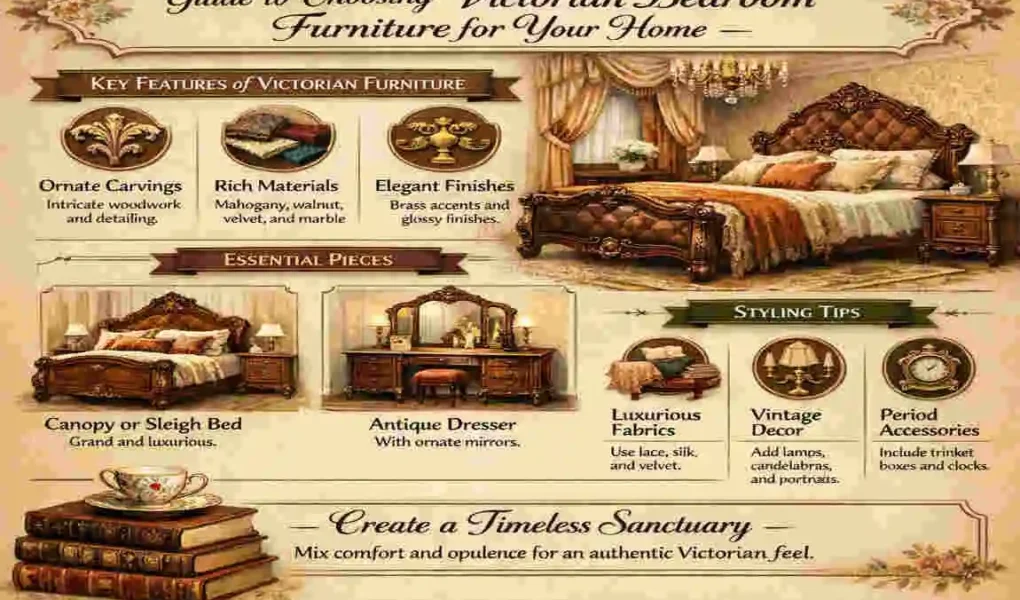
Victorian bedroom design brings a sense of beauty, comfort, and old-world charm into your space. It is known for rich details, elegant shapes, and furniture that feels both classic and luxurious. If you love rooms that feel warm, timeless, and a little grand, this style may be a perfect fit.
| Item / Aspect | What to Look For | Tips for Your Home |
|---|---|---|
| Bed frame | High headboard, carved wood or metal, curved shapes | Make this the statement piece; check room height. |
| Wardrobe / Armoire | Dark wood, paneled doors, decorative handles | Use mirrored doors if the room is small. |
| Bedside tables | Matching or coordinated wood tone, turned legs, details | Choose ones with drawers for hidden storage. |
| Dressing table | Curved front, ornate mirror, small drawers | Add a padded stool with tufted or velvet-style fabric. |
| Chair or bench | Upholstered seat, cabriole or turned legs | Place at the foot of the bed or by a window. |
| Wood finish & color | Mahogany, walnut, or dark-stained replicas | Balance dark furniture with lighter walls and bedding. |
| Upholstery & fabrics | Velvet, brocade, floral or damask patterns | Keep to 2–3 main colors so the room doesn’t feel heavy. |
| Ornamentation | Carvings, curves, brass or glass knobs | Use a few ornate pieces; avoid cluttering the space. |
When people look for Victorian bedroom furniture, they are often searching for pieces that do more than fill a room. They want furniture that tells a story, adds character, and still works well for daily life. That balance matters. A Victorian bedroom should feel stylish yet practical and comfortable.
What Is Victorian Bedroom Furniture?
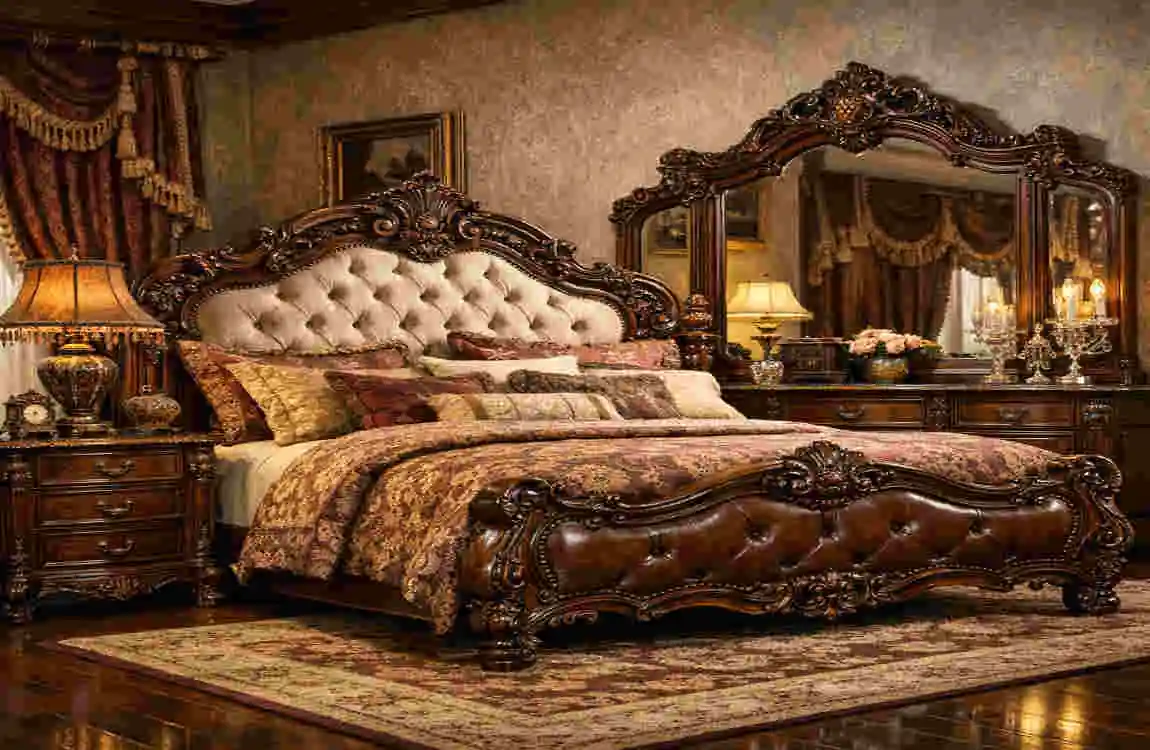
Victorian bedroom furniture is inspired by the design style popular during the Victorian era, from 1837 to 1901. This was a time when furniture makers focused on fine details, rich materials, and handcrafted beauty. Royal influence and skilled craftsmanship shaped the look, which is why this style still feels elegant today.
History of Victorian Interior Design
Victorian interiors were built around luxury and decoration. Furniture often had carved wood, curved shapes, and thick upholstery. People wanted bedrooms to feel polished and refined, so the furniture was made to stand out.
Key Characteristics of Victorian Furniture
Victorian furniture is easy to recognize. It often includes:
- Ornate carvings
- Dark polished wood
- Curved edges
- Rich fabrics
- Heavy, luxurious shapes
These details give the room a strong sense of presence. Nothing feels plain or rushed. Every piece is made to look thoughtful and elegant.
Why Homeowners Love Victorian Bedroom Styles
Many homeowners love this style because it feels timeless. It brings a sense of history into the home, and the pieces are usually sturdy and long-lasting. If you enjoy classic design, Victorian furniture offers both beauty and strength.
Why Choose Victorian Bedroom Furniture for Your Home?
Victorian furniture is more than decoration. It helps create a room that feels special, restful, and full of character.
Elegant and Luxurious Appeal
One of the biggest reasons people choose Victorian furniture is its sophisticated look. It instantly makes a bedroom feel richer and more complete. Even one statement piece can change the whole mood of the room.
Durability and Quality Craftsmanship
Many Victorian-style pieces are made from hardwood and designed to last. The craftsmanship is often excellent, which means these items can stay in your home for many years with proper care.
Works in Traditional and Modern Homes
Victorian furniture is not only for old houses. It can also work in modern spaces. If you mix it with simple walls, clean lighting, and a few modern items, the room feels balanced rather than heavy.
Essential Victorian Bedroom Furniture Pieces
A Victorian bedroom works best when you choose the right core pieces. You do not need to fill the room with too much furniture. Instead, focus on a few strong items.
Victorian Bed Frame
The bed is usually the main focus of the room. Popular choices include:
- Four-poster beds
- Canopy beds
- Tufted headboards
- Carved wooden frames
These beds create a grand feeling right away. A wooden frame with detailed workmanship can become the focal point of the entire design.
Victorian Dressers
A Victorian dresser is usually large and decorative. Many include big mirrors, carved drawers, and brass handles. They offer useful storage while also adding style.
Wardrobes and Armoires
These tall cabinets help keep clothing organized. Victorian wardrobes often have handcrafted details and a solid, sturdy look. They work especially well in larger bedrooms.
Bedside Tables
Bedside tables in this style often include marble tops, decorative trim, and metal handles. They are small, but they play an important role in completing the room.
Vanity Tables
A vanity table adds a soft, feminine touch. It often includes a mirror and small drawers, making it both practical and beautiful.
Accent Chairs and Benches
A small chair or bench can make the room feel more finished. Look for velvet, floral fabric, or curved wooden legs to maintain the Victorian look.
Best Materials for Victorian Bedroom Furniture
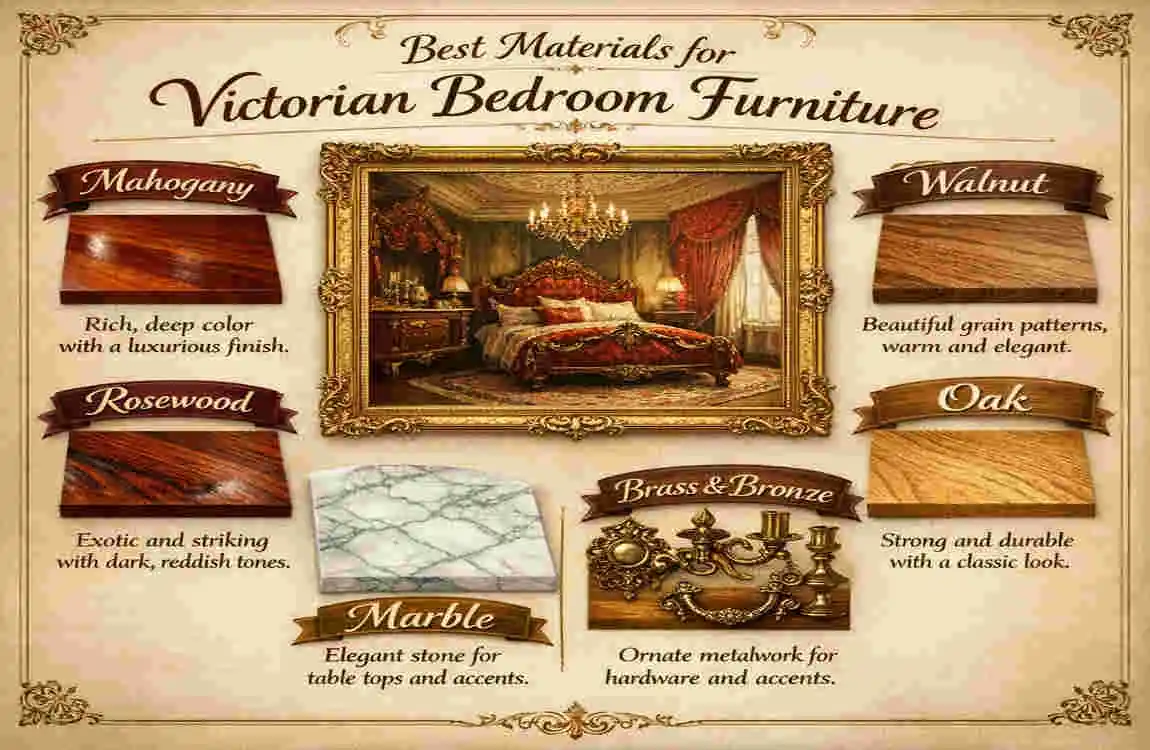
The right material makes a big difference in how the furniture looks and lasts.
Solid Hardwood
The best Victorian-style furniture often uses mahogany, oak, walnut, or rosewood. These woods feel rich and strong, and they age beautifully over time.
Upholstery Fabrics
For soft furniture pieces, classic fabrics include velvet, silk, brocade, and linen. These fabrics add depth and comfort to the room.
Decorative Metals
Details in brass, bronze, or iron can add a lovely vintage touch. You may see these metals in handles, bed frames, or table accents.
How to Choose the Right Victorian Bedroom Furniture Size
Victorian furniture often looks large and bold, so size matters.
Measure Bedroom Space
Before buying anything, measure your room carefully. Check the floor space, wall height, and where windows or doors sit. This helps you avoid pieces that feel too big or awkward.
Balance Large and Small Pieces
A room does not need many large items. If your bed is grand, keep the dresser or chairs slightly simpler. This helps the room feel open and calm.
Consider Ceiling Height
Tall beds and canopy frames look best in rooms with higher ceilings. If your ceiling is low, choose a lower bed frame and simpler furniture to keep the space comfortable.
Quick Size Guide
Bedroom Size: Best Furniture Choice
Small room , simple bed, compact dresser, small bedside tables
Medium room , carved bed frame, dresser, vanity table
Large room , four-poster bed, wardrobe, bench, accent chair
Popular Victorian Bedroom Furniture Styles
Victorian furniture comes in a few popular looks. Each one creates a different mood.
Gothic Victorian Style
This style feels dramatic and bold. It uses dark wood, heavy carving, and strong shapes. It works well if you want a room with a deep, rich atmosphere.
Rococo Victorian Style
Rococo Victorian furniture is softer and more decorative. It often features curved lines, floral carvings, and elegant details. This style feels graceful and romantic.
Eastlake Victorian Style
Eastlake style is a little cleaner and more structured. It uses geometric patterns and careful craftsmanship. If you want Victorian charm without too much ornament, this is a great choice.
Romantic Victorian Style
This version feels softer and more delicate. It often uses light fabrics, floral prints, and gentle colors. It is a lovely choice for a cozy bedroom.
Choosing the Right Color Palette
Color plays a big role in Victorian design. The right shades can make the room feel warm, elegant, and complete.
Classic Victorian Colors
Traditional colors include:
- Burgundy
- Emerald green
- Navy blue
- Deep purple
These shades bring richness and depth to the room.
Neutral Victorian Shades
If you want a softer look, try cream, beige, ivory, or soft gray. These colors help darker furniture stand out without making the room feel too heavy.
Metallic Accents
Small touches of gold, bronze, or antique silver can lift the whole design. These colors work well in mirrors, handles, lamps, and decor pieces.
How to Match Victorian Furniture with Modern Homes
You do not need a full period house to enjoy Victorian style. A few smart choices can blend old and new beautifully.
Mix Antique and Minimalist Pieces
Pair one or two ornate Victorian pieces with simpler furniture. This keeps the room from feeling crowded or dated.
Use Neutral Walls
Soft wall colors help the furniture shine without making the room feel dark. Light walls also make heavier wooden pieces feel more balanced.
Add Contemporary Lighting
You can use modern lamps or a a vintage-inspired ceiling light. This mix feels fresh but still elegant.
Layer Textures
Add rugs, cushions, and curtains in rich textures. This helps the bedroom feel warm and inviting.
Victorian Bedroom Decor Ideas That Complement Furniture
The furniture is important, but decor helps finish the look.
Elegant Wallpapers
Wallpaper with floral or damask patterns can add instant Victorian charm.
Luxurious Curtains
Heavy velvet or other rich fabric curtains help the room feel complete. Tassels and tiebacks can add a classic touch.
Vintage Mirrors
A mirror with a gold or antique-style frame can brighten the space and make it feel more refined.
Chandeliers and Rugs
A small chandelier or patterned rug can add the right amount of drama without overwhelming the room.
Decorative Accessories
Use details such as candlesticks, framed artwork, antique clocks, or ceramic pieces to add warmth and personality to the space.
Common Mistakes to Avoid When Buying Victorian Bedroom Furniture
It is easy to make a few mistakes when choosing this style, so keep these points in mind:
- Do not overcrowd the room
- Do not ignore the function
- Do not buy poor-quality replicas
- Do not mix too many clashing colors
- Do not forget maintenance needs
A beautiful room should also be easy to live in. Always think about comfort, storage, and daily use.
Maintenance Tips for Victorian Bedroom Furniture
Victorian furniture can last a long time if you care for it properly.
Regular Dusting
Dust-carved areas are often so dirt does not build up in the small details.
Wood Polish Care
Use the right polish to protect the finish and keep the wood looking rich.
Fabric Cleaning
Vacuum fabric pieces gently and clean stains as soon as possible.
Avoid Moisture and Sunlight
Too much moisture can damage wood, while direct sunlight can fade fabric and color.
Is Victorian Bedroom Furniture Worth It?
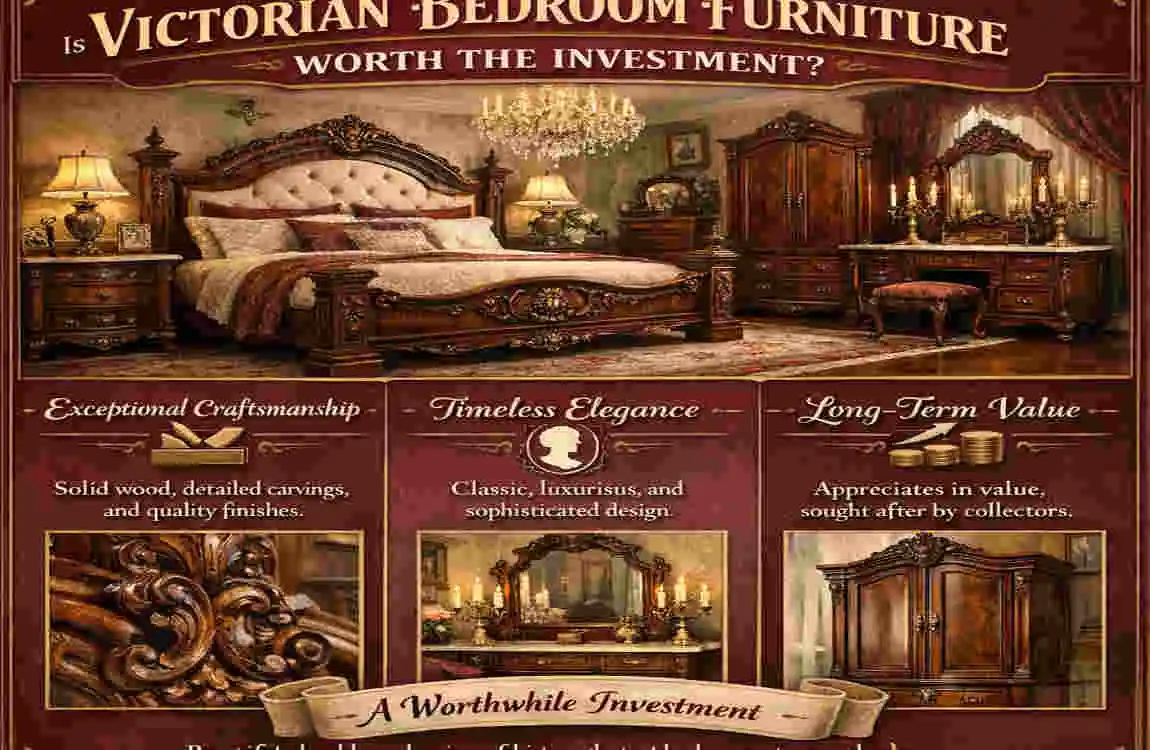
Yes, for many homeowners, it is worth it. Victorian furniture offers long-term durability, strong visual appeal, and timeless style. It can also enhance a home’s overall feel by adding elegance and character.
If you enjoy classic interiors and want a bedroom that feels special, Victorian furniture is a smart choice.
FAQ
What defines Victorian bedroom furniture?
Victorian bedroom furniture is known for its carved details, rich woods, elegant shapes, and luxurious look.
Which wood is best for Victorian furniture?
Mahogany, oak, walnut, and rosewood are among the best choices.
Can Victorian bedroom furniture fit modern homes?
Yes, it can work very well when mixed with simple walls, modern lighting, and clean decor.
What colors work best in Victorian bedrooms?
Deep tones like burgundy and emerald green work well, along with softer shades like ivory and beige.
Is Victorian furniture expensive?
It can be, especially if it is made from solid wood or has handcrafted details.
How do I maintain antique-style wooden furniture?
Dust it often, use polish carefully, and keep it away from too much sunlight and moisture.