Have you ever dreamed of having your own secret hideaway at home? A secret room adds a touch of mystery and excitement to your living space while also offering practical benefits such as privacy, security, and additional functionality. Whether it’s for storing valuables, creating a quiet retreat, or fulfilling childhood fantasies, a hidden room can truly transform your house into something extraordinary.
Why Build a Secret Room?
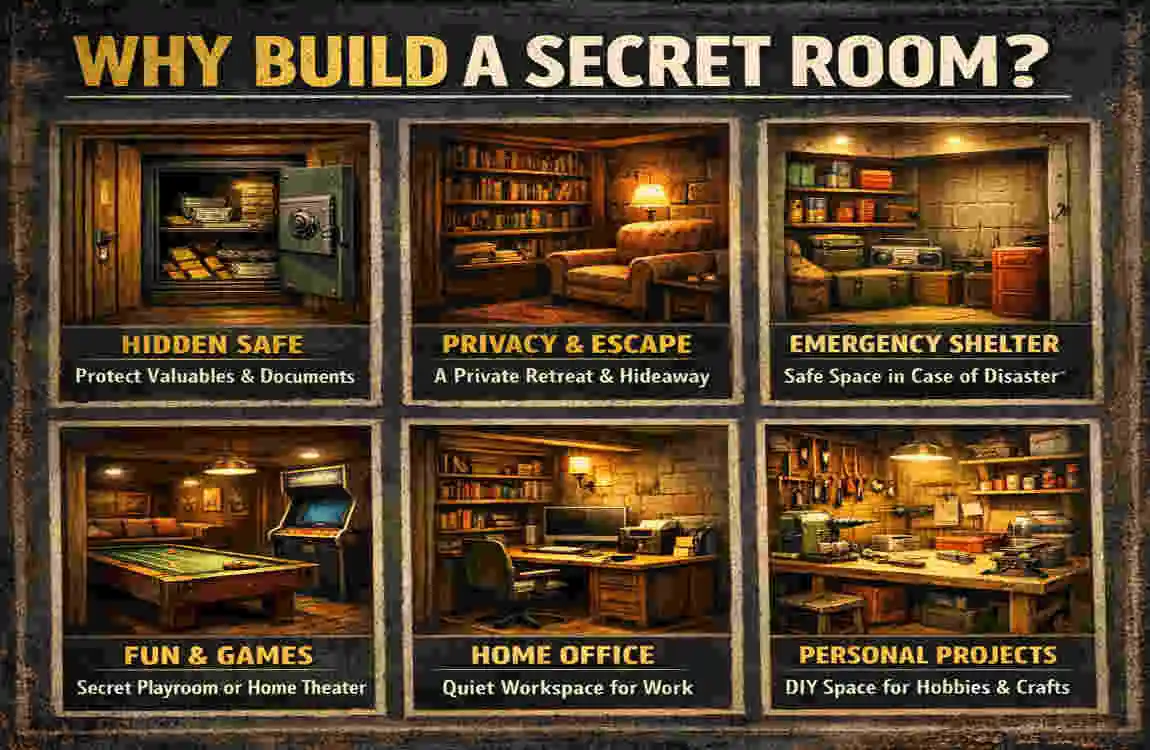
Secret rooms aren’t just for movies or spy novels—they’re becoming increasingly popular in real modern homes. Let’s dive into the reasons why you might want to create one for yourself.
The Practical Benefits
- Enhanced Privacy: A secret room can serve as a private sanctuary where you can work, relax, or escape from the hustle and bustle of daily life.
- Added security: Hidden rooms can serve as secure places to store valuables, important documents, or emergency supplies.
- Maximising Space: They’re a great way to use awkward spaces, such as under staircases or odd corners of your home.
The Fun and Mystique
Building a secret room is about more than just functionality—it’s about the thrill of having something unique and hidden.
- Channel Your Inner Child: Remember the excitement of secret hideouts as a kid? A hidden room brings that same magic to life.
- Unique Home Feature: Guests will be amazed when you reveal your hidden door or concealed space.
Resale Value Considerations
A well-designed secret room can increase your home’s value. It’s a unique selling point that can make your property stand out. In fact, houses with hidden rooms often have a higher perceived value because of their intriguing and custom features.
Planning Your Secret Room
Before you grab your tools, careful planning is essential. Let’s break the process down step by step.
Determining the Purpose
The first question to ask yourself is: What will the secret room be used for?
- Storage: A hidden space for seasonal decorations or valuables.
- Safe Room: A secure area for emergencies.
- Entertainment: Perhaps a gaming room, home theatre, or library.
- Personal Retreat: A cosy corner for relaxation or meditation.
Your room’s purpose will influence its location, size, and design.
Choosing the Perfect Location
Where should your secret room go? Look for areas in your home with hidden potential:
- Under staircases: Often underutilised, this space is perfect for a compact secret room.
- Basements: Ideal for larger spaces like a home theatre or wine cellar.
- Behind bookshelves or closets: A classic option for a hidden entrance.
Evaluate your home’s layout and identify practical, discreet areas.
Design and Aesthetic Considerations
To truly keep your secret room hidden, you’ll need to blend it seamlessly with your home’s existing décor.
- Hidden Entrances: Use sliding bookshelves, mirrors, or wall panels to conceal the entryway.
- Matching Materials: Ensure the walls, doors, and finishes match the surrounding space.
Budgeting for the Project
Building a secret room can range from affordable DIY projects to more elaborate designs requiring professional help.
- DIY Costs: Basic tools and materials may cost a few hundred dollars.
- Professional Help: Hiring carpenters or contractors can significantly increase costs.
Pro Tip: Save money by repurposing materials or focusing on simple designs.
Tools and Materials You’ll Need
Before you begin construction, gather all the tools and materials you’ll need.
Essential Tools
Here’s a list to get you started:
- Power drill
- Saw (circular or jigsaw)
- Level
- Measuring tape
- Screwdrivers
Optional Tools: If you’re feeling ambitious, consider tools like hidden hinges or motorised mechanisms for advanced projects.
Materials
Depending on your design, you’ll need:
- Wood or drywall for walls and doors
- Paint or wallpaper for finishing
- Hinges, handles, and hardware
- Special materials like magnetic locks or book spines for disguises
Safety Equipment
Don’t forget goggles, gloves, and a dust mask to protect yourself while working. Also, ensure your workspace is well-ventilated, especially if you’re painting or cutting materials.
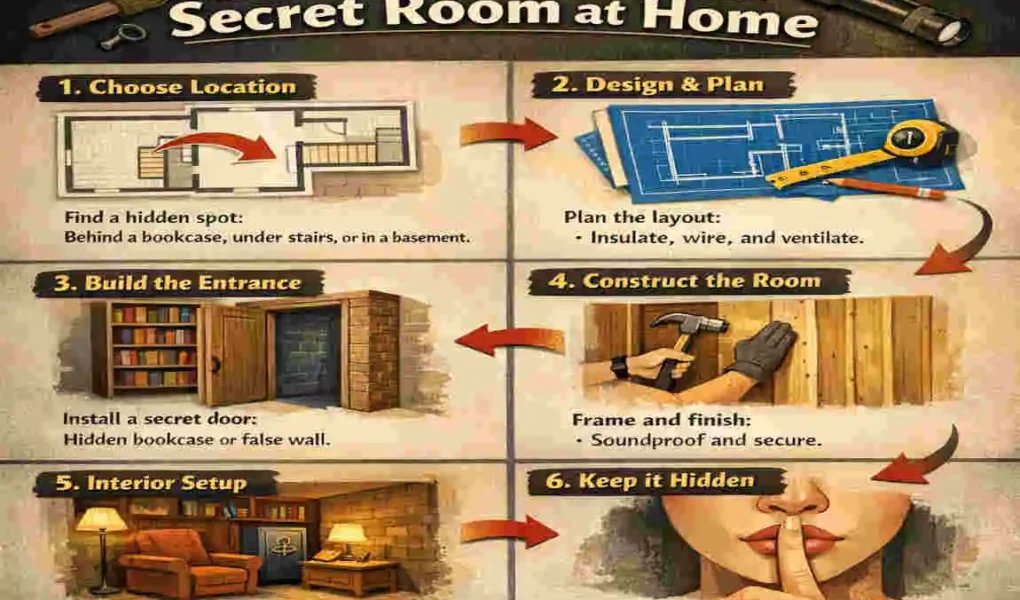
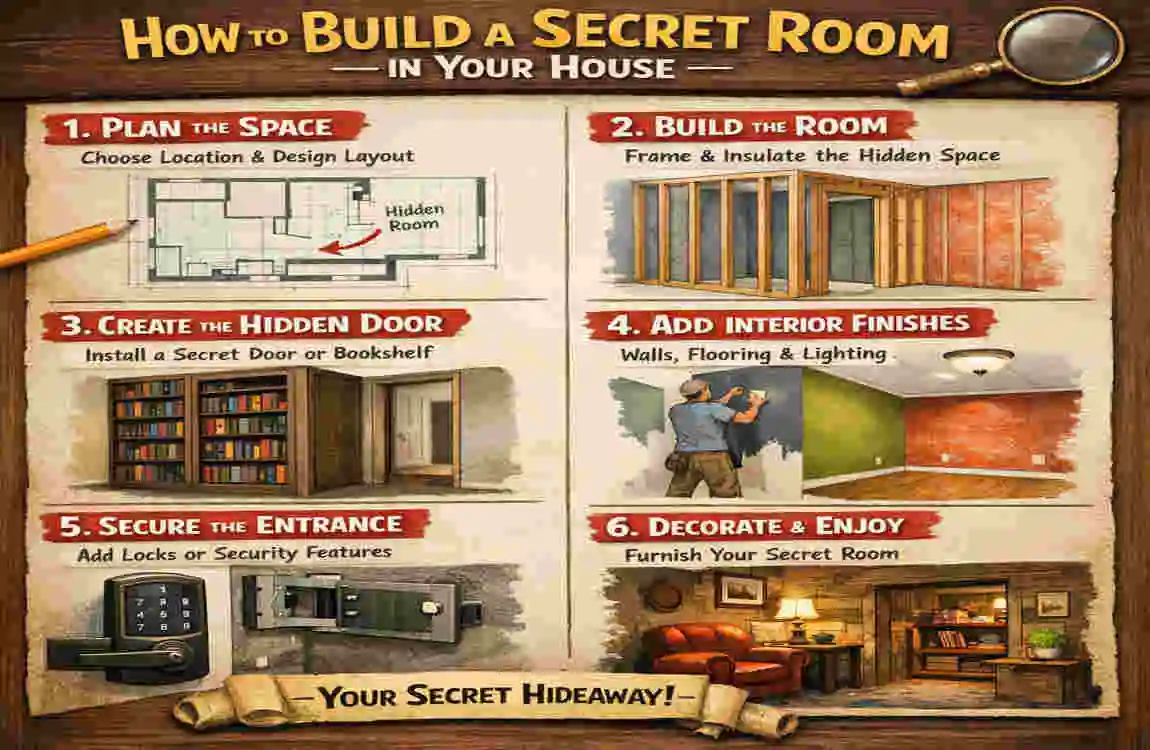
Step-by-Step Guide: How to Build a Secret Room in Your House
Let’s get to the heart of the project! Follow these steps to bring your secret room to life.
Finalise the Design
Start with a blueprint or rough sketch.
- Include dimensions, materials, and mechanisms for the hidden door.
- Plan for scalability in case you want to expand or modify the room later.
Prepare the Space
- Clear out the area and measure everything carefully.
- Check for any structural obstacles, such as electrical wiring or plumbing.
Build the Framework
- Construct the walls of the secret room using wood or drywall.
- Ensure the structure is stable and secure.
Install the Hidden Door
This is the most exciting part! Here’s how:
- Choose your entrance mechanism (e.g., a sliding bookshelf or a pivoting wall panel).
- Install hinges or tracks to allow smooth operation.
- Test the movement to ensure it’s seamless and discreet.
Add Finishing Touches
- Paint or wallpaper the door to disguise it.
- Add furniture, lighting, and any other features inside the room.
Test and Refine
- Test the Door: Open and close it multiple times to ensure it works smoothly.
- Make Adjustments: Fine-tune the door’s alignment or disguise if needed.
Creative Ideas for Secret Rooms
Not sure what to do with your secret space? Here are some ideas to inspire you.
Classic Ideas
- Hidden Library: Create a cosy reading nook behind a bookshelf.
- Wine Cellar: Conceal your collection in a climate-controlled room.
Modern Twists
- Gaming Room: A high-tech space for video games or board games.
- Yoga Retreat: A peaceful area for meditation and relaxation.
Kid-Friendly Options
- Playroom: Add fun themes like castles or pirate ships.
- Adventure Passageways: Build tunnels or hidden doors for kids to explore.
Tips and Tricks for Success
Here are some handy tips to make your project a success:
- Keep It Quiet: Don’t share too many details with others to maintain secrecy.
- Disguise the Door: Use creative techniques like mirrors, artwork, or bookshelves.
- Plan Ventilation: Ensure proper airflow, especially in small or enclosed rooms.
- Emergency Exits: For safety, consider adding an alternate way out.
Common Mistakes to Avoid
Avoid these pitfalls to ensure your secret room turns out perfectly:
- Skipping the Planning Phase: Rushing into construction can lead to costly mistakes.
- Using Cheap Materials: Low-quality materials may compromise the room’s durability.
- Overcomplicating the Design: Simple mechanisms often work best.
- Ignore Codes: Ensure your project complies with local building regulations.
FAQs
Q: How much does it cost to build a secret room?
Costs vary widely, but a DIY project can range from $500 to $5,000 depending on materials and complexity.
Q: Can I DIY a secret room without professional help?
Absolutely! With proper planning and tools, most people can tackle this as a DIY project.
Q: What is the best location for a secret room in a house?
Common spots include under staircases, basements, or behind bookshelves.
Q: Are there any legal considerations for building a hidden room?
Check local building codes to ensure compliance with safety and structural regulations.
Q: How can I make my secret room more secure?
Consider adding features like magnetic locks, reinforced doors, or alarm systems.
| Step | Key Actions | Tips |
|---|---|---|
| Plan Your Room | Choose purpose and location | Use unused spaces like closets |
| Design Layout | Sketch blueprint and entrance idea | Consider hidden doors like bookshelves |
| Gather Materials | Collect tools and supplies | Include safety gear |
| Prepare Space | Clear area and check for obstacles | Measure carefully |
| Build Framework | Construct walls and entrance frame | Ensure sturdy structure |
| Install Door | Create and install hidden door mechanism | Use camouflaging techniques |
| Finish & Decorate | Paint, add lighting and furnishings | Blend door with surroundings |
| Test & Adjust | Check door operation and room usability | Make refinements as needed |