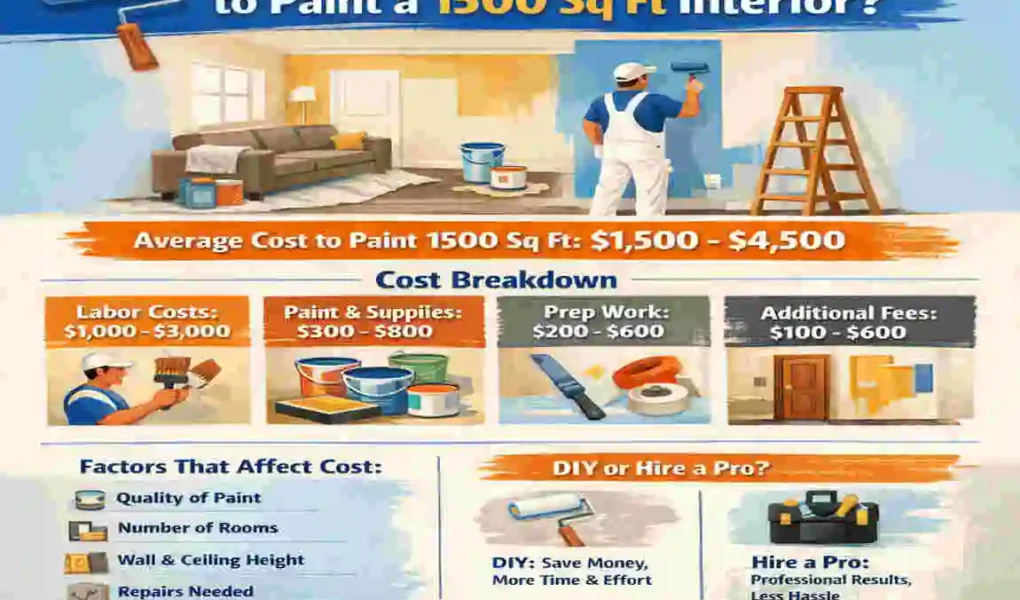
Painting your home is one of those projects that sounds simple at first. You choose a color, buy some paint, and get the walls refreshed. But once you start getting estimates, the numbers can move fast. That is because interior painting is not just about rolling on color. It is also about prep, materials, labor, and the condition of your space.
In 2026, painting costs are still rising in many places. Labor prices have gone up, and many homeowners are also choosing eco-friendly paints, low-VOC finishes, and Premium coatings that cost more than standard options. That means the final bill may look different from what you expected a few years ago.
For interior projects, the cost is often around $1.50 to $4 per sq ft for walls and ceilings alone. In comparison, a full professional job can average about $3.75 per sq ft, depending on the details. That means a 1,500 sq ft home can land anywhere from a modest refresh to a high-end repaint, depending on what you want done.
| Scope | Per Sq Ft | Total for 1500 Sq Ft | Notes |
|---|---|---|---|
| Walls Only (Pro) | $1.50-$3 | $2,250-$4,500 | Basic latex, 2 coats |
| Full Interior (Pro) | $3-$6 | $4,500-$9,000 | Walls, ceilings, trim |
| DIY Materials | $0.30-$0.70 | $500-$1,000 | Paint, supplies only |
| Premium/Repairs | +$1-$2 | +$1,500-$3,000 | High-end paint, prep |
Average Costs Breakdown
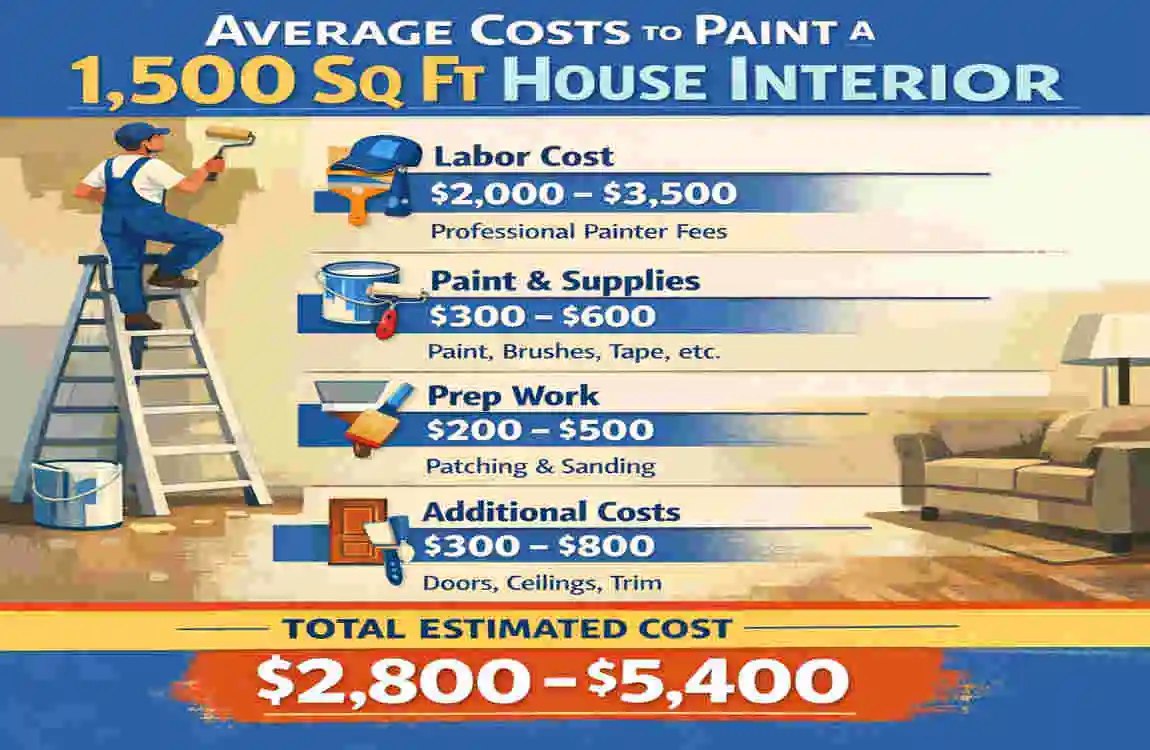
Before you start comparing painters or shopping for gallons of paint, it helps to understand the broad price range. A 1,500 sq ft home is not always priced the same way, because painters look at more than just floor space. They also think about the number of walls, trim, ceilings, doors, and repairs.
Overall Price Range
For most homes, painting the interior of a 1,500 sq ft house costs around $2,250 to $6,000 total for walls, trim, and ceilings. That range gives you a realistic starting point, but the final price can move up or down based on paint quality and prep work.
A lower-cost project might fall around $1,500 to $3,500 if you use basic paint, have simple walls, and do very little prep. This is the type of job where the rooms are in decent shape, and the goal is mainly to refresh the look.
At the higher end, you may see $5,000 or more if your home needs patching, priming, detailed trim work, or Premium finishes. Large open spaces, tall ceilings, and more complex layouts can also push the total upward.
So when people ask, ” How much does it cost to paint a 1500 sq ft house interior, the most honest answer is this: it depends on how much work the walls need and how polished you want the final result to look.
Per Square Foot Pricing
Many painters estimate their work using a cost per square foot, which makes it easier to compare quotes. This is especially useful when you want a fast way to understand whether a quote is fair.
Here is a simple breakdown:
Component Cost per Sq Ft, Total for 1500 Sq Ft, Notes
Walls Only $1.50–$3 $2,250–$4,500 Basic latex paint
Walls + Trim/Ceilings $3–$6.75 $4,500–$10,000 Full professional job
DIY Materials $0.30–$0.70 $500–$1,000 Paint + supplies
This table shows why the final total can vary so much. If you only paint the walls, your bill stays lower. If you include ceilings, trim, doors, and detailed edges, the job becomes larger and more expensive.
Also, keep in mind that square-foot pricing is not always based solely on floor size. A home with more walls, more rooms, and more corners usually takes more time and materials than an open layout with the same square footage.
What a 1,500 Sq Ft Home Usually Means
A 1,500 sq ft home is often a small-to-medium house or condo, but the layout matters a lot. A three-bedroom home with hallways, closets, a kitchen, a living room, and two bathrooms will usually cost more than a simpler open-plan space.
In some cases, a 3-bedroom home can cost around $4,400 to $6,600 when all rooms, trim, and standard labor are included. That is why two homes with the same square footage can still get very different quotes.
The best way to think about it is this: square footage gives you a starting point, not the full answer.
Key Cost Factors
Once you understand the base price, the next step is learning what makes the bill go up or down. This is where many homeowners save money or overspend without realizing it.
Paint Quality and Type
Paint is one of the project’s biggest cost drivers. A cheaper can may seem like a smart choice, but not all paint performs the same way.
Budget Paint
Budget paint often costs around $20 per gallon. It can work for simple projects, but it may need 2 to 3 coats, especially if you are covering a darker wall color. For a 1,500 sq ft home, the paint alone may cost around $300 to $600 if you keep things basic.
This type of paint can help if you are flipping a property, painting a rental unit, or just doing a quick update. But it may not give you the longest-lasting finish.
Mid-Range Paint
Mid-range paint usually costs about $40 to $60 per gallon. This is where many homeowners get the best balance between price and performance. These paints often go on smoother, last longer, and are easier to clean.
If you want a durable finish without paying Premium prices, this is often the sweet spot.
Premium Paint
Premium paint can cost $70 or more per gallon, especially if it is stain-resistant, washable, or eco-friendly. For a full home, the paint budget may climb to $800 or more.
Premium paint is a strong choice if you want:
- Better stain resistance
- Easier cleaning
- Stronger coverage
- Lower odor
- Longer-lasting color
A higher-end paint may cost more today, but it can save money later because it may not need touch-ups or repainting as soon.
Coverage and How Much Paint You Need
A gallon of paint usually covers about 350 to 400 square feet. That means a 1,500 sq ft home often needs around 10 to 15 gallons, depending on the surface, color change, and number of coats.
If your walls are dark and you want to paint them light, or if they are patched and uneven, you may need more paint than you expect. Trim and doors also use separate paint products in many cases, which adds more to the total.
So if you are budgeting carefully, it is smart to calculate paint based on surface area, not only floor size.
Labor Rates
Labor is usually the biggest part of the total bill. In many interior painting projects, labor makes up 60% to 70% of the total cost.
Painters often charge around $20 to $50 per hour per painter, and many jobs require 2 to 3 professionals working for 3 to 5 days. That adds up quickly, especially if the home has multiple rooms or needs detailed trim work.
The final labor cost may range from $1,500 to $4,000 for a typical 1,500 sq ft interior project.
Labor can be higher in urban areas, where demand is stronger, and living costs are higher. In some locations, the same job may cost 20% to 30% more than in a smaller town.
That is why two quotes for the same project can look very different. Local labor markets matter a lot.
Prep and Repairs
Prep work is one of the most overlooked parts of the project. Many homeowners only think about painting time, but prep can take a big chunk of the schedule.
Prep work may include:
- Filling nail holes
- Fixing small cracks
- Sanding rough spots
- Priming stained walls
- Protecting floors and furniture
- Taping edges and trim
If your walls need patching or priming, you may pay an extra an extra $500 to $1,500. That is a meaningful difference, especially if the walls are damaged or older.
High ceilings, tricky angles, and textured walls can also increase time by 10% to 20%. More time means more labor, and more labor means a higher bill.
This is why painters often ask about the condition of the walls before giving a final price. They are not being difficult; they are trying to price the real amount of work correctly.
Room Count and Layout
The number of rooms affects the price more than many people expect. A home with many small rooms may take longer than a similar-sized home with large open spaces.
Why? Because every room usually means:
- More cutting in around edges
- More corners
- More trim
- More moving furniture
- More setup and cleanup
That means the layout of your home can matter almost as much as the square footage.
Room-by-Room Estimates
If you want a more practical way to budget, room-by-room estimates can be very helpful. This gives you a better idea of where the money goes and which areas are more expensive to paint.
Typical Room Cost Table
Room Type Sq Ft (Typical)Cost Range Details
Living Room (400 sq ft) $800–$1,800 Open space, high walls
Kitchen (200 sq ft) $600–$1,400 Cabinets/trim add 25%
3 Bedrooms (300 sq ft each) $500–$1,200 each Standard; doors extra
Bathrooms (100 sq ft each) $400–$900 each Moisture-resistant paint
Total 1500 Sq Ft $2,500–$6,000 Pro average
This table is useful because it shows how different rooms carry different costs. A bathroom may be small, but it often needs special paint. A kitchen may look simple, but trim, cabinets, and tighter work can make it more expensive.
Living Room
A living room is often one of the largest and most visible spaces in the home. If it has tall walls, open corners, or lots of natural light, the painter may need more time to get clean edges and even coverage.
A typical living room costs $800 to $1,800, especially if the area has a lot of wall surface and some trim detailing.
If the room is open to a hallway or dining area, the price may rise because the painting area becomes larger and more connected.
Kitchen
Kitchens can be tricky. Even if they are not huge, they often require careful work around cabinets, backsplashes, trim, and appliances.
A kitchen might cost around $600 to $1,400, but that can increase if the space includes more detailed finish work.
If the kitchen walls have grease buildup, stains, or moisture problems, prep work may add to the total as well.
Bedrooms
Bedrooms are usually more straightforward than living rooms or kitchens. A standard bedroom may cost around $500 to $1,200 each, depending on size and condition.
If the room has closets, built-ins, doors, or custom trim, that can increase the time. Still, bedrooms are usually among the easier rooms to estimate.
Bathrooms
Bathrooms are small, but they often require more careful material choices. Moisture-resistant paint is usually a smart choice, and the room may need extra prep due to humidity, small spaces, or previous water damage.
A bathroom may cost around $400 to $900, even though it is smaller than other rooms.
Why Room-by-Room Pricing Helps
This approach is especially useful if you want to paint your home in stages. You can update the main living area first. You can do bedrooms now and save bathrooms for later.
Room-by-room pricing makes it easier to:
- Set a phased budget
- Compare contractor quotes
- Decide which rooms matter most
- Understand where the money goes
It also gives you more control over the project, which can reduce stress.
Multi-Room Discounts
Some painters offer discounts of 10% to 15% if you paint multiple rooms at once. That is because setup and travel costs are easier to spread across a larger job.
If you plan to repaint several areas, ask about package pricing. Even a small discount can make a real difference when the total bill is several thousand dollars.
DIY vs. Professional Painting
One of the biggest decisions you will make is whether to paint the home yourself or hire a professional. Both choices have benefits, but they serve different needs.
DIY Costs and Timeline
DIY can be a smart option if you want to save money and you do not mind putting in the work. For a 1,500 sq ft interior, DIY materials usually cost around $500 to $1,000.
That total may include:
- Paint
- Brushes
- Rollers
- Tape
- Drop cloths
- Trays
- Sanding supplies
- Primer
If you are new to painting, the project may take 1 to 2 weeks or longer, especially if you are working only on weekends or evenings. It can also be physically tiring, because interior painting involves a lot of standing, reaching, moving, and cleanup.
The biggest risk with DIY is an uneven finish. If the walls are not properly prepped, the final look may show roller marks, missed spots, or rough edges.
When DIY Makes Sense
DIY may be the right choice if:
- The home is in good condition
- You want a simple color refresh
- You are painting only a few rooms
- You already have some tools
- You are comfortable doing prep work
If you are patient and detail-oriented, DIY can save a lot of money. Just remember that the time cost is real, even if the cash cost is lower.
Hiring Professionals: Pros and Cons
Hiring pros usually costs more upfront, but you get a smoother process and a more polished finish.
Pros
- Faster completion
- Better surface preparation
- Cleaner lines and smoother coverage
- Less stress for you
- Often includes a warranty or touch-up support
A professional crew can usually finish a 1,500 sq ft interior in about 3 to 5 days, depending on the scope.
Cons
- Higher cost
- You need to compare quotes
- Not every painter gives the same level of quality
When It Is Worth Paying for a Pro
Professional painting is often worth it if:
- Your walls are damaged
- The ceilings are high
- The trim is detailed
- You want a perfect finish
- You do not have time to do it yourself
If the project is large or the house has complicated surfaces, a pro can actually save you money in the long run by avoiding mistakes and redoing work.
Simple Rule of Thumb
Use DIY for small, simple refresh jobs.
Use professionals for full-home repaints, older homes, or any project where you want a clean, lasting result.
Hidden Costs and Savings Tips
Many people budget only for paint and labor, then get surprised by the smaller extras. These hidden costs may not seem large on their own, but they can still affect your total.
Common Hidden Costs
Here are a few extras to watch for:
- Furniture moving: around $200
- Minor repairs: patching holes, fixing cracks, caulking trim
- Primer: if you need to cover stains or dark colors
- Specialty paint: moisture-resistant, stain-blocking, or low-odor options
- Permits: rare, but sometimes $50 to $100 if local rules apply
Most standard interiors will not need all of these, but it is good to ask about them before work begins.
Smart Ways to Save Money
You do not need to cut quality to save money. A few simple choices can lower your cost without hurting the final result.
Paint in the Off-Season
Painters are often busier during peak moving or renovation seasons. If you schedule in a slower period, you may save 10% to 20%.
Buy Paint in Bulk
If you need several rooms painted the same color, bulk buying can reduce per-gallon cost.
Prepare the Space Yourself
If you move furniture, remove wall items, and clear the rooms before the crew arrives, you may reduce labor time.
Choose Mid-Range Paint
Mid-range paint often gives the best balance between cost and quality. It is often a better buy than the cheapest option.
Avoid Cheap Paint That Peels Fast
This is one of the biggest long-term money traps. Low-quality paint may look fine at first, but if it peels, stains, or fades quickly, you may pay again sooner than expected. That means a lower upfront price can turn into a higher total cost later.
A Simple Saving Checklist
If you want to stay on budget, focus on these steps:
- Get the walls ready before the crew arrives
- Ask for a clear scope of work
- Compare at least three quotes
- Choose the right paint grade for the room
- Ask whether trim, doors, and ceilings are included
Small decisions add up quickly in a painting project.
How to Get Accurate Quotes
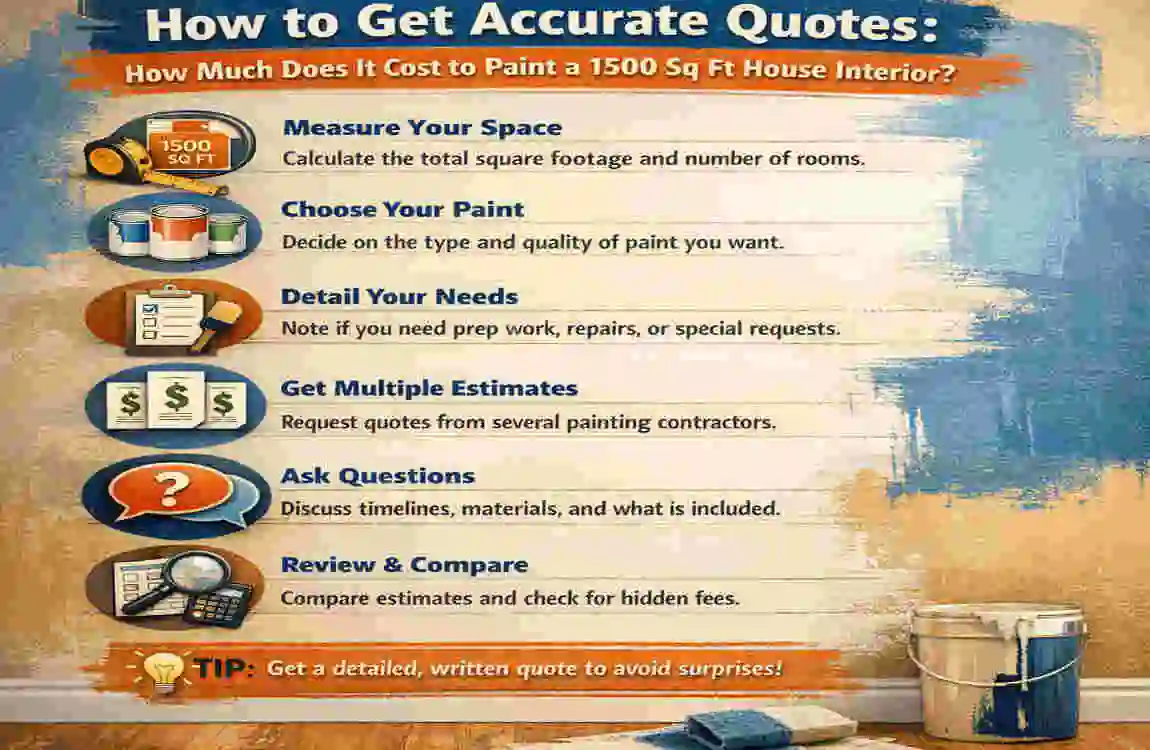
Getting the right quote is one of the best ways to avoid budget surprises. A good quote should be clear, detailed, and easy to compare with others.
What to Tell the Painter
When requesting a quote, provide as much useful information as possible. Include:
- Total square footage
- Number of rooms
- Wall condition
- Whether ceilings are included
- Whether trim and doors are included
- Paint type you want
- Any repairs needed
- Whether furniture must be moved
The more detail you provide, the more accurate the quote will be.
Why You Should Get Three Bids
Always try to get at least 3 estimates. This helps you see the market range and spot any quote that is too high or too low.
If one quote is much cheaper than the others, ask why. It may not include prep work, primer, or all the rooms you want painted.
If one quote is much higher, ask what makes it different. Sometimes the higher price includes better paint, more prep, or a stronger warranty.
Red Flags to Watch For
Be careful if a painter:
- Does not provide a written estimate
- Refuses to explain what is included
- Gives a price without looking at the space
- Pushes for cash only
- Avoids answering questions about prep or materials
A professional estimate should be clear and easy to understand. If it feels vague, it probably is.
Make the Comparison Fair
To compare quotes fairly, make sure all painters are pricing the same scope of work. That means the same rooms, the same paint type, the same prep, and the same finish level.
This is the easiest way to know whether you are actually getting a better deal.
FAQs
Here are some of the most common questions homeowners ask when planning an interior paint project.
How much would it cost to paint the interior of a 1500 sq ft house DIY?
A DIY project usually costs around $500 to $1,000 for materials, depending on paint quality and supplies. If you need primer, extra tools, or more coats, the total may be a little higher.
Does trim add to the price?
Yes, trim adds to the price. It often increases the cost by about $1 per sq ft, since trim work requires greater precision and takes more time.
How long does it take to paint a 1,500 sq ft interior?
A professional crew can often finish in 3 to 5 days. DIY painting can take 1 to 2 weeks or more, especially for beginners.
What is the cheapest way to paint a house interior?
The cheapest way is to do it yourself using basic materials and doing your own prep work. Still, the low-cost route should not mean poor-quality paint, because cheap paint may need repainting sooner.
Why do quotes vary so much?
Quotes vary because of paint quality, labor rates, prep work, ceiling height, trim, repair needs, and regional pricing. A home that looks simple from the outside may still require a lot of work on the inside.
Will 2026 painting costs keep rising?
Many estimates suggest interior painting costs may remain 5% to 10% higher than in earlier years due to inflation and labor shortages. Exact pricing will still depend on your local market.
Should I ask for written estimates?
Yes, always ask for a written estimate. It should list what is included, what materials will be used, and what conditions might change the price.