A metal roof can do more than protect your home. It can also affect how much heat your house absorbs, how hard your air conditioner works, and how comfortable your rooms feel during the day.
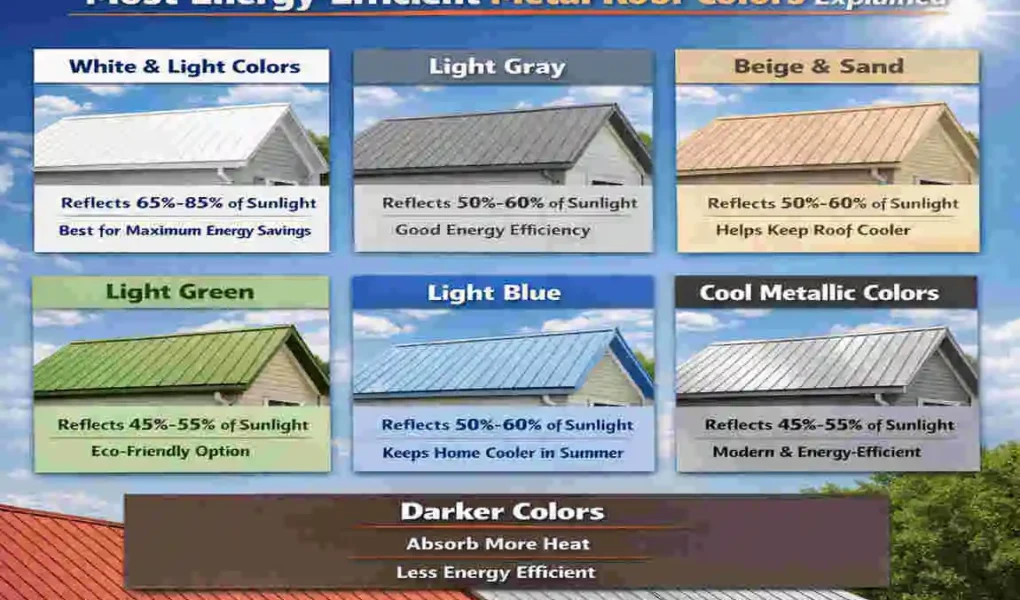
So, if you are asking what color metal roof is more energy efficient, the short answer is this: light-colored metal roofs usually save more energy because they reflect more sunlight and absorb less heat. White is often the top choice, followed by light gray, beige, tan, and pale shades such as soft blue or light green.
That said, color is only part of the story. The roof coating, insulation, ventilation, and installation quality all matter too. A dark roof with a good reflective finish may perform better than a plain dark roof, and a light roof still needs proper attic airflow to work well.
Does Roof Color Really Affect Energy Efficiency?
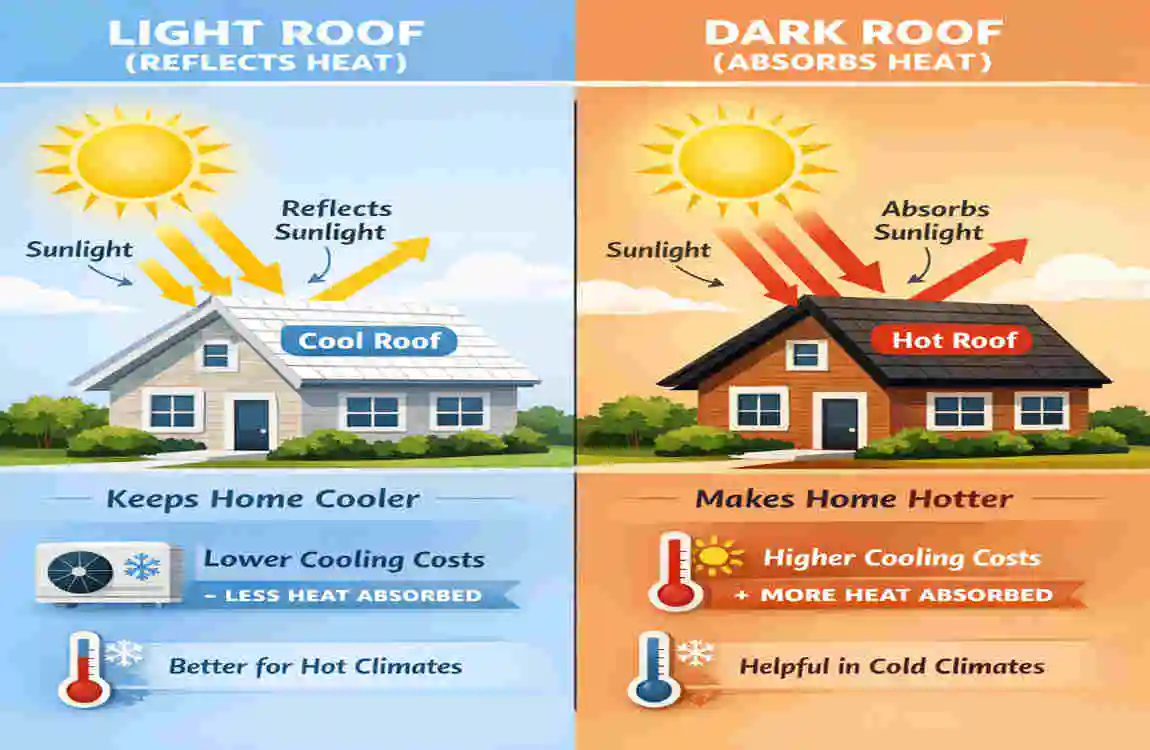
Yes, it does. Roof color significantly affects how much heat your roof absorbs from the sun.
How Sunlight Impacts Roof Temperature
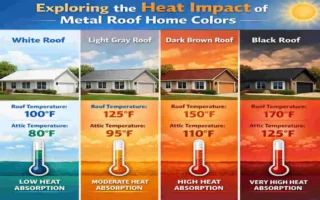
When sunlight hits your roof, some of it bounces off, and some is absorbed as heat. Darker colors usually absorb more sunlight, which makes the roof surface hotter.
That extra heat can move into the attic and then into your living space. When that happens, your cooling system has to work harder.
Solar radiation is the energy from the sun that reaches your roof.
Heat absorption is how much of that energy your roof takes in.
Heat reflection is how much sunlight your roof sends back into the air.
If you live in a warm area, roof heat is very important. Even a small change in roof temperature can affect indoor comfort and energy use.
Understanding Solar Reflectance
A roof that reflects more sunlight stays cooler. That is where solar reflectance comes in. It measures how much solar energy a surface reflects rather than absorbs.
Another important term is thermal emittance. This means how well a roof radiates the heat it has already absorbed. A roof with good thermal emittance can release heat more easily.
Together, these features are often referred to as cool roofing technology. In simple terms, cool roofs help reduce heat buildup and lower cooling demand.
What Color Metal Roof Is More Energy Efficient?
If your main goal is energy savings, the best choices are usually light and reflective colors. These colors keep the roof cooler in strong sun.
White Metal Roof
White is usually the most energy-efficient metal roof color. It reflects a large amount of sunlight and absorbs very little heat.
That makes it a strong choice for hot climates. If your area gets long summers, intense sun, or high cooling bills, white can be a very smart option.
White also gives a clean, fresh look. It works especially well on modern and coastal homes, as well as minimalist designs.
Light Gray Roof
Light gray is another excellent energy-saving choice. It offers strong reflectivity without looking as bright as white.
Many homeowners like light gray because it feels balanced. It is practical, attractive, and easy to match with different home colors.
Beige and Tan Roofs
Beige and tan are good middle-ground colors. They still reflect more heat than darker tones while offering a warm, natural look.
These shades work well if you want energy savings but do not want a roof that stands out too much. They often blend nicely with traditional and suburban home styles.
Light Blue and Pale Green
Soft blue and pale green roofs can also perform reasonably well. They are not always the top performers, but they can offer a nice balance between style and efficiency.
If you want a more customized look, these colors may be worth considering. Just make sure the roof product uses a reflective finish, not just a pretty color.
Least Energy-Efficient Metal Roof Colors
Darker roof colors usually absorb more sunlight, which makes them warmer. That does not mean they are bad, but they are usually less efficient for cooling.
Black Roof
Black absorbs a lot of heat. In a hot climate, that can raise roof temperature quickly and increase cooling needs.
Still, some people choose black because of its bold appearance. If you like the look, you can improve performance with reflective coatings and strong attic insulation.
Dark Brown Roof
Dark brown roofs also absorb more heat than lighter colors. They can work well in cooler climates or for homes where style matters more than maximum cooling savings.
Dark Green Roof
Dark green is often chosen for natural, earthy looks. It can be attractive, but it usually does not reflect as much sunlight as lighter shades.
Dark Blue Roof
Dark blue is stylish and modern, but it still holds heat more than light colors. It may be fine if your roof has a reflective finish and your home is properly insulated.
Why Darker Colors Absorb More Heat
Dark colors absorb a larger part of the sun’s energy. Instead of bouncing light away, they turn more of it into heat.
When Darker Colors May Still Be Suitable
Dark colors can still work if you live in a cooler region, want a specific design look, or choose a roof with a high-performance coating. So, color matters, but it is not the only factor.
Roof Coatings Matter More Than Color
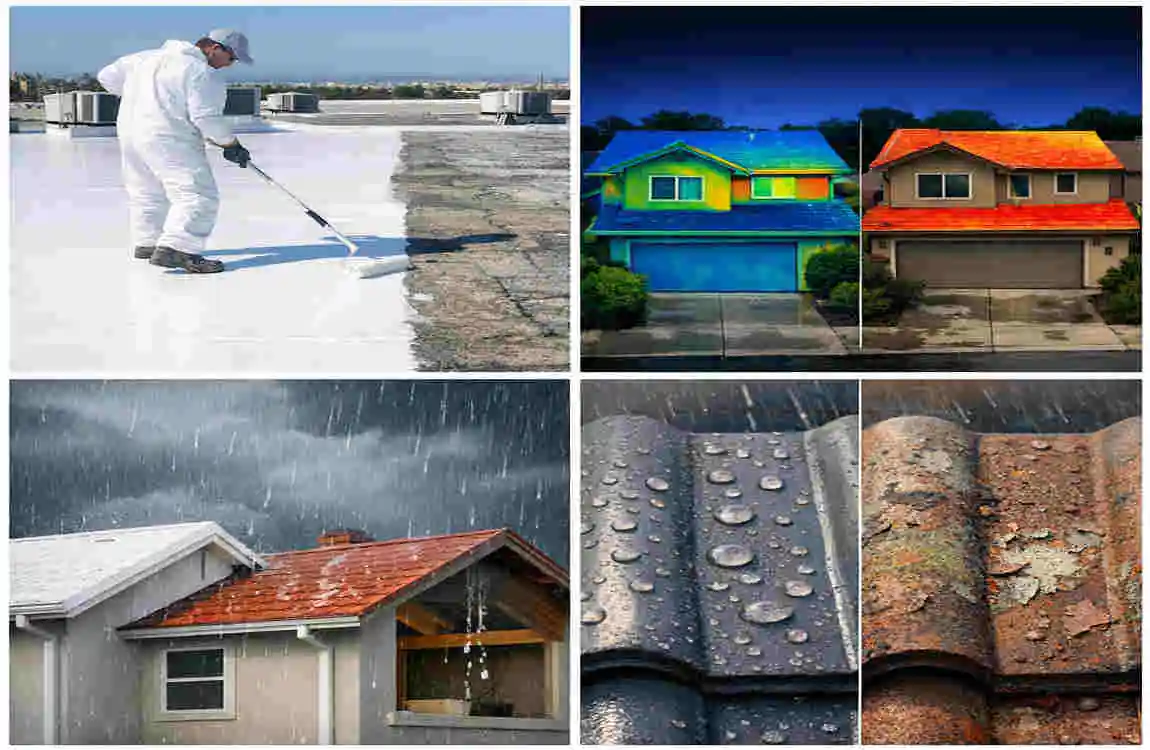
This is one of the most important points in the whole guide. The color is important, but the coating can make a huge difference.
Cool Roof Paint Technology
Some metal roofs use special paint systems that reflect more sunlight than standard finishes. These are often called cool roof coatings.
They help reduce heat absorption, even if the color is not pure white. That means you can sometimes choose a darker or richer color and still get decent energy performance.
Reflective Pigments
Modern roof coatings often contain reflective pigments. These pigments help bounce away heat in a way that standard paint cannot.
That means the same color can perform differently depending on the product quality. Two dark gray roofs may look similar, but one may reflect heat much better than the other.
ENERGY STAR® Rated Metal Roofs
Some metal roofing products are designed to meet energy-performance standards. These products are made to reflect more sunlight and stay cooler.
If you are comparing options, this kind of rating can help guide your decision. It is often a better clue than color alone.
Importance of High-Quality Finishes
A low-quality finish may fade, chalk, or break down faster under sun exposure. A better finish helps the roof keep its reflective power longer.
That means less heat buildup and better long-term performance.
Best Metal Roof Colors by Climate
The best roof color depends on where you live. A color that works great in one region may not be the best in another.
Hot Southern Regions
If you live in a hot region, white, light gray, beige, and tan are usually the top choices. These colors help keep the roof cooler and reduce cooling costs.
They are especially helpful in places with long summers and strong sun.
Mixed Climates
In areas with both warm and cold seasons, you may want a more balanced approach. Light gray, soft beige, and reflective mid-tone finishes can work well.
These colors help control summer heat while still looking good year-round.
Cold Northern Areas
In colder regions, darker colors can sometimes be useful because they absorb more sun and may help with winter warmth.
That said, the roof still needs good insulation and ventilation. A dark roof is not a free heating system, but it can be practical in certain climates.
Coastal Locations
Coastal homes often face strong sun, salt air, and moisture. A light-colored metal roof with a strong protective finish is usually a smart choice.
This helps with both reflectivity and durability.
Energy Savings You Can Expect
A more energy-efficient roof does not just look good on paper. It can make daily life more comfortable and lower your bills.
Lower Cooling Bills
If your roof absorbs less heat, your air conditioner does not need to run as often. That can lead to real savings during hot months.
Improved Indoor Comfort
A cooler roof can help reduce hot spots upstairs and make rooms feel more evenly temperature-wise. You may notice less heat in the attic and upper floor.
Reduced HVAC Usage
When your cooling system runs less, it may also last longer. Less wear and tear can mean fewer repairs and a longer equipment life.
Longer Roof Lifespan
Lower heat absorption can reduce thermal stress on the roof surface. That may help the roof last longer and stay in better shape over time.
Factors Besides Color That Improve Energy Efficiency
Roof color is important, but it should not be your only concern. A roof works best when several parts work together.
Proper Roof Insulation
Good insulation helps slow the transfer of heat from the roof into your home. Even the best roof color cannot do everything on its own.
Roof Ventilation
Ventilation lets hot air escape from the attic. This lowers heat buildup and helps your roof system perform better.
Roof Pitch
The slope of the roof can affect how sunlight hits the surface and how quickly heat builds up. Steeper roofs may handle drainage better too.
Quality Installation
Even a high-performance roof can underperform if it is installed poorly. Strong fastening, proper underlayment, and correct sealing all matter.
Choosing the Right Metal Roof Color
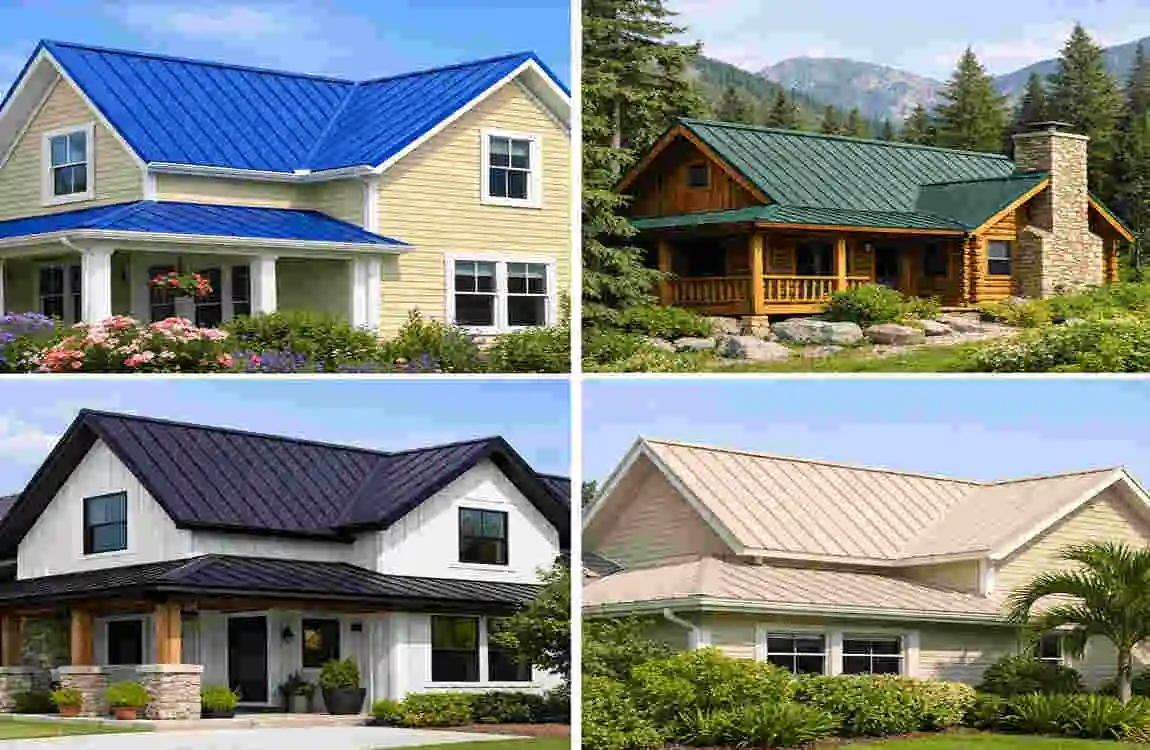
Now that you know the basics, how do you choose the right color for your home?
Match Your Climate
If you live in a hot climate, go lighter. If your winters are long and cold, you may want to think about how much winter heat gain matters to you.
Consider HOA Requirements
Some neighborhoods have rules about roof colors. Before you decide, make sure your choice fits any homeowner association standards.
Home Style and Curb Appeal
You should also consider how the roof will look alongside the rest of your house. Energy efficiency matters, but your roof should still complement your home.
Long-Term Energy Savings
It can help to think beyond the first cost. A lighter roof may cost a little more or less depending on the product, but the cooling savings can add up over time.
Common Mistakes to Avoid
A few simple mistakes can lead to poor results. Try to avoid these.
- Choosing color based only on appearance
- Ignoring reflective coatings
- Poor attic ventilation
- Low-quality roofing materials
- Skipping professional installation
These mistakes can cancel out the energy benefits you want. A beautiful roof is great, but it should also perform well.
Frequently Asked Questions (FAQ)
Which color metal roof is more energy-efficient?
White and other light-colored metal roofs are generally the most energy efficient because they reflect more sunlight and absorb less heat.
Is a white metal roof always the best choice?
Yes, in hot climates. In colder regions, darker colors may help absorb more sun during winter.
Does roof coating matter more than color?
Yes. Reflective coatings can greatly improve energy efficiency, even on darker roofs.
Can a black metal roof still be energy efficient?
Yes, if it has a high-quality reflective coating and the home has proper insulation and ventilation.
Which metal roof color is best for hot climates?
White, light gray, beige, and tan are among the best options for reducing cooling costs.
| Metal Roof Color | Energy Efficiency | Best For | Key Benefits |
|---|---|---|---|
| White | Excellent | Hot climates | Reflects the most sunlight, keeping homes cooler and reducing cooling costs. |
| Light Gray | Very Good | Warm to moderate climates | Reflects heat well while offering a modern appearance. |
| Beige/Tan | Very Good | Sunny regions | Absorbs less heat than darker colors and blends with many home styles. |
| Light Blue | Very Good | Coastal and warm areas | Reflects solar heat and provides an attractive, fresh look. |
| Cool Green | Good | Mixed climates | Energy-efficient with reflective coatings and natural curb appeal. |