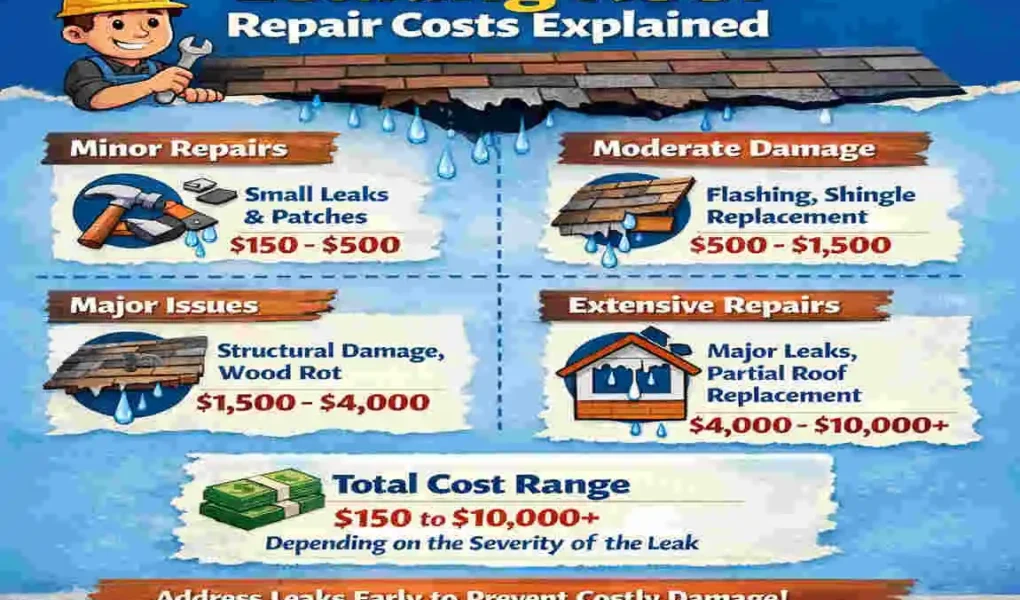
A leaking roof is not a small problem. Even a tiny drip can turn into serious damage if you leave it alone. Water can spread into insulation, drywall, wood, and even wiring. That means the longer you wait, the more you may pay.
If you are asking how much it costs to fix a leaking roof, the short answer is this: most repairs cost between $150 and $1,200, but major damage can cost much more. The final price depends on the leak size, the roofing material, the location of the damage, and whether water has already caused hidden problems.
What Is a Roof Leak?
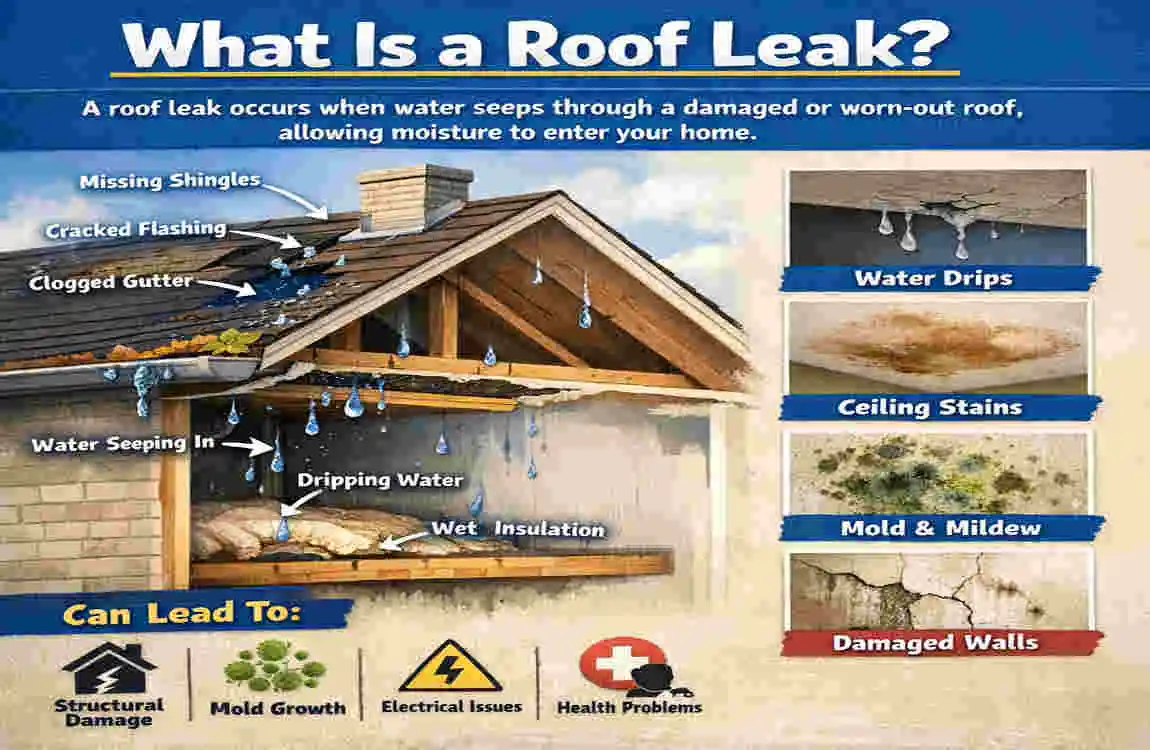
A roof leak happens when water gets through your roof and enters your home. Sometimes the problem is obvious, like a steady drip after rain. Other times, the leak is hidden and only shows up as stains, mould, or damp insulation.
A leak does not always mean the whole roof is failing. In many cases, one damaged area is the real problem. If you catch it early, the repair can stay affordable.
Common causes of roof leaks
Here are some of the most common reasons roofs start leaking:
- Damaged shingles
- Shingles can crack, curl, or blow off during strong winds.
- Cracked flashing
- Flashing seals roof edges, chimneys, and vents. If it breaks, water can sneak in.
- Broken roof vents
- Roof vents can wear out or loosen over time.
- Ice dams
- In cold areas, ice can trap water on the roof and force it under the shingles.
- Clogged gutters
- When gutters are blocked, water can back up and overflow into the roof edge.
Early warning signs
You do not have to wait for a big drip to know something is wrong. Look for these warning signs:
- Water stains on ceilings or walls
- Ceiling discoloration
- Mold growth
- Dripping water after rain
- Damp attic insulation
If you notice one or more of these signs, it is smart to act fast.
How Much to Fix a Leaking Roof?
The cost depends on the type of leak and the extent of the damage. Some repairs are quick and simple. Others need more labour and materials.
Average roof leak repair costs
Repair Type Average Cost
Minor leak repair $150–$400
Flashing replacement $250–$700
Roof vent repair $200–$600
Shingle replacement $200–$800
Moderate leak repair $500–$1,200
Major structural repair $1,500–$5,000+
A minor leak often stays on the lower end. But if water has soaked into the roof deck or damaged wood, the price can rise quickly.
Factors That Affect Roof Leak Repair Costs
Several things can change the final bill. Two homes with similar leaks may still have very different repair costs.
Roof size
A larger roof usually takes more time to inspect and repair. It may also need more materials.
Roofing material
Different roofing materials are repaired in different ways. Some are easy to patch. Others need special tools or skills.
- Asphalt shingles: usually the most affordable to fix
- Metal roofing: often costs more because repairs need precision
- Tile roofing: can be pricey because tiles may break easily
- Slate roofing: expensive to repair due to material and labour
- Wood shakes: may need careful matching and replacement
Leak location
A leak near a chimney, skylight, vent, or roof valley often costs more to fix. These areas are more complex and harder to seal properly.
Roof pitch
A steep roof is harder and riskier to work on. That usually increases labour costs.
Labor costs
Labour is a major part of the price. In areas with high demand or high living costs, roofing service rates are often higher.
Extent of water damage
If the water only touched a small area, the repair may be simple. But if it soaked into wood, drywall, or insulation, the cost can rise fast.
Roof Leak Repair Costs by Roofing Material
Asphalt shingle roofs
These are usually the least expensive to repair. If a few shingles are missing or cracked, the fix is often straightforward.
Metal roofs
Metal roof repairs may cost more because the panels must fit tightly. Even a small mistake can cause more leaks later.
Tile roofs
Tile roofs can be expensive to repair because broken tiles may need careful replacement. Matching the old style can also be tricky.
Slate roofs
Slate is beautiful and long-lasting, but repairs are usually costly. The material itself and the skilled labour both raise the price.
Flat roofs
Flat roofs often leak around seams, drains, or flashing. Repairs may be simpler than for tile or slate, but recurring leaks are common if drainage is poor.
Cost of Common Roof Leak Repairs
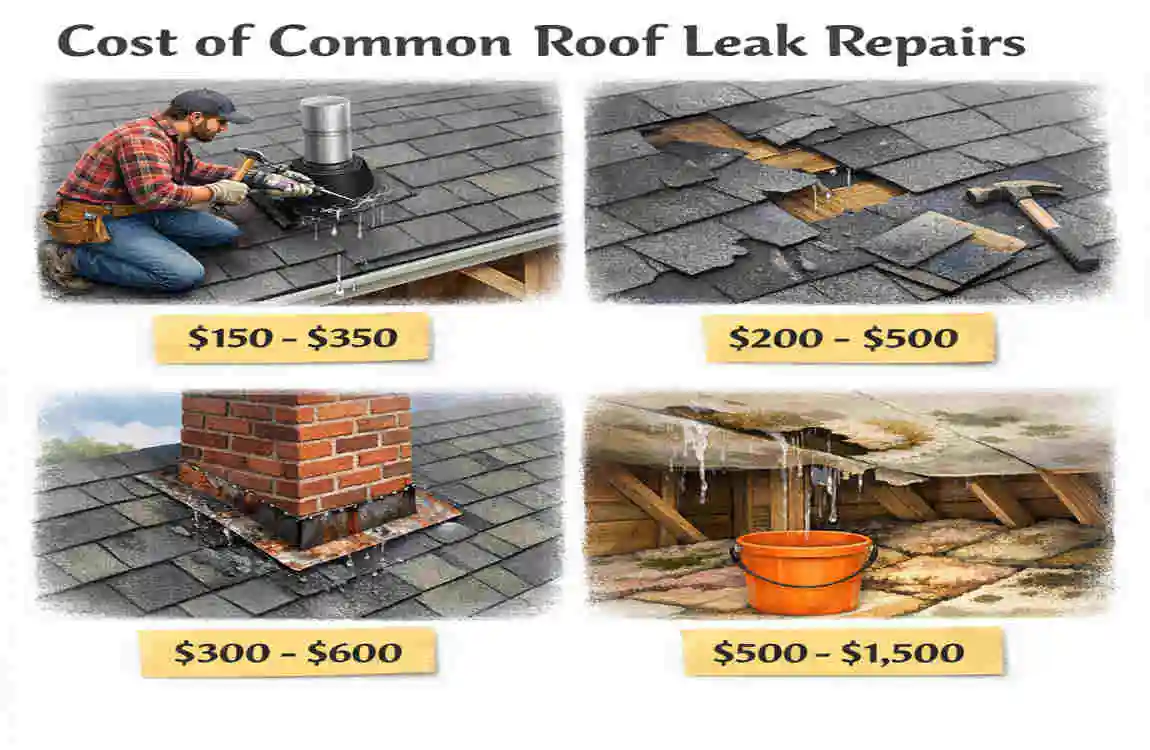
Let’s look at the kinds of repairs homeowners often face.
Replacing damaged shingles
This is one of the most common repairs. If the shingles are cracked, loose, or blown off, replacing them can quickly stop the leak.
Repairing flashing
Flashing protects weak spots on the roof. If it is cracked or loose, water can enter through the cracks or around the edges. This repair is often affordable if caught early.
Fixing roof valleys
Roof valleys carry a lot of rainwater. If they fail, water can quickly enter the house. Repairs here may cost more because the area is so important.
Skylight leak repairs
Skylights can leak around the seal or frame. These repairs often need careful resealing or part replacement.
Chimney flashing repair
Chimneys are leak-prone areas. Damaged flashing around the chimney often causes slow, hidden leaks.
Roof vent replacement
Vents may crack, loosen, or wear out over time. Replacing them can stop water from entering around the opening.
Gutter repair
Sometimes the roof is not the only issue. If gutters are clogged, broken, or pulling away from the house, water can back up and cause roof leaks.
DIY vs Professional Roof Leak Repair
When DIY is suitable
Small, simple repairs may be manageable if you are confident and the roof is safe to access. For example, cleaning gutters or replacing a few shingles may be possible for some homeowners.
When to hire a professional
Hire a roofer if the leak is hard to find, the roof is steep, or the damage is near flashing, chimneys, skylights, or structural parts. You should also call a pro if water damage is already spreading indoors.
Cost comparison
DIY may look cheaper at first, but mistakes can make the leak worse. Professional repair usually costs more upfront, but it often saves money in the long run because the problem is fixed correctly.
How Long Does Roof Leak Repair Take?
The timeline depends on the size of the problem.
Small repairs
Small fixes may take a few hours. These are often simple patch jobs or shingle replacements.
Medium repairs
Moderate repairs can take half a day to a full day. This may include flashing, vent, or valley repair.
Extensive roof restoration
If the leak caused major damage, the work can take several days or longer. That is especially true if wood, insulation, or interior ceilings also need repair.
What Happens If You Ignore a Roof Leak?
A leak will not stay small forever. Water tends to spread, and the damage can grow quietly.
Structural damage
Water can weaken wood and roof decking. Over time, this can weaken your roof.
Mold growth
Moisture creates the perfect place for mould to grow. Mould can spread into walls, ceilings, and insulation.
Ceiling collapse
If water keeps building up, ceilings can sag or even collapse in bad cases.
Electrical hazards
Leaks near light fixtures or wires can become dangerous. Water and electricity do not mix.
Higher repair costs
A small repair today is usually far cheaper than major repairs later. Waiting often turns a simple fix into a large project.
Tips to Reduce Roof Repair Costs
You can reduce the risk of costly repairs by acting early.
- Schedule regular inspections
- Clean gutters regularly
- Replace damaged shingles quickly
- Repair flashing immediately
- Address leaks early
- Compare contractor quotes
These steps may seem simple, but they can save you a lot of money over time.
How to Prevent Future Roof Leaks
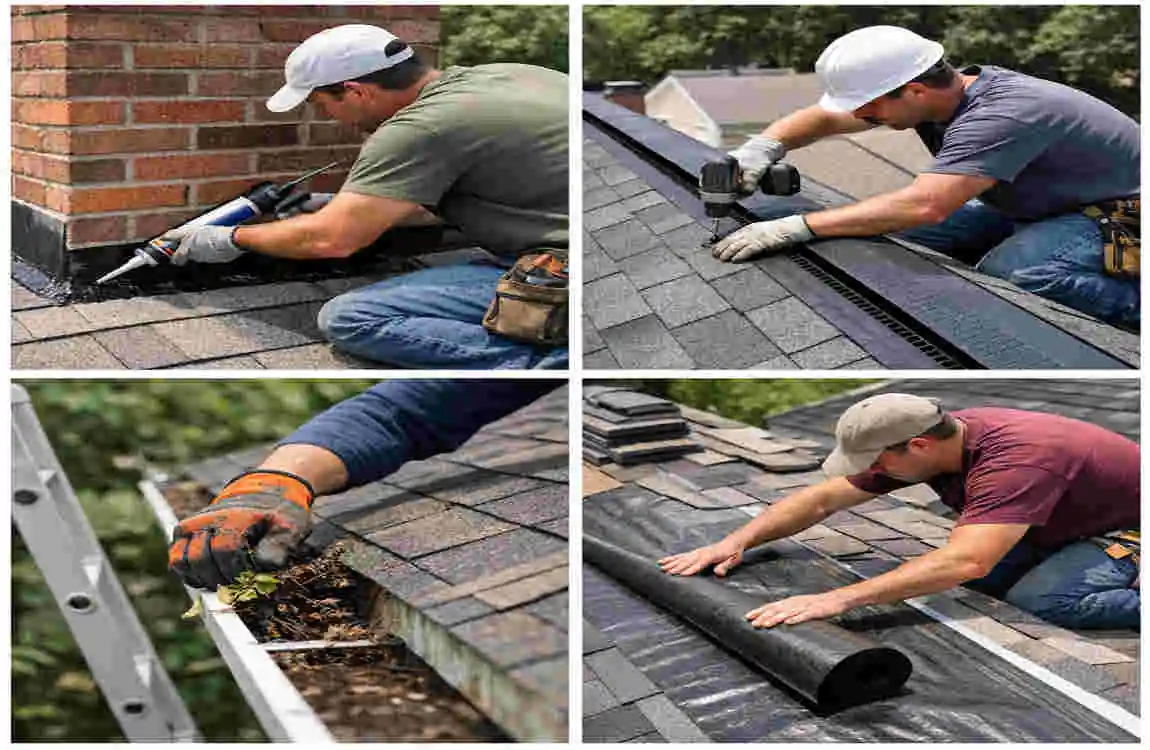
Annual roof inspections
An annual inspection helps catch small problems before they turn into big leaks. This is one of the easiest ways to protect your home.
Proper attic ventilation
Good airflow in the attic helps control heat and moisture. That can reduce roof wear and help the roof last longer.
Roof maintenance checklist
A simple maintenance routine can go a long way:
- Check for missing shingles
- Look for ceiling stains
- Inspect flashing around vents and chimneys
- Keep gutters clear
- Watch for soft spots or sagging areas
Tree trimming
Branches that hang over the roof can scrape shingles and drop debris. Trimming them back helps reduce damage.
When Should You Replace Instead of Repair?
Sometimes repair is not the best choice. In some cases, replacement makes more sense.
Age of the roof
If your roof is very old, repairs may only buy you a little time. A new roof may be the better investment.
Multiple recurring leaks
If leaks keep coming back, the roof may have deeper problems.
Severe storm damage
Storms can damage large sections of the roof at once. In that case, replacement may be more practical.
Extensive structural damage
If the decking or support system is badly damaged, repairs may not be enough.
Frequently Asked Questions
How much to fix a leaking roof on average?
Most roof leak repairs cost between $150 and $1,200, depending on the damage and material.
Is it cheaper to repair or replace a leaking roof?
Repair is usually cheaper for one small leak. Replacement is better if the roof is old or damaged in many places.
Does homeowners insurance cover roof leaks?
It may cover leaks caused by sudden events like storms, but not issues caused by poor upkeep.
Can a small roof leak become a major problem?
Yes. Even a small leak can cause mould, rot, and expensive structural damage over time.
How long does roof leak repair last?
A proper repair can last for years, especially if the roof is maintained well.
| Topic | Details |
|---|---|
| Average Roof Leak Repair Cost | Typically $150–$1,500, depending on the damage and roof type. |
| Minor Leak Repair | Costs around $150–$400 for sealing small cracks or replacing a few shingles. |
| Moderate Leak Repair | Usually $400–$900 for flashing repairs, vent leaks, or damaged underlayment. |
| Major Leak Repair | Can range from $900–$1,500+ if structural damage or extensive roof sections need replacement. |
| Common Causes of Roof Leaks | Broken shingles, damaged flashing, clogged gutters, cracked vents, aging roofing materials, or storm damage. |
| Factors Affecting Cost | Roof size, roofing material, leak severity, labor rates, accessibility, and location. |
| Repair Time | Most minor repairs take 1–3 hours, while larger repairs may require 1–2 days. |